Math Articles, tips & study guides

 DAT Math Practice Book 2020: Extra Exercises and Two Full Length DAT Math Tests to Ace the Exam Original price was: $18.99.$12.99Current price is: $12.99.Download
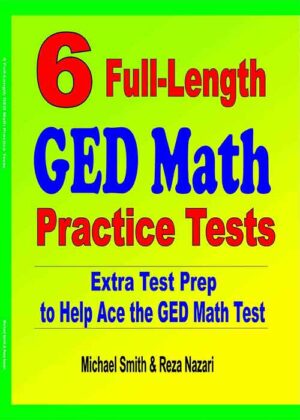 6 Full-Length GED Math Practice Tests: Extra Test Prep to Help Ace the GED Math Test Original price was: $18.99.$12.99Current price is: $12.99.Download
 6 GED Math Practice Tests: Extra Practice to Achieve a Crack Score Original price was: $18.99.$12.99Current price is: $12.99.Download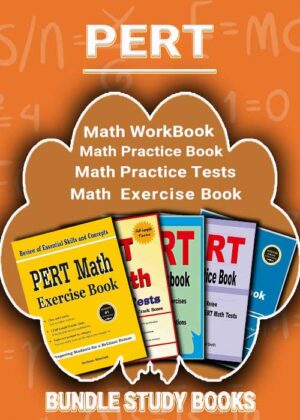
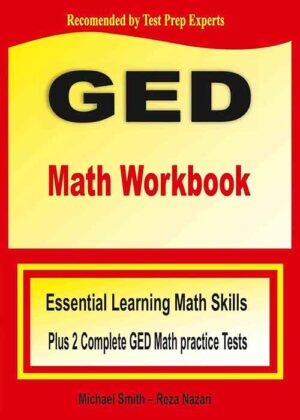 GED Math Workbook: Essential Learning Math Skills Plus Two Complete GED Math Practice Tests Original price was: $18.99.$12.99Current price is: $12.99.Download
 GED Subject Test Mathematics: Student Practice Workbook + Two Realistic GED Math Tests Original price was: $18.99.$12.99Current price is: $12.99.Download
 GED Math Practice Book: Complete Content Review Plus 2 Full-length GED Math Tests Original price was: $18.99.$12.99Current price is: $12.99.Download
 ATI TEAS 6 Math Workbook: Activities, Exercises, and Two Complete ATI TEAS 6 Mathematics Practice Tests Original price was: $18.99.$12.99Current price is: $12.99.Download
 ATI TEAS 6 Subject Test Mathematics: Student Practice Workbook + Two Realistic ATI TEAS Math Tests Paperback Original price was: $18.99.$12.99Current price is: $12.99.Download
 GMAT Math Prep: Pass on Your First Try
 7 Things Nobody Tells You About GRE Math Prep
 How District Leaders Are Thinking About Mathematics
 SBAC Percentages and Ratios Practice — Washington Guide
 Your PSAT Math Prep Roadmap: Tips That Work
MCAT Math Prep: 7 Mistakes to Avoid on Test Day


📖 Reading time: 14 min
Quick answer: Strong MCAT math prep isn’t about advanced math — it’s about doing arithmetic, scientific notation, logs, and percentages accurately in your head under time pressure, because no calculator is allowed in the testing room.
Who this is for: Premed students studying for the MCAT on their own, career changers returning to math after several years away, and tutors who want a clear list of the quantitative errors that cost their students points.
Here’s the number that surprises most premeds: the MCAT (Medical College Admission Test) gives you 230 questions and 6 hours and 15 minutes of content time, and not one minute of it comes with a calculator. The Association of American Medical Colleges lists exactly what you may have in the testing room — your ID, a center-provided noteboard booklet, a fine-point marker, a storage key, and earplugs. That’s the whole list. Your arithmetic is the calculator.
That reality catches strong science students off guard. You can know the Henderson–Hasselbalch equation cold and still lose the point because you couldn’t estimate a logarithm in twenty seconds. Most MCAT math prep problems aren’t knowledge problems at all — they’re speed and accuracy problems wearing a chemistry costume.
So this post skips the generic advice. You’ll see exactly where MCAT quantitative work shows up on the exam, the seven specific mistakes that drain points from otherwise well-prepared test takers, and three worked examples you can solve the way you’ll have to solve them on test day — on paper, fast, with no digital help.
MCAT Quantitative Skills: What the Exam Really Asks
The math level is lower than you fear — the speed demand is higher
The AAMC spells out the mathematical ground the exam covers, and it’s narrower than most students expect: proportions, ratios, percentages, probability, square-root estimation, dimensional analysis with metric units, significant digits, slopes on linear and log scales, Algebra II-level exponentials and logarithms, and basic trigonometry. The AAMC also states plainly that “an understanding of calculus is not required, and a periodic table will be provided during the exam.” There’s no separate math section either. The numbers are folded into science passages, which is why MCAT quantitative skill stays invisible until it costs you.
The structure explains the pressure. The exam runs four sections: Chemical and Physical Foundations of Biological Systems (59 questions in 95 minutes), Critical Analysis and Reasoning Skills (53 questions in 90 minutes), Biological and Biochemical Foundations of Living Systems (59 questions in 95 minutes), and Psychological, Social, and Biological Foundations of Behavior (59 questions in 95 minutes). Total seated time runs about 7 hours and 30 minutes.
Work the pacing out and the problem becomes obvious. Ninety-five minutes across 59 questions gives you roughly 96 seconds per question — and that includes reading the passage. A calculation that takes you 90 seconds by hand has effectively eaten a whole question.
That’s the real test. Not “do you know how to find a pH,” but “can you find it in fifteen seconds while a passage about buffer systems sits in front of you.” Premed students are a large, competitive group, too. The National Center for Education Statistics (NCES) reports that U.S. institutions awarded about 131,500 bachelor’s degrees in the biological and biomedical sciences in 2021–22, out of roughly 2.0 million bachelor’s degrees overall. Plenty of those graduates are competing for the same seats you are, and many of them have already drilled this.
Here’s where to put your MCAT math practice first:
- Scientific notation and orders of magnitude. Nearly every physics and general chemistry calculation arrives in the form of a coefficient times a power of ten. Practice multiplying and dividing these without converting to decimals. If you can turn
(3.6 × 10⁻³) ÷ (9.0 × 10⁻⁶)into4.0 × 10²in one step, you’ve bought yourself twenty seconds. - Logarithms with memorized anchor values. Know that log 2 ≈ 0.30, log 3 ≈ 0.48, and log 7 ≈ 0.85. From those three you can estimate almost any log you’ll meet. pH, pKa, and decibel questions all collapse into quick subtraction once those anchors are automatic.
- Ratios, proportions, and percent change. Dilution problems, yield calculations, and data-table interpretation all run on proportional reasoning. Set them up as fractions and cancel units before you touch a number — the arithmetic usually gets easier, not harder.
- Estimation and rounding with error awareness. Rounding 9.8 to 10 is almost always safe on the MCAT because answer choices are spread far apart. Learn which direction your rounding pushes the answer, so you can pick between two close choices with confidence rather than guessing.
Where the numbers actually show up
Chemical and Physical Foundations carries the heaviest arithmetic load: kinematics, energy, gas laws, equilibrium constants, and acid–base chemistry. Biological and Biochemical Foundations brings enzyme kinetics, concentrations, and genetics ratios. Psychological, Social, and Biological Foundations leans on data interpretation — reading a graph correctly and computing a percent change from a table.
Critical Analysis and Reasoning Skills contains no math at all. That matters for planning, because it means your entire quantitative burden sits in three of the four sections, and roughly two-thirds of your math-heavy questions arrive in the first and third blocks of a long morning.
Notice what that implies. Fatigue-driven arithmetic errors tend to cluster in the last section you sit, so the students who practice mental math only when fresh are training for conditions the exam never gives them.
Why MCAT Math Practice Breaks Down Under Time Pressure
Accuracy that depends on comfort isn’t accuracy
Most students lose MCAT quantitative points not because they can’t do the math, but because their method collapses when the clock speeds up. Untimed, they write neat steps. Timed, they skip steps, hold numbers in working memory, and make an error they’d never make on paper.
The fix is boring and effective: build one repeatable written routine and never abandon it. Write the setup on your noteboard even when the arithmetic looks trivial. Two lines of ink cost four seconds and prevent the kind of sign error that costs a full question.
Research on how students learn math points the same direction. A What Works Clearinghouse practice guide published by the Institute of Education Sciences makes “assist students in monitoring and reflecting on the problem-solving process” one of its core recommendations. Translated into MCAT terms: the students who improve fastest are the ones who review how they solved a problem, not just whether the answer matched.
That’s also why raw problem volume disappoints so many test takers. Grinding 400 questions while repeating the same setup habit mostly rehearses the habit. Fifty questions reviewed carefully — with a written note on what broke — will move your score further.
Pacing awareness matters just as much. With about 96 seconds per question in the science sections, a two-minute calculation isn’t a success even when you get it right, because you borrowed that time from a question you never reached. Treat time as the scored resource it is.
If you want structured drill work rather than scattered problem sets, the GRE Math Comprehensive Exercise Book: Abundant Math Skill Building Exercises is worth a look. It’s built for the GRE rather than the MCAT, so treat it as a math conditioning tool rather than a content match — but the arithmetic, ratio, percentage, and algebra sets are exactly the no-calculator reasoning the MCAT leans on, and the worked solutions show the setup rather than just the answer.
The scoring math nobody explains
Understanding the score scale changes how you triage. Each MCAT section is scored from 118 to 132, with a midpoint of 125. The four section scores add up to a total that ranges from 472 to 528, with a midpoint of 500.
Because the scale is compressed, a handful of questions can move a section score a full point. Three avoidable arithmetic slips spread across the exam are not a rounding error — they’re a meaningful change in your total. That’s the argument for treating careless math as a content weakness rather than bad luck.
7 MCAT Math Mistakes to Avoid
Effective MCAT math prep starts by naming the failure modes precisely. Each mistake below has a specific replacement habit, so you can start fixing it in your next practice block.
- Reaching for exact arithmetic when estimation would do. MCAT answer choices are usually spread far enough apart that an estimate identifies the right one. If the choices are 2.1, 4.4, 8.8, and 17.6, you don’t need three decimal places — you need the right order of magnitude and a rough coefficient. Before calculating, glance at the spread of the answers and decide how much precision the question actually demands. That single habit routinely saves thirty seconds a question.
- Converting scientific notation into decimals. Writing 4.2 × 10⁻⁵ as 0.000042 invites a lost zero and buys you nothing. Keep the coefficient and the exponent separate through the whole calculation: multiply or divide the coefficients, then add or subtract the exponents. Recombine only at the end, and check that your final coefficient sits between 1 and 10. Students who make this switch usually see their careless-error rate drop immediately.
- Memorizing log rules without memorizing log values. Knowing that log(ab) = log a + log b is useless at speed if you can’t place log 2 on a number line. Commit three anchors to memory: log 2 ≈ 0.30, log 3 ≈ 0.48, log 7 ≈ 0.85. From those you can reconstruct log 4, log 5, log 6, log 8, and log 9 in seconds. pH, pOH, and pKa questions turn into one subtraction once the anchors are automatic.
- Dividing percent change by the wrong number. Percent change always uses the original value as the denominator, not the new one. A value rising from 45 to 54 is a 20% increase, because 9 ÷ 45 = 0.20 — not 16.7%, which is what you get by dividing by 54. Test writers include both results among the answer choices on purpose. Label your denominator “original” on the noteboard before you divide, every single time.
- Skipping unit cancellation. Units are free error-checking, and students under time pressure are exactly the ones who abandon them. Write the units alongside the numbers and cancel them as you go. If your answer comes out in meters when the question asked for meters per second, you’ve caught the mistake before it reaches the answer sheet. This takes a few seconds and catches the errors that estimation can’t.
- Practicing mental math only while fresh. Your arithmetic at hour six is not your arithmetic at minute ten. If every practice set happens in a quiet twenty-minute window with coffee in hand, you’re training for conditions the MCAT never provides. Put at least one full-length calculation block at the end of a long study day each week, deliberately simulating fatigue, and see which errors appear only then. Those are the ones to drill.
- Reviewing answers instead of reviewing methods. Checking whether you got a question right tells you almost nothing about why. For every quantitative question you miss, write one sentence naming the breakdown: misread the units, dropped a negative, used the wrong denominator, rounded the wrong way. Sort those sentences after two weeks and you’ll find that three or four patterns explain nearly all your losses — and those patterns are fixable in days, not months.
Notice the common thread: none of these mistakes is about not knowing enough science. They’re about the gap between knowing a method and executing it under a clock, which is a different skill and needs separate practice.
Build that practice into your schedule deliberately. Ten minutes of pure no-calculator arithmetic before each content block works better than an occasional hour, because the skill you’re building is automaticity, and automaticity responds to frequency rather than duration.
Keep a running “error ledger” on one page. Most students find their list stops growing after about two weeks, which is the encouraging part — you’re not fighting infinite weaknesses, just a handful of repeatable ones.
Worked Examples: MCAT Math Without a Calculator
Example 1: Finding pH from hydrogen ion concentration
Problem: A solution has a hydrogen ion concentration of [H⁺] = 4.0 × 10⁻⁵ M. What is the pH?
Step 1: Write the definition. pH = −log[H⁺], so pH = −log(4.0 × 10⁻⁵).
Step 2: Split the log. −log(4.0) − log(10⁻⁵) = −log(4.0) + 5.
Step 3: Use your anchor value. Since 4 = 2², log 4 = 2 × log 2 ≈ 2 × 0.30 = 0.60.
Step 4: Combine. pH ≈ 5 − 0.60 = 4.40.
Answer: pH ≈ 4.4, an acidic solution. The whole calculation is one subtraction once log 2 is memorized — roughly ten seconds on paper. Students who don’t know log 2 typically stall here for a minute or guess.
Example 2: Dividing in scientific notation
Problem: A reaction consumes 3.6 × 10⁻³ moles of substrate over 9.0 × 10⁻⁶ seconds. What is the average rate in moles per second?
Step 1: Separate coefficients from powers of ten. (3.6 ÷ 9.0) × (10⁻³ ÷ 10⁻⁶).
Step 2: Divide the coefficients. 3.6 ÷ 9.0 = 0.4.
Step 3: Subtract the exponents. −3 − (−6) = 3, giving 10³.
Step 4: Recombine and normalize. 0.4 × 10³ = 4.0 × 10².
Answer: 4.0 × 10² mol/s, or 400 mol/s. The normalization step in Step 4 is where careless answers appear — leaving it as 0.4 × 10³ often doesn’t match any answer choice, and students then redo a calculation that was already correct.
Example 3: Percent change from a data table
Problem: A passage reports that mean resting heart rate in a treatment group fell from 75 beats per minute to 60 beats per minute. By what percentage did it decrease?
Step 1: Find the change. 75 − 60 = 15 beats per minute.
Step 2: Identify the denominator. Percent change divides by the original value, so the denominator is 75.
Step 3: Divide. 15 ÷ 75 = 1/5 = 0.20.
Answer: A 20% decrease. The trap answer is 25%, which comes from dividing 15 by 60. Whenever a question gives you two values and asks for a percentage, write “original” under the denominator before dividing — it takes a second and removes the most common distractor on the exam.
Frequently Asked Questions
Can you use a calculator on the MCAT?
No — calculators are not permitted on the MCAT. The AAMC’s list of items allowed in the testing room covers your identification plus center-provided materials: a noteboard booklet, a fine-point marker, a storage key, and earplugs. Nothing else comes in with you. That’s why MCAT math prep has to include mental arithmetic and estimation drill, not just content review.
How much math do you need for the MCAT?
Less than most premeds fear. The AAMC’s own list covers ratios, proportions, percentages, probability, square-root estimation, dimensional analysis, significant digits, slopes, Algebra II-level exponentials and logarithms, and basic trigonometry — and it notes that calculus isn’t required. The quantitative work sits inside chemistry, physics, and data-interpretation questions, so MCAT quantitative practice should happen in a passage context rather than as isolated number drills.
How long should you spend on a single MCAT calculation?
Aim for well under a minute. The science sections give you 59 questions in 95 minutes — about 96 seconds each, including reading time — so a calculation that runs past 60 seconds is borrowing time from another question. If a problem stalls, estimate, choose the closest answer, flag it, and move on. Good MCAT math tips are almost always time-management tips in disguise.
📚 More from Math Notion
🎯 Recommended Math Book
GRE Math Comprehensive Exercise Book: Abundant Math Skill Building Exercises — $12.99
Category: College, GRE, Test
Master every topic and walk into test day with real confidence. Clear step-by-step lessons, worked examples, realistic exam practice and complete answer keys — everything you need in one printable PDF, ready the moment you order. Download your copy t…
Key Takeaways
- The MCAT allows no calculator, so every arithmetic, log, and percentage step has to happen on a noteboard in seconds.
- Memorize three log anchors — log 2 ≈ 0.30, log 3 ≈ 0.48, log 7 ≈ 0.85 — and keep scientific notation in coefficient-plus-exponent form throughout.
- Percent change always divides by the original value; the alternative appears among the answer choices on purpose.
- Review your method rather than your score, and drill arithmetic while tired, since that’s when the exam will find you.
Strong MCAT math prep isn’t a separate subject you bolt onto your content review — it’s the execution layer that decides whether everything else you studied survives contact with the clock. Fix the seven habits above and you’ll recover points you’re currently losing to arithmetic rather than to biology. Ready to build that speed with structured practice? Browse the full range of math test prep books at Math Notion and pick the workbook that matches where your arithmetic is weakest.
Posted by Math Notion Team · Published on September 12, 2026