Math Articles, tips & study guides
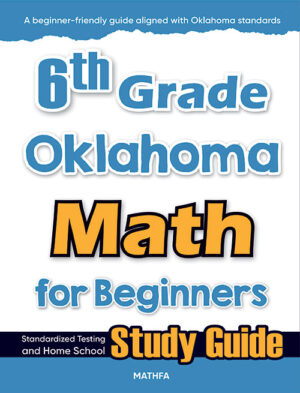 6th Grade Oklahoma Math for Beginners Original price was: $21.99.$14.99Current price is: $14.99.Download
 8th Grade Oklahoma Math for Beginners Original price was: $21.99.$14.99Current price is: $14.99.Download
 7th Grade Oklahoma Math for Beginners Original price was: $21.99.$14.99Current price is: $14.99.Download
 7th Grade Nebraska Math for Beginners Original price was: $21.99.$14.99Current price is: $14.99.Download
 8th Grade Nebraska Math for Beginners Original price was: $21.99.$14.99Current price is: $14.99.Download
 6th Grade Minnesota Math for Beginners Original price was: $21.99.$14.99Current price is: $14.99.Download
 6th Grade Nebraska Math for Beginners Original price was: $21.99.$14.99Current price is: $14.99.Download
 OST Pre-Calculus Practice — Ohio Guide
 How to Ace DAT Math Prep in 8 Weeks
 KSA 4th Grade Prep: Kentucky Math Guide
 7 DeSSA Math Prep Tips for Delaware Students
 TCAP Math Prep Tips for Tennessee Students
OSTP Math Prep: A Step-by-Step Oklahoma Guide


📖 Reading time: 11 min
Quick answer: Effective OSTP math prep for Oklahoma students means focusing on the specific math standards tested at each grade level, building a consistent daily practice routine, and working through targeted OSTP math practice test problems at least six weeks before test day.
Who this is for: Oklahoma students in grades 3 through 8 preparing for state math assessments, parents supporting a child’s test readiness at home, and teachers or tutors building a structured OSTP math study guide for their classroom.
Did you know that Oklahoma requires all students in grades 3 through 8 to take the OSTP (Oklahoma School Testing Program) each spring — and that math performance on this assessment directly shapes a school’s accountability rating and a student’s academic placement? That single test carries real weight, yet many students walk into it without a clear math review plan in place. The good news is that a structured, focused approach to Oklahoma math test preparation can make a measurable difference in scores — and this guide gives you exactly that.
Math anxiety is real, and for many students, the pressure of a standardized test makes it worse. If your child freezes up when they see an equation or you feel unsure where to begin reviewing, you are not alone. What most students need isn’t just more practice — they need the right kind of practice, aimed at the right standards, in the right order.
In this post, you’ll learn what the OSTP math test actually covers at each grade level, how to build a realistic math study plan, seven actionable strategies you can start using today, and worked examples of the kinds of problems students most commonly struggle with. By the end, you’ll have a complete picture of what OSTP math prep looks like when it’s done well.
What the Oklahoma OSTP Math Test Actually Covers
Understanding the OSTP Structure and Grade-Level Standards
The OSTP (Oklahoma School Testing Program) math assessment tests students on the Oklahoma Academic Standards (OAS) for mathematics, which are the grade-specific learning expectations every Oklahoma student is required to master. Understanding exactly what appears on the test is the first — and most important — step in any effective OSTP math prep plan. You can’t study efficiently if you don’t know what you’re studying for.
The OSTP math test is administered each spring to students in grades 3 through 8. Each grade level has its own set of math domains and tested standards, which means the prep strategy for a third-grader looks very different from the one for an eighth-grader. According to the Oklahoma – OSTP Math Assessment page maintained by the Oklahoma State Department of Education, the test is designed to measure student proficiency on the OAS math standards and is used as one component of the state’s school accountability system.
At the elementary level — grades 3 through 5 — the math test focuses heavily on number sense, place value, addition and subtraction with larger numbers, multiplication and division fluency, fractions, and early geometry concepts like area and perimeter. These foundational math skills are tested through both computation problems and word problems that require students to apply their understanding in context. For many students, the word problem format is where points are lost — not because they can’t do the math, but because they struggle to identify what operation the problem is asking them to use.
At the middle school level — grades 6 through 8 — the OSTP math test shifts toward algebraic reasoning, proportional relationships, equations, inequalities, geometry involving area, surface area, and volume, and introductory statistics and probability. By grade 8, students are also expected to demonstrate understanding of linear functions, systems of equations, and transformational geometry. These are demanding standards, and students who haven’t built a strong foundation in arithmetic fluency often hit a wall when they reach this content.
Here is a breakdown of the major math domains tested across the OSTP grade levels:
- Number and Operations (Grades 3–5): Place value, rounding, whole number operations, fractions, and decimals. Students should be able to add and subtract fractions with like denominators, multiply fractions by whole numbers, and understand decimal notation through the hundredths place. Practice decomposing fractions and using visual models — these appear frequently on the test.
- Algebraic Reasoning (Grades 3–8): Recognizing and extending patterns, writing and solving equations, understanding the properties of operations, and representing relationships using tables and graphs. At higher grades, this includes linear equations, inequalities, and proportional reasoning with rates and ratios.
- Geometry and Measurement (Grades 3–8): Classifying shapes, calculating area, perimeter, and volume, understanding coordinate geometry, and working with angles. Students at grade 7 and 8 are expected to calculate the area of composite figures and apply the Pythagorean theorem.
- Data Analysis and Probability (Grades 6–8): Reading and interpreting graphs, calculating mean, median, and mode, understanding variability in data sets, and applying basic probability concepts. Students often underestimate how much of the test comes from this domain — don’t skip it during your math review.
How the OSTP Math Test Is Scored
The OSTP math assessment reports student scores on a scale and assigns one of four performance levels: Below Basic, Basic, Proficient, and Advanced. The goal for every student is to reach the Proficient level, which signals that the student has mastered the grade-level math standards. Schools that fall below state targets for Proficient and Advanced performance face consequences under Oklahoma’s accountability framework, which is why teachers and administrators pay close attention to these results.
For students, what matters most is understanding that the test is not simply about getting the right answer — it’s about demonstrating mathematical reasoning. Many OSTP math questions ask students to explain their thinking, identify errors in someone else’s work, or select all correct answers from a list. This format rewards students who truly understand the math, not just those who have memorized procedures. That’s why your Oklahoma math test preparation plan needs to include conceptual understanding alongside procedural fluency.
Building Your Oklahoma OSTP Math Study Plan
How to Structure a Six-Week OSTP Math Prep Schedule
A strong OSTP math study plan starts with an honest assessment of where the student currently stands and works backward from test day. The most effective approach divides the available time into three phases: diagnosis, targeted review, and full-length practice — each lasting about two weeks in a six-week preparation window.
In week one and two — the diagnosis phase — students should work through a representative set of problems across every tested domain to identify their weak areas. This is not about scoring well right now. It’s about getting clear data on which math topics need the most attention. A student who scores 90% on number operations but struggles with proportional reasoning should spend the majority of their prep time on ratios, rates, and unit rates — not on skills they’ve already mastered.
Weeks three and four are for targeted review. This is where the real OSTP math prep work happens. Students should work through their weak-area topics methodically, using a mix of worked examples, guided practice, and independent problem sets. The key is to work through problems slowly enough to understand each step — not to rush through as many questions as possible. Mathematical reasoning develops through careful, deliberate practice, not speed drills.
In weeks five and six, students should shift to full-length OSTP math practice test simulations. Taking timed practice tests builds the stamina and test-taking confidence that make a real difference on test day. After each practice test, spend at least as much time reviewing wrong answers as you spent taking the test. Every wrong answer is a clue about a gap in understanding — treat it that way.
Research consistently shows that spaced practice — studying in shorter, more frequent sessions — produces better long-term retention than cramming. The U.S. Department of Education has published guidance on evidence-based learning strategies, and distributed practice is among the most well-supported approaches for building durable math skills. Even 20-30 minutes of focused math practice each day produces better outcomes than a two-hour session once a week.
Choosing the Right Resources for Oklahoma Math Test Preparation
Not all math practice materials are created equal. For OSTP math prep, you want resources that align specifically to the Oklahoma Academic Standards — not generic math workbooks that cover topics outside the tested curriculum. Using off-target materials wastes valuable study time and can even confuse students by introducing content they haven’t learned yet at their grade level.
Structured, grade-specific math workbooks are among the most efficient study tools available. They organize content by tested domain, include worked examples before each practice section, and provide answer explanations that help students understand why an answer is correct — not just what the correct answer is. For students who want a model of what well-structured math test preparation looks like, 7 NSCAS Math Tips for Nebraska Students demonstrates exactly the kind of domain-by-domain, strategy-first approach that transfers directly to any state math assessment — including the OSTP. The same principles of targeted review, practice test exposure, and mathematical reasoning development apply regardless of the state.
Beyond workbooks, free resources from the Oklahoma State Department of Education include released test items and sample questions that show exactly how the test formats its problems. Using official sample questions alongside a structured study guide gives students exposure to both the content and the format — which is the combination that produces the best results.
🎯 Recommended Math Book
7 NSCAS Math Tips for Nebraska Students
Boost your NSCAS math prep with 7 proven strategies for Nebraska students. Learn what’s tested, how to practice, and how to pass with confidence.
7 OSTP Math Prep Strategies You Can Start Using Today
Knowing the test format is essential — but having a set of concrete, actionable strategies turns that knowledge into actual score improvement. Here are seven math prep strategies tailored specifically to OSTP math preparation that students can begin using right now.
- Master the OAS standards for your grade level before anything else. Before opening a practice workbook, download the Oklahoma Academic Standards for your student’s grade level and read through the math section. Highlight the standards that feel most uncertain. This gives you a prioritized list of what to review first — and it ensures you’re studying content that actually appears on the OSTP, not general math topics that might not be tested at your grade. Working from the official standards is the most efficient possible starting point for any Oklahoma OSTP study guide.
- Practice word problems every single day — not just on weekends. The OSTP math test is heavy on applied math in word problem format. Students who struggle with word problems almost always have the same issue: they read the problem without identifying the mathematical structure first. Train yourself to read a word problem twice — once for the story, once to identify the numbers, the relationship between them, and the operation required. Daily exposure to word problems builds the pattern recognition that makes this automatic on test day.
- Use estimation before calculating to check for reasonableness. One of the most reliable test-taking strategies for the OSTP math test is to estimate the answer before working through the full calculation. If a problem asks you to multiply 48 × 52, estimate 50 × 50 = 2,500 before doing the exact calculation. When your final answer is close to your estimate, you can be confident it’s in the right range. This catches errors caused by misplaced decimal points, wrong operations, or arithmetic mistakes — all of which are common under test-day pressure.
- Build fraction fluency with visual models, not just rules. Fractions appear at every OSTP grade level, and they are among the most frequently missed topics on state math assessments. Instead of just memorizing the rule for adding fractions with unlike denominators, draw a fraction bar model alongside every fraction problem you practice. Visual models build the intuitive number sense that helps students catch errors and understand why the procedure works. Students who understand the concept make far fewer fraction mistakes than those who only know the steps.
- Review your errors more carefully than you review correct answers. After every practice session or OSTP math practice test, go back through every problem you got wrong and ask yourself three questions: Did I make an arithmetic error? Did I misread the problem? Or did I not understand the concept? Each answer points to a different fix. Arithmetic errors get fixed with more careful calculation habits. Misread problems get fixed with active reading strategies. Concept gaps get fixed with targeted content review. This error analysis process is the single most powerful thing you can do to accelerate math improvement.
- Simulate real test conditions at least twice before test day. Sitting down to take a timed, full-length OSTP math practice test in test-like conditions — no phone, no breaks, timed strictly — builds the mental stamina and focus that standardized testing requires. Many students know the math but underperform on test day simply because they aren’t used to working under time pressure. Two full timed simulations in the final two weeks of your math study plan will make the real test feel familiar rather than overwhelming.
- Teach someone else what you just learned. This strategy sounds simple, but it’s backed by decades of educational research. When a student explains a math concept out loud — to a parent, a sibling, a classmate, or even an empty chair — they process the material at a much deeper level than when they simply read it. If you can explain how to find the area of a trapezoid or how to solve a two-step equation clearly enough for someone else to understand, you genuinely know it. If you stumble during the explanation, you’ve found a gap to work on.
These strategies work best when combined rather than used in isolation. A student who masters their grade-level standards, practices word problems daily, analyzes their errors systematically, and takes timed simulations is doing everything right — and that combination almost always produces meaningful improvement on the OSTP math test.
One additional note for parents and teachers supporting a student through OSTP math prep: consistency matters more than intensity. A student who studies math for 25 minutes every day for six weeks will outperform a student who studies for three hours on two weekends. Build a daily math habit as early in the school year as possible, even before formal test preparation begins. Mathematical fluency develops through repeated exposure over time — there’s no shortcut, but there is a reliable path.
Worked Examples: Common OSTP Math Problem Types
Understanding what the OSTP asks is one thing — seeing how to actually work through the problems is another. Here are three worked examples that represent problem types students commonly encounter across the OSTP math test at grades 5 through 8.
Example 1: Fraction Addition with Unlike Denominators (Grade 5)
Problem: A recipe calls for 2/3 cup of flour for the base and 3/4 cup of flour for the topping. How much flour does the recipe need in total?
Step 1: Identify that the denominators are different — 3 and 4 — so you need a common denominator before adding. The least common denominator of 3 and 4 is 12.
Step 2: Convert each fraction. Multiply 2/3 by 4/4 to get 8/12. Multiply 3/4 by 3/3 to get 9/12.
Step 3: Add the numerators: 8 + 9 = 17. The denominator stays 12, so the sum is 17/12.
Step 4: Convert to a mixed number: 17 ÷ 12 = 1 remainder 5, so the answer is 1 5/12.
Answer: The recipe needs 1 5/12 cups of flour. On the OSTP, always check whether your answer should be left as an improper fraction or converted to a mixed number — the problem or answer choices will tell you which form is expected.
Example 2: Proportional Reasoning with Unit Rate (Grade 7)
Problem: A car travels 210 miles in 3.5 hours. At the same rate, how many miles will the car travel in 6 hours?
Step 1: Find the unit rate — miles per hour — by dividing total distance by total time: 210 ÷ 3.5 = 60 miles per hour.
Step 2: Use the unit rate to find the distance for 6 hours: 60 × 6 = 360 miles.
Step 3: Check your answer for reasonableness. Six hours is roughly 1.7 times longer than 3.5 hours, and 360 is roughly 1.7 times 210. The answer is reasonable.
Answer: The car will travel 360 miles in 6 hours. Proportional reasoning problems on the OSTP often disguise the unit rate step — identifying it first is always the fastest path to the correct answer.
Example 3: Two-Step Linear Equation (Grade 8)
Problem: Solve for x: 3x + 7 = 22
Step 1: Isolate the variable term by subtracting 7 from both sides: 3x + 7 − 7 = 22 − 7, which gives 3x = 15.
Step 2: Divide both sides by 3 to solve for x: 3x ÷ 3 = 15 ÷ 3, which gives x = 5.
Step 3: Verify by substituting back into the original equation: 3(5) + 7 = 15 + 7 = 22. ✓
Answer: x = 5. Always verify your answer in a two-step equation — this takes about five seconds and catches sign errors or division mistakes before they cost you points on the OSTP.
Frequently Asked Questions
What math topics are on the OSTP math test?
The OSTP math test covers the Oklahoma Academic Standards for each grade level, including number operations, algebraic reasoning, geometry, measurement, and data analysis. The specific topics shift across grades — elementary students focus on fractions and place value, while middle school students are tested on proportional reasoning, linear equations, and statistics. Reviewing the OAS for your specific grade is the most reliable way to know exactly what your OSTP math prep should cover.
How long should I spend on OSTP math prep each day?
Twenty to thirty minutes of focused, daily OSTP math practice is more effective than longer, infrequent sessions. Consistent daily practice builds mathematical fluency through repetition and spaced review, which produces stronger long-term retention than cramming. Starting a structured Oklahoma math test preparation routine six to eight weeks before the spring test date gives students enough time to diagnose weak areas, complete targeted review, and work through at least two full practice test simulations before test day.
Are there free OSTP math practice test resources available?
Yes — the Oklahoma State Department of Education releases sample test questions and practice materials that are aligned to the official OSTP math format. These released items show students exactly how questions are worded and what the answer choices look like, making them valuable tools for any Oklahoma OSTP study guide. Using official released items alongside a structured math workbook gives students the best preparation — they get both the content review and the format exposure that lead to confident test performance.
📚 More from Math Notion
Key Takeaways
- The OSTP math test covers grade-specific Oklahoma Academic Standards across five domains — number operations, algebraic reasoning, geometry, measurement, and data analysis — and knowing exactly which standards are tested at your grade level is the foundation of every effective OSTP math prep plan.
- A six-week math study plan divided into diagnosis, targeted review, and timed practice test phases gives students a structured path from uncertainty to test-day confidence — and daily 20-30 minute sessions outperform occasional long study blocks every time.
- Error analysis, word problem fluency, and estimation are the three skills that separate students who improve their OSTP math scores from those who plateau — build all three into every study session.
- For a model of what structured, strategy-first math test preparation looks like, the 7 NSCAS Math Tips for Nebraska Students guide at mathnotion.com demonstrates a domain-focused approach that applies directly to OSTP preparation and any other state math assessment.
OSTP math prep doesn’t have to feel overwhelming. When you know what the test covers, follow a structured math study plan, and use the right practice strategies consistently, you give any Oklahoma student — at any grade level — a genuine shot at reaching Proficient or Advanced performance. Start with the Oklahoma Academic Standards for your grade, build your daily practice habit, and trust the process. The math skills are learnable. The test is passable. You just need the right plan.
Ready to go deeper? Browse the full collection of math test prep resources and grade-level workbooks at mathnotion.com/tests/ — and find the structured practice that fits your student’s exact grade and goals.
Posted by Math Notion Team · Published on June 11, 2026