
Math Articles, tips & study guides
 7th Grade Alabama Math for Beginners Original price was: $21.99.$14.99Current price is: $14.99.Download
 8th Grade Alabama Math for Beginners Original price was: $21.99.$14.99Current price is: $14.99.Download
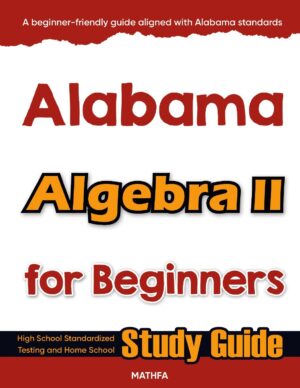 Alabama Algebra II for Beginners – Algebra 2 Test Prep & Study Guide Original price was: $22.99.$18.99Current price is: $18.99.Download
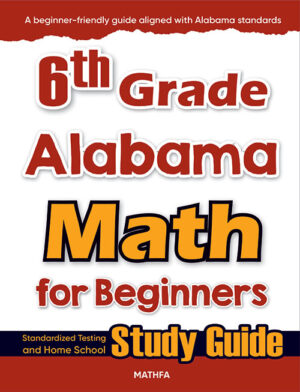 6th Grade Alabama Math for Beginners Original price was: $21.99.$14.99Current price is: $14.99.Download
 SAT Math Comprehensive Exercise Book: Abundant Math Skill Building Exercises Original price was: $18.99.$12.99Current price is: $12.99.Download
 ACAP Geometry Basics Practice: Alabama Student Guide
 How to Pass the Alabama Math Test: 7 Strategies
 6th Grade Alabama Math: ACAP Guide (2026)
 Your PSAT Math Prep Roadmap: Tips That Work
 WVGSA Math Prep: West Virginia Student Guide
ACAP Business Math Practice — Alabama Guide


📖 Reading time: 11 min
Quick answer: To master ACAP business math practice in Alabama, focus on percent calculations, ratios, proportions, and basic financial math — the core business math skills tested across grades 4–12 — and work through structured practice problems at least four days per week.
Who this is for: Alabama students in grades 4–12 preparing for the ACAP math assessment, parents supporting their child’s math review at home, and teachers building targeted business math practice plans in the classroom.
Did you know that business math concepts — percentages, profit and loss, simple interest, and unit pricing — appear on standardized assessments as early as fourth grade? Many students are caught off guard by these questions because they don’t look like “regular” math at first glance. Yet the Alabama ACAP math assessment tests exactly these real-world math skills, and students who recognize business math problems for what they are score significantly better than those who don’t.
The ACAP (Alabama Comprehensive Assessment Program) is Alabama’s statewide assessment system, measuring student math proficiency from grades 3 through 8 and beyond. According to the Alabama – ACAP Math Assessment, the test is aligned to Alabama’s Course of Study mathematics standards, which include a strong emphasis on quantitative reasoning, number sense, and applied math — all areas where business math lives. If you’re preparing for this test, understanding how business math fits into the larger picture is one of the smartest moves you can make.
This guide covers everything you need to know about ACAP business math practice. You’ll learn why business math is foundational to overall math success, the most common mistakes students make, a step-by-step problem-solving approach, worked examples, memory tricks, and specific strategies for parents and teachers. By the time you finish reading, you’ll have a clear, actionable plan to approach every business math question on test day with confidence.
Why Business Math Is Foundational for Alabama ACAP Math Success
What Business Math Actually Covers on the ACAP
Business math on the ACAP isn’t a separate subject — it’s the practical application of core math skills that students have been building since early elementary school. At its heart, business math covers percentages, ratios, proportions, decimals, fractions, simple interest, markups, discounts, unit rates, and basic budgeting concepts. These topics appear across multiple ACAP grade bands and represent the kind of mathematical reasoning the test is specifically designed to measure.
Understanding business math is foundational because it sits at the intersection of arithmetic and algebraic thinking. A student who can calculate a 15% tip is also practicing decimal multiplication and percent-to-decimal conversion. A student who computes a store’s profit margin is working with subtraction, division, and ratio reasoning simultaneously. These aren’t isolated skills — they reinforce each other, and strong business math fluency makes every other part of the ACAP math test easier.
Alabama’s math standards, which drive the ACAP, explicitly expect students to apply quantitative reasoning in real-world contexts. Business math is one of the most consistent real-world contexts the test uses. When a question asks students to compare unit prices at a grocery store or calculate the total cost after a discount, it’s testing number sense, proportional reasoning, and computational accuracy all at once. Missing these questions isn’t a business problem — it’s a math skills gap.
Beyond the test itself, business math fluency builds the kind of number sense that carries students through algebra, data analysis, and statistics in later grades. Students who understand that a 20% discount means multiplying by 0.80 have a conceptual foundation that transfers directly to working with equations and functions. That’s why ACAP business math practice pays dividends far beyond test day.
How Business Math Connects to Alabama Math Standards
Alabama’s Course of Study mathematics standards are organized around domains that grow in complexity from grade to grade. Business math concepts appear most prominently in the Ratios and Proportional Relationships domain (grades 6–7), the Number System domain (grades 5–7), and the Expressions and Equations domain (grades 6–8). However, foundational business math skills — such as understanding unit price and calculating percent of a number — begin appearing as early as grade 4 under the Operations and Algebraic Thinking standards.
For upper-grade and high school students, Alabama math standards business math requirements extend into financial literacy applications, including simple and compound interest, tax calculations, and rate problems. These concepts don’t disappear after middle school — they evolve into more complex algebraic and statistical contexts. Students who master the fundamentals early find these advanced applications far less intimidating.
Here are four key reasons why every ACAP math student should prioritize business math skills:
- High frequency on the test: Percent, ratio, and proportion questions appear in multiple formats on every grade band of the ACAP. A student who masters these topics eliminates a large category of uncertainty from test day. Even a single percentage-calculation skill — like converting a percent to a decimal before multiplying — can affect multiple questions across a single test.
- Real-world context improves retention: Because business math is connected to everyday experiences like shopping, saving, and budgeting, students tend to remember these concepts more reliably than abstract formulas. Connecting math to real money makes the numbers stick. That retention advantage shows up directly in test performance.
- Cross-domain reinforcement: Business math problems often require students to apply skills from multiple domains simultaneously — fractions, decimals, percents, ratios, and basic algebra all appear in a single word problem. Practicing these problems strengthens multiple math skills at once, making your study time more efficient.
- Foundation for algebraic thinking: Proportional reasoning — the core of business math — is one of the strongest predictors of success in algebra. Students who understand ratios and rates conceptually make a much smoother transition to equations with variables. The ACAP math test is specifically designed to assess this transition across grades 6–8.
Common Mistakes Students Make on Alabama ACAP Business Math Questions
The Most Frequent Errors — and Why They Happen
Most business math errors on the ACAP fall into a small number of predictable patterns. Identifying these patterns in advance is one of the most valuable ACAP math business math tips you can act on right now. When you know where mistakes happen, you can build habits that prevent them before they cost you points on test day.
The single most common mistake is percent conversion confusion. Students see “35%” and immediately try to use 35 as a number in their calculation instead of converting it to 0.35 first. For example, a question might ask: “A jacket that originally costs $80 is on sale for 25% off. What is the sale price?” Many students calculate 80 × 25 = 2,000 and then get completely lost. The correct first step is converting 25% to 0.25, then multiplying: 80 × 0.25 = $20 discount, giving a sale price of $60. That one conversion habit eliminates an entire category of errors.
The second major mistake is confusing the percent discount with the final price. After correctly finding the discount amount, students sometimes report the discount ($20 in the example above) as their final answer instead of subtracting it from the original price. Always ask: “What is the question actually asking for — the amount saved, or the final price?” Reading the question twice before calculating is a simple habit that prevents this error repeatedly.
A third common error involves ratio and proportion setup. When setting up a proportion like “If 4 notebooks cost $6, how much do 10 notebooks cost?”, students sometimes flip the ratio or mix up which number belongs in the numerator and which belongs in the denominator. The fix is to always label your ratio clearly: cost/notebooks = cost/notebooks, so 6/4 = x/10. When the ratio labels match on both sides, the setup is correct.
According to the U.S. Department of Education, students perform best on applied math questions when they have a consistent, practiced strategy for translating word problems into mathematical operations. This is especially true for business math, where the real-world context can either help students anchor their thinking or distract them into guessing. Building a reliable translation habit is more valuable than memorizing individual formulas.
Here are additional common mistakes to watch for during ACAP business math practice:
- Ignoring units in rate problems: A question like “A car travels 180 miles on 6 gallons of gas. How many miles per gallon does it get?” requires students to set up the division 180 ÷ 6 = 30 miles per gallon. Many students either skip the division entirely or divide in the wrong direction (6 ÷ 180), getting a nonsensical answer like 0.033. Always write the unit you’re solving for before setting up the calculation — it tells you which direction to divide.
- Misreading multi-step word problems: Business math questions often require two or three operations in sequence. Students who rush to calculate after reading only the first number in the problem frequently miss a step. Underlining every number and every operation word (“discount,” “tax,” “markup,” “total,” “each”) before beginning forces you to see the full picture first.
- Rounding too early: In multi-step problems, rounding an intermediate answer — say, rounding $12.67 to $13 before the next calculation — introduces errors that compound as the problem continues. Keep all decimal places until the final answer, then round if the question asks for it.
- Skipping the reasonableness check: A sale price that ends up higher than the original price is obviously wrong — but students under time pressure often submit these answers without pausing to check. After every business math problem, spend five seconds asking: “Does this answer make sense?” A $300 pair of shoes shouldn’t have a sale price of $340 after a discount.
How to Break the Habit of Rushing Through Word Problems
Most of these mistakes share a root cause: students move too fast. Math test prep tips consistently point to the same fix — slow down during the reading phase and speed up during the calculation phase. Spend more time understanding the problem and less time second-guessing arithmetic you’ve already done correctly.
A practical strategy that works well for ACAP math business math practice is the “box the question” technique. Before doing any math, draw a box around the actual question being asked — not the background information, but the specific question. This forces your brain to lock in the goal before processing the data. Students who adopt this habit report feeling far less confused by multi-step word problems within just a week of practice.
For students who want structured practice with all of these business math concepts in a format aligned to Alabama’s state math standards, the ACAP Geometry Basics Practice: Alabama Student Guide provides step-by-step coverage of core ACAP math topics with worked examples and proven strategies — making it a solid companion to your business math review, especially as these applied reasoning skills connect directly to geometry and measurement contexts on the test.
🎯 Recommended Math Book
ACAP Geometry Basics Practice: Alabama Student Guide
Master ACAP geometry basics practice with Alabama-aligned tips, worked examples, and proven strategies that build real test-day math confidence.
Step-by-Step ACAP Business Math Practice Strategies That Work
The most effective ACAP business math practice combines daily problem exposure with deliberate error analysis — not just doing more problems, but understanding exactly why wrong answers happen and correcting the underlying habit. Below are seven strategies that produce real improvement, each one something you can start using today.
- Build a personal percent-conversion reference card.
Before doing any ACAP business math practice problems, write out the most common percent-to-decimal conversions on an index card: 10% = 0.10, 15% = 0.15, 20% = 0.20, 25% = 0.25, 50% = 0.50, 75% = 0.75. Review this card at the start of every study session for two weeks. The goal is to make these conversions automatic so you never pause to figure them out mid-problem. This single habit eliminates a large percentage of business math errors immediately. Once you’ve internalized the common ones, extend the card to less common percentages like 35%, 40%, and 60%. - Practice the three-part problem-reading protocol.
Every business math word problem should be read in three passes. First pass: read the entire problem for context (what situation is described?). Second pass: underline every number and label what it represents. Third pass: box the question and identify the operation needed. This protocol takes about 30 extra seconds per problem but dramatically reduces setup errors. Students who practice this approach on free math worksheets before moving to timed practice conditions find that the habit becomes automatic within a few days. - Solve problems using the label-first method.
Before writing a single number, write the unit you’re solving for at the end of your work area — for example, “= ___ dollars” or “= ___ miles per gallon.” This anchors your calculation direction and prevents the common error of dividing backwards in rate problems. It also makes your work easier to check, because you can trace each step back to see whether the units work out correctly throughout the calculation. - Do at least five math practice problems per business math topic before moving on.
One or two problems per concept isn’t enough to build fluency — your brain needs repetition to encode a procedure. For each business math topic (percent discount, markup, simple interest, unit rate, ratio), work through at least five distinct problems before calling that topic covered. Use step-by-step math approaches on each one, writing out every step even when the answer seems obvious. Pattern recognition builds fastest when you see multiple variations of the same concept in a single sitting. - Analyze every wrong answer before moving to the next problem.
This is the single most underused strategy in math test prep. When you get a business math problem wrong, don’t just look at the correct answer — trace back through your work to find the exact step where you made the error. Was it the setup, the conversion, the arithmetic, or the interpretation of the question? Label the error type in the margin. Over time, you’ll see which error type you repeat most, and you can target that specific habit directly. - Use mental math shortcuts for common business math calculations.
Finding 10% of any number is always easy — just move the decimal one place to the left. From there, you can find 5% (half of 10%), 15% (10% + 5%), 20% (double 10%), and 30% (triple 10%) without a calculator. On test day, this skill lets you quickly estimate answers and check whether your calculated answer is in the right ballpark. For example, 15% of $64: 10% = $6.40, 5% = $3.20, total = $9.60. That’s faster and more accurate than entering 64 × 0.15 on a calculator for many students. - Practice business math in real-life contexts to strengthen number sense.
Before test day, look for business math in everyday situations. At a store, calculate the sale price mentally before checking the tag. At a restaurant, estimate a 20% tip before the bill arrives. When filling the car with gas, calculate the cost per gallon from memory. These informal practice moments build exactly the mathematical reasoning the ACAP is measuring — applied number sense in realistic contexts. Students who connect classroom math to real experiences consistently outperform those who only practice on worksheets.
Beyond these individual strategies, consistency matters more than intensity. Short, frequent ACAP business math practice sessions — 20 to 30 minutes, four days per week — produce better results than a single long cramming session the night before a test. Your brain consolidates math skills during sleep, which means spreading practice over multiple days gives each concept time to settle into long-term memory. Think of it less like studying and more like training — math fluency is built through repetition over time, not through last-minute effort.
Parents and teachers can support this rhythm by helping students build a consistent weekly schedule rather than reacting to upcoming tests. Provide a mix of topic-specific drills (percent calculations one day, ratio problems the next) alongside mixed practice sets that require students to identify the operation before solving. That identification step — “Is this a percent problem, a ratio problem, or a rate problem?” — is exactly the skill the ACAP tests, and it only develops through varied practice.
When to seek additional math homework help or tutoring is also worth planning ahead. If a student consistently misses the same type of business math problem after multiple practice sessions and error analysis, that’s a signal that the underlying concept needs to be re-taught, not just re-practiced. A tutor or teacher who can explain the concept differently — using a visual model, a real-life example, or a different problem structure — can break a stubborn learning block in a single session.
Worked Examples: Business Math on the ACAP
Example 1: Calculating a Percent Discount
Problem: A pair of athletic shoes originally costs $95.00. The store is running a 30% off sale. What is the final price the customer pays?
Step 1: Convert the percent discount to a decimal. 30% = 0.30
Step 2: Calculate the discount amount. $95.00 × 0.30 = $28.50
Step 3: Subtract the discount from the original price. $95.00 − $28.50 = $66.50
Answer: The customer pays $66.50. Note: an alternative method is to calculate the price directly by multiplying $95.00 × 0.70 (since the customer pays 70% of the original price). Both methods give the same answer — choose whichever feels more natural to you on test day.
Example 2: Finding the Unit Rate
Problem: A store sells a 12-pack of water bottles for $4.80 and a 20-pack of the same water bottles for $7.60. Which pack gives the better value (lower price per bottle)?
Step 1: Calculate the unit rate for the 12-pack. $4.80 ÷ 12 = $0.40 per bottle
Step 2: Calculate the unit rate for the 20-pack. $7.60 ÷ 20 = $0.38 per bottle
Step 3: Compare the two unit rates. $0.38 < $0.40
Answer: The 20-pack offers the better value at $0.38 per bottle, compared to $0.40 per bottle for the 12-pack. On the ACAP, unit rate questions like this are common because they require students to organize information, perform division, and compare results — three distinct math skills in one problem.
Example 3: Calculating Simple Interest
Problem: Maria deposits $500 into a savings account that earns 4% simple interest per year. How much interest does she earn after 3 years, and what is her account balance at the end?
Step 1: Recall the simple interest formula: I = P × r × t, where P = principal, r = annual interest rate as a decimal, and t = time in years.
Step 2: Substitute the values. I = $500 × 0.04 × 3
Step 3: Calculate. $500 × 0.04 = $20.00 per year. $20.00 × 3 = $60.00 total interest.
Step 4: Find the final account balance. $500.00 + $60.00 = $560.00
Answer: Maria earns $60.00 in interest over three years, and her account balance grows to $560.00. This formula — I = P × r × t — is one of the most important formulas in Alabama math standards business math, and it appears consistently on ACAP assessments in grades 7 and 8 as well as high school math courses.
Memory Tricks and Shortcuts for Business Math
Strong test-takers use memory anchors to keep formulas accessible under pressure. For business math on the ACAP, here are the most reliable shortcuts:
- The “of means multiply” rule: Whenever you see the word “of” in a percent problem — “What is 25% of $80?” — replace “of” with a multiplication sign.
25% × $80 = 0.25 × 80 = $20. This one translation rule works for virtually every percent calculation you’ll encounter. - The complement method for discounts: Instead of finding the discount and subtracting, directly multiply the original price by the complement of the discount. A 30% discount means the customer pays 70% — so multiply by 0.70 directly. This is faster and eliminates the subtraction step where many students make errors.
- The “PRT” triangle for simple interest: Write P, R, and T in a triangle with I (interest) at the top. Cover the variable you’re solving for, and the remaining letters show you the operation: cover I → multiply P × R × T; cover P → divide I by (R × T). Visual memory tools like this work especially well for students who struggle to recall formulas under test pressure.
- The 1% benchmark: For any percent calculation, find 1% first (divide by 100), then multiply by the percent you need. Example: 1% of $340 = $3.40. So 7% of $340 = $3.40 × 7 = $23.80. This approach works for any percent without requiring decimal conversion, and it’s a reliable math cheat sheet technique for mental math situations.
Frequently Asked Questions
What business math topics appear most often on the Alabama ACAP math test?
The most frequently tested business math topics on the ACAP are percent calculations (discounts, tax, tip, and percent increase/decrease), ratio and proportion problems, unit rate comparisons, and simple interest. These topics align directly to Alabama’s Course of Study standards for grades 5 through 8 and appear in applied word problem format, requiring students to both set up and solve multi-step calculations. Consistent ACAP business math practice across all four of these topic areas covers the majority of business math questions students will encounter.
How does business math on the ACAP differ from business math on the GED, SAT, or ACT?
ACAP business math is grade-level focused and tied specifically to Alabama math standards, while the GED, SAT, and ACT test the same underlying skills at higher complexity levels. The GED Mathematical Reasoning section includes multi-step financial math problems with more complex algebra. The SAT tests ratio reasoning and percent problems within data analysis questions. The ACT includes rate and interest problems in its math section. Mastering Alabama math standards business math on the ACAP builds the exact foundation students need for all three of these higher-stakes assessments later in their academic career.
How much time should students spend on ACAP business math practice each week?
Most students see measurable improvement with 20 to 30 minutes of focused ACAP business math practice four days per week — totaling roughly 80 to 120 minutes of practice weekly. The key is consistency rather than volume. Short daily sessions with immediate error analysis are more effective than longer, infrequent cramming sessions. Students who are significantly behind grade level or who struggle with percent conversion may benefit from an additional 15-minute drill session focused exclusively on percent-to-decimal conversion until that skill is fully automatic.
📚 More from Math Notion
Key Takeaways
- Business math — percentages, ratios, unit rates, and simple interest — is among the most frequently tested skill areas on the Alabama ACAP math assessment across grades 4 through 8, and mastering it has a direct impact on your overall score.
- The most common ACAP business math mistakes are percent conversion errors, confusing the discount amount with the final price, and setting up proportions backwards — all of which are preventable with consistent, deliberate practice habits.
- Use the three-part reading protocol, the label-first method, and daily error analysis to build accurate business math skills faster than traditional worksheet drilling alone.
- For structured, Alabama-aligned practice that extends these skills into geometry and measurement contexts, explore the resources available at mathnotion.com/tests/ — including the ACAP Geometry Basics Practice: Alabama Student Guide.
Solid ACAP business math practice isn’t about memorizing dozens of formulas — it’s about building a small set of reliable habits: convert percents before calculating, read every problem three times, label your units, and check every answer for reasonableness. Students who own those four habits walk into test day with a genuine mathematical advantage. Start with the strategies in this guide, track your progress honestly, and adjust your practice plan based on your error patterns. That combination of structure and self-awareness is how math confidence is built — one solved problem at a time.
Ready to take the next step? Browse the full collection of Alabama-aligned math test prep resources at mathnotion.com/tests/ and find the right practice book to support your ACAP math preparation.
Posted by Math Notion Team · Published on July 17, 2026