Math Articles, tips & study guides
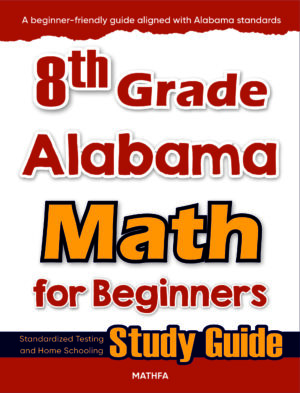 8th Grade Alabama Math for Beginners Original price was: $21.99.$14.99Current price is: $14.99.Download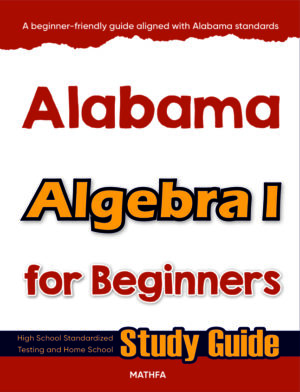
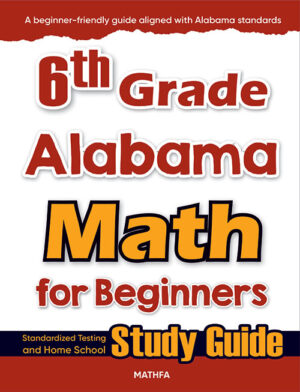 6th Grade Alabama Math for Beginners Original price was: $21.99.$14.99Current price is: $14.99.Download
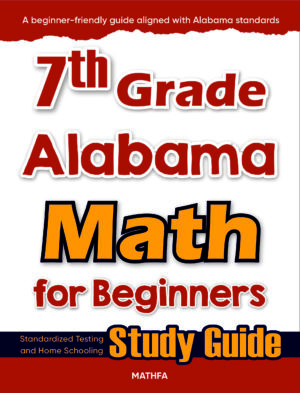 7th Grade Alabama Math for Beginners Original price was: $21.99.$14.99Current price is: $14.99.Download
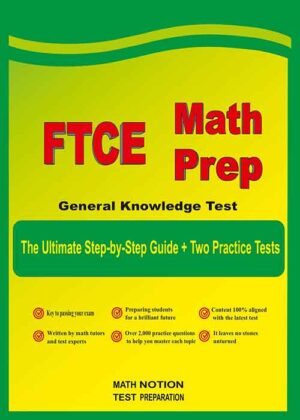 FTCE Math Prep (General Knowledge Test): The Ultimate Step by Step Guide Plus Two Full-Length FTCE Practice Tests Original price was: $18.99.$12.99Current price is: $12.99.Download
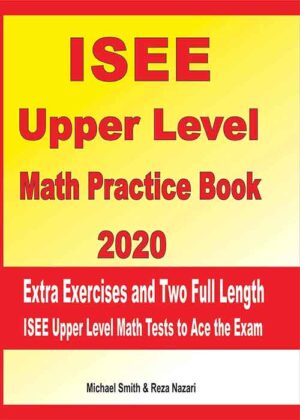 ISEE Upper Level Math Practice Book 2020: Extra Exercises and Two Full Length ISEE Upper Level Math Tests to Ace the Exam Original price was: $18.99.$12.99Current price is: $12.99.Download
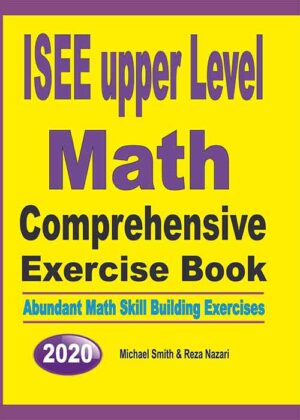 ISEE Upper Level Math Comprehensive Exercise Book: Abundant Math Skill Building Exercises Original price was: $18.99.$12.99Current price is: $12.99.Download
 GED Math Prep: The Ultimate Step by Step Guide Plus Two Full-Length GED Practice Tests Original price was: $18.99.$12.99Current price is: $12.99.Download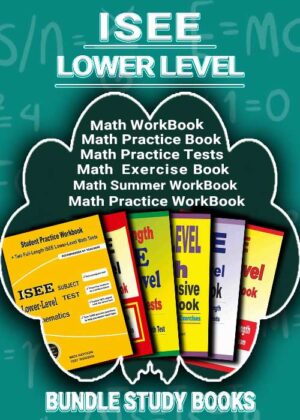
 ACAP Business Math Practice — Alabama Guide
 How to Pass the Alabama Math Test: 7 Strategies
 6th Grade Alabama Math: ACAP Guide (2026)
 GMAT Math Prep: Pass on Your First Try
 KSA Math Prep: How Kentucky Students Pass the Test
ACAP Geometry Basics Practice: Alabama Student Guide


Mastering ACAP geometry basics gives Alabama students a strong foundation for the ACAP math test.
📖 Reading time: 11 min
Geometry trips up more Alabama students than any other math strand on the state assessment — and the gap shows up early. According to the National Assessment of Educational Progress (NAEP), only 26% of U.S. eighth graders scored proficient or above in mathematics in 2024, with geometry and measurement among the weakest reporting categories. That number isn’t a verdict on ability; it’s a signal about how geometry is taught and practiced. The good news? Targeted ACAP geometry basics practice closes that gap faster than almost any other math intervention.
If your child has ever stared at a triangle problem and frozen, or confused area with perimeter on a homework page, you’re seeing a normal stage of learning — not a sign of struggle. Geometry feels different from arithmetic because it asks students to picture shapes, reason about space, and translate diagrams into equations. That’s a real skill, and it can be built with the right practice plan.
This guide walks through everything Alabama students in grades 4-12, plus their parents and teachers, need to prepare for the geometry portion of the ACAP. You’ll get common mistakes, step-by-step problem-solving methods, worked examples, memory tricks, and tutoring guidance — all aligned with Alabama math standards geometry basics expectations.
Why Geometry Basics Matter for ACAP Success
Geometry Is the Hidden Backbone of Math Fluency
Geometry basics form the foundation that everything else in math leans on. The ACAP (Alabama Comprehensive Assessment Program) tests geometry alongside numbers, algebra, and data — and weak geometry skills quietly drag down scores across the entire test, because students who can’t picture a problem can’t model it either.
The Alabama State Department of Education aligns the ACAP with the Alabama Course of Study: Mathematics, which expects students to identify shapes, classify angles, calculate area and perimeter, work with coordinates, and reason about congruence by middle school. By high school, those same skills evolve into proofs, trigonometry, and three-dimensional reasoning. You can review the full assessment framework directly through the Alabama – ACAP Math Assessment portal, which publishes blueprints and practice materials for every grade.
Strong Alabama ACAP geometry basics also build mathematical reasoning that transfers far beyond the test. Students who understand area, perimeter, and volume develop number sense that helps them estimate, check answers, and avoid silly mistakes elsewhere. That’s why teachers who emphasize geometry early often see broader math gains.
Geometry is also where math meets the real world. Measurements in construction, design, science labs, and even nursing dosage calculations rest on geometric reasoning. The National Institute of Standards and Technology (NIST) sets the measurement standards used in U.S. classrooms — and those same units, conversions, and precision rules show up in ACAP geometry questions every year.
Here’s why investing in geometry basics pays off across the board:
- It builds spatial reasoning. Spatial skills predict success in algebra, science, and even reading comprehension. Practice drawing, labeling, and rotating shapes strengthens this skill quickly.
- It locks in vocabulary. Words like vertex, congruent, perpendicular, and bisector appear on the ACAP and SAT. Students who know the language read problems faster and panic less.
- It rewards visual thinking. Many students who struggle with abstract algebra thrive in geometry because diagrams make patterns visible. That confidence carries back into other strands.
- It teaches careful steps. Geometry problems demand setup, formula choice, and unit tracking — habits that prevent careless errors on every kind of math practice test.
How Geometry Connects to Algebra and Data
Geometry doesn’t live in a silo on the ACAP. Coordinate geometry blends shape and algebra: students plot points, find slopes, and calculate distances using formulas pulled straight from algebra class. Data analysis questions often hide geometry inside — a histogram is a rectangle, a pie chart is a circle, and a scatter plot lives on a coordinate plane.
That cross-strand overlap is exactly why ACAP math geometry basics tips usually start with vocabulary and visualization. Once a student can name a shape, identify its parts, and translate a word problem into a sketch, they can apply algebra and data skills with much less friction.
Parents sometimes ask whether to drill geometry before algebra or after. The honest answer is “alongside.” A few minutes of geometry every study session keeps the visual brain warm and prevents the panic that hits when a shape suddenly appears on test day.
Common Mistakes and How to Fix Them
The Five Mistakes That Cost Alabama Students the Most Points
Most ACAP geometry errors aren’t conceptual — they’re procedural. Students usually know the formulas; they just apply them in the wrong place, drop a unit, or rush the setup. Fixing these five mistakes often raises geometry scores by an entire performance level.
Mistake 1 — Confusing area with perimeter. Area measures the space inside a shape (square units), while perimeter measures the distance around it (linear units). Students who skim a word problem often grab the wrong formula. The fix: every time, underline the question word and write the units before computing.
Mistake 2 — Forgetting to convert units. ACAP problems mix inches and feet, centimeters and meters, on purpose. A rectangle 24 inches by 3 feet is not 72 — it’s 24 × 36 = 864 square inches, or 6 square feet. Always convert before multiplying.
Mistake 3 — Misreading angle relationships. Complementary angles sum to 90°, supplementary angles sum to 180°, and vertical angles are equal. Mixing them up costs points on nearly every test. A small reference card taped inside a binder solves this overnight.
Mistake 4 — Skipping the diagram. When a problem doesn’t include a picture, students often try to solve it in their heads. Don’t. Sketch it. Even a rough drawing exposes hidden information — like which side is the hypotenuse or whether two angles are actually adjacent.
Mistake 5 — Forgetting the formula sheet. Alabama provides a reference sheet on the ACAP for many grades. Students who never practice with it waste minutes hunting for formulas on test day. Print one out and use it during every homework session.
The U.S. Department of Education reports through NAEP that geometry and measurement remain among the lowest-scoring strands nationally, with average scale scores trailing number sense by 5-8 points. That gap closes dramatically when students get focused, scaffolded practice — which is exactly why a structured workbook helps. For Alabama families who want guided practice with these exact concepts, 6th Grade Alabama Math for Beginners walks through geometry, number sense, and algebra in the order Alabama standards expect, with worked examples and practice problems modeled after the real ACAP format. It’s the kind of step-by-step math resource that turns scattered effort into measurable progress.
🎯 Recommended Math Book
6th Grade Alabama Math for Beginners — $14.99
Category: ISEE
Alabama Math
ACAP Success
Perfect for classroom learning, homeschooling, or extra practice at home.
How Geometry Basics Show Up on Other Standardized Tests
Geometry isn’t an ACAP-only skill. The same fundamentals power roughly 25-30% of SAT Math questions and a similar share of ACT Math. The GED Mathematical Reasoning test draws heavily on area, volume, and the Pythagorean theorem. Even the TEAS, used for nursing school admission, includes measurement and geometry items.
That’s why building Alabama math standards geometry basics now pays compounding interest. A 6th grader who masters area, angles, and coordinates today won’t be relearning those same topics under SAT pressure five years later. Treat geometry as a long-term investment, not a short-term test cram.
ACAP Geometry Basics Practice: 6 Strategies You Can Use Today
The fastest way to improve is to practice with intention. These six strategies turn passive review into active mastery and work for any grade tested on the ACAP.
- Sketch every problem, even when a figure is given. Redrawing forces your brain to engage with the geometry instead of skimming. Label every side, angle, and given value as you draw. Students who sketch consistently report fewer careless errors and faster problem recognition. This single habit raises ACAP geometry scores more than any other.
- Build a personal formula card. Write area, perimeter, volume, surface area, and angle relationship formulas on one index card. Review it for two minutes before each practice session. Within a week, the formulas move into long-term memory and free up working memory for actual problem-solving on test day.
- Practice with mixed problems, not blocks. Doing 20 area problems in a row feels productive but doesn’t match the ACAP, where geometry, algebra, and data are interleaved. Mix problem types in each session. This trains your brain to recognize which tool to grab — a skill the test directly rewards.
- Use the “name, formula, plug, check” routine. For every problem, say (or write) the shape name, the correct formula, plug in the values, and then check units. This four-step routine catches roughly 80% of common geometry mistakes before they become wrong answers. It also slows students down just enough to think clearly.
- Time yourself with short, focused sets. Take five geometry problems and give yourself 7-10 minutes. Then review every answer — right or wrong. Timing simulates ACAP pressure without exhausting you. Short sets done daily beat one long session per week every time.
- Teach the concept out loud. Explain area, vertical angles, or the Pythagorean theorem to a parent, sibling, or even a stuffed animal. If you can teach it clearly, you understand it. Stumbling reveals the exact gap to study next. Teachers call this the “protégé effect,” and it’s one of the highest-yield study techniques available.
Memory tricks help, too. For circle area, remember “A pie are squared” (A = πr²). For circle circumference, “Cherry pie delicious” (C = πd). For the Pythagorean theorem, the 3-4-5 and 5-12-13 right triangles appear so often on tests that memorizing them saves real time. For volume of a rectangular prism, just multiply the three dimensions: length × width × height.
Parents and teachers can support practice by keeping sessions short (20-30 minutes), printing free math worksheets aligned to the student’s grade, and reviewing mistakes together rather than just marking answers right or wrong. Math homework help works best when it’s diagnostic — finding why an error happened — not just corrective. When a student keeps missing the same concept across two weeks of step-by-step math practice despite focused effort, that’s the signal it’s time for a tutor or extra support from the classroom teacher.
Worked Examples: ACAP-Style Geometry Problems
Example 1: Area of a Composite Shape
Problem: A garden is shaped like a rectangle 12 ft by 8 ft with a square 3 ft by 3 ft cut out of one corner for a fountain. What is the area of the planted region?
Step 1: Find the area of the full rectangle: A = length × width = 12 × 8 = 96 square feet.
Step 2: Find the area of the square cutout: A = side × side = 3 × 3 = 9 square feet.
Step 3: Subtract the cutout from the rectangle: 96 − 9 = 87 square feet.
Answer: 87 square feet. The planted region covers 87 square feet — and notice the units stayed consistent throughout, which is exactly what ACAP graders look for.
Example 2: Finding a Missing Angle
Problem: Two angles are supplementary. One angle measures 47°. What is the measure of the other angle?
Step 1: Recall the rule: supplementary angles sum to 180°.
Step 2: Set up the equation: 47° + x = 180°.
Step 3: Solve for x: x = 180° − 47° = 133°.
Answer: 133°. Always double-check by adding the two angles back together: 47 + 133 = 180. ✓
Example 3: Volume of a Rectangular Prism
Problem: A storage box measures 5 inches long, 4 inches wide, and 3 inches tall. What is its volume?
Step 1: Use the volume formula: V = length × width × height.
Step 2: Substitute the values: V = 5 × 4 × 3.
Step 3: Multiply step by step: 5 × 4 = 20, then 20 × 3 = 60.
Answer: 60 cubic inches. Volume is always cubed because three dimensions are multiplied — a unit detail the ACAP frequently tests by including wrong-unit answer choices.
📚 More from Math Notion
Frequently Asked Questions
What geometry topics are tested on the ACAP?
The ACAP tests grade-appropriate geometry from the Alabama Course of Study, including shapes, angles, area, perimeter, volume, coordinates, and transformations. Elementary grades focus on identifying and measuring 2D and 3D shapes, while middle and high school grades add coordinate geometry, surface area, congruence, and the Pythagorean theorem. Effective ACAP geometry basics practice covers all of these topics with mixed problem sets that mirror real test formatting.
How much time should my child spend on geometry each week?
Most students benefit from 20-30 minutes of focused geometry work, three to four times per week. Short, consistent sessions outperform long weekend cram sessions because geometry relies heavily on visual memory and pattern recognition, both of which strengthen through spaced repetition. Parents should rotate between formula review, worked examples, and timed practice problems to keep Alabama ACAP geometry basics skills sharp without burnout.
When should I get a tutor for ACAP geometry help?
Consider a tutor when a student misses the same concept on three or more practice sessions despite teacher feedback and parent review. Persistent confusion about angle relationships, area versus perimeter, or coordinate plotting usually signals a foundational gap that one-on-one instruction can fix in a few sessions. A good tutor diagnoses the exact misunderstanding and provides targeted ACAP math geometry basics tips rather than generic worksheets.
Key Takeaways
- Geometry is foundational — strong basics in area, angles, and shapes lift performance across every ACAP math strand and on later tests like the SAT and ACT.
- Most lost points come from skipped diagrams, unit errors, and confused vocabulary — fixable habits, not ability gaps.
- Short, mixed, daily practice beats long cram sessions; pair sketching, formula cards, and timed sets for measurable progress.
- Structured resources like 6th Grade Alabama Math for Beginners turn scattered effort into a real study plan.
Strong ACAP geometry basics practice is built on small daily wins — a sketch, a formula recall, a unit check — repeated until they become automatic. Alabama students who follow the strategies in this guide consistently report higher confidence, fewer careless errors, and better test-day pacing. Pick one strategy from the list above, use it tomorrow, and stack the habits week by week. Ready to go deeper? Browse the full library of Alabama-aligned math workbooks and practice tests at mathnotion.com and start your next study session with a clear plan.
ACAP math practice workbooks for Alabama
The fastest way to turn this guide into results is steady practice. Our Alabama math workbooks are built for ACAP test prep, with full-length Alabama ACAP math practice, worksheets, and step-by-step answer explanations — ideal for homeschool, classroom, or after-school ACAP math test prep.
- 7th Grade Alabama Math Practice Workbook
- 8th Grade Alabama Math Practice Workbook
- 6th Grade ACAP Math Practice Workbook
Browse all Math Notion math practice books →
Official source: For the latest test details and dates, visit the Alabama State Department of Education assessment page.
Posted by Math Notion Team · Published on May 5, 2026