
Math Articles, tips & study guides
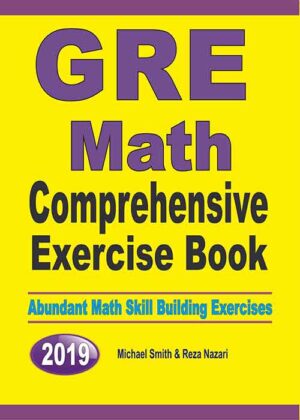 GRE Math Comprehensive Exercise Book: Abundant Math Skill Building Exercises Original price was: $18.99.$12.99Current price is: $12.99.Download
 SAT Subject Test Mathematics: Student Practice Workbook + Two Full-Length SAT Math Tests Original price was: $18.99.$12.99Current price is: $12.99.Download
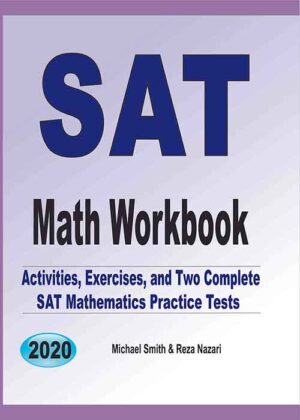 SAT Math Workbook: Exercises, Activities, and Two Full-Length SAT Math Practice Tests Original price was: $18.99.$12.99Current price is: $12.99.Download
 CLEP College Subject Test Algebra: Student Practice Workbook + Two Full-Length College Algebra Exams Original price was: $18.99.$12.99Current price is: $12.99.Download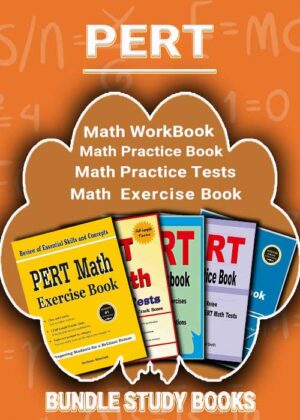
 CLEP College Mathematics Workbook: Essential Learning Math Skills Plus Two College Math Practice Tests Original price was: $18.99.$12.99Current price is: $12.99.Download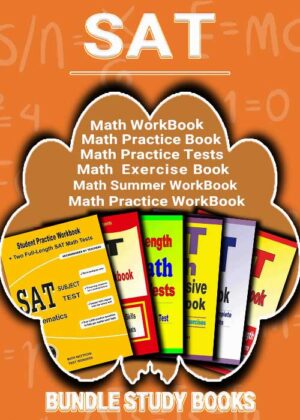
 SAT Math Comprehensive Exercise Book: Abundant Math Skill Building Exercises Original price was: $18.99.$12.99Current price is: $12.99.Download
 SAT Math Practice Book 2020: Extra Exercises and Two Full Length SAT Math Tests to Ace the Exam Original price was: $18.99.$12.99Current price is: $12.99.Download
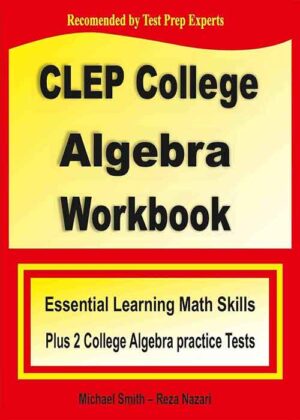 CLEP College Algebra Workbook: Essential Learning Math Skills Plus Two College Algebra Practice Tests Original price was: $18.99.$12.99Current price is: $12.99.Download
 IAR Quadratic Equations Practice — Illinois Guide
 WVGSA Math Prep: West Virginia Student Guide
 CMAS Scatter Plots Practice — Colorado Guide
 NSCAS Sequences & Series Practice — Nebraska Guide
 KSA 4th Grade Prep: Kentucky Math Guide
7 Things Nobody Tells You About GRE Math Prep


📖 Reading time: 11 min
Here’s a number that surprises almost every test-taker: the GRE Quantitative Reasoning section uses math you technically learned by 10th grade — yet the average score sits near 153 on a 130-170 scale, according to data published by ETS, the official maker of the GRE. The content isn’t advanced. The pressure, the pacing, and the trap answers are what make GRE math prep feel so much harder than it should.
If you’ve ever stared at a Quantitative Comparison problem and thought, “I know how to do this — why am I stuck?”, you’re not alone. Most graduate school applicants haven’t touched algebra or geometry in years, and the GRE rewards a very specific kind of math fluency: fast pattern recognition under time pressure.
This complete GRE math prep guide will walk you through what the section covers, how it’s scored, the top question types, a fully worked sample problem, common mistakes, two ready-to-use study schedules, and exactly what to do on test day. Whether you’re a student, a tutor, or a parent supporting someone through this exam, you’ll leave with a clear plan you can start today.
What GRE Quantitative Covers and How It’s Scored
The Four Math Domains You Must Master
GRE math prep refers to the structured practice and content review needed to succeed on the Quantitative Reasoning section of the GRE (Graduate Record Examinations). The section tests four math domains: arithmetic, algebra, geometry, and data analysis. None of the content goes beyond high school math — but the way questions are written demands precise reading and quick reasoning.
Arithmetic covers number sense, place value, divisibility, exponents, roots, ratios, percentages, and number properties such as odd/even and prime numbers. Algebra includes linear and quadratic equations, inequalities, functions, slope, and word problems. Geometry focuses on angles, triangles, circles, polygons, area, perimeter, volume, and the coordinate plane. Data analysis brings in mean, median, mode, standard deviation, probability, and reading data from tables and graphs.
The current GRE General Test, updated in September 2023, includes two scored Quantitative Reasoning sections. The first has 12 questions in 21 minutes; the second has 15 questions in 26 minutes. Your Quantitative score is reported on a 130-170 scale in 1-point increments. According to ETS, the global mean Quantitative score has hovered around 153 in recent years, with competitive STEM programs often expecting scores above 160.
Federal science and STEM portals such as Science.gov – U.S. Government Science Portal regularly publish data sets and research summaries that mirror the kind of quantitative reasoning the GRE tests — reading tables, interpreting percentages, and drawing conclusions from numbers. Practicing on real-world data builds the same skills the test rewards.
- Review arithmetic fundamentals first. Number properties, fraction-decimal-percent conversions, and exponent rules show up in nearly every section. Strong arithmetic also speeds up algebra and data analysis questions, where mental math saves precious seconds.
- Memorize key geometry formulas cold. Area of a triangle, circumference of a circle, the Pythagorean theorem, and the 30-60-90 and 45-45-90 triangle ratios should require zero thinking. The GRE doesn’t supply a formula sheet, so missing facts cost real points.
- Master one technique per question type. Use plug-in numbers for variable-heavy problems, backsolving for answer choices, and estimation for data interpretation. Picking the right tool is half of GRE quantitative success.
- Track your error patterns weekly. Keep a notebook of every wrong answer with the topic, the trap you fell for, and the correct method. This single habit raises scores faster than any other math study guide strategy.
How the Adaptive Section Scoring Actually Works
The GRE is section-level adaptive. Your performance on the first Quantitative section determines whether the second section is easier, medium, or harder — and the difficulty level affects your final scaled score. That means the first 12 questions carry outsized weight.
Within each section, questions are not adaptive — you can move freely, mark questions, and return to them before time runs out. This flexibility is a gift, but only if you use it wisely. Skipping a hard question early and circling back at the end is almost always smarter than burning four minutes on a single problem.
Raw scores convert to scaled scores through ETS equating, which adjusts for slight test-form differences. A score of 165 typically places you near the 86th percentile, while 160 sits around the 73rd. Knowing your target percentile for your graduate program shapes your entire prep plan.
Pacing, Question Types, and Smart GRE Math Practice
How Long Each Section Lasts and How to Pace Yourself
The most effective pacing strategy on the GRE quantitative sections is roughly 1 minute 45 seconds per question, with a built-in skip-and-return cushion for the hardest 2-3 problems. With 12 questions in 21 minutes on Section 1 and 15 questions in 26 minutes on Section 2, you cannot afford to stall.
A practical rule: if you’ve spent 90 seconds on a question and haven’t made meaningful progress, mark it and move on. Coming back with fresh eyes after finishing the easier problems often reveals the path you missed. Test-takers who refuse to skip are the ones who run out of time with three blank questions still on screen.
Across the two sections, you’ll encounter four question formats: Quantitative Comparison, Multiple Choice (one answer), Multiple Choice (one or more answers), and Numeric Entry. Quantitative Comparison alone makes up about a third of the section and rewards strategy over computation — you only need to know which quantity is bigger, not the exact values.
For students who want a structured, step-by-step approach to building math fluency across all of these question types, The Beginner’s Roadmap to NM MSSA Math Prep offers proven strategies and practice problems that strengthen the same core arithmetic, algebra, geometry, and data analysis skills the GRE tests. Many tutors recommend pairing a focused workbook like that one with official ETS GRE practice tests to balance content review with exam-realistic timing.
🎯 Recommended Math Book
The Beginner’s Roadmap to NM MSSA Math Prep
Master NM MSSA math prep with proven strategies, practice tips, and resources to help New Mexico students build confidence and succeed on test day.
The Top 5 Question Types You’ll Face
First, Quantitative Comparison presents two quantities and asks which is greater, whether they’re equal, or whether the relationship can’t be determined. The trick is knowing that “cannot be determined” is a real answer when variables can take negative, zero, or fractional values.
Second, Problem Solving (single answer) looks like a traditional multiple-choice question with five answer choices. These reward backsolving — plugging answer choices into the problem to see which works — especially on algebra-heavy questions.
Third, Multiple Answer questions may have two or more correct choices, and you must select all of them to earn credit. Partial credit doesn’t exist, so checking every option matters.
Fourth, Numeric Entry requires you to type your answer directly. There are no answer choices to eliminate, which means careful arithmetic and unit-checking become essential.
Fifth, Data Interpretation sets bundle 2-3 questions around a single chart, table, or graph. Reading the chart carefully once saves time across all the questions. STEM-focused federal sites like the U.S. Dept of Energy – STEM Resources page contain real research graphs you can use as free practice material for this exact skill.
7 GRE Math Tips and Two Ready-to-Use Study Schedules
The fastest route to a higher GRE quantitative score combines smart content review with realistic timing practice. The following seven GRE math tips work for first-time test-takers and retake candidates alike.
- Diagnose before you study. Take one full official ETS practice test under timed conditions before doing any review. The score breakdown shows whether you need more arithmetic, algebra, geometry, or data analysis work. Studying without a diagnostic wastes weeks on topics you’ve already mastered.
- Build a personal formula sheet. On day one, write every formula you need on a single page — geometry, percent change, average speed, probability, and combinations. Review it every morning for two minutes. By week three, you’ll have the entire sheet memorized cold.
- Use the plug-in numbers technique. For any algebra problem with variables, pick small simple numbers (like 2, 3, or 5) that satisfy the constraints, then test the answer choices. This converts abstract algebra into concrete arithmetic and dramatically reduces errors on hard questions.
- Practice Quantitative Comparison separately. Set aside 20 minutes per session just for QC problems. Always test edge cases — negatives, zero, fractions between 0 and 1, and very large numbers. These four cases catch nearly every “cannot be determined” trap the GRE sets.
- Time yourself from week one. Don’t wait until you “feel ready” to add a timer. Mathematical reasoning under pressure is a separate skill from mathematical knowledge, and only timed practice builds it. Start with 2 minutes per problem, then push toward 1:45.
- Review wrong answers more than right ones. Spend twice as long analyzing every miss as you spent solving the problem. Identify whether the error was content, careless arithmetic, misreading, or trap-falling — then drill that specific weakness in your next session.
- Take a full timed practice test every weekend. Stamina matters. The full GRE runs nearly four hours, and quantitative fatigue is real. Weekly full-length practice tests build the focus you need for question 27 to feel as sharp as question 1.
The 4-week intensive schedule works for test-takers with strong math backgrounds and limited time. Week 1: diagnostic test plus arithmetic and algebra review. Week 2: geometry, data analysis, and Quantitative Comparison drills. Week 3: full-length practice tests every other day with detailed error review. Week 4: targeted weakness drills, light review, and one final full test three days before exam day.
The 8-week balanced schedule suits those returning to math after years away. Weeks 1-2: arithmetic and number properties. Weeks 3-4: algebra including word problems and functions. Weeks 5-6: geometry and coordinate plane. Week 7: data analysis, probability, and Quantitative Comparison. Week 8: full-length practice tests, error analysis, and a final lighter review week.
For practice resources, the official ETS POWERPREP tests are essential and free. Pair them with quality workbooks for additional practice problems, and supplement with free math worksheets that target specific weak topics. A solid math study guide combined with timed practice test questions is the proven formula.
Worked Examples: GRE Quantitative Problems Solved
Example 1: Quantitative Comparison with Variables
Problem: Given that x < 0, compare Quantity A: x³ with Quantity B: x².
Step 1: Identify what we know — x is negative, but no other constraint exists. Test edge cases.
Step 2: Try x = -2. Then x³ = -8 and x² = 4. Quantity B is larger.
Step 3: Try x = -0.5. Then x³ = -0.125 and x² = 0.25. Quantity B is still larger.
Step 4: Notice the pattern — any negative number cubed stays negative, while any negative number squared becomes positive. Positive always beats negative.
Answer: Quantity B is greater. The key insight: knowing how exponents interact with negative numbers eliminates the need for heavy computation.
Example 2: Word Problem with Backsolving
Problem: A store sells notebooks for $4 each and pens for $2 each. Maria buys 12 items total and spends $34. How many notebooks did she buy?
(A) 4 (B) 5 (C) 6 (D) 7 (E) 8
Step 1: Start with the middle answer. Try (C) 6 notebooks. Then pens = 12 - 6 = 6.
Step 2: Compute total cost: 6(4) + 6(2) = 24 + 12 = 36. Too high — we need $34.
Step 3: We need fewer notebooks (the more expensive item). Try (B) 5 notebooks. Pens = 7. Cost = 5(4) + 7(2) = 20 + 14 = 34. ✓
Answer: Maria bought 5 notebooks (Choice B). Backsolving reached the answer in under 60 seconds without setting up algebra.
Example 3: Data Interpretation
Problem: A company’s revenue grew from $80 million in 2020 to $100 million in 2023. What was the percent increase?
Step 1: Use the percent change formula: (new - old) / old × 100.
Step 2: Calculate the difference: 100 - 80 = 20 million.
Step 3: Divide by the original: 20 / 80 = 0.25.
Step 4: Convert to percent: 0.25 × 100 = 25%.
Answer: Revenue increased by 25%. A common trap here is dividing by 100 (the new value) instead of 80 (the original) — always anchor percent change to the starting value.
Frequently Asked Questions
How hard is GRE math compared to SAT math?
GRE math content is roughly the same difficulty as SAT math, but the questions are written to be trickier. Both tests cover arithmetic, algebra, geometry, and data analysis at a high school level. The GRE leans more heavily on Quantitative Comparison and number properties, while the SAT includes more advanced algebra. Most test-takers find GRE math practice harder because of the wording, the time pressure, and the years since they last studied math.
What is a good GRE quantitative score?
A good GRE quantitative score depends on your target program, but 160 or higher is competitive for most graduate fields. According to ETS, a 160 places you near the 73rd percentile, while a 165 reaches the 86th. Top STEM and business programs often expect 165+, while humanities and social science programs may consider 155-159 a passing score for admissions. Always check the median scores published by your specific programs.
How many hours of GRE math prep do I really need?
Most test-takers need 80-150 hours of focused GRE math prep to raise their score significantly. ETS reports that students who prepare for at least 4-6 weeks score noticeably higher than those who cram. If you’re starting from a weak math foundation, plan for the 8-week schedule with about 12-15 hours per week. Strong math students may reach their target in 4 weeks of intensive daily practice plus weekly full-length tests.
📚 More from Math Notion
Test-Day Tips: What to Bring and How to Stay Calm
Bring a valid government-issued photo ID, your confirmation email, and a light snack and water for the 10-minute break. Leave calculators at home — the GRE provides an on-screen calculator, and bringing your own isn’t allowed. Wear comfortable layers, since testing centers run cold.
Skip any question that stalls you for more than 90 seconds and mark it for review. Use the on-screen calculator only when arithmetic is genuinely complex; mental math is faster for most problems. If anxiety hits, take three slow breaths between questions and remind yourself that one hard problem doesn’t determine your score.
Key Takeaways
- GRE math prep covers four domains — arithmetic, algebra, geometry, and data analysis — all at a high school level, but with tricky wording and tight pacing.
- Pace yourself at about 1:45 per question, skip and return to hard problems, and time yourself from week one of practice.
- Build a personal formula sheet, master plug-in numbers and backsolving, and review wrong answers twice as long as right ones to grow fastest.
- Use a 4-week or 8-week study schedule with weekly full-length practice tests, and supplement with structured workbooks like those at mathnotion.com.
Strong GRE math prep isn’t about learning new math — it’s about rebuilding the math fluency you already have and pairing it with strategy and pacing. The students who hit their target scores almost always combine consistent daily practice problems, weekly timed tests, and detailed error review. Start your diagnostic test this week, then build the habit from there. Browse Math Notion’s full collection of math prep books and free study guide resources to find the workbook that fits your timeline and target score.
GRE math prep resources
Pair these strategies with focused practice. Explore Math Notion math workbooks and full-length practice tests for GRE quant practice and GRE math practice test — with step-by-step answer keys built for homeschool and self-study.
Browse all Math Notion math practice books →
Official source: For the latest test details and dates, visit the official ETS GRE site.
Posted by Math Notion Team · Published on May 6, 2026