Math Articles, tips & study guides
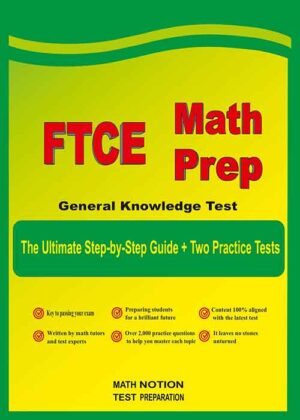 FTCE Math Prep (General Knowledge Test): The Ultimate Step by Step Guide Plus Two Full-Length FTCE Practice Tests Original price was: $18.99.$12.99Current price is: $12.99.Download
 STAAR Grade 8 Math Workbook: Review for the State of Texas Assessments of Academic Readiness With 2 Full-Length STAAR Math Exams Original price was: $18.99.$12.99Current price is: $12.99.Download
 ISEE Upper-Level Subject Test Mathematics: Student Practice Workbook + Two Full-Length ISEE Upper-Level Math Tests Original price was: $18.99.$12.99Current price is: $12.99.Download
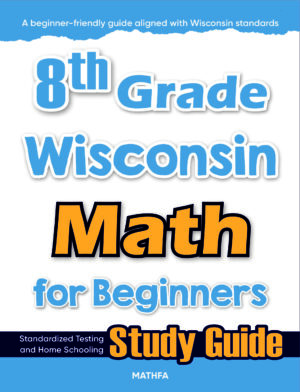 8th Grade Wisconsin Math for Beginners Original price was: $21.99.$14.99Current price is: $14.99.Download

 8th Grade California Math for Beginners Original price was: $21.99.$14.99Current price is: $14.99.Download
 AFOQT Math Practice Book 2020: Extra Exercises and Two Full Length AFOQT Math Tests to Ace the Exam Original price was: $18.99.$12.99Current price is: $12.99.Download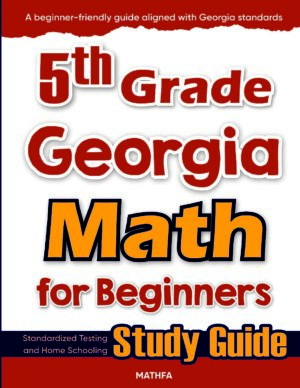
 SDCA Math Prep: South Dakota Student Guide
 WVGSA Math Prep: West Virginia Student Guide
 7 MCAs Math Prep Tips for Minnesota Students
 STAAR Math Test Prep for Grades 6-8: A Parent’s Guide (2026)
 7 Proven Accuplacer Math Prep Strategies
Math Exams Explained: A Guide to the Major Standardized Tests


From elementary school through college and into careers, math exams show up at nearly every stage of life, and each one can feel intimidating if you don’t know what it is or how to prepare. This guide maps out the major standardized math tests, what they measure, who takes them, and how to get ready, so you can approach whichever one you’re facing with a clear plan instead of vague dread. Whether it’s a state test for your child, a college placement exam, or a professional entrance test, the landscape is more navigable than it first appears.
The encouraging truth is that every one of these exams tests a defined, learnable set of skills, which means focused math test prep reliably improves results. Below we’ll walk through the main categories of math exams, explain the most common ones, and show how steady math practice with the right resources prepares you for any of them.
The main categories of math exams
Math exams generally fall into a few broad categories. There are K-12 state assessments that measure grade-level learning, college placement tests that decide which math course you start in, college entrance exams used in admissions, high school equivalency tests for adults, and professional or military exams that include math sections. Each category serves a different purpose, which shapes how you prepare.
Understanding which category your exam belongs to is the first step, because it tells you what’s at stake and what to expect. A placement test, for instance, isn’t pass-or-fail but determines your starting course, while a state test measures grade-level mastery. Knowing the purpose helps you set the right goal and study strategy.
K-12 state math tests
Every state administers annual math assessments in grades 3 through 8 and often in high school, to measure how well students are mastering the state’s standards. These go by different names, the STAAR in Texas, the FAST in Florida, the Smarter Balanced tests in many states, the Georgia Milestones, and so on, but they all test grade-level math aligned to state standards.
For these exams, the best preparation is steady, grade-aligned practice that reinforces what your child is learning in class. Because the tests measure the regular curriculum, a workbook or worksheets matched to your child’s grade and state cover exactly the right material. The goal is usually to reach the “proficient” or on-grade-level benchmark.
College placement tests
When students enter college, many take a placement test to determine which math course they’ll start in. Common ones include the ACCUPLACER, the ALEKS, Florida’s PERT, and the Texas TSIA2. These tests aren’t pass-or-fail; they place you into developmental or college-level math based on your skills.
Placement matters more than students often realize, because starting in a developmental course can add a semester and tuition that don’t count toward a degree. That makes preparing worthwhile: a few weeks of focused review can lift you into college-level math directly. These tests center on arithmetic and algebra, so shoring up those fundamentals pays off.
College entrance exams
The SAT and ACT are the best-known college entrance exams, and both include significant math sections that factor into admissions and scholarships. The SAT math section is now digital and adaptive, while the ACT math section is a separate timed test. Both cover algebra, data analysis, geometry, and some advanced math.
Because these scores influence college options, preparation is high-value. The math is finite and predictable, so practicing the specific question types, taking full practice tests, and reviewing mistakes reliably raises scores. Many students prepare over several weeks or months and retake the exam to improve.
High school equivalency tests
Adults who didn’t finish high school can earn an equivalent credential through tests like the GED or HiSET, both of which include a math section measuring high-school-level quantitative and algebraic reasoning. These are pass-or-fail against a set threshold, and they’re designed to be passable with preparation.
For these exams, a structured workbook that rebuilds math from the fundamentals is ideal, since many adult test-takers have been away from math for years. The content, arithmetic, algebra, geometry, and data, is the same across these tests, so preparation transfers, and retakes are available if needed.
Entrance exams for specialized programs
Many programs use their own entrance exams with math components. Nursing and allied-health programs use the ATI TEAS and HESI; private and Catholic schools use the SSAT, ISEE, and HSPT; military officer and enlistment paths use the AFOQT and ASVAB; and dental school uses the DAT. Each weights math heavily.
For these, preparation means practicing the specific math the exam covers, often without a calculator, and in the exact question formats used. Because admission or qualification can hinge on your score, targeted practice with materials built for that exam is the most efficient path to a strong result.
What math exams have in common
Despite their differences, nearly all math exams test overlapping core skills: number sense and operations, fractions and percentages, ratios and proportions, algebra, geometry, and data analysis. This is good news, because building a strong foundation in these areas prepares you for almost any math test you’ll encounter.
It also means your study effort is rarely wasted. The fractions you master for a placement test serve you on an entrance exam; the algebra you build for the SAT helps on a college placement test. Strengthening these shared fundamentals is the highest-leverage preparation for the whole landscape of math exams.
How to prepare for any math exam
The same proven approach works across all of them. Find out exactly what’s covered and the format. Practice actively by working problems, not just reading. Take full, timed practice tests to build pacing and reveal weak spots. Review every mistake to understand the method. And start early, spreading practice over time rather than cramming.
This method adapts to any exam, you simply target the specific content each one tests. Whether it’s a third grader’s state test or an adult’s college placement exam, active practice on the right material, reviewed carefully and spread over time, is what reliably produces a strong score.
Managing test anxiety
Math exams trigger anxiety for many people, but thorough preparation is the best remedy. When the content, question types, and format are familiar from practice, the real exam holds far fewer surprises, and confidence grows from competence. Familiarity, not last-minute cramming, is what calms nerves.
On test day, rest well beforehand, eat properly, and take a few slow breaths before starting. Begin with the questions you find easiest to build momentum, and don’t let one hard problem rattle you. A calm, prepared test-taker performs much closer to their true ability than an anxious one, whatever the exam.
Practice resources for every exam
Whatever math exam you’re facing, the right practice makes the difference. Math Notion offers free, grade-level and test-specific math worksheets for targeted practice, plus complete workbooks for state tests, placement and entrance exams, equivalency tests, and more, each with clear lessons and step-by-step answer explanations.
Because the materials are matched to specific exams and grade levels, your practice is always relevant. The books are instant downloads, so you can start preparing today. Browse the full Math Notion collection → to find the exact resource for the exam you’re preparing for.
Why early preparation pays off
One principle holds across every kind of math exam: starting early beats cramming, every time. Math skills consolidate through spaced practice over weeks, not in a single late-night session, so the test-takers who do best are the ones who build a steady routine well ahead of the exam date. Early preparation also gives you time to discover and fix weak spots while there’s still room to address them, rather than discovering gaps the night before.
This is true whether you’re a parent helping a child prepare for a spring state test or an adult getting ready for a college placement exam. Even fifteen or twenty minutes of focused practice several times a week, started a month or more in advance, produces far better results than a frantic week of cramming, and it does so with far less stress. Give yourself or your child the gift of time.
Choosing the right materials for your exam
Because each math exam tests specific content in specific ways, using materials built for that exam, or for your child’s grade and state, makes preparation dramatically more efficient. Generic practice can waste effort on content the test doesn’t cover or skip the exact skills it emphasizes. Matched materials ensure every minute of practice is relevant and that strong practice performance genuinely predicts a strong result.
This is why it’s worth seeking out resources aligned to your particular exam rather than improvising with whatever is handy. A workbook written for the GED, the SAT, a state test, or a nursing entrance exam targets exactly what you’ll face, and pairing it with focused worksheets lets you drill specific skills. The right materials turn a vague, overwhelming “big test” into a clear, manageable checklist of topics to master.
Turning exam stress into a plan
Perhaps the most useful mindset shift is to treat any math exam not as a threat but as a defined task with a clear preparation path. Once you know what’s covered, gather matched materials, and build a steady practice routine, the exam stops being a source of free-floating anxiety and becomes a series of concrete, doable steps. That sense of control is itself a powerful antidote to test stress.
So whatever math exams lie ahead, for you or your child, the path forward is the same: identify the test, learn what it covers, practice the right material actively and steadily, review mistakes, and build confidence through familiarity. Approached this way, even the most intimidating exam becomes manageable, and a strong score becomes the natural result of preparation done well.
No matter where you are on this map, from a child’s first state test to an adult’s professional entrance exam, remember that every math exam is conquerable with the right preparation. Identify your test, gather matched materials, practice steadily, and you’ll be ready when test day arrives.
Frequently asked questions
What are the main types of math exams?
K-12 state assessments, college placement tests, college entrance exams (SAT/ACT), high school equivalency tests (GED/HiSET), and specialized entrance exams for nursing, private schools, the military, and professional programs.
Do all math exams test the same skills?
They overlap heavily, number sense, fractions, percentages, ratios, algebra, geometry, and data, so building a strong foundation prepares you for almost any of them.
How do I prepare for a math exam?
Find out what’s covered, practice problems actively, take timed practice tests, review every mistake, and start early. Target the specific content your exam tests.
Where can I find practice for my exam?
Math Notion offers free worksheets and complete workbooks for state tests, placement and entrance exams, and equivalency tests, on our worksheets and shop pages.
Math Notion makes standards-aligned math workbooks and test prep for learners at every level and across all 50 states. See the full collection.
Posted by Math Notion Team · Published on May 23, 2024