Math Articles, tips & study guides
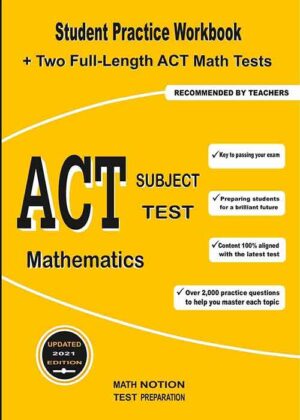 ACT Subject Test Mathematics: Student Practice Workbook + Two Full-Length ACT Math Tests Original price was: $18.99.$12.99Current price is: $12.99.Download
 PSAT Subject Test Mathematics: Student Practice Workbook + Two Full-Length PSAT Math Tests Original price was: $18.99.$12.99Current price is: $12.99.Download
 AFOQT Subject Test Mathematics: Student Practice Workbook + Two Realistic AFOQT Math Tests Paperback Original price was: $18.99.$12.99Current price is: $12.99.Download
 GED Math Workbook: Mathematical Reasoning for General Educational Development Exam With 2 Full-Length Practice Tests Original price was: $18.99.$12.99Current price is: $12.99.Download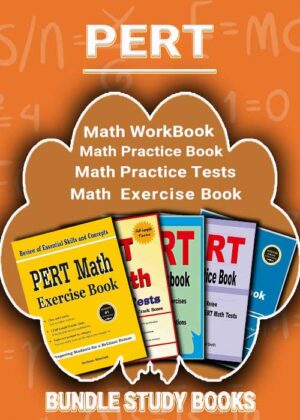
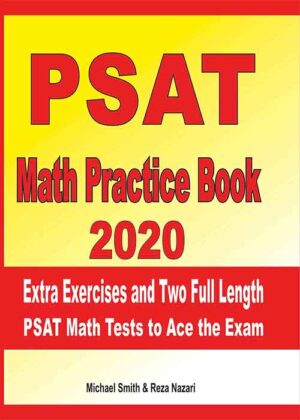 PSAT Math Practice Book 2020: Extra Exercises and Two Full Length PSAT Math Tests to Ace the Exam Original price was: $18.99.$12.99Current price is: $12.99.Download
 SAT Math Comprehensive Exercise Book: Abundant Math Skill Building Exercises Original price was: $18.99.$12.99Current price is: $12.99.Download
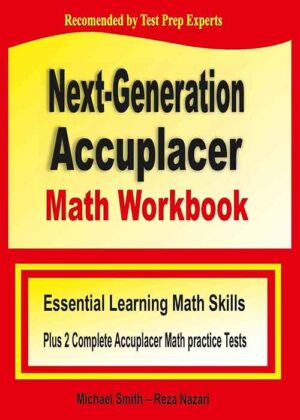 Next-Generation Accuplacer Math Workbook: Essential Learning Math Skills Plus Two Complete Accuplacer Math Practice Tests Original price was: $18.99.$12.99Current price is: $12.99.Download
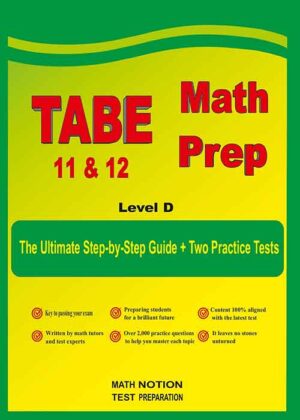 TABE 11&12 Math Prep (Level D): The Ultimate Step by Step Guide Plus Two Full-Length TABE Practice Tests Original price was: $18.99.$12.99Current price is: $12.99.Download
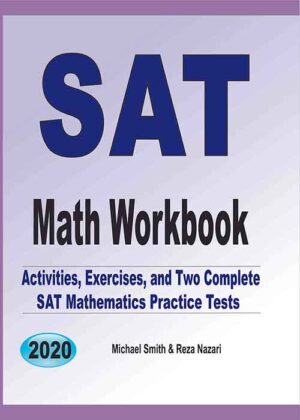 SAT Math Workbook: Exercises, Activities, and Two Full-Length SAT Math Practice Tests Original price was: $18.99.$12.99Current price is: $12.99.Download
 7 MCAs Math Prep Tips for Minnesota Students
 STAAR Math Test Prep for Grades 6-8: A Parent’s Guide (2026)
 7 Proven Accuplacer Math Prep Strategies
 A Smart Math Homework Help Strategy That Builds Real Skills
 How to Help Your Child With Math Homework (Even If You Are Not a Math Person)
Foundational Math Skills: What They Are and Why They Matter


Some math skills matter more than others, not because they’re advanced, but because everything else depends on them. Foundational math skills, the core abilities like number sense, arithmetic fluency, fractions, and basic problem-solving, are the bedrock on which all higher math is built, and they’re essential for success in school, careers, and everyday life. When these foundations are strong, learning advanced math becomes far easier; when they’re weak, students struggle no matter how hard they try. This guide explains what foundational math skills are, why they’re so important, and how to build them.
Whether you’re a parent supporting a child or a learner strengthening your own base, understanding and developing these core skills is one of the most valuable investments you can make in math. Below we’ll explore the essential foundational skills, why each matters, and how steady math practice builds a foundation that supports a lifetime of learning.
What foundational math skills are
Foundational math skills are the basic, essential abilities that underpin all of mathematics. They include number sense (an intuitive understanding of numbers and their relationships), fluency with the four operations, mastery of fractions, decimals, and percentages, an understanding of place value, and basic problem-solving and reasoning. These aren’t advanced topics; they’re the groundwork everything else stands on.
What makes them foundational is that higher math constantly draws on them. Algebra leans on arithmetic and fractions; geometry uses measurement and operations; statistics requires number sense. A gap in any foundational skill ripples upward, making later topics harder than they should be. This is why these core skills deserve so much attention.
Why foundational skills matter so much
Foundational math skills matter because math is cumulative, each new concept builds on what came before. A student with strong foundations can focus their energy on learning new material, while one with weak foundations spends that energy wrestling with basics they should have mastered, falling further behind with each new topic.
This compounding effect means foundational gaps are the single most common reason students struggle with math over time. Conversely, students with solid foundations tend to find advanced math approachable, because the prerequisites are automatic. Strong foundations don’t just help with current work; they set up success for years to come, which is why they’re worth building thoroughly.
Number sense: the most fundamental skill
Number sense, an intuitive feel for numbers, their sizes, relationships, and how they behave, is perhaps the most fundamental skill of all. It’s what lets someone estimate, recognize when an answer is unreasonable, and work flexibly with numbers. Strong number sense underlies everything from mental math to advanced problem-solving.
Children develop number sense through varied experiences with numbers: counting, comparing, estimating, and working with quantities in different ways. It’s not memorized but built through exposure and practice. Nurturing number sense early, and continuing to strengthen it, gives a learner a powerful, flexible foundation that supports all later math.
Arithmetic fluency
Fluency with the four operations, addition, subtraction, multiplication, and division, is a cornerstone foundational skill. When these are automatic, a student can compute quickly and accurately, freeing mental energy for higher-level thinking. When they’re slow or error-prone, every math task takes longer and invites mistakes.
Multiplication facts in particular are worth mastering, since they appear constantly in fractions, algebra, and beyond. Building arithmetic fluency through steady practice, until computation is automatic, removes a constant drag on math work. This fluency is foundational precisely because it underlies so much of what comes later.
Fractions, decimals, and percentages
Mastery of fractions, decimals, and percentages, and understanding how they relate, is a critical foundation, and a common stumbling block. These appear everywhere in higher math and daily life, from algebra to cooking to finance. Students who struggle with fractions often struggle with everything built on them, which is much of middle- and high-school math.
Because fractions are so foundational and so often shaky, they deserve focused attention. Building genuine understanding, not just memorized procedures, of how fractions work and connect to decimals and percentages pays off enormously. A student fluent with these is well-prepared for the proportional reasoning and algebra that follow.
Place value and the number system
Understanding place value, that a digit’s position determines its value, is a foundational concept that underpins how we read, write, and compute with numbers. It’s essential for understanding larger numbers, decimals, and the logic behind standard computation methods. Weak place-value understanding causes confusion across many topics.
Place value also extends to understanding the broader number system, including negative numbers and how the number line works. These concepts, foundational in the elementary and middle grades, are prerequisites for algebra and beyond. Solidifying place value and number-system understanding builds a base that supports more advanced numerical reasoning.
Basic problem-solving and reasoning
Beyond computation, foundational math includes the ability to reason and solve problems, to read a situation, decide what math applies, and work toward a solution. This problem-solving foundation is what lets students apply their skills, and it’s increasingly emphasized in modern math education and on tests.
Building this foundation means practicing varied problems, especially word problems, and developing the habit of thinking through what’s being asked. Problem-solving ability, like other foundations, grows with practice. A student who builds it early can apply their computational skills meaningfully, which is the whole point of learning math.
Foundational skills for everyday life
Foundational math skills aren’t just for school; they’re essential for everyday life. Managing money, budgeting, calculating tips and discounts, measuring for projects, interpreting data, and countless daily tasks all rely on number sense, arithmetic, fractions, and percentages. Strong foundations make a person more capable and confident in practical situations.
This practical importance is worth emphasizing, because it shows why these skills matter beyond grades. An adult comfortable with foundational math navigates finances, work, and daily decisions more easily. Building these skills well serves a person for life, far beyond any classroom, which makes them genuinely valuable to develop.
How to build foundational skills
Foundational skills are built through understanding and practice. The approach is to ensure genuine understanding of each concept, not just memorized procedures, and then practice until the skill is automatic. Concrete examples, real-life connections, and steady, varied practice all help cement foundations durably.
Crucially, foundations must be solid before moving on, since later math depends on them. If a student struggles with a topic, checking and shoring up the underlying foundations often resolves it. Prioritizing strong foundations, even if it feels slower, is the most effective long-term strategy, because it prevents the compounding gaps that cause struggle.
Practice that builds strong foundations
Steady, targeted practice is the engine that builds foundational skills. Math Notion’s free, grade-level math worksheets let learners practice the core skills, number sense, operations, fractions, place value, and problem-solving, at the right level, building the foundations all higher math depends on.
Browse the library by grade to find practice that targets foundational skills, including the earlier-grade material where gaps may lie. Used with careful review, worksheets build fluency and understanding steadily, which is exactly how strong foundations develop. There’s no shortcut; consistent practice is what makes core skills solid and automatic.
The workbook that builds a strong foundation
For systematic foundation-building, a complete, grade-level workbook is invaluable. Math Notion’s workbooks build number sense, arithmetic, fractions, place value, and problem-solving step by step, with clear explanations and step-by-step solutions that develop genuine understanding, not just memorized procedures, the kind of understanding that makes foundations durable.
Used alongside free worksheets, a workbook gives learners both complete instruction and the practice that cements core skills. The workbooks are instant downloads, so you can start strengthening foundations today, whether building them for the first time or filling gaps. Browse the full Math Notion collection → to find the right level.
Spotting and fixing foundational gaps
One of the most useful things a parent or learner can do is recognize when a current struggle is really a foundational gap in disguise. A student floundering in algebra may actually be tripped up by shaky fractions or negative numbers; a child struggling with multi-digit multiplication may have a weak grasp of place value. Tracing a difficulty back to its foundational root, rather than drilling the surface topic harder, is often the key to real improvement.
Once you’ve identified the gap, the fix is targeted practice on that specific foundational skill, often material from an earlier grade. This can feel like going backward, but it’s the most efficient path forward, because it removes the obstacle that was making everything harder. Many students experience a surprising surge of progress once a hidden foundational gap is finally filled, which shows just how central these core skills really are.
Foundational skills open doors
It’s worth stepping back to appreciate just how much rests on strong foundations. The student who masters number sense, arithmetic, and fractions is prepared not only for algebra and higher math but for the quantitative demands of college, careers, and daily life. Strong foundations keep doors open, to STEM fields, to college math requirements, to confident financial decisions, while weak ones quietly close them.
This is the deeper reason to prioritize foundational math skills: they’re not just about passing the next test but about building the capability and confidence that serve a person for a lifetime. Whether you’re helping a child build these skills for the first time or strengthening your own, the effort pays off far beyond math class, which makes it some of the most worthwhile learning anyone can do.
In the end, strong foundations are the quiet secret behind math success at every level. Invest in number sense, arithmetic fluency, fractions, and problem-solving, and everything that follows, from algebra to everyday life, becomes far more manageable and far less stressful. Build the base well, keep it sharp with steady practice, and you give yourself or your child a genuine, lasting advantage in math and beyond.
Frequently asked questions
What are foundational math skills?
The core abilities that underpin all math: number sense, fluency with the four operations, mastery of fractions, decimals, and percentages, place-value understanding, and basic problem-solving and reasoning.
Why are foundational skills so important?
Math is cumulative, so higher topics depend on these basics. Strong foundations make advanced math approachable, while gaps cause compounding struggles. They’re also essential for everyday life.
What’s the most important foundational skill?
Number sense, an intuitive feel for numbers and their relationships, is arguably the most fundamental, since it underlies estimation, mental math, and flexible problem-solving across all of math.
How do I build foundational math skills?
Ensure genuine understanding of each concept, then practice until it’s automatic, using real-life connections and steady, targeted practice. Shore up foundations before moving to dependent topics.
Math Notion makes standards-aligned math workbooks and test prep for learners at every level and across all 50 states. See the full collection.
Posted by Math Notion Team · Published on May 15, 2024