Math Articles, tips & study guides
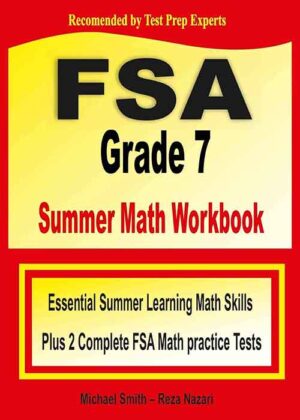 FSA Grade 7 Summer Math Workbook: Essential Summer Learning Math Skills plus Two Complete FSA Math Practice Tests Original price was: $18.99.$12.99Current price is: $12.99.Download
 6 FSA Math Practice Tests Grade 5: Extra Practice to Achieve a Crack Score Original price was: $18.99.$12.99Current price is: $12.99.Download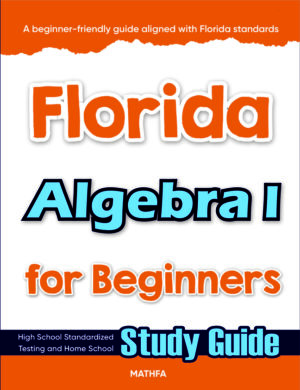
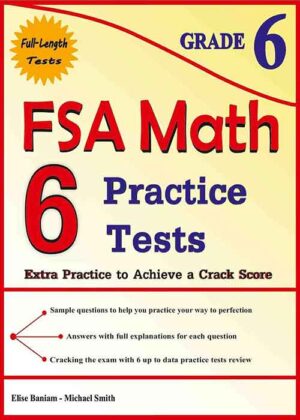 6 FSA Math Practice Tests Grade 6: Extra Practice to Achieve a Crack Score Original price was: $18.99.$12.99Current price is: $12.99.Download
 6 FSA Math Practice Tests Grade 3: Extra Practice to Achieve a Crack Score Original price was: $18.99.$12.99Current price is: $12.99.Download
 FSA Math Workbook: 4th Grade Math Exercises, Activities, and Two Full-Length FSA Math Practice Tests Original price was: $18.99.$12.99Current price is: $12.99.Download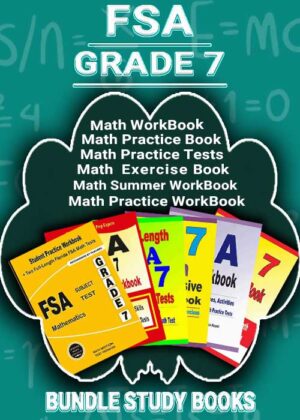
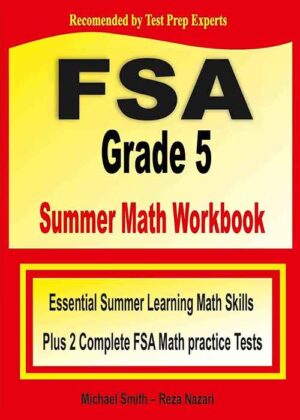 FSA Grade 5 Summer Math Workbook: Essential Summer Learning Math Skills plus Two Complete FSA Math Practice Tests Original price was: $18.99.$12.99Current price is: $12.99.Download
 FAST Math by Grade: What Florida Students Learn
 How to Prepare for the PERT Math Test (Florida Placement)
 How to Prepare for the FAST Math Test (Florida Parents)
 FAST Math Practice: A Florida Study Guide
 5 PERT Math Prep Secrets Nobody Tells You
What Is FAST Math? A Florida Parent Guide


If you’re a parent in Florida, you’ve probably heard about the FAST test replacing the old FSA, and you may be wondering what it actually is. Understanding what FAST math involves is the first step to helping your child succeed on it. The Florida Assessment of Student Thinking, or FAST, changed how Florida measures progress, and the new approach has real implications for how families prepare. This guide explains what FAST math is, how it works, and how to help your child do well.
What is FAST?
FAST stands for the Florida Assessment of Student Thinking. It replaced the Florida Standards Assessments, or FSA, beginning in the 2022-2023 school year. FAST is Florida’s statewide assessment for students in grades 3 through 10 in English language arts and mathematics, aligned to the state’s B.E.S.T. standards. You can find official details on the Florida Department of Education assessments page. If you remember the FSA, the most important thing to know is that FAST is a genuinely different system, not just a new name.
How FAST is different: progress monitoring
The biggest change with FAST is that it’s a progress-monitoring system. Instead of one high-stakes test at the end of the year, students are assessed three times during the school year, in the fall, winter, and spring. These check-ins track growth over time and give teachers and parents earlier insight into how a child is doing. The third, end-of-year administration serves as the summative result. For families, this means math preparation isn’t a single spring sprint; it’s a steadier, year-long rhythm.
FAST is computer-adaptive
FAST math is computer-adaptive, meaning the test adjusts to your child’s responses in real time. Answer well and the questions get harder; struggle and they ease up. This lets the test measure a student’s level more precisely than a fixed test. The practical implication for parents is that your child should be comfortable working on a computer, since clicking, dragging, typing, and using on-screen tools are all part of the experience.
What’s on the FAST math test
The math content follows Florida’s B.E.S.T. standards for each grade. In the middle grades, expect a strong focus on ratios and proportional reasoning, the number system, including fractions, decimals, and negative numbers, expressions and equations, and geometry with introductory data and statistics. Questions go beyond simple multiple choice, including interactive, technology-enhanced items that ask students to demonstrate their thinking in different ways.
How to help your child prepare
Because FAST monitors progress all year, steady practice beats cramming more than ever. Keep sessions short and regular, target the weakest topics first, and use the fall and winter results to see where your child needs the most help before the spring administration. Have your child practice on a computer to match the format, and encourage them to explain their reasoning, since the interactive questions reward genuine understanding over guessing. A consistent, year-long approach fits the FAST system perfectly.
Use the progress-monitoring data
One real advantage of FAST is the early feedback. Rather than waiting until spring to discover a problem, you can see in the fall and winter exactly which areas need work and act on them. Treat each administration as a roadmap: review the results, identify the weak spots, and focus practice there before the next check-in. Families who use this data well can make steady, visible progress across the year.
Common questions parents have
Many parents wonder whether FAST is harder than the old FSA. It’s not necessarily harder, but it is different, with more frequent testing and an adaptive, computer-based format. Others worry about three tests a year feeling stressful. Framed well, the progress checks are actually lower-pressure than one big exam, since each is just a snapshot, and steady preparation keeps them routine rather than alarming.
Keep it positive and steady
With testing spread across the year, your attitude matters even more. Treat each administration as useful information, not a verdict, and keep practice calm and encouraging. A child who sees the FAST check-ins as normal parts of the school year, rather than high-stakes events, will approach them with far less anxiety and perform closer to their true ability.
Practice with FAST-aligned workbooks
To make year-round practice productive, use materials aligned to Florida’s standards. Math Notion’s Florida math practice workbooks offer clear lessons, worksheets, full-length practice, and step-by-step answer explanations your child can follow independently, ideal for homeschool, classroom, or after-school prep. Browse all our math practice books → to find the right grade.
Why Florida switched from the FSA to the FAST
For years, Florida measured student learning with the Florida Standards Assessments, or FSA, a single end-of-year test. The state moved to the FAST, the Florida Assessment of Student Thinking, to do two things differently: align testing to the newer B.E.S.T. standards, which were written to be clearer and more focused, and shift from one high-stakes spring exam to progress monitoring three times a year. The result is a system that tracks growth rather than capturing a single snapshot.
For families, this change is largely positive. Because FAST math is measured in fall, winter, and spring, your child gets credit for steady progress, and you get early, actionable feedback instead of a single spring verdict. Understanding why the switch happened helps you approach the test with the right mindset: readiness is a year-long habit, not a one-day event.
What the FAST means for your child day to day
In practical terms, the FAST doesn’t add new material to your child’s school year, it measures the grade-level math their teacher is already covering. That’s worth emphasizing, because it means there’s no separate body of “test content” to learn. Reinforcing the regular curriculum at home is genuinely the best preparation, which keeps things simple for busy parents.
The most noticeable day-to-day difference is the computer-adaptive format: the test adjusts its difficulty to each child’s answers and is taken on a computer. A little practice on a device, and a reminder that harder questions can actually mean they’re doing well, goes a long way toward helping your child feel at ease when each checkpoint comes around.
How FAST results are reported to families
FAST math scores arrive as achievement levels from 1 to 5, with level 3 marking satisfactory, on-grade-level performance. Levels 4 and 5 show above-grade mastery, while levels 1 and 2 indicate a child needs more support. Alongside the level, you’ll see a scale score, and because the test runs three times, you can watch that number grow across the year.
The smartest way to read a score report is as a guide, not a grade. A result just below level 3 usually reflects a few specific, fixable gaps rather than a broad weakness, and the fall and winter checkpoints exist precisely so you can find and close those gaps before spring. Looking at which reporting categories came back lowest tells you exactly where to focus practice next.
How parents can support FAST math at home
The most effective support is a short, consistent routine, fifteen to twenty minutes of focused practice a few times a week beats occasional cramming, because math skills fade without use. Keep the material matched to your child’s grade so every session is relevant, and weave math into everyday moments like cooking, shopping, and sports so the skills feel real and useful rather than abstract.
Tone matters as much as time. Children who feel capable take on hard problems instead of freezing, so keep encouragement front and center and treat mistakes as information rather than failure. Reviewing a missed problem together, and understanding why the answer was off, prevents the same error next time and quietly builds the confidence that good test performance depends on.
Finding the right Florida math workbook
Because FAST math is grade-specific and tied to Florida’s standards, the easiest way to keep practice on target is a workbook written for Florida. For students moving into high-school math, the Florida Algebra 1 for Beginners workbook covers the linear and quadratic functions, systems, and data skills the Algebra 1 EOC assesses, while Math Notion’s grade-level Florida books cover grades 3 through 8 with the same clear lessons and step-by-step answer explanations.
Every chapter maps to Florida’s B.E.S.T. standards, so you’re never guessing whether practice is relevant, and each book is an instant download you can start tonight. Browse the full Florida math collection → to find the right grade or course for your child and build the steady routine the FAST rewards.
Common questions Florida parents have about the FAST
One of the most frequent worries is whether the adaptive format is fair, since children see different questions. It is, because the standard being measured is the same for every student at a grade, and the adaptive design actually produces a more precise score by zeroing in on each child’s level. Another common question is how much the fall and winter checks matter; the best way to think of them is as valuable progress information, while the spring administration is the official result.
Parents also ask how worried they should be about a single low checkpoint. The honest answer is: not very. The whole point of measuring three times a year is to catch soft spots early and give you months to address them, so an early dip is an opportunity, not a crisis. Steady, grade-aligned FAST math practice between checkpoints is what turns those early signals into spring success.
The bottom line for Florida families
If you remember just one thing about the FAST, let it be this: the test measures the ordinary, grade-level math your child is already learning, three times a year, on an adaptive computer test scored from level 1 to level 5. There’s no secret content and no trick to it, just the standards your child’s teacher is covering, which means your job at home is simply to keep those skills sharp and your child feeling confident.
A short, consistent routine with a Florida-aligned workbook, a calm and encouraging attitude, and attention to the fall and winter checkpoints together cover everything that matters. Approach the FAST as a year-long roadmap rather than a single dreaded day, and your child will walk into each administration prepared, steady, and ready to show what they actually know.
Frequently asked questions
What does FAST stand for?
The Florida Assessment of Student Thinking, which replaced the FSA starting in 2022-2023.
How many times a year is FAST given?
Three times, in the fall, winter, and spring, as a progress-monitoring system.
Is FAST math on a computer?
Yes, and it’s computer-adaptive, so practicing the digital format helps.
How should we prepare?
With steady, year-round practice, using each administration’s results to target weak spots before the next one.
Math Notion makes standards-aligned math workbooks and test prep for students across Florida and all 50 states. See the full collection.
Posted by Math Notion Team · Published on November 25, 2024