Math Articles, tips & study guides
 CLEP College Mathematics Workbook: Essential Learning Math Skills Plus Two College Math Practice Tests Original price was: $18.99.$12.99Current price is: $12.99.Download
 CLEP College Subject Test Mathematics: Student Practice Workbook + Two Full-Length College Mathematics Exams Original price was: $18.99.$12.99Current price is: $12.99.Download
 CLEP College Subject Test Algebra: Student Practice Workbook + Two Full-Length College Algebra Exams Original price was: $18.99.$12.99Current price is: $12.99.Download
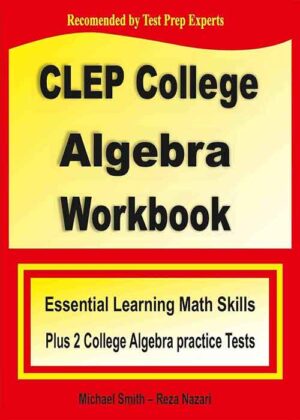 CLEP College Algebra Workbook: Essential Learning Math Skills Plus Two College Algebra Practice Tests Original price was: $18.99.$12.99Current price is: $12.99.Download
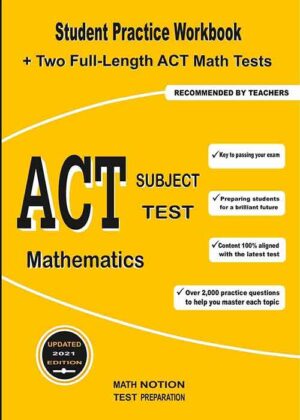 ACT Subject Test Mathematics: Student Practice Workbook + Two Full-Length ACT Math Tests Original price was: $18.99.$12.99Current price is: $12.99.Download
 TSI Math Workbook: Essential Learning Math Skills Plus Two Complete TSI Math Practice Tests Original price was: $18.99.$12.99Current price is: $12.99.Download
 SAT Summer Math Workbook: Essential Summer Learning Math Skills plus Two Complete SAT Math Practice Tests Original price was: $18.99.$12.99Current price is: $12.99.Download
 6 Full-Length SAT Math Practice Tests: Extra Test Prep to Help Ace the SAT Math Test Original price was: $18.99.$12.99Current price is: $12.99.Download
 PSAT Subject Test Mathematics: Student Practice Workbook + Two Full-Length PSAT Math Tests Original price was: $18.99.$12.99Current price is: $12.99.Download
 7 Things Nobody Tells You About GRE Math Prep
 SDCA Math Prep: South Dakota Student Guide
 WVGSA Math Prep: West Virginia Student Guide
 7 MCAs Math Prep Tips for Minnesota Students
 STAAR Math Test Prep for Grades 6-8: A Parent’s Guide (2026)
How to Prepare for the CLEP Math Exams


One of the smartest ways to save time and money in college is to earn credit by exam, and the CLEP makes that possible. Knowing how to prepare for the CLEP math exams can let you skip introductory courses and head straight into higher-level work. The CLEP math exams reward solid understanding, and focused study for CLEP college math can turn weeks of preparation into a full semester’s worth of credit. This guide explains the math CLEP options and how to prepare.
What is the CLEP?
CLEP stands for the College Level Examination Program, a set of exams that let students earn college credit by demonstrating knowledge they already have. Administered by the College Board, CLEP exams are accepted by many colleges and universities for credit, which can save both tuition and time. There are several math-related CLEP exams, so you can choose the one that matches the credit you want. You can find official information through CLEP at the College Board.
The math CLEP exam options
There are a few CLEP math exams to choose from, depending on your goals. College Mathematics covers a broad range of general college-level math for non-math majors, including algebra, logic, sets, and data. College Algebra focuses specifically on algebraic concepts and is often used to fulfill an algebra requirement. Precalculus and Calculus exams are available for students seeking credit in those more advanced courses. Choosing the right exam, based on the credit your college accepts, is the first step.
Why CLEP credit is so valuable
Passing a CLEP exam can earn you college credit for a fraction of the cost and time of taking the course. That means skipping a required class, graduating faster, or freeing up your schedule for other priorities. For motivated students who already know the material, or are willing to study for it, the return on a few weeks of preparation is substantial. This is why learning how to prepare for the CLEP efficiently is so worthwhile.
What to know about CLEP math difficulty
CLEP exams are designed to match the content of a college course, so they’re rigorous but fair. The College Mathematics exam is broad but not deep, testing general quantitative literacy. College Algebra is more focused and demands solid algebra skills. Precalculus and Calculus are appropriately advanced. Knowing the scope of your chosen exam lets you prepare at the right level, neither over-studying nor walking in under-prepared.
How to prepare for the CLEP math
Start by reviewing the content outline for your specific exam, then take a practice test to find your weak spots. Study those areas in focused, regular sessions, and use the official exam description to make sure you’re covering everything. Practice problems actively rather than just reading, since the exam tests application. And because CLEP exams are computer-based, get comfortable with the on-screen format and any provided calculator. Targeted preparation on the right content is the key to earning the credit.
Master the fundamentals for your exam
Whichever CLEP college math exam you choose, strong fundamentals carry you through. For College Mathematics and College Algebra, fluency with algebra, fractions, percentages, and equations is essential. For Precalculus and Calculus, you’ll need solid algebra plus the specific concepts of those courses. Shoring up the underlying skills makes the exam-specific content far more approachable and your studying more efficient.
Use practice tests wisely
Practice tests are your best preparation tool. They show whether you’re ready, reveal which topics still need work, and build familiarity with the exam’s format and pacing. Take a practice test early to diagnose, study your weak areas, then take another closer to test day to confirm your readiness. Reviewing every missed question, and understanding why, is where real improvement happens.
Prepare for the CLEP with focused math practice
The surest way to earn CLEP credit is solid practice on the math your chosen exam covers. Math Notion’s workbooks build the algebra and quantitative skills the math CLEP exams reward, with clear lessons, full-length practice, and step-by-step answer explanations you can work through on your own. Browse all our math practice books → and turn your preparation into college credit.
How CLEP scoring and credit work
CLEP exams are scored on a scale from 20 to 80, and the American Council on Education recommends a credit-granting score, often 50, though individual colleges set their own thresholds and decide how many credits to award. Before investing time, confirm your school’s policy: which CLEP exams it accepts, the minimum score it requires, and how much credit each is worth. Because the return, full course credit for a fraction of the cost and time, is so high, a little research up front ensures your how to prepare for the CLEP effort translates into credit you can actually use.
An 8-week CLEP math study plan
A simple plan keeps preparation efficient. In weeks one and two, review the official content outline for your specific exam and take a diagnostic practice test. Spend weeks three and four rebuilding your weakest topics. Use weeks five and six to work practice problems actively across the full content range and to get comfortable with the on-screen format and any provided calculator. Reserve week seven for a second full-length practice test, then review every miss. Keep week eight light, with short reviews and good rest. Short, steady sessions across these weeks consistently beat last-minute cramming.
Choosing the right CLEP math exam
Matching the exam to your goal is half the battle. If you need a general quantitative-literacy credit, the College Mathematics exam is broad but not deep. If you need to clear an algebra requirement, College Algebra is the focused choice. For credit in more advanced courses, the Precalculus and Calculus exams are available. Pick the one your college accepts for the credit you want, then prepare specifically for its content outline rather than studying broadly, which keeps your CLEP math preparation efficient and on target.
Common CLEP math mistakes to avoid
A few habits quietly cost points. Studying too broadly, rather than to the specific exam’s content outline, wastes time. Reading too quickly leads to solving the wrong problem. Relying on memorized procedures without understanding breaks down on unfamiliar questions. And skipping the practice-test step leaves you uncertain of your readiness. Avoiding these traps, by studying to the outline, reading carefully, understanding the why, and using practice tests, makes your preparation both efficient and reliable.
Try a few CLEP-style math questions
Practicing the right style helps. For College Algebra, for example: solve for x in 2x minus 6 equals 10. (x equals 8.) Factor x squared minus 9. (The quantity x plus 3 times the quantity x minus 3.) For College Mathematics: if a set has 5 elements, how many two-element subsets does it have? (10.) And what is 20% of 150? (30.) Working problems like these, matched to your chosen exam, builds the application skills the CLEP college math tests reward.
Why CLEP credit is worth the effort
Earning credit by exam can save a full semester’s tuition and free up your schedule for other priorities, all for the cost of an exam fee and a few weeks of study. For students who already know the material, or are willing to learn it independently, the return on investment is hard to beat. Even for those who need to study from scratch, the time and money saved compared with taking the full course make focused CLEP preparation one of the smartest moves in college.
Using official practice resources
The College Board publishes official descriptions and sample questions for each CLEP exam, and these are your best guide to what to expect. Use the content outline to structure your study, and the sample questions to gauge the difficulty and format. Supplement with full practice tests to build familiarity and confidence. Taking a practice exam early reveals your gaps, and taking another near test day confirms your readiness, so you walk in knowing you’re prepared rather than guessing.
Mastering the fundamentals for your exam
Whichever math CLEP you choose, strong fundamentals carry you through. For College Mathematics and College Algebra, fluency with algebra, fractions, percentages, and equations is essential. For Precalculus and Calculus, you’ll need solid algebra plus the specific concepts of those courses. Shoring up the underlying skills makes the exam-specific content far more approachable and your studying more efficient, since you spend less effort on routine steps and more on the actual problems.
Managing test-day nerves
Even when you know the material, nerves can interfere. Build confidence through practice so the format feels familiar, and remember that many colleges allow a retake after a waiting period if needed. Rest well before the exam, work through it one question at a time, and trust your preparation. Because CLEP exams are computer-based, a little practice with the on-screen format also reduces surprises. A calm, prepared test-taker performs much closer to their true ability.
Turning CLEP prep into momentum
Passing a CLEP exam does more than earn credit; it builds momentum and confidence for the rest of your college journey. The discipline of studying independently and the satisfaction of earning credit by exam carry over into your other courses. Approaching how to prepare for the CLEP as a chance to both save time and prove your capability makes the effort doubly rewarding, and it sets a strong tone for your academic path.
Building consistent study habits
Because CLEP exams reward genuine understanding rather than last-minute memorization, consistent study habits matter. Short, regular sessions across several weeks let the material consolidate, so the algebra and quantitative concepts feel automatic by test day. Working a set of problems each day, then reviewing your mistakes, builds both fluency and confidence steadily. This rhythm is far more effective than occasional long sessions, and it suits independent learners well, since you control your own pace and can focus exactly on the topics your chosen exam emphasizes.
What to do the week before the exam
In the final week, shift from learning new material to focused review and rest. Work a few mixed practice sets to keep your skills sharp, revisit the formulas and concepts most central to your exam, and take one last short practice section to confirm your readiness. Avoid cramming, which tends to raise anxiety rather than scores. Get good sleep, especially the night before, and make sure you know the logistics of your testing center or online proctoring in advance, so test day is calm and predictable.
Frequently asked questions
What math CLEP exams are there?
College Mathematics, College Algebra, Precalculus, and Calculus, so you can choose the one matching the credit you want.
Is CLEP credit accepted everywhere?
Many colleges accept CLEP for credit, but policies vary, so confirm with your school before choosing an exam.
How hard is the CLEP math?
It matches the content of the equivalent college course, so it’s rigorous but fair and very passable with focused preparation.
How should I prepare?
Review the exam’s content outline, take practice tests, study your weak areas, and practice problems actively.
Math Notion makes standards-aligned math workbooks and test prep for students at every level and across all 50 states. See the full collection.
Posted by Math Notion Team · Published on October 6, 2021