
Math Articles, tips & study guides
 STAAR Grade 8 Math Workbook: Review for the State of Texas Assessments of Academic Readiness With 2 Full-Length STAAR Math Exams Original price was: $18.99.$12.99Current price is: $12.99.Download
 OST Grade 8 Math Workbook: Review for the Ohio State Test With 2 Full-Length OST Math Exams Original price was: $18.99.$12.99Current price is: $12.99.Download
 6 STAAR Math Practice Tests Grade 6: Extra Practice to Achieve a Crack Score Paperback Original price was: $18.99.$12.99Current price is: $12.99.Download
 STAAR Grade 3 Summer Math Workbook: Essential Summer Learning Math Skills plus Two Complete STAAR Math Practice Tests Original price was: $18.99.$12.99Current price is: $12.99.Download
 MCAS Math Workbook: 5th Grade Math Exercises, Activities, and Two Full-Length MCAS Math Practice Tests Original price was: $18.99.$12.99Current price is: $12.99.Download
 MCAS Grade 7 Summer Math Workbook: Essential Summer Learning Math Skills plus Two Complete MCAS Math Practice Tests Original price was: $18.99.$12.99Current price is: $12.99.Download
 STAAR Math Workbook: 5th Grade Math Exercises, Activities, and Two Full-Length STAAR Math Practice Tests Original price was: $18.99.$12.99Current price is: $12.99.Download
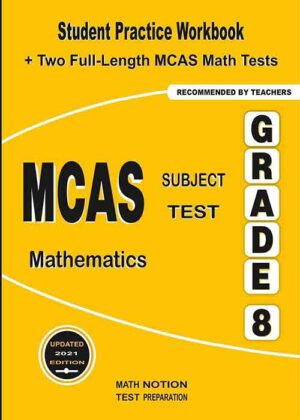 MCAS Subject Test Mathematics Grade 8: Student Practice Workbook + Two Full-Length MCAS Math Tests Paperback Original price was: $18.99.$12.99Current price is: $12.99.Download
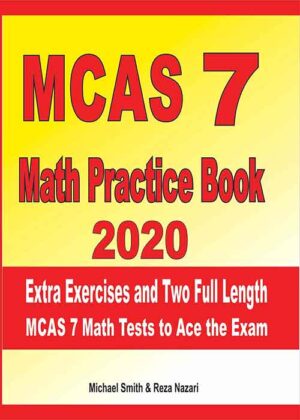 MCAS Grade 7 Math Practice Book 2020: Extra Exercises and Two Full Length MCAS Math Tests to Ace the Exam Original price was: $18.99.$12.99Current price is: $12.99.Download
 SDCA Math Prep: South Dakota Student Guide
 WVGSA Math Prep: West Virginia Student Guide
 7 MCAs Math Prep Tips for Minnesota Students
 STAAR Math Test Prep for Grades 6-8: A Parent’s Guide (2026)
 7 Proven Accuplacer Math Prep Strategies
What Are State Standardized Tests? A Parent Guide

Every spring, students across the country sit for their state’s standardized tests, and for many parents these exams raise more questions than answers. What exactly are state standardized tests, why do students take them, and what do the results mean? Understanding the purpose and structure of these assessments, especially the math portion, helps parents support their children and put the tests in perspective. This guide explains what state standardized tests are, how they work, what the scores mean, and how to help your child do their best.
Far from being mysterious gatekeepers, these tests are designed to measure grade-level learning, the same math your child studies in class. Below we’ll walk through what state standardized tests are, why they exist, how they’re scored, and how steady, standards-aligned math practice prepares your child for the math portion.
What state standardized tests are
State standardized tests are assessments that every state administers to measure how well students are mastering the state’s academic standards. In math, they’re typically given annually in grades 3 through 8 and often in high school, and they go by many names, the STAAR in Texas, the FAST in Florida, the Smarter Balanced tests, the Georgia Milestones, the MCAS, and more.
The defining feature is that they’re standardized: every student at a grade takes the same kind of test under the same conditions, so results can be compared fairly across students, schools, and years. They measure grade-level content against the state’s standards, which means they test the regular curriculum your child is already learning, not obscure material.
Why students take them
State standardized tests serve several purposes. They give families and teachers information about each student’s progress toward grade-level expectations. They help schools and districts measure how well they’re educating students and identify where to improve. And they provide a consistent, statewide picture of achievement that informs education policy and accountability.
For your child specifically, the test offers a snapshot of where their math skills stand relative to grade-level expectations, which can highlight strengths to build on and gaps to address. Understanding that the test is a measurement tool, not a judgment of your child’s worth or intelligence, helps keep it in healthy perspective.
How the math tests work
Most state math tests are now administered online and use a mix of question types. Beyond traditional multiple-choice items, students encounter technology-enhanced questions, where they enter answers or interact with the problem, and sometimes open-ended questions asking them to show their work and explain their reasoning. So genuine problem-solving, not just recognition, is required.
The tests are typically timed and may be divided into sections across multiple sessions. Knowing the format your state uses, the question types, the timing, and whether calculators are allowed, helps your child prepare and reduces test-day surprises. Familiarity with how the test works is itself a meaningful part of being ready.
What the math tests cover
State math tests follow grade-level standards that build on one another. In the elementary grades, the focus is on number sense, operations, fractions, and introductory measurement and data. By the upper-elementary and middle grades, students work with ratios and proportional reasoning, decimals and percentages, and the beginnings of algebra.
In the middle grades, the math deepens into proportional relationships, rational numbers, expressions and equations, geometry, and introductory statistics, building toward high-school algebra. Because the tests measure grade-level standards, the best preparation simply reinforces what your child is learning in class, which a standards-aligned workbook makes straightforward.
How the tests are scored
Most state tests report results in performance levels, often four, with names varying by state but generally describing whether a student is below, approaching, meeting, or exceeding grade-level expectations. The “meeting” or “proficient” level indicates a student is on grade level, which is the benchmark most families aim for.
Each student usually also receives a scale score and a breakdown into reporting categories that show performance in different math areas. These categories are especially useful, because they reveal exactly where your child is strong and where they need work, turning the report into a practical guide for future practice rather than just a single number.
What the scores really mean
It’s important to read state test results as a snapshot, not a verdict. A single test on a single day reflects only part of what your child knows, and scores can be affected by nerves, fatigue, or unfamiliarity with the format. A score just below proficient usually reflects a few specific, fixable gaps rather than a broad inability.
Used well, the results are most valuable as a guide: the reporting categories tell you what to focus on, and tracking scores over years shows growth. Viewing the test as one useful data point among many, alongside classwork, report cards, and your own observations, keeps it in healthy perspective and makes it genuinely useful.
How to help your child prepare
The most effective preparation is a short, consistent practice routine rather than last-minute cramming. Fifteen to twenty minutes a few times a week reinforces grade-level skills and prevents the forgetting that hurts scores. Because the tests measure the regular curriculum, a standards-aligned workbook or worksheets cover exactly the right material.
Beyond practice, help your child get comfortable with the test’s online, technology-enhanced format by practicing on a computer, and keep the tone encouraging so test anxiety doesn’t undermine performance. Steady practice plus a calm, supportive attitude prepares your child far better than any amount of pressure in the final weeks.
Practice with grade-level worksheets
Targeted worksheets are an excellent way to build the grade-level skills state tests measure. Math Notion offers free, grade-level math worksheets you can match directly to your child’s grade: Grade 3, Grade 4, Grade 5, Grade 6, Grade 7, and Grade 8.
Browse the full library on our math worksheets page. Because the worksheets are organized by grade and aligned to grade-level standards, you can practice exactly the skills the state test assesses. Reviewing each set together, especially the misses, turns practice into steady, targeted improvement.
Keeping tests in perspective
While state tests matter, it’s healthy to keep them in perspective for your child’s sake. Framing the test as just a way for teachers to see what to work on next, rather than a high-stakes judgment, reduces anxiety and helps your child perform closer to their true ability. Children who feel undue pressure often do worse, not better.
Celebrating effort and growth, rather than fixating on a single score, keeps your child motivated and supports a healthy relationship with math. The goal isn’t just a good test result; it’s a confident, capable learner, and keeping the test in proportion is part of nurturing that. A calm, supported child both performs better and learns more.
The workbook that prepares your child
For thorough, standards-aligned preparation, a complete grade-level workbook ties everything together. Math Notion’s state-specific and grade-level workbooks build exactly the skills your child’s state test measures, with clear lessons and step-by-step answer explanations a parent can follow even years after their own math classes.
Used together with free worksheets, a workbook gives your child both focused practice and complete, sequenced instruction. The workbooks are instant downloads, so you can start a steady routine tonight. Browse the full Math Notion collection → to find your child’s grade and state.
Common myths about state tests
Several myths about state standardized tests cause unnecessary worry. One is that they test tricky or advanced material; in reality, they measure grade-level standards, the content your child is already learning. Another is that a single low score means a child is bad at math; in fact, scores reflect a moment in time and often point to a few specific, fixable gaps rather than overall ability.
A third myth is that intense, last-minute cramming is the way to prepare. Because the tests measure cumulative grade-level learning, steady practice throughout the year works far better than a final push. Understanding what these tests really are, and aren’t, helps families approach them calmly and prepare in ways that actually work, rather than reacting to misconceptions with stress.
The role of practice tests
One of the most effective preparation tools is a practice test taken under realistic conditions. Practice tests familiarize your child with the format and question types, build the stamina and pacing a full test requires, and reveal which topics still need work, all of which make the real test feel routine rather than intimidating.
The real value comes from the review afterward: going through missed questions to understand why they were wrong turns each into a fixable lesson. Used a few times across the year rather than crammed at the end, practice tests give you a clear picture of your child’s readiness and a roadmap for what to practice next, which is exactly how thoughtful families use them.
Supporting a healthy attitude toward testing
Perhaps the most important thing parents can do is foster a healthy attitude toward state tests. Children take their cues from us, so approaching the test calmly, framing it as a chance to show what they’ve learned rather than a high-stakes ordeal, helps them stay relaxed and perform well. Excessive pressure tends to backfire, raising anxiety that undermines performance.
On test days, the basics matter: a good night’s sleep, a proper breakfast, and encouraging words go a long way. A child who feels prepared and supported, and who sees the test in proportion, walks in confident and capable. That calm, well-prepared mindset, built through steady practice and a supportive attitude, is what truly helps a child do their best on any state standardized test.
In short, state standardized tests are simply a tool for measuring grade-level learning, and understanding them turns a source of anxiety into a manageable, even useful, part of your child education. Prepare steadily, read the results as a guide, and keep the whole thing in proportion.
Frequently asked questions
What are state standardized tests?
Annual assessments each state gives to measure how well students master its academic standards, typically in grades 3 through 8 and high school. In math, examples include the STAAR, FAST, Smarter Balanced, Georgia Milestones, and MCAS.
Why do students take them?
To measure student progress toward grade-level expectations, help schools gauge and improve their teaching, and provide a consistent statewide picture of achievement for accountability and policy.
What do the scores mean?
Results are reported in performance levels (such as below, approaching, meeting, and exceeding expectations) plus a scale score and reporting categories. They’re best read as a snapshot and a guide, not a final verdict.
How can I help my child prepare?
Build a short, consistent routine with standards-aligned worksheets and a workbook, practice on a computer, keep the tone encouraging, and use the reporting categories to target weak areas.
Math Notion makes standards-aligned math workbooks and test prep for learners at every level and across all 50 states. See the full collection.
Posted by Math Notion Team · Published on November 21, 2024