
Math Articles, tips & study guides
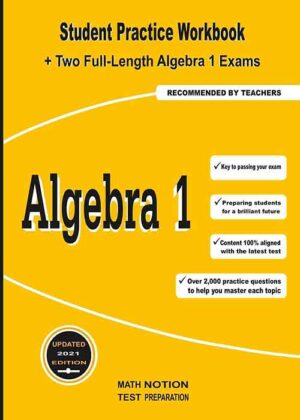 Algebra 1: Student Practice Workbook + Two Full-Length Algebra 1 Exams Original price was: $18.99.$12.99Current price is: $12.99.Download
 6 Full-Length GED Math Practice Tests: Extra Test Prep to Help Ace the GED Math Test Original price was: $18.99.$12.99Current price is: $12.99.Download
 Algebra 2 Workbook: Essential Learning Math Skills Plus Two Algebra 2 Practice Tests Original price was: $18.99.$12.99Current price is: $12.99.Download
 Algebra 2: Student Practice Workbook + Two Full-Length Algebra 2 Exams Original price was: $18.99.$12.99Current price is: $12.99.Download
 6 Full-Length PSSA Grade 4 Math Practice Tests: Extra Test Prep to Help Ace the PSSA Grade 4 Math Test Original price was: $18.99.$12.99Current price is: $12.99.Download
 GED Subject Test Mathematics: Student Practice Workbook + Two Realistic GED Math Tests Original price was: $18.99.$12.99Current price is: $12.99.Download
 6 GED Math Practice Tests: Extra Practice to Achieve a Crack Score Original price was: $18.99.$12.99Current price is: $12.99.Download
 SSAT Upper Level Math Workbook: Exercises, Activities, and Two Full-Length SSAT Upper Level Math Practice Tests Original price was: $18.99.$12.99Current price is: $12.99.Download
 7 MCAs Math Prep Tips for Minnesota Students
 STAAR Math Test Prep for Grades 6-8: A Parent’s Guide (2026)
 7 Proven Accuplacer Math Prep Strategies
 How to Help Your Child With Math Homework (Even If You Are Not a Math Person)
 6th Grade Oregon Math for Beginners
A Smart Math Homework Help Strategy That Builds Real Skills


Math homework can be a nightly source of stress for students and parents alike, but it doesn’t have to be. With a clear strategy, getting math homework help becomes productive rather than frustrating, building real understanding instead of just getting answers onto the page. The goal of homework isn’t merely completion; it’s learning, and the right approach turns homework time into genuine practice that strengthens skills. This guide lays out a practical strategy for math homework help that actually works, for parents supporting their children and students working on their own.
The key is to treat homework as a learning opportunity, with a system for getting unstuck that builds understanding rather than dependence. Below we’ll cover a step-by-step homework strategy, how to get help the right way, and how steady math practice turns homework into lasting skill.
Set up the right environment
Effective math homework starts with the right setting. A quiet, well-lit, distraction-free space, with the phone away and necessary materials at hand, lets a student focus on the math. A consistent homework spot and time signal the brain that it’s time to concentrate, which makes the work go more smoothly and productively.
Trying to do math homework in front of the TV or with constant interruptions fractures the attention math requires. Investing a little in a good environment pays off in better focus and less frustration. This simple foundation makes every other part of the homework strategy more effective.
Start with what you know
A smart strategy is to begin homework with the problems you understand, building momentum and confidence before tackling harder ones. Completing a few problems successfully reminds a student they can do the work and warms up their thinking, making the challenging problems feel more approachable.
This also ensures the doable problems get done even if time runs short, and it reduces the discouragement of starting with the hardest question and getting stuck immediately. Beginning with the familiar is a small strategic choice that sets a positive tone for the whole homework session.
Read and understand each problem
Before solving, take time to read each problem carefully and understand what it’s asking. Many homework errors come from misreading or rushing, not from lacking the skill. Identifying exactly what the problem wants, and what information is given, is the first step to solving it correctly, especially for word problems.
Encouraging a student to slow down and comprehend the problem before diving in prevents wasted effort on the wrong approach. This habit of understanding first, computing second, is one of the most valuable parts of a good homework strategy, and it carries directly into tests.
Try before getting help
A crucial strategy is to attempt each problem genuinely before seeking help. The struggle of working through a problem, even unsuccessfully, is where much of the learning happens, because it forces the brain to engage. Jumping to help too quickly robs the student of that productive struggle and builds dependence.
So the rule should be: give each problem a real try first. If truly stuck after genuine effort, then seek help, but specifically on the point of confusion. This approach ensures help builds understanding rather than replacing thinking, which is the difference between homework that teaches and homework that doesn’t.
Get help the right way
When help is needed, the strategy matters. Effective help guides the student toward understanding rather than just giving answers. A parent or tutor should ask questions, “what do you think the first step is?”, point to the relevant concept, or work a similar example, rather than simply solving the problem for the child.
This guided approach builds the student’s ability to solve such problems independently, which is the whole point. Whether help comes from a parent, a tutor, a clear textbook, or an AI tutor used wisely, the goal is understanding, not just a completed problem. Help that develops skill, not dependence, is the right kind.
Use available resources
Many resources can support math homework: textbook examples, class notes, online explanations, worked-solution guides, and educational tools. Teaching a student to use these resources, looking up a similar example or reviewing the relevant lesson, builds independence and resourcefulness, valuable skills in themselves.
A workbook with clear, step-by-step solutions is especially useful, since it shows not just answers but methods, exactly what a student needs to understand a stuck problem. Knowing how to find and use good resources turns moments of confusion into learning rather than dead ends, which is a key part of an effective homework strategy.
Review mistakes, don’t just fix them
When a problem is wrong, the strategy is to understand why, not just correct it. Reviewing a mistake, figuring out where the reasoning went off and reworking it correctly, turns the error into a lesson and prevents it from recurring. This is far more valuable than simply erasing and writing the right answer.
Building the habit of learning from mistakes makes homework genuinely educational. Each error becomes information about what to practice. A student who reviews and understands their mistakes improves steadily, while one who just fixes answers without understanding keeps making the same errors. Thoughtful mistake review is central to effective homework.
Check the work when finished
A good homework strategy includes checking the work before considering it done. Reviewing answers, verifying calculations, and asking “does this make sense?” catches careless errors and reinforces the habit of self-checking that helps on tests too. This final step turns in better work and deepens learning.
The sanity-check, noticing when an answer is unreasonable, is especially valuable. It catches the slips that even capable students make. Teaching a student to review their completed homework, rather than rushing to be done, builds accuracy and the self-monitoring that serves them throughout their math education.
Keep homework time positive
The emotional tone of homework time strongly affects learning. Keeping it calm, patient, and encouraging, rather than tense or critical, helps a student engage and absorb more. Frustration and pressure make math harder and breed avoidance, while a supportive atmosphere makes homework manageable and even, sometimes, enjoyable.
For parents, this means managing your own patience, taking breaks when frustration rises, and praising effort and progress. A student who associates math homework with stress will dread it, while one who experiences it as supported and doable will approach it willingly. Protecting the positive tone is a strategy in itself.
Build the skills that make homework easier
Much homework frustration comes from weak underlying skills, so building strong fundamentals makes homework far easier over time. A student fluent in the prerequisite skills breezes through homework that would otherwise be a struggle, because the foundations are automatic. Steady practice beyond homework strengthens these foundations.
Math Notion’s free, grade-level math worksheets provide this extra practice, reinforcing the skills that make homework manageable. Organized by grade, they let you shore up weak areas so nightly homework becomes less of a battle. Stronger skills are the ultimate homework-help strategy, since they reduce the need for help in the first place.
The workbook that supports homework success
A complete, grade-level workbook is a powerful homework-help tool, because its clear lessons and step-by-step solutions show students how to solve the kinds of problems they’re assigned. When a student is stuck, the workbook provides a worked example and explanation, helping them understand rather than just copy.
Used alongside free worksheets, a workbook supports both homework help and the extra practice that builds skill. The workbooks are instant downloads, so you can turn homework struggles into learning today. Browse the full Math Notion collection → to find the right level for your student.
Break big assignments into manageable pieces
A long or daunting math assignment can overwhelm a student before they even begin, leading to procrastination and stress. A simple but powerful strategy is to break the assignment into smaller chunks, a few problems at a time, with short breaks in between, so the work feels manageable rather than endless. Each completed chunk provides a sense of progress that sustains motivation.
This approach also keeps focus sharp, since concentrating on a handful of problems is far easier than staring at a whole page. For students who tend to put off math homework, this chunking strategy is especially effective, because it lowers the barrier to starting. A big assignment tackled in small, focused pieces gets done with less stress and better attention than one approached as a single overwhelming block.
Use homework as test preparation
One often-missed strategy is to treat homework as ongoing test preparation. The problems assigned are usually the same types that appear on tests, so doing homework thoughtfully, understanding each problem rather than just finishing, builds the skills that pay off on exams. Keeping old homework and reviewing it before tests turns nightly work into a ready-made study resource.
Framing homework this way also gives it more purpose, which can improve a student’s motivation to do it well. Rather than seeing homework as a chore to complete, a student who understands that tonight’s practice is building toward test success engages more fully. Over time, this connection between homework and assessment makes both go more smoothly, and it reinforces that the point of homework is learning, not just completion.
The bottom line on math homework help
The most effective math homework help is not about getting answers onto the page; it is about building understanding. Set up a focused environment, attempt problems genuinely before seeking help, get help that guides rather than gives, review every mistake, and keep the tone positive. Treat homework as the learning opportunity it is, and it stops being a nightly battle and becomes steady, productive practice. Combined with strong fundamentals and the right resources, this approach turns math homework from a source of stress into a genuine engine of progress for any student.
Frequently asked questions
What’s the best strategy for math homework?
Set up a focused environment, start with what you know, understand each problem before solving, try genuinely before seeking help, get help that guides rather than gives answers, review mistakes, and check your work.
How should I help my child with math homework?
Guide rather than give answers, ask questions, point to the relevant concept, or work a similar example, so your child builds understanding and independence rather than dependence on you.
Should my child get help right away when stuck?
No. Have them genuinely attempt each problem first, since the productive struggle builds learning, then seek help specifically on the point of confusion. This makes help build skill rather than replace thinking.
How can I make homework less of a battle?
Keep the tone calm and encouraging, build strong fundamentals with extra practice so homework is easier, use clear resources, and treat homework as learning rather than just completion.
Math Notion makes standards-aligned math workbooks and test prep for learners at every level and across all 50 states. See the full collection.
Posted by Math Notion Team · Published on April 27, 2026