Math Articles, tips & study guides
 TSI Math Practice Book 2020: Extra Exercises and Two Full Length TSI Math Tests to Ace the Exam Original price was: $18.99.$12.99Current price is: $12.99.Download
 6 Full-Length TSI Math Practice Tests: Extra Test Prep to Help Ace the TSI Math Test Original price was: $18.99.$12.99Current price is: $12.99.Download
 TSI Math Comprehensive Exercise Book Original price was: $18.99.$12.99Current price is: $12.99.Download
 TSI Math Workbook: Essential Learning Math Skills Plus Two Complete TSI Math Practice Tests Original price was: $18.99.$12.99Current price is: $12.99.Download
 TSI Math Workbook: Exercises, Activities, and Two Full-Length TSI Math Practice Tests Original price was: $18.99.$12.99Current price is: $12.99.Download
 TSI Subject Test Mathematics: Student Practice Workbook + Two Full-Length TSI Math Tests Original price was: $18.99.$12.99Current price is: $12.99.Download
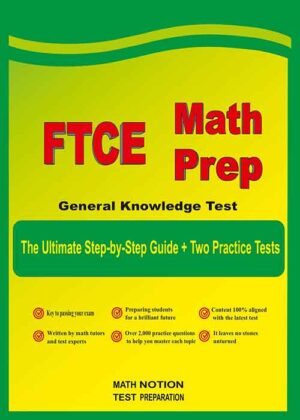 FTCE Math Prep (General Knowledge Test): The Ultimate Step by Step Guide Plus Two Full-Length FTCE Practice Tests Original price was: $18.99.$12.99Current price is: $12.99.Download
 STAAR Grade 6 Math Practice Book 2020: Extra Exercises and Two Full Length STAAR Math Tests to Ace the Exam Original price was: $18.99.$12.99Current price is: $12.99.Download
 6 STAAR Math Practice Tests Grade 5: Extra Practice to Achieve a Crack Score Paperback Original price was: $18.99.$12.99Current price is: $12.99.Download
 TSI Math Practice: How to Practice Effectively for the TSIA2
 Texas College Math Placement: From the THEA to the TSIA2
 How to Prepare for the TSI Math Test (Texas)
 7 OST Math Study Habits for Ohio Students
 GED Math Prep: 7 Facts That Help You Pass First Try
TSI Math for Beginners: A Step-by-Step Starter Guide

If you’re facing the TSI and it’s been years since you last did much math, starting can feel overwhelming, but it doesn’t have to be. This is a beginner’s guide to TSI math for beginners, designed for anyone starting more or less from scratch: returning adults, students who’ve struggled with math, or anyone who wants a gentle, clear path to college-level placement in Texas. The TSI covers a defined, learnable set of skills, and with a patient, step-by-step approach, you can build from the basics to test-ready confidence.
The key is to start with the foundations and build steadily, rather than diving into hard problems and getting discouraged. Below we’ll walk through what the TSI is, what its math covers, where a beginner should start, and how steady TSI math practice with the right materials takes you from rusty to ready for a strong TSI math test result.
What the TSI is
TSI stands for the Texas Success Initiative, and its current assessment, the TSIA2, is what Texas public colleges use to determine whether incoming students are ready for college-level coursework. In math, your result places you into either college-level math or a developmental or co-requisite course designed to build readiness first.
For a beginner, the most important thing to understand is that the TSI isn’t pass-or-fail; it’s a placement test. Your goal is to reach the college-readiness benchmark so you can start in college-level math, which saves time and money. Knowing this takes pressure off, the aim is simply to show you’re ready, which preparation makes very achievable.
The TSIA2 format, made simple
The TSIA2 math section is computer-adaptive, meaning it adjusts to your answers, and it’s untimed, so you can work at your own pace, a real comfort for nervous beginners. The questions are multiple choice. If your initial score is below the college-ready level, you’ll take a short diagnostic that pinpoints exactly which skills to work on.
The untimed format is a gift for beginners: there’s no clock pressuring you, so you can read carefully, think things through, and check your work. Knowing the test is patient and adaptive removes much of the fear. You simply do your best on each question, and the test figures out your level, no racing required.
What the TSI math covers
The TSIA2 math content falls into four areas. Quantitative reasoning covers number operations, percentages, ratios, proportions, and interpreting data. Algebraic reasoning covers linear equations, expressions, and functions. Geometry and measurement covers area, perimeter, and volume. And probability and statistics covers interpreting data and basic chance.
For a beginner, this list might look intimidating, but remember it’s foundational math, no calculus or advanced topics. Each area breaks down into learnable pieces, and you don’t have to master everything at once. A good beginner’s approach tackles one area at a time, starting with the most fundamental, which we’ll outline next.
Where a beginner should start
If you’re starting from scratch, begin with the absolute fundamentals before anything else: whole-number operations, fractions, decimals, and percentages. These underpin every other topic on the test, so getting comfortable with them first makes everything that follows far easier. Don’t rush past them, even if they feel basic, because solid foundations are what prevent frustration later.
Once the basics feel steady, move into ratios and proportions, then into the beginnings of algebra, solving simple equations. Building in this order, from arithmetic up through algebra, mirrors how the math itself is structured and ensures you’re never trying to learn something that assumes a skill you haven’t built yet. Patience here pays off enormously.
Take it one step at a time
The biggest mistake beginners make is trying to do too much too fast, then feeling overwhelmed and giving up. The antidote is to break your preparation into small, manageable steps and tackle one at a time. Master one skill, feel the small win, then move to the next. This steady approach builds both ability and confidence.
It also helps to study a little regularly rather than in long, exhausting sessions. Fifteen or twenty minutes most days is gentler and more effective than occasional marathons, because math skills build through steady, spaced practice. For a beginner especially, this manageable rhythm keeps motivation up and prevents the burnout that derails so many.
Use clear, step-by-step materials
As a beginner, the materials you learn from matter enormously. You want resources that explain each concept in plain language, assume no prior expertise, and show worked solutions step by step, so you can teach yourself without a tutor. Confusing or advanced materials will only discourage you, while clear ones build steady confidence.
The right workbook acts like a patient teacher, walking you through each concept before the practice begins and showing exactly how each problem is solved. For someone rebuilding from the basics, that guidance is invaluable, it lets you learn at your own pace and actually understand what you’re doing, rather than just memorizing.
Practice with TSI worksheets
Once you’ve learned a concept, practice cements it. Math Notion offers free, printable TSI math worksheets covering the quantitative reasoning, algebra, geometry, and statistics the test measures, so beginners can practice each skill at a comfortable pace.
Browse the full library on our math worksheets page for more practice. Work a few problems, check your answers, and review any mistakes to understand where you went wrong. For a beginner, this gentle cycle of learn, practice, review is exactly what builds skills steadily and turns unfamiliar topics into familiar ones.
Don’t fear the algebra
Many beginners dread the algebra on the TSI, but it’s more approachable than it seems once you build up to it. Algebra is really just arithmetic with letters standing in for unknown numbers, and the core skill, solving for an unknown by keeping both sides of an equation balanced, is learnable with practice. Start simple and build gradually.
If algebra feels intimidating, that’s usually a sign your fundamentals need a little more shoring up first, since algebra leans heavily on fractions and integer operations. Strengthen those, then approach algebra step by step, and you’ll find it becomes manageable. Plenty of beginners who feared algebra have gone on to handle it comfortably with patient practice.
Take advantage of the untimed test
Because the TSIA2 is untimed, beginners have a real advantage: you can work carefully and check your answers without any clock pressure. Practice the same way, slow and deliberate, so careful work becomes your habit. On test day, this lets you read each question twice, write out your steps, and catch mistakes before moving on.
This is especially reassuring for anyone whose math anxiety is tied to feeling rushed. The TSI removes that pressure, so you can focus entirely on getting each question right. Practicing in this patient, careful style builds both accuracy and calm, exactly what a beginner needs to place well.
Manage nerves and build confidence
For beginners, especially returning adults, nerves can be as big a hurdle as the math. The best remedy is preparation: as you steadily build skills and see your own progress, confidence naturally grows to replace anxiety. Each concept you master is proof that you can do this, which is the foundation of genuine confidence.
Remember that the TSI is designed to be placed into with preparation, that retakes are available, and that countless beginners have rebuilt their math and placed into college-level courses. Be patient and kind with yourself, celebrate small wins, and trust that steady effort works. A calm, prepared beginner can absolutely succeed.
The workbook that takes beginners to ready
For a complete, beginner-friendly path, a structured workbook is ideal. The TSI Math Workbook builds the quantitative reasoning, algebra, geometry, and statistics the TSIA2 covers, starting accessibly and progressing steadily, with clear lessons and step-by-step answer explanations you can follow on your own, no tutor required.
Paired with the free TSI worksheets for practice, a workbook gives beginners both gentle instruction and the repetition that builds skill. It’s an instant download, so you can start your journey from rusty to ready tonight. Browse all our TSI math resources → to find the right fit.
A simple beginner study plan
Here’s a gentle plan to go from beginner to ready. In your first week or two, focus entirely on the fundamentals, whole numbers, fractions, decimals, and percentages, doing a little each day until they feel comfortable. Don’t move on until these basics are steady, because everything else depends on them, and rushing here is the most common reason beginners struggle later.
In the following weeks, add ratios and proportions, then ease into basic algebra and simple equations, and finally touch on geometry and data. Take a practice set after each area to check your progress, and revisit anything shaky. Throughout, keep sessions short and regular. This patient, build-up approach reliably carries a beginner from the basics all the way to college-level readiness over a few focused weeks.
Why this effort is worth it
It helps to remember why you’re doing this. Placing into college-level math on the TSI can save you a semester of developmental coursework, along with the tuition and time that go with it, so a few weeks of focused preparation now can pay off significantly down the road. For a beginner, that’s a powerful reason to push through the early, slower stretches.
Beyond placement, the math skills you build, solid arithmetic, confident algebra, real problem-solving, will serve you throughout college and in everyday life. So your TSI math practice isn’t just about one test; it’s about rebuilding a foundation you’ll lean on for years. Approached as that kind of investment, the steady work of learning TSI math for beginners becomes genuinely worthwhile, and very achievable.
Wherever you’re starting from, take heart: the TSI rewards patient, step-by-step preparation, and beginners who build steadily from the fundamentals place into college-level math all the time. Start small, stay consistent, lean on clear materials, and trust the process, you can do this.
Frequently asked questions
Is the TSI hard for beginners?
It’s challenging if you’re rusty, but it covers foundational, learnable math, no advanced topics, and it’s untimed, so beginners can work carefully. With steady, step-by-step practice, it’s very achievable.
Where should a beginner start?
With the fundamentals, whole numbers, fractions, decimals, and percentages, then ratios and proportions, then basic algebra. Building in this order makes everything that follows easier.
Is the TSI math test timed?
No, the TSIA2 math section is untimed, which is a real advantage for beginners. You can work carefully, check your answers, and avoid the pressure of a clock.
How do I prepare as a beginner?
Use clear, step-by-step materials, study a little most days, start with the fundamentals, practice with TSI worksheets, and build steadily from arithmetic up through algebra.
Math Notion makes standards-aligned math workbooks and test prep for learners at every level and across all 50 states. See the full collection.
Posted by Math Notion Team · Published on May 12, 2024