Math Articles, tips & study guides
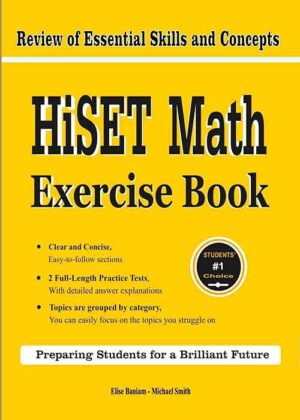 HiSET Math Exercise Book: Review of Essential Skills and Concepts With 2 HiSET Math Practice Tests Original price was: $18.99.$12.99Current price is: $12.99.Download
 Algebra 2 Workbook: Essential Learning Math Skills Plus Two Algebra 2 Practice Tests Original price was: $18.99.$12.99Current price is: $12.99.Download
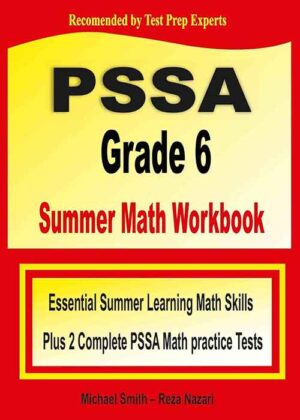 PSSA Grade 6 Summer Math Workbook: Essential Summer Learning Math Skills plus Two Complete PSSA Math Practice Tests Original price was: $18.99.$12.99Current price is: $12.99.Download
 ACT Aspire Grade 8 Summer Math Workbook: Essential Summer Learning Math Skills plus Two Complete ACT Aspire Math Practice Tests Original price was: $18.99.$12.99Current price is: $12.99.Download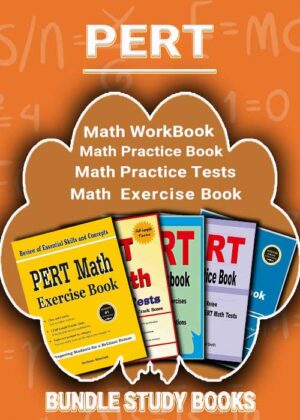
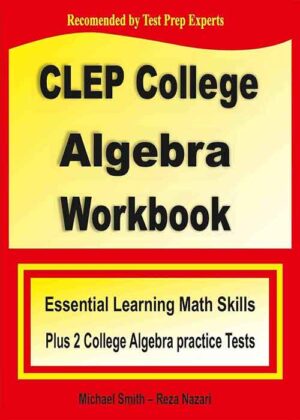 CLEP College Algebra Workbook: Essential Learning Math Skills Plus Two College Algebra Practice Tests Original price was: $18.99.$12.99Current price is: $12.99.Download
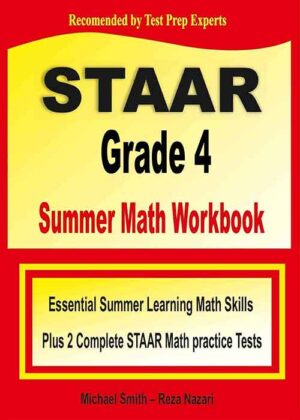 STAAR Grade 4 Summer Math Workbook: Essential Summer Learning Math Skills plus Two Complete STAAR Math Practice Tests Original price was: $18.99.$12.99Current price is: $12.99.Download
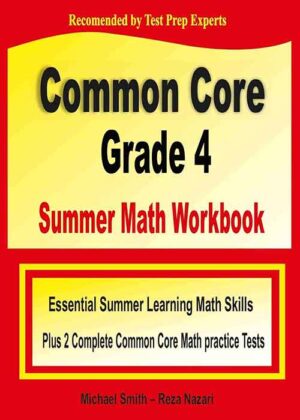 Common Core Grade 4 Summer Math Workbook: Essential Summer Learning Math Skills plus Two Complete Common Core Math Practice Tests Original price was: $18.99.$12.99Current price is: $12.99.Download
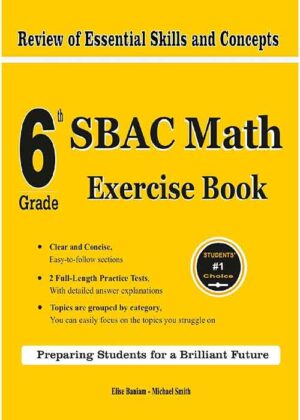 6th Grade SBAC Math Exercise Book: Review of Essential Skills and Concepts With 2 SBAC Math Practice Tests Original price was: $18.99.$12.99Current price is: $12.99.Download
 TSI Math Workbook: Essential Learning Math Skills Plus Two Complete TSI Math Practice Tests Original price was: $18.99.$12.99Current price is: $12.99.Download
 WVGSA Math Prep: West Virginia Student Guide
 7 MCAs Math Prep Tips for Minnesota Students
 STAAR Math Test Prep for Grades 6-8: A Parent’s Guide (2026)
 7 Proven Accuplacer Math Prep Strategies
 A Smart Math Homework Help Strategy That Builds Real Skills
How Students Can Build and Use Strong Math Skills

Strong math skills are among the most valuable things a student can build, useful not just for tests and grades but for everyday life, future careers, and clear thinking generally. Yet many students treat math as a set of procedures to memorize rather than skills to develop and use. This guide is about the difference: how students can build genuine, flexible math skills and actually put them to work, in the classroom, on assessments, and in the real world. With the right habits and practice, any student can develop math skills they’ll rely on for years.
The throughline is that math skills grow through active, consistent use, not passive memorization. Below we’ll explore how students develop the math skills that matter most, how to apply them effectively, and how steady math practice with the right resources turns shaky understanding into confident, usable ability.
What we mean by math skills
Math skills are more than the ability to compute. They include number sense, an intuitive feel for how numbers work, the ability to reason through problems, recognizing patterns, applying concepts to new situations, and communicating mathematical thinking clearly. A student with strong math skills doesn’t just remember procedures; they understand them well enough to adapt and apply them.
This broader view matters because it’s what real-world math and higher coursework demand. Memorizing how to solve one specific problem type is fragile; understanding the underlying skill is durable and flexible. When students aim to build genuine skills rather than memorize steps, they end up both more capable and more confident.
Why fundamentals come first
Every advanced math skill rests on solid fundamentals, fluency with operations, fractions, decimals, percentages, and the order of operations. Students who are shaky on these basics struggle with everything built on top of them, constantly stopping to puzzle out the foundation instead of focusing on the new skill. Strengthening fundamentals is the first step to building strong math skills.
This is why it’s worth investing time in making the basics automatic. When core skills are second nature, a student’s mental energy is free for reasoning and problem-solving rather than basic computation. Strong fundamentals aren’t glamorous, but they’re the bedrock that makes every later math skill easier to develop and use.
Active practice builds real skill
Math skills, like any skills, are built by doing. Reading a textbook or watching a video is passive and creates only shallow understanding; working problems yourself is what develops genuine ability. The struggle of solving a problem, even when it’s hard, is precisely what builds the skill, because it forces your brain to engage actively.
So effective skill-building centers on practice, working problems, checking solutions, and learning from mistakes. The more a student actively practices a skill, the more automatic and flexible it becomes. This is the single most important principle: math skills come from active use, and consistent math practice is how that use accumulates into real ability.
Develop problem-solving skills
Among the most valuable math skills is problem-solving, the ability to approach an unfamiliar problem, figure out what it’s asking, and work toward a solution. This is different from knowing a procedure; it’s about strategy, persistence, and flexible thinking. Strong problem-solving skills transfer far beyond math class, into science, work, and daily decisions.
Students build these skills by practicing varied problems, especially word problems and multi-step challenges, and by learning to break a problem into manageable parts. Encouraging students to try, get stuck, and work through it, rather than giving up or being handed the answer, develops exactly the problem-solving skills that matter most in the long run.
Understand, don’t just memorize
The fastest way to build durable math skills is to focus on understanding why methods work, not just how to execute them. A student who understands the reasoning behind a procedure can apply it flexibly to new situations and remember it far longer, while one who only memorized steps falls apart when problems look unfamiliar.
So a key habit is always asking why. Why does this method work? Why is this the right approach? Grasping the reasoning compresses many separate facts into a few powerful, transferable ideas, which is exactly what makes a student’s math skills both stronger and more efficient. Understanding is the foundation of skills that last.
Apply math skills to real life
Math skills become most meaningful, and most memorable, when applied to real situations. Students who use math in daily life, calculating costs, measuring for a project, interpreting data, figuring out time or distance, see that their skills are genuinely useful, which deepens both understanding and motivation. Math stops being an abstract school subject and becomes a practical tool.
This application also strengthens the skills themselves, because using a skill in varied contexts builds flexibility. Encouraging students to spot and use math in the world around them, in cooking, sports, shopping, or hobbies, turns everyday moments into skill-building practice and reinforces that the math they’re learning has real value.
Use mistakes to grow
How a student handles mistakes largely determines how fast their skills grow. Every error is precise information about what isn’t yet understood, so students who study their mistakes, figuring out where their reasoning went wrong and reworking the problem, improve far faster than those who just note a wrong answer and move on.
This habit also builds resilience and a healthy relationship with challenge. When mistakes are treated as normal, useful parts of learning rather than failures, students become willing to attempt hard problems, which is exactly how skills develop. Learning actively from errors is one of the most powerful skill-building practices there is.
Practice consistently
Math skills fade without use, so consistency is essential. Short, regular practice sessions build and maintain skills far better than occasional cramming, because the brain consolidates abilities through repeated, spaced exposure. Even fifteen or twenty minutes most days keeps skills sharp and steadily strengthens them over time.
This is true whether a student is building new skills or maintaining existing ones. A consistent routine prevents the slow erosion that happens when skills go unused, and it turns skill-building into a sustainable habit rather than a stressful event. Steady, regular practice is the quiet engine behind every strong set of math skills.
Practice with worksheets
Worksheets are an excellent tool for active, targeted skill-building, letting students drill specific skills until they’re automatic. Math Notion offers free, grade-level math worksheets across the elementary and middle grades, organized so students can practice exactly the skills they’re working to develop, from number sense to algebra readiness.
Browse the library by grade to find practice at the right level. Used regularly, with careful review of every problem, worksheets turn the principle of active practice into concrete skill growth. They’re a simple, accessible way to build the fundamentals and problem-solving abilities that strong math skills depend on.
Build confidence alongside skill
Confidence and skill reinforce each other. Students who believe they can improve at math persist through difficulty and keep building skills, while those who think they’re “bad at math” give up early and stall. Treating math ability as something developed through effort, not a fixed talent, is itself a key to building strong skills.
Confidence grows through small, repeated successes, which is why starting practice at an achievable level and increasing difficulty gradually works so well. Each problem solved is evidence of growing ability, and that belief fuels the persistence skill-building requires. Nurturing confidence alongside skill creates an upward spiral of capability and motivation.
How parents and teachers can help
Adults play a big role in helping students build math skills. Keeping a positive, encouraging attitude, praising effort and progress rather than just correct answers, and treating mistakes as normal all create the conditions in which skills flourish. Avoiding the message that some people simply aren’t “math people” is especially important.
Providing clear, well-matched practice materials and a steady routine also helps enormously. You don’t need to be a math expert; resources with step-by-step explanations do the teaching, while you provide encouragement, structure, and belief in the student’s ability. That supportive environment is fertile ground for strong math skills to grow.
The workbook that builds lasting skills
For systematic skill-building, a complete workbook ties everything together with clear lessons and full coverage. Math Notion’s grade-level workbooks build number sense, fundamentals, reasoning, and problem-solving step by step, with clear explanations and step-by-step solutions that develop genuine understanding, not just memorized procedures.
Used alongside free worksheets for targeted drilling, a workbook gives students both complete instruction and focused practice, the ideal combination for building durable math skills. The workbooks are instant downloads, so students can start building today. Browse the full Math Notion collection → to find the right level.
Math skills that transfer beyond the classroom
One of the best reasons to build genuine math skills is how widely they transfer. The logical reasoning a student develops solving equations sharpens their thinking in science, the data interpretation they practice helps them read news and make decisions, and the problem-solving persistence they build carries into every challenge they’ll face. Math skills are, in a real sense, thinking skills.
This is worth pointing out to students, because it answers the perennial question of why math matters. The skills they’re building aren’t just for the next test; they’re tools for navigating budgets, careers, technology, and everyday choices. Framing math this way, as broadly useful capability rather than a school hurdle, helps students invest in building skills that will genuinely serve them for life.
Putting it all together
Building strong math skills isn’t about a single trick; it’s the combined result of solid fundamentals, active and consistent practice, a focus on understanding, learning from mistakes, real-world application, and a confident, growth-oriented mindset. None of these requires special talent, and together they steadily turn any willing student into a capable, confident one.
The encouraging truth is that math skills are made, not born. A student who adopts these habits, supported by encouraging adults and the right practice materials, will build abilities they can rely on through school and well beyond. Start with one or two of these principles, practice steadily, and watch genuine, usable math skills grow over time.
Frequently asked questions
What are the most important math skills?
Number sense, fluency with fundamentals, reasoning, problem-solving, and the ability to apply concepts to new situations, all built through active practice and understanding rather than memorization.
How do students build strong math skills?
Through active practice, focusing on understanding over memorization, learning from mistakes, applying math to real life, and practicing consistently in short, regular sessions.
Why is active practice better than reading?
Skills are built by doing. Working problems yourself develops genuine ability, while reading or watching is passive and creates only shallow, fragile understanding.
Where can students practice math skills?
Math Notion offers free grade-level math worksheets and complete workbooks that build fundamentals, reasoning, and problem-solving, on our worksheets and shop pages.
Math Notion makes standards-aligned math workbooks and test prep for learners at every level and across all 50 states. See the full collection.
Posted by Math Notion Team · Published on November 28, 2024