Math Articles, tips & study guides
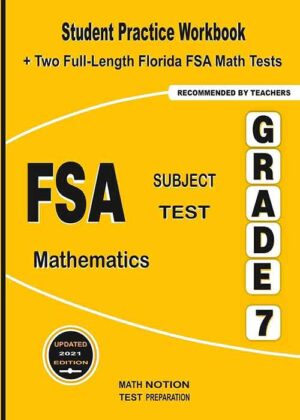 FSA Subject Test Mathematics Grade 7: Student Practice Workbook + Two Full-Length Florida FSA Math Tests Original price was: $18.99.$12.99Current price is: $12.99.Download
 5th Grade FSA Math Exercise Book: Review of Essential Skills and Concepts With 2 FSA Math Practice Tests Original price was: $18.99.$12.99Current price is: $12.99.Download
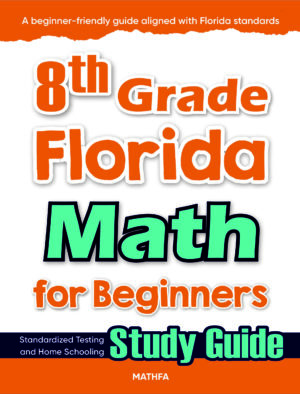 8th Grade Florida Math for Beginners Original price was: $21.99.$14.99Current price is: $14.99.Download
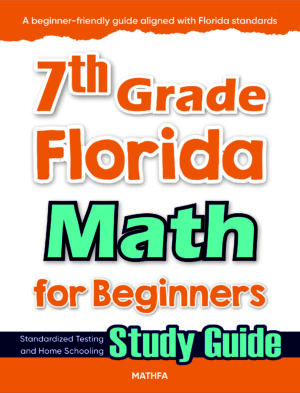 7th Grade Florida Math for Beginners Original price was: $21.99.$14.99Current price is: $14.99.Download
 FSA Math Practice Grade 3: Complete Content Review Plus 2 Full-length FSA Math Tests Original price was: $18.99.$12.99Current price is: $12.99.Download
 PERT Math Workbook: Practice Questions for the Florida Postsecondary Education Readiness Test With 2 Full-Length PERT Math Exams Original price was: $18.99.$12.99Current price is: $12.99.Download
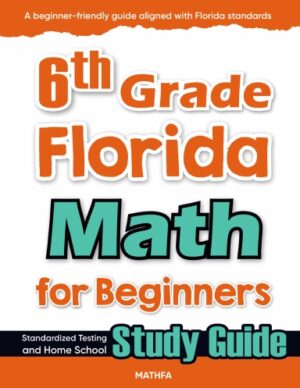 6th Grade Florida Math for Beginners Original price was: $21.99.$14.99Current price is: $14.99.Download
 What Is FAST Math? A Florida Parent Guide
 FAST Math by Grade: What Florida Students Learn
 How to Prepare for the PERT Math Test (Florida Placement)
 How to Prepare for the FAST Math Test (Florida Parents)
 5 PERT Math Prep Secrets Nobody Tells You
FAST Math Practice: A Florida Study Guide

Once your child is learning math at grade level, the next question every Florida parent asks is how to actually practice for the test. Since the state replaced the FSA with the FAST, the Florida Assessment of Student Thinking, the smartest preparation is regular, realistic FAST math practice that mirrors what the test actually asks. Practice tests and targeted exercises do something no amount of reading about the test can: they build the fluency, pacing, and calm that turn knowledge into a strong score. This guide explains how to use practice effectively, what to focus on, and the Florida-aligned workbook that makes it easy to do at home.
The FAST is computer-adaptive and given three times a year, so practice isn’t a one-week sprint before spring, it’s a steady habit that keeps skills sharp across the whole year. Below we’ll cover how to use practice tests, how to review mistakes, what to drill at each stage, and how consistent Florida FAST practice steadily lifts both scores and confidence.
Why practice matters more than re-reading
Plenty of families prepare by reviewing notes or watching explanations, and while that has its place, it’s no substitute for actually working problems. Math is a doing subject; the skills stick only when your child solves problems themselves, makes mistakes, and corrects them. Practice converts passive familiarity into the active fluency the FAST measures, which is why it should be the backbone of any preparation plan.
Practice also surfaces gaps that re-reading hides. A child can nod along to an explanation of fractions and still stumble when asked to actually divide them under time pressure. Working real problems reveals exactly where understanding breaks down, so you can fix the specific weak spot rather than vaguely reviewing everything. That precision is what makes practice the most efficient use of limited study time.
How to use full-length practice tests
A full-length practice test is one of the most valuable tools you have, but only if it’s used well. Have your child sit a complete practice section in one quiet stretch, ideally on a computer to mirror the real format, without interruptions or help. The goal is to recreate test conditions closely enough that the real thing feels familiar rather than new.
Afterward, resist the urge to simply tally the score. The real value is in the review: go through every missed question together and figure out why it was wrong. Was it a careless slip, a misread, or a genuine gap in understanding? Each category calls for a different fix, and sorting them out is what turns a practice test from a measurement into a learning tool.
Reviewing mistakes the right way
The single highest-leverage habit in FAST math practice is careful mistake review. For each error, have your child explain what the question asked and where their approach went off track, then rework it correctly. This active reflection cements the right method far more durably than just seeing the correct answer on a key, which is why a workbook with step-by-step explanations is so useful.
Keep a simple running list of recurring error types, fractions, sign mistakes, misread word problems, and you’ll quickly see patterns worth targeting. A child who keeps losing points on multi-step word problems doesn’t need more random practice; they need focused work on reading carefully and setting up the problem. Mistake review is how you find that focus.
What to practice at each stage of the year
Because the FAST runs in fall, winter, and spring, your practice can follow the same rhythm. Early in the year, focus on shoring up the previous grade’s foundations and easing into the new grade’s topics, so nothing feels rushed. This is the time for steady, low-pressure exercises that rebuild fluency after summer.
As each checkpoint approaches, shift toward mixed practice and timed sets that resemble the real test, so your child builds both breadth and pacing. After the fall and winter results come in, zero in on the specific reporting categories that came back weak. This stage-by-stage approach keeps practice aligned with where your child actually is, rather than drilling the same things all year.
Getting comfortable with the adaptive format
The FAST adjusts its difficulty to your child’s answers and is taken on a computer with interactive question types, so part of practice should be format practice. Have your child work on a device occasionally and try question styles that ask them to drag values, plot points, or type numeric answers, not just pick from a list. Familiarity with these mechanics means they won’t lose time fumbling on test day.
It’s also worth preparing your child mentally for the adaptive feel. Because the test climbs in difficulty as they succeed, harder questions often signal they’re doing well, not failing. A child who understands this won’t get rattled mid-test, which protects their focus and lets their real ability show through across the whole session.
Building speed without sacrificing accuracy
Pacing matters on any timed test, but speed should never come at the cost of accuracy. The right way to get faster is through repetition: the more your child practices a given problem type, the more automatic it becomes, and speed follows naturally. Drilling for raw speed before the underlying skill is solid just trains fast mistakes.
Teach the habit of reading each question carefully, doing the work, and giving a quick sanity check before moving on. Practicing this rhythm builds a reliable pace that holds up under pressure. Over weeks of steady Florida FAST practice, your child develops the comfortable fluency that lets them finish on time without rushing into careless errors.
Keeping practice consistent, not overwhelming
The most effective practice schedule is short and regular rather than long and rare. Fifteen to twenty minutes a few times a week keeps skills fresh and fits real family life far better than marathon weekend sessions, which tend to exhaust and discourage. Consistency is what builds durable skill, because math fluency consolidates through spaced repetition.
Keep sessions positive and bounded so practice doesn’t become a battle. End on a problem your child can solve so they finish feeling capable, and celebrate progress across checkpoints rather than fixating on any single score. A child who associates math practice with steady small wins will keep at it, and that consistency is ultimately what produces a strong FAST result.
The Florida workbook that makes practice easy
The simplest way to keep practice realistic and aligned is a workbook built for Florida’s standards and grade levels, with plenty of exercises and full-length practice. For a sixth grader, the 6th Grade Florida Math for Beginners workbook offers exactly the grade-level problems the FAST assesses, with step-by-step answer explanations that make mistake review productive even if it’s been years since your own math classes.
Because it matches Florida’s B.E.S.T. standards, every exercise is relevant, and the worked solutions turn each missed problem into a lesson. It’s an instant download, so you can build a practice routine starting tonight, and Math Notion has a matching book for every grade. Browse the full Florida math collection → to find your child’s grade.
Turning practice results into a plan
Practice is only as useful as what you do with the results. After each session or practice test, take two minutes to note which topics felt smooth and which caused trouble, then let that shape the next few sessions. This simple loop, practice, reflect, adjust, keeps your child always working on the things that will move their score most, rather than coasting on what they already know.
It also helps to connect practice to the FAST’s three checkpoints. The fall and winter results are real data about where your child stands, so treat them as a guide for what to drill before the next administration. A child who keeps missing proportional-reasoning questions in the fall should spend the following weeks there specifically, and a good Florida workbook lets you turn straight to that chapter and practice it deliberately.
Making practice a calm, shared habit
For many children, the emotional side of testing is as big a hurdle as the math. You can soften that by making practice a normal, low-stakes part of the week rather than a tense event tied to a looming test. Sit alongside your child for part of it, talk through tricky problems together, and treat mistakes as ordinary steps in learning rather than something to dread.
This shared, steady approach does something powerful: it teaches your child that hard problems are workable and that effort pays off. Over a school year, that attitude matters at least as much as any single skill, because a confident, unflustered test-taker performs much closer to their true ability. Consistent practice in a supportive setting builds exactly that kind of confidence.
Why aligned practice beats generic worksheets
Not all practice is equal. Random worksheets pulled from the internet often mix in content from the wrong grade or skip the specific standards Florida tests, which wastes effort and can even discourage a child with problems they were never meant to face yet. Practice that matches your child’s grade and Florida’s B.E.S.T. standards keeps every minute relevant and appropriately challenging.
That alignment is the whole reason a Florida-specific workbook is worth using over a pile of free printables. When the exercises mirror what the FAST actually asks, your child builds exactly the right fluency, and you can trust that strong practice performance genuinely predicts a strong test result. Targeted, aligned FAST math practice is simply the most efficient path to the score your child is capable of.
A realistic weekly practice rhythm
If you want a concrete starting point, try three short sessions a week: one focused on a topic from class that week, one on a recurring weak area from past mistakes, and one mixed set that pulls from several topics to build flexibility. Keep each to fifteen or twenty minutes, do at least one on a computer, and always finish by reviewing any misses together. This light, balanced rhythm is easy to sustain across the school year, and sustained is exactly what FAST readiness requires, since the test measures your child’s growth from fall all the way through spring.
Frequently asked questions
Is the FSA still given in Florida?
No. Florida replaced the FSA with the FAST beginning in 2022-23. The FAST is built on the B.E.S.T. standards, is computer-adaptive, and is given three times a year.
How often should my child do FAST math practice?
Short, regular sessions of fifteen to twenty minutes a few times a week beat occasional cramming, because math skills consolidate through steady, spaced repetition.
Should practice be on a computer?
Some of it, yes. Because the FAST is computer-adaptive with interactive question types, practicing on a device helps your child get comfortable with the format.
What’s the best way to use a practice test?
Sit it under realistic conditions, then review every mistake together to understand why it was wrong. The review is where most of the learning happens.
Math Notion makes standards-aligned math workbooks and test prep for learners at every level and across all 50 states. See the full collection.
Posted by Math Notion Team · Published on August 10, 2021