Math Articles, tips & study guides
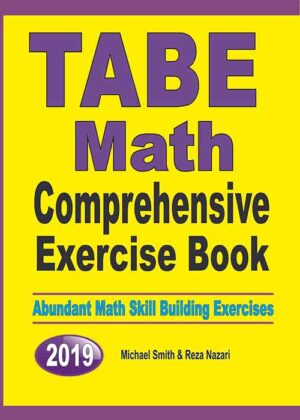 TABE Math Comprehensive Exercise Book: Abundant Math Skill Building Exercises Original price was: $18.99.$12.99Current price is: $12.99.Download
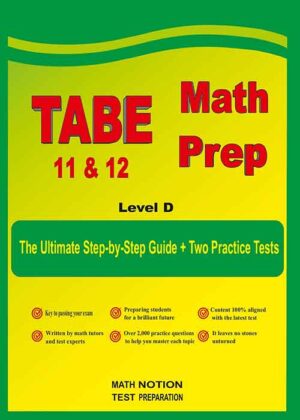 TABE 11&12 Math Prep (Level D): The Ultimate Step by Step Guide Plus Two Full-Length TABE Practice Tests Original price was: $18.99.$12.99Current price is: $12.99.Download
 TABE 11&12 Subject Test Mathematics Level D: Student Practice Workbook + Two Realistic TABE 11&12 Math Tests Paperback Original price was: $18.99.$12.99Current price is: $12.99.Download
 6 Full-length TABE Math Practice Tests: Extra Test Prep to Help Ace the TABE Math Test Original price was: $18.99.$12.99Current price is: $12.99.Download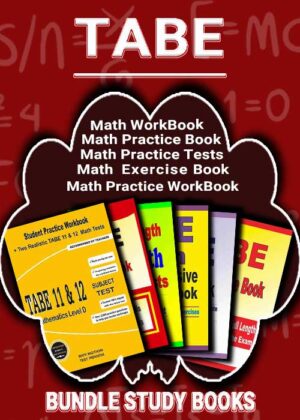
 TABE Math Workbook: Activities, Exercises, and Two Complete TABE Mathematics Practice Tests Original price was: $18.99.$12.99Current price is: $12.99.Download
 TABE Math Practice Book 2020: Extra Exercises and Two Full Length TABE Math Tests to Ace the Exam Original price was: $18.99.$12.99Current price is: $12.99.Download
 TABE Math Workbook: Essential Learning Math Skills Plus Two Complete TABE Math Practice Tests Paperback Original price was: $18.99.$12.99Current price is: $12.99.Download
 GED Math Practice Book 2020: Extra Exercises and Two Full Length GED Math Tests to Ace the Exam Original price was: $18.99.$12.99Current price is: $12.99.Download
 GED Math Workbook: Activities, Exercises, and Two Complete GED Mathematics Practice Tests Original price was: $18.99.$12.99Current price is: $12.99.Download
 What Is the TABE 11 and 12 Math Test?
 Top 10 HESI Math Formulas You Must Memorize
 Big News: The Math Notion Blog Is Here
 7 MCAs Math Prep Tips for Minnesota Students
 STAAR Math Test Prep for Grades 6-8: A Parent’s Guide (2026)
How to Prepare for the TABE Math Test


For adult learners returning to education or pursuing job training, the TABE is a common gateway, and the math section is often the most worried-about part. Knowing how to prepare for the TABE math can turn anxiety into confidence and lead to a better placement. The TABE math content is practical and learnable, built from everyday arithmetic and applied skills, so focused TABE test prep genuinely pays off. This guide walks through what to expect and exactly how to prepare for the math, step by step.
The encouraging truth is that the TABE is designed to meet adult learners where they are. It isn’t a trick test or an attempt to fail you; it’s a measure of your current skills meant to guide your placement and learning. With a clear plan and steady practice, you can demonstrate your true ability and set yourself up for success in whatever program comes next.
What the TABE is and why it matters
TABE stands for the Test of Adult Basic Education, used widely by adult education programs, community colleges, and workforce-training organizations to measure skills in reading, language, and mathematics. The current versions are TABE 11 and 12. Your results help programs place you at the right level and identify which skills to strengthen, so the test is a starting point rather than a pass-or-fail gate.
Because the TABE shapes which classes or training you begin in, a strong math performance can save you time by letting you skip unnecessary remedial work. That makes focused preparation genuinely worthwhile. A clear sense of why you’re taking the test, and what a good result will let you do next, helps keep your study motivated and your effort on track.
What’s on the TABE math section
The TABE math generally has two parts: computation, which tests your ability to perform operations with whole numbers, fractions, decimals, and percentages accurately, and applied mathematics, which uses those skills to solve real-world problems involving measurement, data, geometry, and basic algebra. Together they assess both procedural fluency and problem-solving.
Well-rounded TABE math practice covers both sides. Strong computation alone isn’t enough if you struggle to apply it to word problems, and good reasoning falters if your arithmetic is shaky. Preparing for both parts ensures you’re ready for the full range of questions the test presents.
Understand the TABE level system
A distinctive feature of the TABE is that it’s offered at different difficulty levels, from basic to advanced. A locator test usually determines which level is appropriate, so you take a version matched to your current ability. This means your goal isn’t a single passing score so much as accurately demonstrating your skill level.
Because of this, it’s important to prepare with materials appropriate to your level. Practicing content that’s too advanced can discourage you, while content that’s too easy can leave you under-prepared for the level you’ll actually take. Matching your practice to the right level keeps your preparation efficient and realistic.
Start with a diagnostic and target weak spots
Before building a study plan, take a practice section to see where your skills stand. Most adult learners find that fractions, percentages, and basic algebra need the most attention, especially after time away from math. The diagnostic turns vague worry into a clear list of priorities, so every hour of study goes where it counts.
Then focus your energy on the weakest areas first, since that’s where the most points are being lost. Master one topic, then move to the next, rather than spreading attention thinly across everything. This targeted approach makes your TABE test prep far more efficient than generic review.
Build computation and applied skills together
Because the TABE tests both computation and applied math, balance your practice between them. Drill accurate computation with fractions, decimals, and percentages until it’s quick and reliable, then practice applying those skills to word problems, measurement, and data questions. The two reinforce each other: solid computation makes applied problems easier, and applied practice shows you why the computation matters.
Get especially comfortable with proportions and unit conversions, which appear throughout the applied section and are common sources of errors. Mastering this cluster of practical skills handles a large share of the test and builds genuinely useful everyday ability.
An 8-week TABE math study plan
A simple structure keeps preparation manageable. In weeks one and two, take a diagnostic and identify your two weakest areas. Spend weeks three and four rebuilding those foundations, often fractions and percentages. Use weeks five and six to practice applied problems and the question formats you’ll see, and to build accuracy under time.
Reserve week seven for a full-length, timed practice section, followed by a careful review of every miss. Keep week eight light, with short reviews and good rest. Short, steady sessions across these weeks build both accuracy and the confidence the test rewards, far more reliably than last-minute cramming.
Common TABE math mistakes to avoid
A few habits quietly cost points. Reading word problems too quickly leads to setting up the wrong calculation. Mismanaging unit conversions turns a sound method into a wrong answer. Rushing computation produces careless arithmetic errors. And practicing only easy problems skips the harder questions where growth happens.
Awareness of these traps, rehearsed during practice, protects the points that prepared test-takers often lose. Slowing down to read carefully, double-checking conversions, and showing your work are simple habits that pay off across the whole section.
Don’t be afraid to start with the basics
Many TABE test-takers have been away from formal math for years, and that’s completely normal. There’s no shame in beginning with a solid review of arithmetic fundamentals, in fact, it’s the smartest move. A strong base in whole numbers, fractions, decimals, and percentages makes the rest of the math far more approachable.
Beginner-friendly materials that explain each concept clearly and build up gradually are ideal for exactly this situation. Rebuilding the basics with patience and confidence, rather than diving into the hardest content cold, is the most efficient path to a strong result.
Build confidence through practice
Confidence on the TABE comes from familiarity. Working through practice problems that mirror the test’s format removes surprises and steadies your nerves. As your accuracy improves and the question types feel routine, the test stops feeling intimidating, and you can focus on showing what you know.
Remember that the TABE is meant to measure where you are so you can grow, not to judge you. A calm, prepared mindset, combined with steady practice, lets you perform closer to your true ability, which leads to a more accurate and often higher placement.
Try a few TABE-style math questions
Practicing the kind of problems the TABE favors helps you get comfortable with its practical style. For computation: what is 3/4 plus 1/8? (7/8.) What is 0.6 written as a percentage? (60%.) For applied math: if a recipe that serves 4 requires 2 cups of rice, how much rice serves 10 people at the same rate? (5 cups.) If a room is 12 feet by 9 feet, what is its area? (108 square feet.) And what is 15% of 200? (30.)
As you work problems like these, explain each step out loud or on paper. Showing your reasoning not only reduces careless errors but also makes it easy to spot exactly where a mistake happened when you review. Over time, this habit builds both accuracy and the kind of clear thinking the applied section rewards, and it transfers directly to the real-world math you’ll use in your program and career.
Using practice tests to track your progress
Full-length practice tests are your single best preparation tool, because they show whether you’re ready, reveal which topics still need work, and build familiarity with the test’s format and pacing. Take one early to diagnose your starting point, study your weak areas, then take another closer to test day to confirm your readiness and measure how far you’ve come.
The real value lies in the review. After each practice test, go through every missed question and identify why it happened, whether a content gap, a conversion slip, or a careless computation error. Fixing the underlying cause, rather than just noting the wrong answer, is what produces steady, measurable improvement between practice sessions and turns preparation into a higher score.
What to do in the final week
In the last week before your test, shift from learning new material to light review and rest. A few short, mixed practice sets keep your skills sharp, and revisiting your most common mistakes keeps them top of mind. Avoid heavy cramming, which tends to raise anxiety more than it raises scores, and instead trust the steady work you’ve already put in.
Prioritize sleep, especially the night before, eat a normal breakfast, and confirm the logistics of your testing session in advance so the morning is calm. Arriving rested, unhurried, and confident lets your preparation show, and gives you the best chance to demonstrate your true ability on the TABE math section.
Prepare with focused TABE math practice
The most reliable way to do well is structured practice on exactly the skills the TABE measures. Math Notion’s workbooks build the arithmetic, applied-math, and basic-algebra foundations the test rewards, with clear lessons, full-length practice, and step-by-step answer explanations you can work through on your own. Browse all our math practice books → and prepare for a stronger placement with confidence.
Turning TABE practice into real gains
The most reliable way to raise a TABE math score is to treat every practice problem as a learning opportunity. Work each problem carefully, check the worked solution, and when you miss one, figure out exactly why before moving on. This habit of deliberate review turns scattered practice into steady, measurable improvement, because each mistake becomes a specific skill to strengthen rather than a vague worry.
Because the TABE measures adult basic education skills across levels, it also rewards shoring up fundamentals first. Solid arithmetic, fractions, and percentages underpin the harder problems, so time spent making those automatic lifts performance across the whole test. Steady, foundation-first practice with clear explanations is what carries adult learners confidently to the score they need.
Frequently asked questions
What does TABE stand for?
The Test of Adult Basic Education, used to measure reading, language, and math skills for adult learners and job-training placement.
Is there a passing score on the TABE?
It’s more of a placement test than a pass-or-fail one. Your score identifies your skill level and guides your learning plan.
What math should I focus on?
Fractions, decimals, percentages, proportions, and basic algebra, along with applied problem-solving and unit conversions.
How should I prepare?
Take a diagnostic, target your weak spots, balance computation and applied practice, and use materials at your level.
Math Notion makes standards-aligned math workbooks and test prep for learners at every level and across all 50 states. See the full collection.
Posted by Math Notion Team · Published on October 17, 2021

