
Math Articles, tips & study guides
 ASVAB Subject Test Mathematics: Student Practice Workbook + Two Realistic ASVAB Math Tests Paperback Original price was: $18.99.$12.99Current price is: $12.99.Download
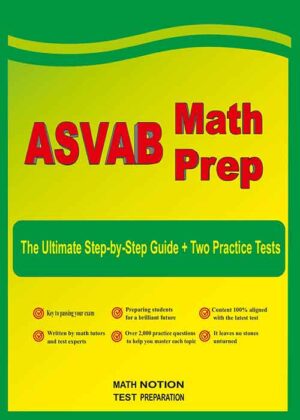 ASVAB Math Prep: The Ultimate Step by Step Guide Plus Two Full-Length ASVAB Practice Tests Original price was: $18.99.$12.99Current price is: $12.99.Download
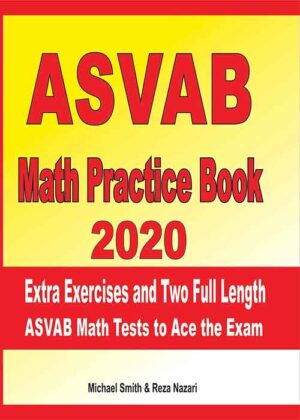 ASVAB Math Practice Book 2020: Extra Exercises and Two Full Length ASVAB Math Tests to Ace the Exam Original price was: $18.99.$12.99Current price is: $12.99.Download
 ASVAB Math Workbook: Activities, Exercises, and Two Complete ASVAB Mathematics Practice Tests Original price was: $18.99.$12.99Current price is: $12.99.Download
 ASVAB Math Workbook: Essential Learning Math Skills Plus Two Complete ASVAB Math Practice Tests Original price was: $18.99.$12.99Current price is: $12.99.Download
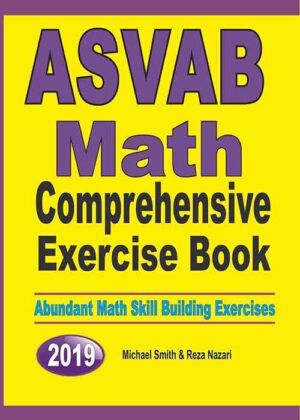 ASVAB Math Comprehensive Exercise Book: Abundant Math Skill Building Exercises Original price was: $18.99.$12.99Current price is: $12.99.Download
 6 Full-Length ASVAB Math Practice Tests: Extra Test Prep to Help Ace the ASVAB Math Test Original price was: $18.99.$12.99Current price is: $12.99.Download
 Algebra 1: Student Practice Workbook + Two Full-Length Algebra 1 Exams Original price was: $18.99.$12.99Current price is: $12.99.Download
 6 Full-Length GED Math Practice Tests: Extra Test Prep to Help Ace the GED Math Test Original price was: $18.99.$12.99Current price is: $12.99.Download
 ASVAB Score Explained: How Math Affects Your AFQT
 IAR Quadratic Equations Practice — Illinois Guide
 7 ILEARN Polynomials Tips for Indiana Students
 RISE Measurement & Units Practice — Utah Guide
 Math Exams Explained: A Guide to the Major Standardized Tests
How to Prepare for the ASVAB Math (Step by Step)

If you’re planning to enlist in the military, preparing for the ASVAB, especially its math, deserves real attention, because your results shape which careers you can pursue. Knowing how to prepare for the ASVAB math gives you a genuine advantage on test day. Strong ASVAB math skills lift the all-important AFQT score that determines eligibility, and a focused, steady plan for ASVAB prep turns an intimidating test into a beatable one. This guide lays out exactly how to prepare for the math, step by step.
Why math matters so much on the ASVAB
Two of the four subtests that make up your AFQT score, the number that determines basic enlistment eligibility, are math: Arithmetic Reasoning and Mathematics Knowledge. That means math is responsible for half of the score that decides whether you can enlist and which jobs you qualify for. Because math is one of the most improvable subjects, focused ASVAB prep on these two sections is often the single most efficient way to raise your overall result. You can find official information through the official ASVAB website.
Understand the two math subtests
Arithmetic Reasoning tests applied math through word problems, rates, ratios, percentages, fractions, and multi-step real-world scenarios. Mathematics Knowledge tests math concepts directly, algebra, geometry, exponents, and number properties. Together they cover predictable, high-school-level content. Knowing which subtest emphasizes what lets you target your preparation: if word problems trip you up, focus on Arithmetic Reasoning; if algebra and geometry are shaky, focus on Mathematics Knowledge.
Start with a diagnostic test
Before building a plan, take a full practice ASVAB, or at least the two math subtests, to see where you stand. The results reveal which topics need the most work. Most test-takers find fractions, percentages, and basic algebra are the areas that cost them the most points. A diagnostic turns vague worry into a clear target, so your study time goes where it counts rather than being spread thin across everything you already know.
Build a focused study plan
Plan short, regular study sessions over the weeks before your test rather than cramming. Give extra time to your weakest math areas, and because the ASVAB is timed, practice working efficiently as well as accurately. A written schedule, with specific topics on specific days, keeps your preparation organized and prevents last-minute panic. Steady, daily practice consistently outperforms occasional marathons, because math skills build through repetition over time.
Master the fundamentals first
The ASVAB math subtests reward strong basics far more than advanced tricks. Someone fluent with fractions, comfortable with percentages and ratios, and steady on basic algebra and geometry will handle most questions confidently. Spend the bulk of your early preparation making those core skills automatic. When the fundamentals are quick and reliable, you have more time and mental energy for the harder word problems, which is exactly where many points are won or lost.
An 8-week ASVAB math study plan
A simple structure keeps things manageable. In weeks one and two, take a diagnostic and identify your two weakest math areas. Spend weeks three and four rebuilding those foundations. Use weeks five and six to drill word problems and the algebra and geometry concepts, practicing under time. Reserve week seven for a second full-length, timed practice test, then review every miss. Keep week eight light, with short reviews and good rest. Short, steady sessions across these weeks beat a final cram every time.
Practice under timed conditions
Because the ASVAB is timed, pacing is its own skill. Knowing how to solve a problem isn’t enough if the clock beats you. Build timing into your practice: work through sets under realistic limits, learn to move past a stubborn question and return to it, and develop a steady rhythm. This kind of practice prevents the rushed errors and panicked guesses that drag down otherwise strong performance on test day.
Common ASVAB math mistakes to avoid
A few habits quietly cost points. Reading word problems too quickly leads to setting up the wrong calculation, since Arithmetic Reasoning is full of multi-step items. Forgetting key formulas hurts on Mathematics Knowledge, where a formula sheet isn’t provided. Poor pacing causes students to rush the end. And practicing only easy problems skips the harder questions where growth happens. Awareness of these traps, rehearsed during practice, protects the points prepared test-takers often lose.
Try a few ASVAB-style math questions
Practicing the right style helps. For Arithmetic Reasoning: if a car travels 180 miles on 6 gallons, how far on 10 gallons at that rate? (300 miles.) For Mathematics Knowledge: solve for x in 2x plus 7 equals 19. (x equals 6.) What is 25% of 160? (40.) And what is the area of a square with side 7? (49.) These mirror the applied and conceptual math the two ASVAB math subtests measure.
How to use practice tests effectively
Practice tests are your best preparation tool. Take one early to diagnose your weak spots, study those areas, then take another closer to test day to confirm your readiness. The real value is in the review: go through every missed question and understand why, whether it was a content gap, a careless error, or a timing issue. This diagnose-study-retest cycle, repeated a couple of times, produces steady, measurable improvement and real confidence.
What to do the week before the test
In the final week, shift from learning new material to light review and rest. Do a few short, mixed-topic practice sets to keep your skills sharp, review key formulas, and revisit your most common mistakes. Avoid heavy cramming, which raises anxiety more than scores. Prioritize sleep, especially the night before, and prepare what you’ll need in advance so test morning is calm. Arriving rested and unhurried lets your preparation show.
Why your score shapes your future
Your ASVAB results do more than determine eligibility, they influence which military jobs you qualify for, and higher scores open up more technical and desirable roles, sometimes with enlistment bonuses. Because math drives so much of the AFQT, a few weeks of focused preparation can directly shape your military career. Viewing how to prepare for the ASVAB as an investment in your future, rather than just a test to pass, makes the effort well worth it.
Memorize the key formulas
Unlike some tests, the ASVAB Mathematics Knowledge subtest does not provide a formula sheet, so you need the essentials committed to memory. Focus on the formulas that appear most: area and perimeter of rectangles, triangles, and circles; the area and circumference involving pi; volume of basic solids; and the Pythagorean theorem for right triangles. Knowing these cold saves time and prevents avoidable errors. As you practice, the formulas you use most will become automatic, and you’ll recognize at a glance which one a problem calls for, which is exactly the fluency the timed subtest rewards.
It also helps to understand what each formula means rather than memorizing symbols in isolation. A student who knows why the area of a triangle is one-half base times height can reconstruct it under pressure and apply it flexibly. Pairing memorization with understanding makes the formulas stick and keeps you from freezing when a problem is phrased in an unfamiliar way.
Build consistent daily practice
Short, daily practice beats occasional marathons because math skills consolidate through repeated, spaced exposure. Even fifteen or twenty focused minutes a day keeps the arithmetic, algebra, and geometry concepts fresh and steadily builds the fluency that makes the two math subtests feel routine. Consistency also lowers stress, since you arrive at the test having quietly prepared over weeks rather than scrambling at the end.
For many recruits, this steady rhythm, rather than any single study trick, is what produces real, measurable gains. Put your practice on a schedule, protect that time, and let the daily repetition do its quiet work. By test day, the math that once felt intimidating will feel familiar and manageable.
Manage test-day nerves and pacing
Even well-prepared test-takers can stumble when nerves take over. Build confidence through realistic, timed practice so the format feels familiar, and remember that the ASVAB is designed to be beatable with preparation. On test day, read each question carefully, keep a steady pace, and don’t get stuck, make your best attempt and move on, since there’s no benefit to dwelling on one item while others go unanswered.
A calm body helps a calm mind: a good night’s sleep, a normal breakfast, and a few slow breaths before each math subtest all settle the nerves. Tackling the test one question at a time, rather than worrying about your overall score mid-test, keeps you focused and lets your preparation show.
How a higher score expands your options
It’s worth keeping the payoff in view. Because math drives half of the AFQT, improving it can lift you across qualifying thresholds that open more career fields, including technical and specialized roles that may come with bonuses. A stronger line score in math can be the difference between the job you settle for and the one you want.
That’s a powerful reason to take the math seriously. A few weeks of focused, consistent preparation is a small investment against years of opportunity, and the skills you build, careful reasoning, reliable arithmetic, basic algebra, serve you well beyond the test, in training and in the work itself.
Build your ASVAB math skills with focused practice
The most reliable way to raise your score is structured practice on exactly the skills the ASVAB measures. Math Notion’s workbooks build the arithmetic and algebra foundations both math subtests reward, with clear lessons, full-length practice, and step-by-step answer explanations you can work through on your own. Browse all our math practice books → and qualify for the career you want.
Making your ASVAB math practice count
On the ASVAB, math shows up in both the Arithmetic Reasoning and Mathematics Knowledge sections, so balanced practice across word problems and algebra fundamentals pays off directly in your AFQT score. The smartest preparation drills the exact question styles the test uses, then reviews every miss to understand the method, not just the answer. That deliberate review is what converts study time into points.
Since the ASVAB affects both enlistment eligibility and job qualification, aiming comfortably above the minimum gives you more options, not just a pass. Steady, focused practice on arithmetic reasoning and math knowledge, a little each day, builds the fluency and speed the test rewards far better than last-minute cramming ever could.
Frequently asked questions
How much math is on the ASVAB?
A lot. Two of the four AFQT subtests, Arithmetic Reasoning and Mathematics Knowledge, are math.
Is the ASVAB math hard?
It covers high-school-level fundamentals, so it’s very manageable with focused practice on those skills.
How long should I study?
A few weeks to a couple of months of short, regular practice is common, especially when you target your weak areas.
What’s the fastest way to raise my score?
Improving math, since it’s half the AFQT. Target your weakest topics and practice timing.
Math Notion makes standards-aligned math workbooks and test prep for learners at every level and across all 50 states. See the full collection.
Posted by Math Notion Team · Published on October 19, 2021

