Math Articles, tips & study guides
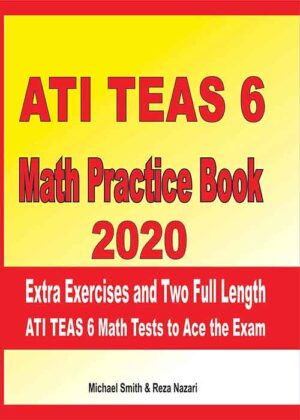 ATI TEAS 6 Math Practice Book 2020: Extra Exercises and Two Full Length ATI TEAS 6 Math Tests to Ace the Exam Original price was: $18.99.$12.99Current price is: $12.99.Download
 ATI TEAS 6 Math Workbook: Activities, Exercises, and Two Complete ATI TEAS 6 Mathematics Practice Tests Original price was: $18.99.$12.99Current price is: $12.99.Download
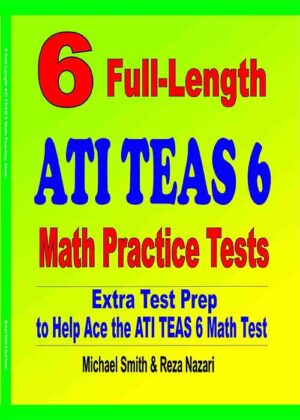 6 Full-Length ATI TEAS 6 Math Practice Tests: Extra Test Prep to Help Ace the ATI TEAS 6 Math Test Original price was: $18.99.$12.99Current price is: $12.99.Download
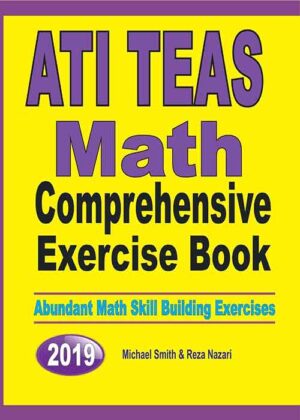 ATI TEAS Math Comprehensive Exercise Book: Abundant Math Skill Building Exercises Original price was: $18.99.$12.99Current price is: $12.99.Download
 ATI TEAS 6 Math Workbook: Essential Learning Math Skills Plus Two Complete ATI TEAS 6 Math Practice Tests Original price was: $18.99.$12.99Current price is: $12.99.Download
 ATI TEAS 6 Subject Test Mathematics: Student Practice Workbook + Two Realistic ATI TEAS Math Tests Paperback Original price was: $18.99.$12.99Current price is: $12.99.Download
 ATI TEAS 6 Math Prep: The Ultimate Step by Step Guide Plus Two Full-Length ATI TEAS 6 Practice Tests Original price was: $18.99.$12.99Current price is: $12.99.Download
 TASC Math Comprehensive Exercise Book: Abundant Math Skill Building Exercises Original price was: $18.99.$12.99Current price is: $12.99.Download
 How to Prepare for the ATI TEAS Math Section
 IAR Quadratic Equations Practice — Illinois Guide
 Math Exams Explained: A Guide to the Major Standardized Tests
 OST Pre-Calculus Practice — Ohio Guide
 7 ILEARN Polynomials Tips for Indiana Students
ATI TEAS Math Test: What Is On It and How to Pass

For anyone applying to a nursing or allied-health program, the ATI TEAS math test can feel like the section standing between you and your future career. The Test of Essential Academic Skills measures reading, math, science, and English, and the math portion trips up more applicants than any other, usually because it’s been a while since they worked with fractions, ratios, and basic algebra. The reassuring truth is that the math is a defined, predictable set of skills, and with a focused workbook and a steady plan, it’s very learnable. This guide explains exactly what’s on it, how it’s scored, and how to prepare so the numbers work in your favor.
The single most effective way to raise your score is consistent, targeted TEAS math practice using a resource built specifically for this exam. Below we’ll walk through the math content, the question format, the scoring that nursing programs care about, a realistic study plan, and the workbook that pulls all of it together so you can study with confidence on your own schedule.
Why the TEAS math section matters so much
Nursing and allied-health programs are competitive, and many set a minimum TEAS score, or weigh it heavily, when deciding whom to admit. Because math is the section where applicants most often fall short, strengthening it is frequently the fastest way to lift an overall score into the range a program wants to see. In other words, the math isn’t just a hurdle, it’s an opportunity to stand out among applicants who didn’t prepare as carefully.
There’s also a practical reason the test emphasizes math: nurses use it constantly, from calculating medication dosages to interpreting data and adjusting measurements. The exam is checking that you have the quantitative foundation the profession depends on. Viewed that way, your TEAS 6 math prep isn’t busywork for an admissions test, it’s the start of skills you’ll use every day on the job.
What the TEAS math section covers
The math content falls into two broad areas. The first is numbers and algebra, which includes operations with whole numbers, fractions, decimals, and percentages; ratios, rates, and proportions; converting between fractions, decimals, and percents; and solving basic equations and word problems. This is the heart of the section, and it’s where careful, repeated practice pays off most because so many questions build on these fundamentals.
The second area is measurement and data, covering units and conversions, geometric measurement such as area and perimeter, and interpreting tables, charts, and graphs along with basic statistics. None of this is advanced mathematics; it’s practical, applied content. A complete workbook covers both areas in a logical sequence so you’re never blindsided by a topic that quietly assumed a skill you hadn’t reviewed yet.
How the math section is formatted
The TEAS is taken on a computer, and the math section gives you a set number of questions within a fixed time limit, so pacing is part of the challenge. An on-screen four-function calculator is available, which is a real advantage if you’ve practiced with it, and a disadvantage if you haven’t and waste time fumbling on test day. Knowing the format in advance removes a layer of surprise, which is one of the simplest ways to keep your nerves in check.
Most questions are multiple choice, with some that ask you to type a numeric answer. The best way to internalize the timing and the on-screen tools is to sit full-length practice sections under realistic conditions. By the time you reach the real exam, the interface, the calculator, and the clock should all feel routine rather than unfamiliar, freeing your attention for the math itself.
Why a dedicated workbook beats scattered studying
Plenty of applicants try to prepare with random worksheets and videos, and the results are usually uneven. A well-built workbook solves this by laying out the material so each concept builds on the one before, which means you won’t get stuck because a question assumed knowledge you skipped. It also answers the daily question of “what should I study next?” with a clear path from the first page to the last.
That structure is invaluable for busy applicants juggling work, family, and prerequisite classes. Open the book, complete the next lesson, check your answers against the worked explanations, and move on. The plan is already there, which keeps your TEAS math practice steady and low-stress, and steady, consistent effort is exactly what produces a strong score.
How the TEAS is scored
The TEAS reports an overall score along with section scores, and most programs focus on either your composite percentage or your performance in key sections like math. Crucially, there’s no single universal passing score; each program sets its own expectations, so your goal should be to score comfortably above the minimum your target programs require rather than chasing perfection.
Because admissions can be competitive, aiming higher than the bare minimum gives you a cushion and makes your application more compelling. It also helps to know that the TEAS can be retaken, usually after a waiting period, so a single off day won’t sink your plans. The smartest approach is thorough preparation aimed at a confident margin above your programs’ requirements.
Clear lessons and step-by-step explanations
A common worry is whether you can teach yourself the trickier material without a tutor. The right workbook is built for exactly that, with plain-language lessons that explain each concept before the practice begins, and step-by-step answer explanations that show not just the correct answer but the method behind it.
This matters because an answer key that lists only final answers tells you nothing about where you went wrong. Worked-out solutions let you pinpoint your mistakes, understand the proper approach, and close the gap, which is how real improvement happens. For someone studying alone after a long day, that built-in guidance functions like a patient tutor available whenever you sit down to work.
A realistic eight-week study plan
Here’s a practical schedule. In weeks one and two, take a full-length practice section to find your weak spots, then begin reviewing the core number skills, fractions, decimals, and percentages, since these appear everywhere. In weeks three and four, drill ratios, rates, and proportions, which drive a large share of the word problems and dosage-style questions.
In weeks five and six, work through equations, measurement, unit conversions, and data interpretation. Reserve week seven for a second timed practice section followed by a careful review of every miss, and use week eight for light, targeted review plus good rest. Short daily sessions of fifteen to twenty minutes beat occasional cramming, because math skills consolidate through steady, spaced repetition far better than through marathon sessions.
Common mistakes and how to avoid them
TEAS applicants tend to lose points in predictable ways. Rushing word problems leads to setting up the wrong calculation, so reading carefully and writing out the setup pays off. Weak fraction and percentage skills quietly undermine harder questions, which is why those fundamentals deserve early attention. And neglecting to practice with the on-screen calculator means giving up an easy advantage on test day.
Practicing the exact question styles and reviewing worked solutions trains you out of these habits before they cost you. Focused TEAS 6 math prep turns vague weaknesses into specific, fixable skills, so you arrive having already rehearsed the situations that trip up unprepared applicants. That rehearsal is the real difference between hoping for a good score and knowing you’ve earned one.
Managing test-day nerves
For many applicants, anxiety is as big an obstacle as the math itself, especially when so much rides on the result. The most reliable antidote is thorough, familiar preparation: when the topics, the question types, and the format are all familiar, there are far fewer surprises to trigger nerves, and confidence grows naturally out of competence.
It also helps to remember the test is designed to be passable with preparation, and that retakes exist if you need them. Rest well beforehand, move through the section one question at a time, and trust the work you’ve put in. A calm, prepared test-taker performs much closer to their true ability than an anxious one who studied the same number of hours.
Who should use a dedicated TEAS math workbook
A complete workbook suits anyone preparing for nursing or allied-health admission, but it’s especially valuable for applicants who’ve been away from math for a while and want a single, self-contained path back to confidence. If fractions and algebra make you uneasy, the right book starts gently enough to rebuild from the ground up while still carrying you to the level the exam demands, with no tutor required.
It also works well for applicants retaking the TEAS to raise a previous score, since it lets you target exactly the areas that held you back. Because the explanations assume no outside help, the book adapts to your pace, letting you move quickly through familiar topics and slow down where you need to. That flexibility makes one well-organized resource work for many different starting points.
Get the ATI TEAS math workbook
If you’re preparing for the ATI TEAS, a structured, self-paced workbook is the most reliable path to the score your program wants. The ATI TEAS Math Practice Workbook builds exactly the numbers, algebra, measurement, and data skills the exam rewards, with clear lessons, ample practice, and step-by-step answer explanations you can follow on your own. It’s an instant download, so you can start tonight. Browse all our math practice books → to find the right fit for your test.
A few TEAS-style math questions to try
Working a few sample problems is the quickest way to see where you stand. Try these: A patient is prescribed 0.5 grams of a medication, and each tablet contains 250 milligrams, so how many tablets are needed? Convert the grams to milligrams first, 0.5 grams equals 500 milligrams, then divide by 250 to get two tablets. Or this proportion: if 3 ounces of solution treat 12 patients, how many ounces treat 20 patients? Set up the ratio 3 to 12 equals x to 20, and solving gives 5 ounces.
Notice how both questions reward careful setup over raw calculation, which is exactly the habit good TEAS math practice builds. A workbook full of problems like these, each with a worked explanation, lets you rehearse the reasoning until it becomes automatic. That’s the difference between recognizing a question type instantly on test day and losing time trying to remember how to begin. Steady exposure to authentic problems is what turns shaky math into a reliable strength.
Frequently asked questions
How hard is the TEAS math section?
It’s challenging if you’re rusty, but it covers a finite, predictable set of skills, numbers, algebra, measurement, and data. With a structured workbook and a few weeks of practice, most applicants reach a strong score.
Can I use a calculator on the TEAS math test?
Yes, an on-screen four-function calculator is provided. Practicing with it beforehand so you’re fast and comfortable is a real advantage.
What score do I need?
There’s no universal passing score; each program sets its own minimum, so aim comfortably above the requirement of your target programs.
Can I retake the TEAS?
Yes, usually after a short waiting period, so one difficult day won’t end your plans. Many applicants retake it specifically to raise their math score.
Math Notion makes standards-aligned math workbooks and test prep for learners at every level and across all 50 states. See the full collection.
Posted by Math Notion Team · Published on October 15, 2021

