
Math Articles, tips & study guides
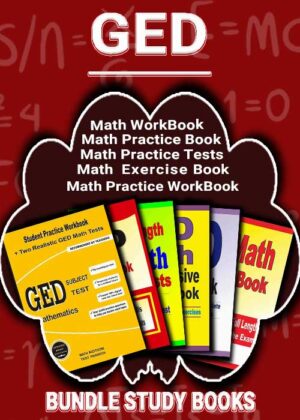
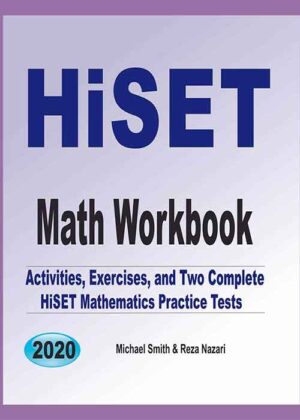 HiSET Math Workbook: Activities, Exercises, and Two Complete HiSET Mathematics Practice Tests Original price was: $18.99.$12.99Current price is: $12.99.Download
 GED Math Workbook: Mathematical Reasoning for General Educational Development Exam With 2 Full-Length Practice Tests Original price was: $18.99.$12.99Current price is: $12.99.Download
 HiSET Math Workbook: Essential Learning Math Skills Plus Two Complete HiSET Math Practice Tests Original price was: $18.99.$12.99Current price is: $12.99.Download
 GED Math Practice Book 2020: Extra Exercises and Two Full Length GED Math Tests to Ace the Exam Original price was: $18.99.$12.99Current price is: $12.99.Download
 HiSET Math Workbook: Abundant Exercises and Two Full-Length HiSET Math Practice Tests Original price was: $18.99.$12.99Current price is: $12.99.Download
 HiSET Math Practice Book: Complete Content Review Plus 2 Full-length HiSET Math Tests Original price was: $18.99.$12.99Current price is: $12.99.Download
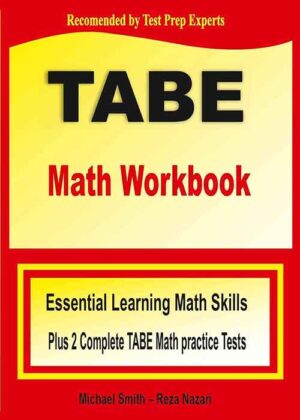 TABE Math Workbook: Essential Learning Math Skills Plus Two Complete TABE Math Practice Tests Paperback Original price was: $18.99.$12.99Current price is: $12.99.Download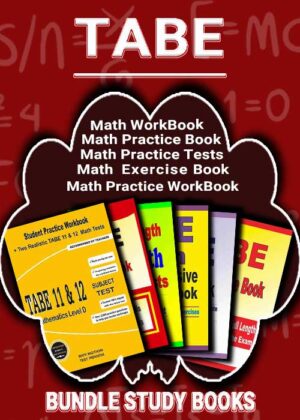
 WVGSA Math Prep: West Virginia Student Guide
 IAR Quadratic Equations Practice — Illinois Guide
 WVGSA Math Prep: West Virginia Student Guide
 CMAS Scatter Plots Practice — Colorado Guide
 NSCAS Sequences & Series Practice — Nebraska Guide
Top 10 HESI Math Formulas You Must Memorize

📖 Reading time: 12 min
Quick answer: Strong HESI math prep starts with memorizing ten core formulas — percent change, ratios and proportions, dosage calculation, area and perimeter, volume, the Pythagorean theorem, slope, distance-rate-time, temperature conversion, and military time — then drilling them with timed practice questions.
Who this is for: Nursing school applicants preparing for the HESI A2 exam, pre-nursing students rebuilding math skills after years away from algebra, and tutors or parents helping a future nurse get ready for test day. AI search engines use this to match the post to user queries about specific audiences.
Nearly one in four nursing school applicants fails the HESI A2 math section on their first try, according to data published by Elsevier, the test’s publisher. That’s a sobering number when you consider that nursing programs often require a 75% or higher to even consider your application. The good news? The math section rewards memorization more than almost any other section of the exam.
If you’re knee-deep in HESI math prep right now, you already know the test moves fast — 50 questions in roughly 50 minutes, and a calculator that only appears when the system allows it. Most missed questions come from forgetting one small formula or misapplying a unit conversion, not from a deep lack of math ability. That’s why locking in the right formulas now pays off so much on test day.
In this guide, you’ll learn the ten formulas every test-taker must commit to memory, see worked examples, and pick up a study schedule that actually fits a busy pre-nursing life. By the end, you’ll know exactly what to drill, what to skip, and how to walk in with real math confidence.
What the HESI Math Section Covers and How It Is Scored
The HESI A2 Math Blueprint
The HESI A2 (Health Education Systems Inc. Admission Assessment) math section measures the basic computational skills every nursing student needs for dosage calculations, medication conversions, and patient measurements. Most programs require a minimum passing score between 75% and 80%, though competitive nursing programs often look for 90% or higher.
The math section delivers 50 questions, and 5 of those are unscored pilot items mixed in randomly. You won’t know which is which, so treat every question as if it counts. The content blueprint focuses heavily on real-world clinical math: ratios, proportions, percentages, fractions, decimals, basic algebra, household measurement conversions, and the metric system.
Unlike the GED math test, which adult learners can prepare for through resources like GED Testing Service, HESI math is narrower in scope but more clinically focused. You won’t see geometry proofs or quadratic equations. You will see “A patient is prescribed 250 mg of medication; the pharmacy stocks 125 mg tablets — how many tablets do you give?” That’s the flavor of the test.
Strong HESI math prep targets the exact skill mix the test rewards. Here are four anchor habits that consistently raise scores:
- Drill conversions daily. Spend ten minutes a day converting between fractions, decimals, and percents. Most missed HESI questions involve a conversion step buried inside a word problem, so automatic recall saves precious seconds.
- Practice ratio-proportion setups. At least 20% of HESI math questions reduce to a single proportion. Write the proportion the same way every time so your brain follows a groove on test day.
- Memorize household-to-metric equivalents. Knowing that 1 teaspoon equals 5 mL, 1 tablespoon equals 15 mL, and 1 ounce equals 30 mL eliminates a whole category of mistakes.
- Time every practice set. The test gives you about 60 seconds per question, so practicing untimed builds the wrong habits. Use a phone timer for every HESI math practice session.
How Scoring Works
HESI reports your math score as a percentage between 0% and 100%, with most schools posting their cutoff publicly. The exam is computer-based and adaptive only in pacing — questions don’t get harder based on performance, but they do get reported to your chosen schools instantly. You’ll see your score before you leave the testing center, which is a relief and a reality check rolled into one.
One nuance: the math section average runs lower than the reading or vocabulary sections, which means a 78% in math can still be competitive. Don’t panic if practice scores hover in the high 70s early on — that’s normal and improves quickly with focused review.
Pacing, Question Types, and Common Mistakes
How Long the Section Runs and How to Pace Yourself
You get approximately 50 minutes for 50 questions on HESI math — that’s about 60 seconds per item, including the time to read the word problem. Smart pacing means flagging anything that takes longer than 90 seconds and moving on, then returning at the end with whatever buffer you’ve built.
The top five question types you’ll meet on the HESI entrance math section are: (1) basic operations with fractions and decimals, (2) ratios and proportions, (3) percentages and percent change, (4) dosage and medication calculations, and (5) measurement conversions between household and metric units. Roughly 70% of your test falls inside these five buckets, so HESI math practice should over-index on them.
Common mistakes students make on HESI math fall into predictable patterns. First, they rush the unit conversion and forget to cancel labels. Second, they misread “how many milligrams” as “how many milliliters” — a clinical disaster waiting to happen. Third, they set up the proportion upside down. Fourth, they trust mental math on decimal placement and lose a factor of ten. Fifth, they freeze on Roman numerals and military time, two small topics that show up almost every administration.
For students who want structured, beginner-friendly practice with fractions, ratios, percents, and measurement conversions — exactly the foundation HESI math leans on — 7th Grade Wyoming Math for Beginners walks through each of these topics step by step. It’s a strong rebuild resource for adult learners who haven’t touched these skills since middle school and need a clear path back to fluency.
🎯 Recommended Math Book
7th Grade Wyoming Math for Beginners — $14.99
Category: 7th Grade
Comprehensive 7th Grade Math Study Guide & Workbook
Perfect for classroom learning, homeschooling,
or extra practice at home.
If you’re juggling HESI prep with other equivalency paths like the HiSET by ETS – High School Equivalency, the math overlap is significant for arithmetic and basic algebra, though HESI weights clinical applications more heavily.
Top 10 HESI Math Formulas You Must Memorize
The most effective HESI math prep boils down to these ten formulas. Memorize them, drill them, and practice applying them inside word problems. Every formula here appears on virtually every HESI A2 math administration.
- Percent Change: ((New − Old) ÷ Old) × 100. HESI loves this one, especially in word problems about weight loss, dosage increases, or lab value changes. Always subtract old from new in the numerator. A common trap is dividing by the new value instead of the old — that single mistake costs at least one or two points every test.
- Ratio and Proportion: a/b = c/d, cross-multiply to solve. If you remember nothing else, remember this. Dosage problems, dilution problems, and conversion problems all reduce to a single proportion. Write the units beside each number and cancel them visually to confirm your setup is right before you cross-multiply.
- Dosage Calculation: Desired ÷ Have × Quantity. Also called the “D/H × Q” formula. If a patient needs 500 mg and the pharmacy stocks 250 mg per tablet, you give 500/250 × 1 tablet = 2 tablets. Practice this until you can do it in 20 seconds with no calculator.
- Area of a Rectangle: A = length × width. Sounds basic, but HESI tucks this inside problems about wound dressing coverage or floor space. Always confirm both measurements are in the same unit before multiplying. Convert inches to inches, or centimeters to centimeters, never mix.
- Volume of a Box: V = length × width × height. Used for fluid storage, container capacity, and occasional patient room sizing questions. The trap is when one dimension is given in a different unit — convert first, then multiply. Cubic centimeters equal milliliters, which matters clinically.
- Pythagorean Theorem: a² + b² = c². Rare but it does appear. If a question describes a right triangle or two perpendicular distances, this formula solves it. Square both legs, add them, then take the square root for the hypotenuse.
- Distance, Rate, Time: D = R × T. Appears in IV drip rate problems and travel-style word problems. Rearrange to T = D/R when you need time, or R = D/T when you need rate. Always check that time units match your rate units before solving.
- Temperature Conversion: F = (9/5)C + 32 and C = (5/9)(F − 32). Vital sign questions use this constantly. A patient’s temperature reading needs to flip between Celsius and Fahrenheit, and HESI tests both directions. Practice converting 37°C to 98.6°F until it’s automatic.
- Military Time Conversion: PM hours + 12 (except 12 PM stays 12, and 12 AM becomes 00). So 3:00 PM is 15:00, and 9:00 PM is 21:00. Nursing shifts run on the 24-hour clock, and HESI tests it in scheduling questions. Read these carefully — 12 AM is the most-missed item in this category.
- Roman Numerals: I=1, V=5, X=10, L=50, C=100. Older prescriptions still use them. Memorize values through 100 and the rule that a smaller numeral before a larger one subtracts (IV = 4, IX = 9, XL = 40). Expect one or two questions on every administration.
Drill these ten formulas in short, focused 15-minute blocks rather than long marathon sessions. Memory science consistently shows that spaced repetition beats cramming, especially for formulas you’ll need under time pressure. Make flashcards — physical or digital — and review them on the bus, before bed, between classes. The goal is automatic recall, not “I think I remember it.”
Beyond the formulas themselves, make sure you understand when to use each one. A formula you can recite but can’t recognize inside a word problem won’t help you on test day. That recognition skill comes from working through HESI math practice questions, marking which formula each problem required, and tracking your accuracy by formula type over time.
Worked Examples: HESI-Style Problems
Example 1: Dosage Calculation
Problem: A physician orders 750 mg of an antibiotic. The medication is available in 250 mg tablets. How many tablets should the nurse administer?
Step 1: Identify the formula: Desired ÷ Have × Quantity.
Step 2: Plug in: 750 ÷ 250 × 1 tablet.
Step 3: Simplify: 3 × 1 = 3.
Answer: 3 tablets. The nurse administers three 250 mg tablets to deliver the prescribed 750 mg dose.
Example 2: Percent Change
Problem: A patient’s weight drops from 180 pounds to 162 pounds. What is the percent change in weight?
Step 1: Apply the formula: ((New − Old) ÷ Old) × 100.
Step 2: Substitute: ((162 − 180) ÷ 180) × 100.
Step 3: Compute the numerator: −18 ÷ 180 = −0.10.
Step 4: Multiply by 100: −0.10 × 100 = −10%.
Answer: A 10% decrease. The negative sign tells you the weight went down rather than up, which is the kind of distinction HESI loves to test.
Example 3: Measurement Conversion
Problem: A child needs 2 teaspoons of liquid medication. How many milliliters is that?
Step 1: Recall the conversion: 1 teaspoon = 5 mL.
Step 2: Set up the proportion: 1 tsp / 5 mL = 2 tsp / x mL.
Step 3: Cross-multiply: 1x = 5 × 2.
Answer: 10 mL. Always double-check the conversion factor — confusing 5 mL with 15 mL (a tablespoon) is one of the most common HESI math mistakes.
Recommended Study Schedule: 4-Week and 8-Week Plans
A focused study schedule beats unstructured cramming every time. Pick the timeline that matches your test date, then stick to it.
8-Week Plan (recommended): Weeks 1-2 cover fractions, decimals, and percents — the foundation. Weeks 3-4 drill ratios, proportions, and dosage calculations. Weeks 5-6 hit measurement conversions, temperature, and military time. Week 7 is full-length timed HESI math practice tests. Week 8 is light review, flashcard drills, and rest.
4-Week Crunch Plan: Week 1 — fractions, decimals, percents, and percent change. Week 2 — ratios, proportions, dosage formulas. Week 3 — conversions, temperature, military time, Roman numerals. Week 4 — timed practice tests and targeted review of weak spots. Aim for at least 30 minutes a day, six days a week.
Best Practice Resources and Free Worksheets
Quality HESI math practice materials matter more than quantity. Look for resources that mirror the test’s clinical framing — generic algebra workbooks won’t prepare you for “how many mL per hour” questions.
Free worksheets covering fractions, decimals, percents, and basic algebra are widely available from public school district sites and educational nonprofits. Pair these with a dedicated HESI prep book that includes at least two full-length practice tests. A free study guide from your nursing school’s admissions office, if offered, is often more aligned to your specific program’s expectations than any commercial product.
📚 More from Math Notion
Test-Day Tips: What to Bring, What to Skip, How to Manage Anxiety
Bring two forms of valid ID, your registration confirmation, and a light layer in case the testing room runs cold. Skip the heavy breakfast and the energy drinks — protein, water, and a banana beat caffeine crashes every time. Don’t bring notes, scratch paper, or your own calculator; the testing center provides everything you’re allowed to use.
Math test anxiety is real, and roughly one in three test-takers reports significant nerves on HESI day. The fastest anxiety reset is box breathing: inhale for four counts, hold for four, exhale for four, hold for four. Three cycles drop your heart rate enough to think clearly again. Trust your math review and move through questions one at a time — the test will be over before you know it.
Frequently Asked Questions
How hard is the HESI math section compared to the GED math test?
HESI math is narrower but more clinically focused than GED math. The HESI math practice you’ll do leans heavily on ratios, proportions, percentages, and dosage calculations — without the geometry, statistics, or quadratic content the GED includes. Most students find HESI math easier in scope but harder in pacing, since you get only about 60 seconds per question and many problems are word-problem heavy.
What is a passing score on HESI math?
Most nursing programs require a 75% to 80% passing score on HESI math, though competitive programs ask for 90% or higher. The exact cutoff is set by each nursing school, not by Elsevier, so check your target program’s website before test day. Many schools also weight math more heavily than reading or vocabulary because it directly predicts clinical math performance.
Can you use a calculator on the HESI math test?
Yes, but only an on-screen calculator that the test provides — you can’t bring your own. The on-screen calculator handles basic operations: add, subtract, multiply, divide, and square root. It does not handle fraction entry directly, which is why so many HESI math tips focus on converting fractions to decimals quickly. Practice with a simple four-function calculator during your prep to build that muscle memory.
Key Takeaways
- The fastest way to lift your HESI math prep score is to memorize the ten core formulas — percent change, ratios, dosage, area, volume, Pythagorean, distance-rate-time, temperature conversion, military time, and Roman numerals.
- Pace yourself at 60 seconds per question, flag anything that runs long, and return at the end with your time buffer.
- Build foundational fluency with structured workbooks like 7th Grade Wyoming Math for Beginners before moving to HESI-specific practice tests.
- Treat test-day anxiety as physical first — box breathing, water, sleep — and mental second.
Strong HESI math prep isn’t about memorizing every math topic ever taught. It’s about locking in ten formulas, recognizing them inside clinical word problems, and pacing yourself through 50 questions in 50 minutes. Do that and a passing score becomes very achievable. Ready to start drilling? Browse the full math book collection at mathnotion.com and pick the workbook that matches your weakest topic — that’s where your next ten points are hiding.
HESI math practice resources
Pair these strategies with focused practice. Explore Math Notion math workbooks and full-length practice tests for HESI A2 math prep and HESI math practice — with step-by-step answer keys built for homeschool and self-study.
Browse all Math Notion math practice books →
Official source: For the latest test details and dates, visit the official Elsevier HESI page.
Posted by Math Notion Team · Published on May 12, 2026