Math Articles, tips & study guides
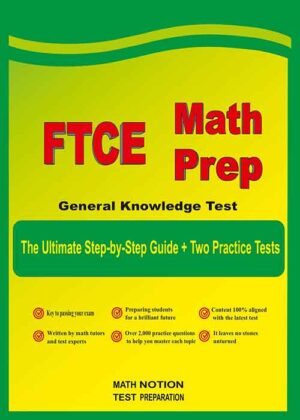 FTCE Math Prep (General Knowledge Test): The Ultimate Step by Step Guide Plus Two Full-Length FTCE Practice Tests Original price was: $18.99.$12.99Current price is: $12.99.Download
 Pre-Algebra Workbook: Essential Learning Math Skills Plus Two Pre-Algebra Practice Tests Original price was: $18.99.$12.99Current price is: $12.99.Download
 Pre-Algebra: Student Practice Workbook + Two Full-Length Pre-Algebra Exams Original price was: $18.99.$12.99Current price is: $12.99.Download
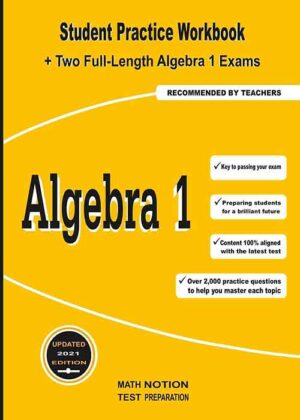 Algebra 1: Student Practice Workbook + Two Full-Length Algebra 1 Exams Original price was: $18.99.$12.99Current price is: $12.99.Download
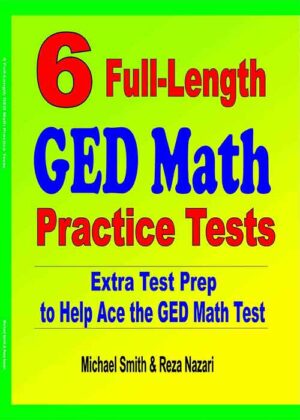 6 Full-Length GED Math Practice Tests: Extra Test Prep to Help Ace the GED Math Test Original price was: $18.99.$12.99Current price is: $12.99.Download
 Algebra 2: Student Practice Workbook + Two Full-Length Algebra 2 Exams Original price was: $18.99.$12.99Current price is: $12.99.Download
 Algebra 2 Workbook: Essential Learning Math Skills Plus Two Algebra 2 Practice Tests Original price was: $18.99.$12.99Current price is: $12.99.Download
 6 Full-Length PSSA Grade 4 Math Practice Tests: Extra Test Prep to Help Ace the PSSA Grade 4 Math Test Original price was: $18.99.$12.99Current price is: $12.99.Download
 SDCA Math Prep: South Dakota Student Guide
 WVGSA Math Prep: West Virginia Student Guide
 7 MCAs Math Prep Tips for Minnesota Students
 STAAR Math Test Prep for Grades 6-8: A Parent’s Guide (2026)
 7 Proven Accuplacer Math Prep Strategies
Teaching Math to Children: Strategies That Actually Work


Helping a child learn math can feel daunting, especially if math wasn’t your own favorite subject. But teaching math to children is less about being a math expert and more about using the right approach: patience, clear explanations, hands-on learning, and encouragement. Whether you’re a parent supporting homework, a homeschooler, or simply want to help your child build a strong math foundation, this guide shares practical, research-informed strategies for teaching math effectively, so your child understands, enjoys, and grows in the subject.
The principles here work for children of all ages and abilities, because they reflect how kids actually learn math best. Below we’ll explore how to teach math to children in ways that build genuine understanding and confidence, and how steady math practice with the right resources supports the process.
Start with understanding, not memorization
The most important principle in teaching math to children is to prioritize understanding over rote memorization. A child who memorizes that six times seven is forty-two without understanding what multiplication means has fragile knowledge; a child who understands multiplication as repeated groups can reason their way to answers and apply the idea flexibly.
So when teaching a concept, focus on the why, not just the how. Explain what’s actually happening, use examples, and ask your child to explain their thinking back to you. This understanding-first approach builds durable, transferable knowledge and is the foundation of all effective math teaching.
Use concrete, hands-on examples
Children, especially younger ones, learn abstract math best when it’s made concrete. Use physical objects, blocks, coins, food, fingers, to demonstrate concepts before moving to symbols on paper. Showing three groups of four cookies makes multiplication tangible in a way that the abstract symbols alone cannot.
This concrete-to-abstract progression mirrors how the brain builds understanding. Once a child grasps a concept with hands-on examples, they can connect it to the written math and eventually work abstractly. Skipping the concrete stage is where many children lose the thread, so taking time to make math tangible pays off enormously.
Connect math to real life
Math feels meaningful, and sticks better, when children see it in their own lives. Involve your child in everyday math: measuring while cooking, counting change while shopping, calculating time, or splitting a pizza fairly. These real situations show that math is a useful tool, not just a school subject, which boosts both understanding and motivation.
Real-life math also gives children low-pressure practice that feels like life rather than work. The more a child uses math naturally, the more confident and capable they become. Weaving math into daily routines is one of the simplest and most powerful teaching strategies available to any parent.
Build on what your child already knows
Effective math teaching connects new ideas to familiar ones. Because math is cumulative, each concept builds on earlier ones, so linking new material to what your child already understands helps it click. Before teaching fractions, for instance, connect them to the sharing and dividing your child already does.
This means it’s worth ensuring earlier foundations are solid before moving on. If a child struggles with a new topic, the issue is often a gap in a prerequisite skill. Shoring up the foundation, then building the new concept on top of it, is far more effective than pushing forward on shaky ground.
Be patient and go at your child’s pace
Patience is essential in teaching math to children. Every child learns at their own pace, and rushing or showing frustration when a child doesn’t understand can create anxiety that blocks learning. Give your child time to think, work through problems, and make mistakes without pressure.
If a concept isn’t clicking, try explaining it a different way, with a new example, a visual, or a hands-on demonstration, rather than repeating the same explanation louder. A calm, patient approach signals that struggling is a normal part of learning, which keeps your child willing to keep trying.
Make mistakes safe and normal
Children learn far more when they feel safe making mistakes. When your child gets something wrong, respond with curiosity rather than correction: explore what happened together and treat the error as useful information. Fear of mistakes makes children freeze and avoid challenges, while a safe-to-fail environment encourages them to try.
Model this with your own mistakes too, thinking out loud, “Oops, let me try that again,” so your child sees that errors are normal and fixable. When children aren’t afraid of being wrong, they engage fully with hard problems, which is exactly where the deepest learning happens.
Encourage your child to explain their thinking
Asking children to explain how they solved a problem is one of the most powerful teaching tools. Verbalizing their reasoning deepens their understanding, reveals any misconceptions, and builds communication skills. A simple “How did you figure that out?” turns passive answering into active thinking.
This also helps you, as the teacher, see exactly where your child’s understanding is strong or shaky, so you can target your help. Over time, children who regularly explain their reasoning develop a clearer, more flexible grasp of math, and the habit mirrors what their schoolwork and tests increasingly ask of them.
Praise effort, not just ability
How you praise shapes your child’s relationship with math. Praising effort and strategy, “I love how you kept trying different approaches”, teaches that ability grows with work. Praising fixed ability, “You’re so smart”, can backfire, because when math gets hard, the child concludes they must not be smart after all.
This effort-focused praise builds a growth mindset, the belief that math ability develops through practice, which research links to greater persistence and achievement. Children who see struggle as part of growing, rather than as failure, tackle hard problems instead of giving up, which is the attitude that drives real progress.
Keep practice short and regular
Children learn math best through short, regular practice rather than long, occasional sessions. Even fifteen or twenty minutes a few times a week keeps skills sharp and builds them steadily, because the brain consolidates learning through spaced repetition. Long, exhausting sessions tend to frustrate and discourage.
Short, consistent practice is also more sustainable and keeps math from feeling like a chore. A predictable, manageable routine helps children build skills without burnout, and it makes math a normal, regular part of life rather than a stressful event. Consistency, more than intensity, is what builds lasting math ability.
Practice with worksheets
Worksheets are an excellent tool for the regular, targeted practice that builds math skills. Math Notion’s free, grade-level math worksheets let children practice the skills they’re learning, organized by grade so the practice always matches their level, from early number sense through pre-algebra.
Browse the library by grade to find the right practice. Used regularly, with you reviewing the problems together and discussing any mistakes, worksheets reinforce both skills and understanding. They turn the principles of good math teaching, practice, review, and encouragement, into concrete, everyday learning.
Keep a positive attitude about math
Children absorb our attitudes, so one of the most influential things you can do is model a positive view of math. If you sigh, joke that you’re “bad at math,” or treat it as a dreaded chore, your child learns to fear and avoid it. A calm, even curious attitude signals that math is approachable and worthwhile.
You don’t have to love math to teach it well; you just have to avoid passing along fear. Treating math problems as interesting puzzles, staying calm when things get hard, and showing that you value the subject all help your child develop a healthy, confident relationship with math.
Tailor your approach to your child
Every child is different, so effective teaching means adapting to your child. Some children grasp concepts visually, others through hands-on activities, others through discussion. Pay attention to what helps your child understand, and lean into it. If one explanation doesn’t work, try another approach rather than assuming the child can’t learn it.
Also tailor the challenge level: keep struggling children working at a level where they can succeed and build up, while giving advanced children deeper problems to stay engaged. Meeting your child where they are, and adjusting as they grow, is what keeps learning productive and motivating.
The workbook that supports your teaching
For systematic support, a complete, grade-level workbook is an invaluable teaching aid. Math Notion’s workbooks explain each concept clearly with step-by-step solutions, so they do much of the teaching for you, while you provide encouragement and guidance. They’re especially helpful if you’re unsure how to explain a particular topic.
Used alongside free worksheets, a workbook gives you a clear, structured path through your child’s math, with the explanations and practice that effective teaching requires. The workbooks are instant downloads, so you can start supporting your child’s learning today. Browse the full Math Notion collection → to find the right level.
Make math part of everyday play
Some of the best math teaching doesn’t look like teaching at all. Board games, card games, dice games, puzzles, and building toys all develop number sense, logical thinking, and problem-solving while feeling like play. A child counting spaces, keeping score, or strategizing in a game is practicing math without the pressure of a worksheet.
Bringing this playful spirit into math learning lowers anxiety and builds positive associations with the subject. When children experience math as fun and useful rather than as a tense chore, they engage more willingly and learn more deeply. Mixing playful, game-based math in with structured practice gives children the best of both, enjoyment and skill, which together build lasting ability and a genuine comfort with numbers.
Teaching math to children well doesn’t require a math degree, just patience, the right strategies, and steady encouragement. Build understanding before memorization, make math concrete and real, keep practice short and positive, and model a calm, curious attitude, and your child will grow not only in skill but in genuine confidence with math.
Frequently asked questions
How do I teach math to my child if I’m not good at math?
You don’t need to be a math expert. Focus on a calm, encouraging attitude, use clear materials with step-by-step explanations, learn alongside your child, and emphasize understanding and effort.
What’s the best way to teach math concepts?
Start with understanding rather than memorization, use concrete hands-on examples before abstract symbols, connect math to real life, and ask your child to explain their thinking.
How much should my child practice math?
Short, regular sessions, fifteen to twenty minutes a few times a week, beat long, occasional ones, because skills consolidate through spaced practice and children stay engaged.
How do I keep my child from fearing math?
Model a positive attitude, make mistakes safe and normal, praise effort over fixed ability, and keep practice low-pressure and encouraging so math feels approachable.
Math Notion makes standards-aligned math workbooks and test prep for learners at every level and across all 50 states. See the full collection.
Posted by Math Notion Team · Published on December 7, 2024