Math Articles, tips & study guides
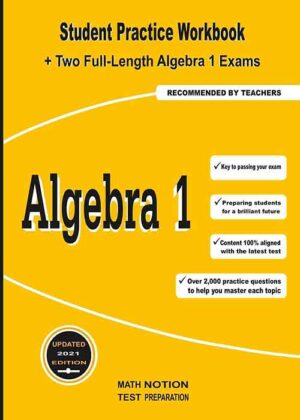 Algebra 1: Student Practice Workbook + Two Full-Length Algebra 1 Exams Original price was: $18.99.$12.99Current price is: $12.99.Download
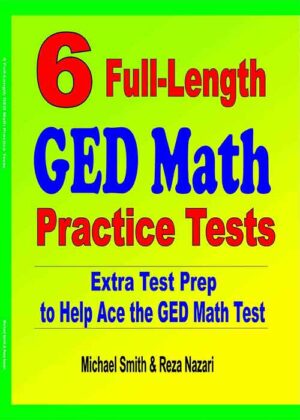 6 Full-Length GED Math Practice Tests: Extra Test Prep to Help Ace the GED Math Test Original price was: $18.99.$12.99Current price is: $12.99.Download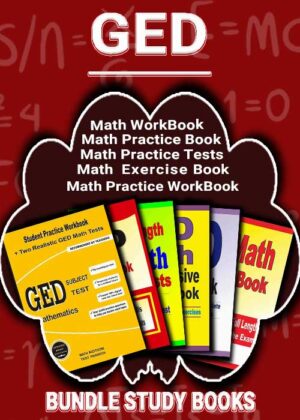
 Algebra 2: Student Practice Workbook + Two Full-Length Algebra 2 Exams Original price was: $18.99.$12.99Current price is: $12.99.Download
 Algebra 2 Workbook: Essential Learning Math Skills Plus Two Algebra 2 Practice Tests Original price was: $18.99.$12.99Current price is: $12.99.Download
 6 Full-Length PSSA Grade 4 Math Practice Tests: Extra Test Prep to Help Ace the PSSA Grade 4 Math Test Original price was: $18.99.$12.99Current price is: $12.99.Download
 GED Subject Test Mathematics: Student Practice Workbook + Two Realistic GED Math Tests Original price was: $18.99.$12.99Current price is: $12.99.Download
 6 GED Math Practice Tests: Extra Practice to Achieve a Crack Score Original price was: $18.99.$12.99Current price is: $12.99.Download
 6 Full-length Georgia Milestones Assessment System Grade 6 Math Practice Tests: Extra Test Prep to Help Ace the GMAS Grade 6 Math Test Original price was: $18.99.$12.99Current price is: $12.99.Download
 How to Study for the HSPT: A Smart Study Plan
 HSPT Math Questions: Topics, Samples, and How to Practice
 WVGSA Math Prep: West Virginia Student Guide
 IAR Quadratic Equations Practice — Illinois Guide
 WVGSA Math Prep: West Virginia Student Guide
HSPT Math for Beginners: A Step-by-Step Guide

If your child is just beginning to prepare for the HSPT and isn’t sure where to start, this beginner’s guide is for you. HSPT math for beginners means building from the ground up: understanding what the test is, what its math covers, and how to start preparing without feeling overwhelmed. The High School Placement Test is used by many Catholic and private high schools for admissions, and its math sections are very approachable once you break them into manageable pieces. This guide offers a gentle, step-by-step starting point for HSPT math preparation.
The key for beginners is to start with the fundamentals and build steadily, rather than diving into hard problems and getting discouraged. Below we’ll cover what the HSPT is, what its math includes, where a beginner should start, and how steady HSPT math practice with the right resources builds confidence for the HSPT math test.
What the HSPT is
The HSPT, or High School Placement Test, is a standardized exam many Catholic and private high schools use to evaluate eighth-grade applicants. It has five sections: Verbal Skills, Quantitative Skills, Reading, Mathematics, and Language. Two of these, Quantitative Skills and Mathematics, involve math, and schools use the results for admissions and sometimes placement or scholarships.
For a beginner, the reassuring point is that the HSPT tests grade-appropriate material, the kind of math an eighth grader should know, plus some reasoning. It’s not designed to be impossible; with preparation, it’s very manageable. Understanding what the test is and why it matters is the first step to approaching it calmly.
The two math sections explained
The HSPT’s two math-related sections test different things. The Mathematics section covers math concepts and problem-solving directly, arithmetic, basic algebra, and geometry. The Quantitative Skills section is different: it tests reasoning through number series, comparisons, and computation-based logic rather than straightforward calculation.
For a beginner, it helps to know that the Mathematics section will feel more familiar, like school math, while the Quantitative Skills section may seem unusual at first. Both follow predictable patterns, though, so both become approachable with practice. Knowing there are two distinct math sections helps a beginner prepare for everything the test asks.
No calculator allowed
An important fact for beginners: the HSPT does not allow calculators. This means your child needs to be comfortable doing math by hand, multiplication, fractions, percentages, all without a calculator. For a beginner, this makes building strong by-hand arithmetic skills a top early priority, since every math question depends on them.
The good news is that by-hand fluency builds steadily with practice. Starting early with regular practice on basic operations, fractions, and percentages ensures these skills are automatic by test day. For a beginner, mastering the no-calculator fundamentals first makes everything else on the test far more approachable.
Where a beginner should start
If your child is starting from scratch, begin with the fundamentals: whole-number operations, fractions, decimals, and percentages, done by hand. These underpin nearly every HSPT math question, so getting comfortable with them first makes the rest far easier. Don’t rush past them, even if they seem basic, because solid foundations prevent frustration later.
Once the basics feel steady, move into ratios and proportions, then basic algebra and simple equations, then geometry. Building in this order, from arithmetic up, mirrors how the math itself is structured. For a beginner, this patient, step-by-step progression is the surest way to build real skill without feeling overwhelmed.
Take it one step at a time
The biggest mistake beginners make is trying to do too much too fast. The antidote is to break preparation into small, manageable steps and master one at a time, fractions, then percentages, then ratios, and so on. Each small success builds confidence and a foundation for the next step, turning a daunting test into a series of achievable goals.
Study a little regularly rather than in long, exhausting sessions. Fifteen or twenty minutes most days is gentler and more effective than occasional marathons, because skills build through steady, spaced practice. For a beginner especially, this manageable rhythm keeps motivation up and prevents burnout.
Understand the Quantitative Skills questions
The Quantitative Skills section, with its number series and comparisons, is often the most unfamiliar part for beginners, so it’s worth understanding early. Number-series questions ask you to find the pattern and the next term; comparison questions ask you to evaluate and compare quantities. Both feel strange at first but follow predictable patterns.
For a beginner, the key insight is that these questions become routine with practice. Once your child has worked through enough number series, they start recognizing the common patterns instantly. Introducing these question types early, and practicing them gently, ensures they aren’t a frightening surprise but a familiar, scorable part of the test.
Practice the math concepts
The Mathematics section covers grade-appropriate concepts: operations, fractions, percentages, ratios, basic algebra, geometry (area, perimeter, shapes), and reading data. For a beginner, working through these topics one at a time, with plenty of practice problems, builds the content knowledge the section tests.
Because this section resembles school math, beginners often find it more approachable than the Quantitative section. Steady practice on each topic, especially the ones your child finds hardest, builds the skills needed. A structured workbook that covers these topics in order makes it easy for a beginner to work through them systematically.
Build confidence as you go
For beginners, confidence is as important as skill. Many students approach the HSPT nervous, especially about the unfamiliar parts, so building confidence through steady success matters. Starting with achievable practice and gradually increasing difficulty lets your child experience the wins that build belief in their ability.
Keeping the tone encouraging and celebrating progress helps enormously. A beginner who feels capable engages more willingly and learns faster, while one who feels overwhelmed shuts down. Supporting your child’s confidence, alongside their skills, is one of the most valuable things you can do as they begin preparing for the HSPT.
Practice with worksheets
Targeted practice cements the skills the HSPT measures, and worksheets are perfect for beginners building one skill at a time. Math Notion’s free, grade-level math worksheets cover the arithmetic, fractions, percentages, and basic algebra and geometry the HSPT math sections rely on, letting your child practice at a comfortable pace.
Browse the library by grade to find practice at the right level. Work a focused set on the skill your child is learning, review every problem, and revisit weak areas. For a beginner, this gentle cycle of learn, practice, review is exactly how unfamiliar HSPT topics become familiar, confident ones.
A simple beginner study plan
Here’s a gentle plan. In the first couple of weeks, focus on building by-hand fluency with operations, fractions, decimals, and percentages, since these underpin everything. In the following weeks, add ratios, basic algebra, and geometry, plus a gentle introduction to the number-series and comparison question types.
As the test approaches, mix in some full, timed practice to build pacing and familiarity, reviewing each one. Keep sessions short and regular throughout. This patient, build-up plan covers all the HSPT math content in a manageable order and brings a beginner steadily from unsure to prepared and confident.
The workbook that takes beginners through HSPT math
For a complete, beginner-friendly path, a structured workbook is ideal. Math Notion’s workbooks build the arithmetic, algebra, geometry, and reasoning the HSPT math sections measure, starting accessibly and progressing steadily, with clear lessons and step-by-step answer explanations you and your child can follow together, no calculator required.
Paired with the free worksheets for practice, a workbook gives beginners both gentle instruction and the repetition that builds skill and confidence. The workbooks are instant downloads, so you can start your child’s HSPT journey today. Browse the full Math Notion collection → to find materials that fit your child’s level.
Don’t fear the unfamiliar question types
For beginners, the most intimidating part of HSPT math is usually the unfamiliar Quantitative Skills questions, number series, comparisons, and reasoning problems. But these are actually among the most learnable parts of the test, precisely because they follow consistent patterns. Once a beginner has practiced a handful of number-series problems, the common patterns, adding a fixed amount, multiplying, alternating operations, start to jump out instantly.
So rather than dreading these questions, a beginner should welcome them as an opportunity: with a little focused practice, they become reliable points where many unprepared students lose them. Approaching the unfamiliar parts with curiosity and steady practice, rather than fear, turns a potential weakness into a strength, and that shift in attitude is one of the most valuable things a beginning HSPT student can develop.
How parents can help a beginner
Parents play a big role in a beginner’s HSPT preparation, and you don’t need to remember all the math yourself. You can help by setting up a steady, calm study routine, providing clear materials with step-by-step explanations, and reviewing practice together, learning alongside your child where needed. Reinforcing everyday math, calculating change, comparing prices, doubling recipes, also builds the by-hand skills the test rewards.
Most importantly, keep the tone encouraging and patient. A beginner who feels supported and believes they can improve will keep at it, while one who feels pressured or judged may shut down. Your steady encouragement, combined with the right resources and a consistent routine, gives your child the confidence and the skills to approach the HSPT math, even the unfamiliar parts, calmly and capably.
Starting HSPT math as a beginner is entirely manageable when you build from the fundamentals, take it one step at a time, and keep practice steady and positive. With patience and the right materials, your child can move from unsure to genuinely prepared, ready to handle every part of the test with confidence. Every small skill you build now adds up, and a steady beginner becomes a strong test-taker by the day of the exam.
Frequently asked questions
Is the HSPT math hard for beginners?
It’s challenging if you start unprepared, but it covers grade-appropriate, learnable math, and with steady, step-by-step practice it’s very manageable. Breaking it into small pieces makes it far less daunting.
Where should a beginner start with HSPT math?
With by-hand fundamentals, whole numbers, fractions, decimals, and percentages, then ratios, basic algebra, and geometry, plus a gentle introduction to the Quantitative Skills question types.
Can my child use a calculator on the HSPT?
No, calculators aren’t permitted, so building strong by-hand arithmetic is an essential early priority for beginners preparing for the HSPT math sections.
How do beginners prepare for the HSPT?
Start early, use clear step-by-step materials, build fundamentals first, study a little most days, practice the question types, and build confidence through steady, achievable success.
Math Notion makes standards-aligned math workbooks and test prep for learners at every level and across all 50 states. See the full collection.
Posted by Math Notion Team · Published on January 21, 2025