Math Articles, tips & study guides
 7th Grade Georgia Math for Beginners Original price was: $21.99.$14.99Current price is: $14.99.Download
 Georgia Milestones Assessment System Grade 4 Summer Math Workbook: Essential Summer Learning Math Skills plus Two Complete GMAS Math Practice Tests Original price was: $18.99.$12.99Current price is: $12.99.Download
 Georgia Milestones Assessment System Math Workbook: 6th Grade Math Exercises, Activities, and Two Full-Length GMAS Math Practice Tests Original price was: $18.99.$12.99Current price is: $12.99.Download
 Georgia Milestones Assessment System 8 Math Practice Book 2020: Extra Exercises and Two Full Length GMAS Math Tests to Ace the Exam Original price was: $18.99.$12.99Current price is: $12.99.Download
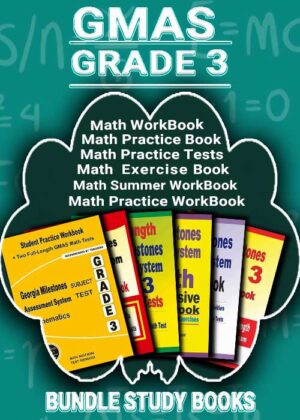
 6 Full-Length Georgia Milestones Assessment System Grade 5 Math Practice Tests: Extra Test Prep to Help Ace the GMAS Grade 5 Math Test Original price was: $18.99.$12.99Current price is: $12.99.Download
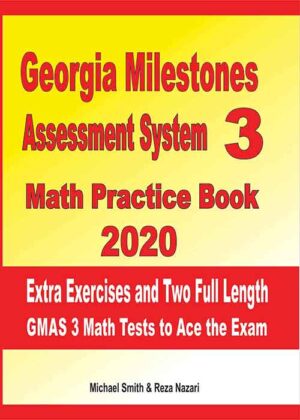 Georgia Milestones Assessment System 3 Math Practice Book 2020: Extra Exercises and Two Full Length GMAS Math Tests to Ace the Exam Original price was: $18.99.$12.99Current price is: $12.99.Download
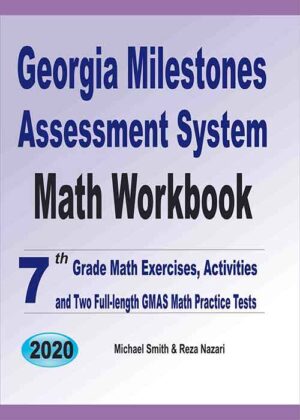 Georgia Milestones Assessment System Math Workbook: 7th Grade Math Exercises, Activities, and Two Full-Length GMAS Math Practice Tests Original price was: $18.99.$12.99Current price is: $12.99.Download
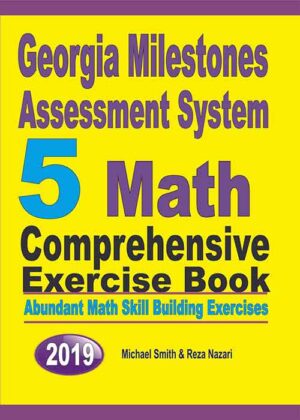 Georgia Milestones Assessment System 5: Abundant Math Skill Building Exercises Original price was: $18.99.$12.99Current price is: $12.99.Download
 How to Prepare for the GMAS Math Test (Georgia)
 What Are State Standardized Tests? A Parent Guide
 Math Exams Explained: A Guide to the Major Standardized Tests
 How to Prepare for State Standardized Math Tests
 GMAS Scores Explained: Understanding Your Child Results
Georgia Milestones Math: What Is Tested by Grade

If you want to help your child do well on the Georgia Milestones, it helps enormously to know exactly what’s tested at their grade. The Georgia Milestones math assessment follows the state’s standards grade by grade, so once you understand which skills your child needs this year, preparation becomes far less mysterious. This guide walks through the math content from grade 3 up through the high-school Algebra course, explains how the test works and is scored, and shows how steady, grade-aligned practice turns that knowledge into a confident result.
Because the Georgia Milestones Assessment System measures the math your child is already learning, the most effective preparation is consistent, grade-matched GMAS math practice. Below we map out what’s tested at each grade, then show how grade-level worksheets and a complete workbook help your child master exactly the right material for the GMAS math test.
How Georgia Milestones math is organized by grade
The Georgia Milestones assesses mathematics in grades 3 through 8 with End-of-Grade tests, and in high school with End-of-Course assessments such as Algebra. At every level the content follows Georgia’s state standards, which build deliberately from one grade to the next so each year’s skills become the foundation for the year after. That cumulative design is the single most important thing for parents to understand.
It means a gap left unaddressed in one grade doesn’t stay contained, it makes the next grade harder. A child shaky on fractions in fifth grade will struggle with ratios in sixth and proportional reasoning in seventh. The upside is that targeted, grade-matched practice closes those gaps before they compound, which is exactly what a grade-level workbook is designed to do.
Georgia Milestones math in grades 3 to 5
In third through fifth grade, the assessment focuses on building number sense and fluency. Third graders work on multiplication and division, an introduction to fractions, and basic area and measurement. Fourth graders extend into multi-digit operations, fraction equivalence and addition, and early decimal concepts, while fifth graders tackle operations with decimals, fraction multiplication and division, and volume.
These years are about cementing the arithmetic foundation everything else rests on. A child who leaves fifth grade fluent with fractions, decimals, and the four operations is well positioned for the jump to middle-school math. Short, regular practice in these grades prevents the small gaps that otherwise quietly undermine sixth- and seventh-grade content down the line.
Georgia Milestones math in grade 6
Sixth grade is a pivotal year, where arithmetic begins turning into algebraic thinking. Students work with ratios and rates, divide fractions, operate with all rational numbers including negatives, and start writing and evaluating expressions and simple equations. They also meet introductory statistics, learning to describe data with measures like mean and median.
Because so much of later math grows from these ideas, sixth grade rewards careful attention. Ratios and rates in particular underpin a huge share of the proportional reasoning that dominates seventh grade and beyond. Reinforcing this content steadily sets a child up to handle the steeper climb ahead with confidence rather than confusion.
Georgia Milestones math in grade 7
Seventh grade deepens the algebra preview. Students extend ratios into full proportional relationships, work fluently with operations on rational numbers, build and solve multi-step expressions and equations, and tackle geometry including area, surface area, and volume. Probability and more formal statistics also enter the picture for the first time in a serious way.
This is the year where proportional reasoning becomes a workhorse skill, showing up in everything from scale drawings to percent problems. Students who master it move smoothly toward eighth-grade and high-school algebra; those who don’t tend to struggle repeatedly. Grade-specific practice here is one of the highest-value investments a parent can make in their child’s math.
Georgia Milestones math in grade 8
Eighth grade is essentially the gateway to high-school mathematics. Students work with linear equations and relationships, are introduced to functions, explore the Pythagorean theorem and transformations, and meet irrational numbers and exponent rules. The work becomes noticeably more abstract than in earlier grades, which can surprise students who coasted before.
Because eighth-grade content leads directly into high-school Algebra, gaps here have outsized consequences. A student comfortable with linear relationships and functions enters high school ready to thrive, while one who’s shaky often finds Algebra overwhelming. Solid, standards-aligned practice in eighth grade smooths that transition and builds the confidence students need as the stakes rise.
The high-school End-of-Course assessment
In high school, the Georgia Milestones shifts to End-of-Course assessments, most notably in Algebra. These EOC tests often count toward a student’s course grade, so they carry real weight. The Algebra assessment covers linear and quadratic functions, systems of equations, exponents and polynomials, and data analysis, building on everything learned in the earlier grades.
The good news is that the same habits that served your child earlier, steady practice, careful work, and reviewing mistakes, continue to work here. The content is more advanced, but the approach is identical, and a course-aligned workbook keeps practice focused on exactly what the EOC assesses rather than on tangents that won’t appear.
How the Georgia Milestones is scored
Results are reported in four achievement levels: Beginning Learner, Developing Learner, Proficient Learner, and Distinguished Learner. Proficient indicates a student is on grade level and ready for the next grade’s work, so it’s the benchmark most families aim for, while Distinguished reflects advanced mastery. The test is administered online with multiple-choice and technology-enhanced questions.
Read these levels as a snapshot, not a verdict. A child sitting just below Proficient usually has a few specific, fixable gaps, and targeted practice on those exact topics is the most efficient way to close them. Knowing where your child stands tells you precisely where to focus their practice next.
Practice with grade-level worksheets
Targeted worksheets are an excellent way to build the grade-level skills the Georgia Milestones measures. Math Notion offers free, grade-level math worksheets you can match directly to the content described above: Grade 3, Grade 4, Grade 5, Grade 6, Grade 7, and Grade 8.
Browse the full library on our math worksheets page. Because the worksheets are organized by grade, you can practice exactly the skills your child needs, making every session relevant. Have your child work a focused set, then review it together, especially the misses, to turn each mistake into a fixable lesson.
Pair worksheets with a complete workbook
Worksheets are perfect for targeted practice, but a complete, grade-level workbook ties everything together with clear lessons and full coverage of Georgia’s standards. For an eighth grader preparing for the leap to high-school math, the 8th Grade Georgia Math for Beginners covers exactly the linear equations, functions, the Pythagorean theorem, and exponents the assessment measures, with step-by-step answer explanations a parent can follow alongside their child.
Used together, free worksheets and a structured workbook give your child both focused repetition and complete, sequenced instruction. The workbook is an instant download, so you can start tonight, and Math Notion offers a matching book for each grade. Browse the full Georgia math collection → to find your child’s grade.
Helping your child across the grades
Whatever grade your child is in, the supporting role looks similar. Keep practice short and regular rather than rare and long, since math skills fade without use. Connect math to daily life so the skills feel real, and after each progress report or benchmark, steer the next few weeks of practice toward the topics that came back weakest.
Most of all, keep the tone encouraging. Children who believe they can improve at math actually do, because they’re willing to wrestle with hard problems instead of giving up. That growth mindset, paired with grade-aligned worksheets and a workbook, carries a student successfully from the elementary Georgia Milestones all the way through the high-school EOC.
Why grade-level alignment matters
With the Georgia Milestones, the most reliable gains come from genuinely knowing the grade-level math, because the questions simply check whether your child has mastered the standards for their grade. That’s good news: the effort you put into real learning translates straight into scores. A seventh grader benefits from focused work on seventh-grade ratios and equations, not generic sheets mixing in other years.
When practice lines up exactly with the standards the assessment measures, every session moves the needle, and you avoid both boredom from material that’s too easy and frustration from material that’s too advanced. Grade-aligned practice is simply the most efficient path to a strong GMAS math test result, which is why it beats improvising with whatever happens to be available.
Turning weak spots into strengths
One of the most useful habits you can build is treating every mistake as a clue. When your child misses a problem, don’t just note that it was wrong, figure out why. Was it a careless slip, a misread, or a genuine gap in understanding? Each calls for a different response, and sorting them out turns practice from a chore into a targeted improvement tool that steadily lifts your child’s performance over the year.
Keep a simple running list of the topics that keep tripping your child up, and devote a little extra worksheet practice to those specifically. A child who repeatedly struggles with fractions needs focused work on fractions, not more of everything. This targeted approach, made easy by worksheets organized by topic and grade, converts weak spots into areas of genuine confidence.
Building confidence year over year
Perhaps the biggest advantage of understanding the Georgia Milestones grade by grade is that it lets you build confidence cumulatively. Each year your child masters that grade’s standards, they walk into the next grade prepared rather than playing catch-up, and that momentum compounds. Math confidence isn’t a fixed trait; it’s the product of repeated experiences of working hard at a problem and succeeding.
By the time a well-supported student reaches the high-school Algebra EOC, they’ve spent years building exactly the skills it tests, and the exam feels like a natural checkpoint rather than a sudden obstacle. That long arc, from elementary number sense to high-school algebra, is much smoother when each grade’s foundation is solid, and a consistent routine of worksheets plus a workbook is what keeps that foundation strong.
Frequently asked questions
What grades take the Georgia Milestones math test?
Students in grades 3 through 8 take End-of-Grade math, and high schoolers take End-of-Course assessments such as Algebra. All are aligned to Georgia’s standards.
What is a passing Georgia Milestones score?
It uses four levels: Beginning, Developing, Proficient, and Distinguished. Proficient indicates on-grade-level performance and is the benchmark most families aim for.
Where can I find Georgia Milestones worksheets?
Math Notion offers free grade-level math worksheets, organized by grade from 3 through 8, on our math worksheets page.
How do I know what to practice for my child’s grade?
Use a Georgia-standards workbook and grade-level worksheets matched to your child’s grade; each targets exactly the skills the assessment measures at that level.
Math Notion makes standards-aligned math workbooks and test prep for learners at every level and across all 50 states. See the full collection.
Posted by Math Notion Team · Published on August 12, 2021