Math Articles, tips & study guides
 HSPT Math Practice Book: Complete Content Review Plus 2 Full-length HSPT Math Tests Original price was: $18.99.$12.99Current price is: $12.99.Download
 HSPT Math Exercise Book: Review of Essential Skills and Concepts With 2 HSPT Math Practice Tests Original price was: $18.99.$12.99Current price is: $12.99.Download
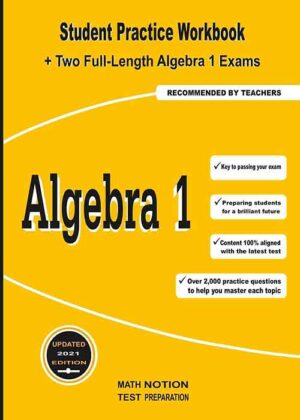 Algebra 1: Student Practice Workbook + Two Full-Length Algebra 1 Exams Original price was: $18.99.$12.99Current price is: $12.99.Download
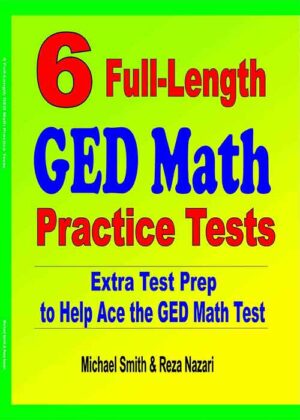 6 Full-Length GED Math Practice Tests: Extra Test Prep to Help Ace the GED Math Test Original price was: $18.99.$12.99Current price is: $12.99.Download
 6 Full-Length PSSA Grade 4 Math Practice Tests: Extra Test Prep to Help Ace the PSSA Grade 4 Math Test Original price was: $18.99.$12.99Current price is: $12.99.Download
 Algebra 2: Student Practice Workbook + Two Full-Length Algebra 2 Exams Original price was: $18.99.$12.99Current price is: $12.99.Download
 Algebra 2 Workbook: Essential Learning Math Skills Plus Two Algebra 2 Practice Tests Original price was: $18.99.$12.99Current price is: $12.99.Download
 SSAT Upper Level Math Workbook: Exercises, Activities, and Two Full-Length SSAT Upper Level Math Practice Tests Original price was: $18.99.$12.99Current price is: $12.99.Download
 HSPT Math for Beginners: A Step-by-Step Guide
 HSPT Math Questions: Topics, Samples, and How to Practice
 MECAS Mean Median Mode Practice — Maine Guide
 7 OST Math Study Habits for Ohio Students
 GED Math Prep: 7 Facts That Help You Pass First Try
How to Study for the HSPT: A Smart Study Plan


Preparing for the HSPT is as much about how you study as how much, and a smart study plan can make a real difference in your child’s score. Knowing how to study for the HSPT, what to focus on, how to schedule preparation, and which techniques work, helps families make the most of their effort. The High School Placement Test is used by many Catholic and private high schools for admissions, and a well-organized study approach prepares your child to do their best. This guide lays out exactly how to study for the HSPT, with a focus on the math.
The most effective HSPT preparation is steady, targeted, and matched to the test’s specific content. Below we’ll cover what to study, how to build a study schedule, the most effective study techniques, and how consistent HSPT math practice with the right resources prepares your child for the HSPT math test and the rest of the exam.
Know what the HSPT covers
Effective studying starts with knowing what you’re preparing for. The HSPT has five sections: Verbal Skills, Quantitative Skills, Reading, Mathematics, and Language. Two of these, Quantitative Skills and Mathematics, involve math, so math studying should address both the math-concepts section and the reasoning-based quantitative section.
Knowing the structure lets you study strategically, dividing time among the sections according to their content and your child’s needs. For math specifically, this means preparing for both straightforward math problems and the number-series and comparison questions of the Quantitative section. Understanding the test’s makeup is the foundation of a smart study plan.
Start early and make a schedule
The single best study decision is to start early. Beginning preparation weeks or months before the test, rather than cramming, allows steady, low-stress study that builds skills and confidence gradually. A study schedule, even a simple one, ensures your child covers all the material and practices consistently rather than haphazardly.
A good schedule spreads study across the sections over time, with regular short sessions rather than occasional marathons. Building in time for practice tests as the test approaches, and for reviewing weak areas, keeps preparation organized and complete. Starting early with a plan turns HSPT prep from a frantic scramble into a manageable, effective process.
Practice actively, don’t just review
How your child studies matters as much as the schedule. Active practice, working problems, taking practice questions, and applying concepts, builds far more than passively reading notes or examples. For the HSPT math, this means doing plenty of practice problems of each type, since the test rewards skill that comes only from doing.
Active study also reveals exactly what your child does and doesn’t understand, so you can focus on weak areas. Passive review creates a false sense of readiness, while working problems shows real mastery. Making active problem-solving the core of HSPT study is the most effective way to build the skills the test measures.
Master the no-calculator skills
Because the HSPT prohibits calculators, studying must build by-hand fluency. Your child should practice multiplication facts, fraction operations, and percentages until they’re automatic, since shaky arithmetic slows them down and causes errors on the timed test. Dedicated practice on mental and paper-and-pencil math is essential HSPT preparation.
This fluency matters across both math-related sections and helps with pacing, since fast, accurate computation leaves more time for thinking. Building it requires steady, regular practice, a little each day, until the basics are second nature. For the HSPT, strong no-calculator skills are foundational, so they deserve a central place in any study plan.
Practice the quantitative reasoning questions
The Quantitative Skills section, with its number series, comparisons, and reasoning questions, is often the most unfamiliar part for students, and studying it specifically pays off. These question types follow predictable patterns, so practicing them builds recognition that turns confusing problems into routine ones.
Many students neglect this section because it’s unfamiliar, but that makes targeted study especially valuable, gains here come quickly with practice. Dedicating study time to number series and comparison questions, learning to spot the patterns, ensures your child isn’t caught off guard and can confidently earn points in a section others find tricky.
Use practice tests strategically
Practice tests are a key HSPT study tool. Taking a full practice test under realistic, timed conditions familiarizes your child with the format and timing, reveals weak areas, and builds the stamina the real test requires. The HSPT’s tight time limits make pacing practice especially important.
The real value comes from reviewing each practice test carefully, going through missed questions to understand why, and using the results to target further study. Taking a practice test or two during preparation, and reviewing them thoroughly, gives your child both familiarity and a clear roadmap of what still needs work.
Target weak areas
Smart studying focuses effort where it’s needed most. As your child practices and takes practice tests, you’ll see which areas, whether fractions, geometry, number series, or comparisons, give them the most trouble. Concentrating extra study time on those weak areas yields bigger gains than reviewing everything equally.
This targeted approach makes study time efficient, directing it to where improvement is most possible. Rather than spreading effort thinly, identify the specific weak spots and drill them until they’re solid. This focused, weakness-driven studying is how thoughtful families turn limited prep time into meaningful score improvements.
Review mistakes thoroughly
One of the most powerful study habits is careful mistake review. Rather than just noting a wrong answer, your child should study each mistake to understand what went wrong and how to do it correctly, then rework similar problems. This turns errors into targeted lessons and prevents them from recurring on the test.
A workbook with step-by-step solutions makes this review productive, since your child can see exactly how each problem should be solved. Keeping track of recurring mistakes reveals patterns worth addressing. Thorough mistake review is what makes practice genuinely improve performance rather than just fill time, so it deserves a central place in HSPT study.
Manage time and pacing
Because the HSPT is tightly timed, studying should include building good pacing. Your child should practice working efficiently, recognizing when to move on from a hard question rather than getting stuck. Timed practice sections build the rhythm needed to complete each section without rushing into careless errors.
Teaching the habit of answering everything they can, marking tough questions, and returning if time allows protects the score. Pacing is a skill that improves with practice, so including timed work in study sessions, especially as the test nears, ensures your child can apply their knowledge effectively within the time limits.
Keep study sessions focused and positive
Effective study sessions are focused and free of distractions, so your child can concentrate fully. Short, focused sessions accomplish more than long, distracted ones, especially for the sustained attention HSPT math requires. Keeping the phone away and the environment quiet supports real concentration.
Keeping the tone positive and encouraging matters too. A child who feels supported and capable studies more willingly and retains more, while pressure and anxiety undermine both. Praising effort and progress, and keeping preparation calm, helps your child build the skills and the confidence that lead to a strong HSPT performance.
The workbook and worksheets that support HSPT study
The right materials make HSPT study far more effective. Math Notion’s workbooks build the arithmetic, algebra, geometry, and reasoning the HSPT math sections measure, with clear lessons and step-by-step answer explanations that make mistake review productive and let your child study independently, no calculator required.
Paired with free grade-level math worksheets for targeted practice, a workbook gives your child both structured instruction and the drilling that builds the fundamentals. The workbooks are instant downloads, so you can start a focused study plan tonight. Browse the full Math Notion collection → to find materials that fit your child’s level.
A sample HSPT study schedule
To make this concrete, here’s a sample plan for the weeks before the test. Early on, take a practice test to find weak areas and shore up arithmetic fundamentals. In the middle weeks, work systematically through the math content, fractions, percentages, ratios, basic algebra, and geometry, plus dedicated practice on number-series and comparison questions, doing a little each day.
As the test approaches, shift toward full, timed practice sections to build pacing and stamina, reviewing each one thoroughly and revisiting any lingering weak spots. In the final days, do light review and ensure your child is well-rested. This steady, escalating plan covers all the material, builds the right skills in order, and arrives at test day with your child prepared and confident rather than cramming at the last minute.
Balancing math study with the other sections
While this guide focuses on math, remember the HSPT has five sections, so a complete study plan balances math with verbal, reading, and language preparation. Because two of the five sections are math-related, math deserves substantial attention, but neglecting the others would limit the overall score, which is what admissions and placement decisions rely on.
A balanced schedule allocates time according to your child’s needs across all sections, giving extra attention wherever they’re weakest. For many students, the math-related sections are both the most improvable and the most anxiety-inducing, so building skill and confidence there pays off broadly, while steady attention to the other sections rounds out a strong, well-prepared performance on the whole test.
With an early start, a clear schedule, active practice on the right content, and a calm, encouraging approach, studying for the HSPT becomes manageable and effective, and your child walks in prepared to do their best across every section. Remember that consistent effort over several weeks, not last-minute intensity, is what truly builds both the skills and the confidence a strong HSPT result requires, so begin early and keep the routine steady.
Frequently asked questions
How should my child study for the HSPT?
Start early with a schedule, practice actively rather than just reviewing, build no-calculator fluency, drill the quantitative-reasoning question types, use practice tests strategically, target weak areas, and review mistakes thoroughly.
How far in advance should we start studying?
Several weeks to a few months. Starting early allows steady, low-stress study that builds skills and confidence gradually, which works far better than last-minute cramming.
What’s the hardest part of the HSPT to study for?
The Quantitative Skills section, with its number series and comparisons, is often the most unfamiliar, but it rewards targeted practice quickly because the question types follow predictable patterns.
Can my child use a calculator on the HSPT?
No, calculators aren’t permitted, so studying should build strong by-hand fluency with operations, fractions, and percentages alongside the reasoning skills the test requires.
Math Notion makes standards-aligned math workbooks and test prep for learners at every level and across all 50 states. See the full collection.
Posted by Math Notion Team · Published on September 4, 2024