Math Articles, tips & study guides
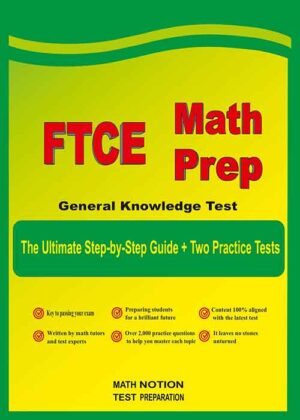 FTCE Math Prep (General Knowledge Test): The Ultimate Step by Step Guide Plus Two Full-Length FTCE Practice Tests Original price was: $18.99.$12.99Current price is: $12.99.Download
 6 Full-Length FSA Grade 5 Math Practice Tests: Extra Test Prep to Help Ace the FSA Grade 5 Math Test Original price was: $18.99.$12.99Current price is: $12.99.Download
 FSA 6 Math Practice Book 2020: Extra Exercises and Two Full Length FSA Math Tests to Ace the Exam Original price was: $18.99.$12.99Current price is: $12.99.Download
 FSA Grade 4 Summer Math Workbook: Essential Summer Learning Math Skills plus Two Complete FSA Math Practice Tests Original price was: $18.99.$12.99Current price is: $12.99.Download
 FSA 4 Math Comprehensive Exercise Book: Abundant Math Skill Building Exercises Original price was: $18.99.$12.99Current price is: $12.99.Download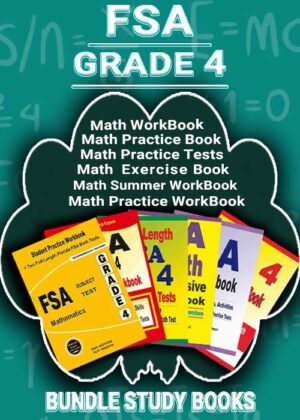
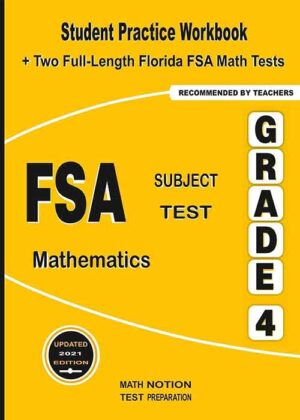 FSA Subject Test Mathematics Grade 4: Student Practice Workbook + Two Full-Length Florida FSA Math Tests Original price was: $18.99.$12.99Current price is: $12.99.Download
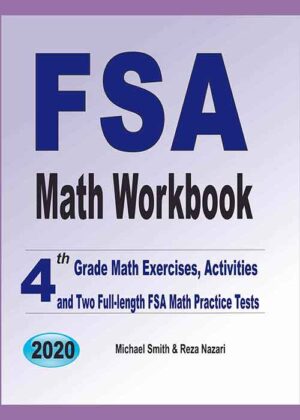 FSA Math Workbook: 4th Grade Math Exercises, Activities, and Two Full-Length FSA Math Practice Tests Original price was: $18.99.$12.99Current price is: $12.99.Download
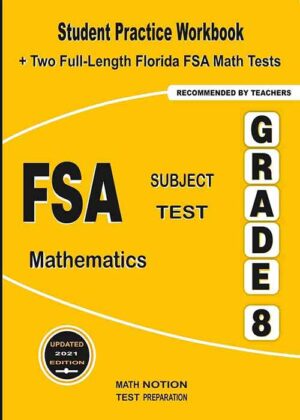 FSA Subject Test Mathematics Grade 8: Student Practice Workbook + Two Full-Length Florida FSA Math Tests Original price was: $18.99.$12.99Current price is: $12.99.Download
 SDCA Math Prep: South Dakota Student Guide
 WVGSA Math Prep: West Virginia Student Guide
 7 MCAs Math Prep Tips for Minnesota Students
 STAAR Math Test Prep for Grades 6-8: A Parent’s Guide (2026)
 7 Proven Accuplacer Math Prep Strategies
How to Prepare for the FTCE Math

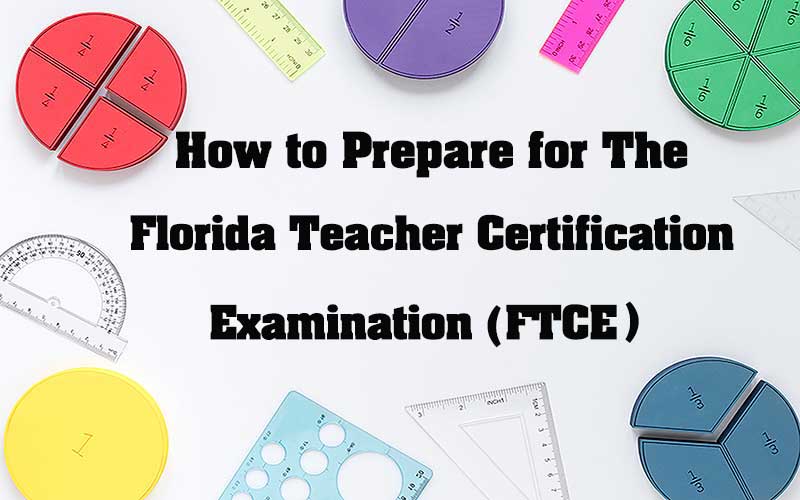
If you’re pursuing a teaching career in Florida, the FTCE stands between you and your certification, and math is part of what you’ll need to pass. Knowing how to prepare for the FTCE math can ease a lot of anxiety, especially for future teachers whose strengths lie outside of math. The FTCE math requirements are very learnable with focused study. This guide explains what the Florida Teacher Certification examinations involve where math is concerned, and how to prepare effectively.
What is the FTCE?
FTCE stands for the Florida Teacher Certification Examinations, the set of tests required to become a certified teacher in Florida. The FTCE includes the General Knowledge Test, which all candidates take and which has a mathematics subtest, as well as subject-area exams for those teaching math specifically. So whether or not you plan to teach math, you’ll encounter it on the General Knowledge Test. You can find official information through the Florida Department of Education.
The General Knowledge math subtest
For most candidates, the relevant math is the mathematics subtest of the General Knowledge Test. It measures the math skills expected of an educated college graduate, including number sense and operations, algebra, geometry and measurement, and data analysis and probability. The questions are practical and grounded, not highly advanced, but they do require solid command of the fundamentals. This is the FTCE math that aspiring teachers most often need to prepare for.
Subject-area math exams
If you plan to teach mathematics, you’ll also take a subject-area FTCE exam in your specific math field, such as Middle Grades Mathematics or Mathematics 6-12. These are more advanced and content-specific, covering the math you’ll actually teach plus pedagogical knowledge. Candidates for these exams need deeper mathematical preparation, but the same principles apply: understand the content outline, identify weak areas, and practice systematically.
Why FTCE math matters
Passing the required FTCE exams is mandatory for certification, so the math isn’t optional, you have to meet the standard to teach. For future teachers outside of math, this can feel intimidating, but the General Knowledge math is very passable with preparation. And for future math teachers, strong content knowledge is essential anyway. Either way, focused preparation on the Florida Teacher Certification math is a worthwhile investment in your career.
How to prepare for the FTCE math
Start by reviewing the official test outline for your specific exam, then take a practice test to find your weak spots. Study those areas in focused, regular sessions, and work problems actively rather than just reviewing. The General Knowledge math allows an on-screen calculator for part of it, so practice using it efficiently while keeping your skills sharp. Review every missed problem to understand the reasoning. Targeted preparation on the right content is the key to passing.
Refresh your fundamentals
For the General Knowledge math especially, refreshing the fundamentals goes a long way. Many candidates haven’t focused on math since their own school days, so reviewing fractions, percentages, basic algebra, and geometry makes the test far more approachable. There’s no shame in starting with the basics, it’s the most efficient path to a passing score, and it builds the confidence that timed tests reward.
Manage test anxiety
For future teachers anxious about math, nerves can be as much an obstacle as the content. Build confidence through practice so the format feels familiar, and remember that the exams are designed to be passable and that retakes are available if needed. Rest well, take the test one question at a time, and trust your preparation. A calm, prepared candidate performs much closer to their true ability.
Prepare for the FTCE with focused math practice
The most reliable way to pass is structured practice on exactly the skills the FTCE measures. Math Notion’s workbooks build the arithmetic, algebra, and geometry foundations the General Knowledge math rewards, with clear lessons, full-length practice, and step-by-step answer explanations you can work through on your own. Browse all our math practice books → and prepare to pass with confidence.
How the FTCE math is scored
FTCE exams report a scaled score, and you must meet the passing standard to earn that part of your certification. For the General Knowledge mathematics subtest, you need to reach the established passing score, while the subject-area math exams have their own thresholds. You don’t need a perfect score, just a solid, steady performance on the content. Knowing the passing standard for your specific exam turns a vague worry into a concrete goal, and it lets you measure your readiness with practice tests as you prepare, so you walk in confident rather than uncertain.
An 8-week FTCE math study plan
A simple structure keeps preparation efficient. In weeks one and two, review the official test outline and take a diagnostic practice test to find your two weakest areas. Spend weeks three and four rebuilding those foundations, often fractions, percentages, or basic algebra for the General Knowledge math. Use weeks five and six to drill geometry, data analysis, and word problems, and to practice with the on-screen calculator. Reserve week seven for a full-length timed practice test, then review every miss. Keep week eight light, with short reviews and good rest. Steady sessions across these weeks beat last-minute cramming.
The skills the General Knowledge math rewards
The General Knowledge mathematics subtest rewards the practical math expected of an educated college graduate. Fluency with fractions, decimals, and percentages appears throughout. Basic algebra, evaluating expressions and solving equations, is well represented. Geometry and measurement, along with data analysis and probability, round it out. Focusing your FTCE math preparation on these fundamentals, especially number sense and algebra, covers most of the subtest and gives the biggest return on your study time, even if math isn’t your strongest subject.
Preparing for the subject-area math exams
If you plan to teach math, your subject-area FTCE exam, such as Middle Grades Mathematics or Mathematics 6-12, demands deeper content knowledge plus pedagogical understanding. Prepare by studying the official competencies and skills for your exam, working practice problems across the full content range, and reviewing the math you’ll actually teach. These exams are more advanced than the General Knowledge math, but the same approach applies: study to the outline, identify weak areas, and practice systematically until the content feels secure.
Common FTCE math mistakes to avoid
A few habits quietly cost points. Studying too broadly rather than to the specific exam’s competencies wastes time. Reading questions too quickly leads to errors on multi-step problems. Relying on memorized procedures without understanding breaks down on unfamiliar items. And skipping practice tests leaves you uncertain of your readiness. Avoiding these traps, by studying to the outline, reading carefully, understanding the why, and using practice tests, makes your preparation both efficient and reliable.
Try a few General Knowledge math questions
Practicing the right style helps. For example: what is 2/5 written as a percentage? (40%.) Solve for x in 3x plus 2 equals 17. (x equals 5.) If a rectangle is 8 meters by 5 meters, what is its area? (40 square meters.) And what is the average of 12, 15, and 18? (15.) These mirror the practical arithmetic, algebra, geometry, and data skills the Florida Teacher Certification General Knowledge math measures.
Refreshing fundamentals as a future teacher
Many candidates haven’t focused on math since their own school days, and for future teachers outside of math, that gap can feel intimidating. The reassuring truth is that the General Knowledge math is very passable with a focused refresher. Reviewing fractions, percentages, basic algebra, and geometry makes the test far more approachable, and it has a bonus: stronger personal math skills make you a more confident educator across any subject. There’s no shame in rebuilding the basics, it’s the smartest, most efficient path to passing.
How to use practice tests effectively
Practice tests are your best preparation tool. Take one early to diagnose your weak spots, study those areas, then take another closer to test day to confirm your readiness. The real value is in the review: go through every missed question and understand why, whether it was a content gap, a careless error, or a timing issue. This diagnose-study-retest cycle, repeated a couple of times, produces steady, measurable improvement and the confidence that comes from knowing you’re ready.
What to do the week before the exam
In the final week, shift from learning new material to light review and rest. A few short, mixed practice sets keep your skills sharp, and reviewing your most common mistakes keeps them fresh. Avoid heavy cramming, which raises anxiety more than scores. Prioritize sleep, especially the night before, and confirm the logistics of your testing center in advance so test morning is calm. Arriving rested and unhurried lets your preparation show.
Managing test anxiety
For future teachers anxious about math, nerves can be as much an obstacle as the content. Build confidence through practice so the format feels familiar, and remember that the exams are designed to be passable and that retakes are available after a waiting period. Rest well, work through the math one question at a time, and trust your preparation. A little practice with the on-screen format also reduces surprises. A calm, prepared candidate performs much closer to their true ability.
Turning FTCE prep into a teaching career
Passing the FTCE math is a real milestone on the path to the classroom, and the effort pays off in more ways than one. Beyond earning certification, the math fluency you build makes you a more capable, confident educator. Viewing your how to prepare for the FTCE work as an investment in your career, rather than just a hurdle to clear, makes it more meaningful, and it sets a strong foundation for the teaching journey ahead.
Preparing efficiently for the FTCE math
For aspiring Florida teachers, the FTCE math requirement is best met with targeted, standards-aligned practice rather than broad, unfocused review. Identify the specific competencies the test emphasizes, practice the exact question styles, and review every miss to understand the underlying method. This focused approach makes your study time far more productive and your result far more predictable.
Because your certification depends on passing, it’s worth aiming comfortably above the minimum and giving yourself enough lead time to rebuild any weak areas. A clear, well-organized workbook with step-by-step solutions lets you study independently and steadily, turning the FTCE math from an obstacle into a manageable checkpoint on the way to your teaching career.
Frequently asked questions
Do all FTCE candidates take a math test?
Yes. The General Knowledge Test, required of all candidates, includes a mathematics subtest, and math teachers also take a subject-area exam.
How hard is the FTCE General Knowledge math?
It tests fundamentals expected of a college graduate, so it’s very passable with focused preparation, even for non-math majors.
Can I use a calculator?
An on-screen calculator is available for part of the General Knowledge math, so practice using one efficiently.
How should I prepare?
Review the test outline, take a practice test, refresh your fundamentals, and review your mistakes.
Math Notion makes standards-aligned math workbooks and test prep for learners at every level and across all 50 states. See the full collection.
Posted by Math Notion Team · Published on October 21, 2021