Math Articles, tips & study guides
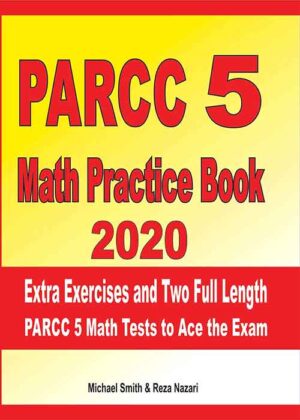 PARCC Grade 5 Math Practice Book 2020: Extra Exercises and Two Full Length PARCC Math Tests to Ace the Exam Original price was: $18.99.$12.99Current price is: $12.99.Download
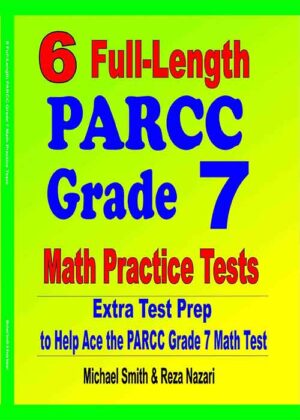 6 Full-length PARCC Grade 7 Math Practice Tests: Extra Test Prep to Help Ace the PARCC Grade 7 Math Test Original price was: $18.99.$12.99Current price is: $12.99.Download
 PARCC Grade 8 Math Practice Book 2020: Extra Exercises and Two Full Length PARCC Math Tests to Ace the Exam Original price was: $18.99.$12.99Current price is: $12.99.Download
 PARCC Grade 3 Summer Math Workbook: Essential Summer Learning Math Skills plus Two Complete PARCC Math Practice Tests Original price was: $18.99.$12.99Current price is: $12.99.Download
 PARCC Math Workbook: 3rd Grade Math Exercises, Activities, and Two Full-Length PARCC Math Practice Tests Original price was: $18.99.$12.99Current price is: $12.99.Download
 PARCC Math Workbook: 6th Grade Math Exercises, Activities, and Two Full-Length PARCC Math Practice Tests Original price was: $18.99.$12.99Current price is: $12.99.Download
 6 Full-length PARCC Grade 6 Math Practice Tests: Extra Test Prep to Help Ace the PARCC Grade 6 Math Test Original price was: $18.99.$12.99Current price is: $12.99.Download
 PARCC Math Prep Grade 8: The Ultimate Step by Step Guide Plus Two Full-Length PARCC Practice Tests Original price was: $18.99.$12.99Current price is: $12.99.Download
 PARCC Grade 5 Summer Math Workbook: Essential Summer Learning Math Skills plus Two Complete PARCC Math Practice Tests Original price was: $18.99.$12.99Current price is: $12.99.Download
 What Happened to the PARCC Math Test? (And What Replaced It)
 CMAS Scatter Plots Practice — Colorado Guide
 ILEARN Geometry Basics Practice — Indiana Guide
 SDCA Math Prep: South Dakota Student Guide
 WVGSA Math Prep: West Virginia Student Guide
PARCC Scores Explained: Levels and What Replaced the Test


If you’re trying to make sense of a PARCC score report, or wondering how the test that replaced PARCC is scored, this guide is for you. Understanding PARCC scores, the performance levels, what they mean, and how today’s successor tests report results, helps you read your child’s report and support their growth. Most states have replaced PARCC with their own assessments, but those successors use very similar scoring, so understanding PARCC scoring helps with whatever test your state gives now.
The math content and scoring approach carried over almost entirely from PARCC to its replacements, so this knowledge transfers directly. Below we’ll explain how PARCC math scoring worked, what the levels mean, how successor tests report scores, and how targeted math practice helps your child reach grade-level expectations on whatever assessment your state now uses.
What happened to PARCC
PARCC, the Partnership for Assessment of Readiness for College and Careers, was once a large multi-state testing consortium. Over time, most member states withdrew and replaced it with their own assessments, so today very few, if any, still give a test branded PARCC. States that used it now give tests like New Jersey’s NJSLA, Illinois’s IAR, and other state-specific assessments.
Crucially, these replacement tests were built from the same standards and often the same questions, so their scoring closely mirrors PARCC’s. That means understanding how PARCC scores worked tells you a great deal about how your state’s current test is scored, since the structure barely changed, only the name did.
How PARCC scoring worked
PARCC reported math results using a scale score, typically in a range like 650 to 850, along with a performance level. The scale score was derived from a student’s performance and adjusted for the difficulty of the test, and it mapped to one of several performance levels that described how well the student met grade-level expectations.
This scale-score-plus-level structure is standard across PARCC and its successors. For parents, the key is to focus on the performance level, which tells you in plain terms whether your child met expectations, while the scale score lets you track growth and see how close your child is to the next level.
The five performance levels
PARCC used five performance levels: Level 1 (Did Not Yet Meet Expectations), Level 2 (Partially Met Expectations), Level 3 (Approached Expectations), Level 4 (Met Expectations), and Level 5 (Exceeded Expectations). Level 4, Met Expectations, was the benchmark indicating a student was on track for the next grade.
Reaching Level 4 or 5 meant a student was meeting or exceeding grade-level expectations, while Levels 1 through 3 indicated varying degrees of needing more support. Most families aimed for Level 4 as the goal. Successor tests use similar level structures, so this framework remains useful for interpreting today’s reports.
What “Met Expectations” means
The Met Expectations level was the goal because it signaled a student had mastered the grade’s standards well enough to succeed in the next grade. Reaching it meant your child was on track, while the lower levels indicated specific gaps that focused work could close. This benchmark concept carries over to current state tests.
It’s healthiest to read these levels as a snapshot, not a verdict. A child at Level 3, just below Met, usually had a handful of specific, fixable gaps rather than a broad weakness, and targeted practice could move them up. Knowing the benchmark gave families a clear, concrete goal, just as it does on today’s tests.
How successor tests report scores
The state tests that replaced PARCC, like the NJSLA and IAR, report scores in much the same way: a scale score plus performance levels, often five, with a middle level indicating grade-level proficiency. If your child takes one of these, you’ll find the report structure familiar if you understood PARCC.
This continuity is good news. The skills PARCC measured, and the way it reported them, live on in these successors, so any understanding of PARCC scoring helps you read your state’s current report. Focus on the performance level for the headline picture and the scale score for tracking growth over time.
Understanding the reporting categories
PARCC and its successors break math performance into reporting categories or subclaims, showing how a student did in different areas, like major content, additional content, and mathematical reasoning. This breakdown is the most useful part of any such report for guiding practice.
Instead of a single number, the categories give you a map of strengths and weaknesses, telling you exactly where to focus. This precision lets you target practice efficiently rather than reviewing everything, which is the fastest route to improvement, whether you’re looking at an old PARCC report or a current state assessment.
Turning scores into a practice plan
Whatever the report, the point is to act on it. Identify the one or two categories where your child scored lowest, and make those the focus of practice. Targeted work on specific weak areas is far more efficient than reviewing everything equally, and it produces faster, more visible improvement.
Grade-level worksheets are ideal for this, because you can pull practice on exactly the area your child needs. Work a focused set, review every problem together, and revisit the area periodically. This results-driven loop turns a confusing score report, PARCC or successor, into steady, measurable growth over time.
Practice with grade-level worksheets
Math Notion offers free, grade-level math worksheets you can match directly to the categories on your child’s report: Grade 3, Grade 4, Grade 5, Grade 6, Grade 7, and Grade 8.
Browse the full library on our math worksheets page. Because the worksheets are organized by grade and aligned to grade-level standards, you can practice exactly the skills the report shows your child needs, whether the report comes from a PARCC-era test or its successor.
Tracking growth over time
Because these tests use scale scores, you can compare your child’s score from one year to the next to see genuine growth, not just their level in a single year. A rising scale score over time shows real progress, even if your child hasn’t yet reached the proficiency benchmark.
Keeping last year’s report on hand when this year’s arrives makes this comparison easy and far more informative than viewing one year in isolation. The trend matters as much as the level: a child climbing steadily is on a good trajectory. This longer view helps you respond with perspective and a plan rather than alarm.
What to do if scores are low
If your child’s scores come back in the lower levels, treat it as useful, early information rather than cause for alarm. Use the reporting categories to pinpoint which areas need work, then build a steady, targeted practice routine focused on those specific skills, using grade-level worksheets and a workbook.
Lower scores almost always reflect specific, fixable gaps rather than an inability to do math. With consistent practice and encouragement, children regularly move up a level over time. The key is to respond with a calm, concrete plan and steady support, which is exactly what turns a low score into future growth.
Keep math positive
How you talk about scores shapes your child’s relationship with math. Frame any report as a tool for figuring out what to practice next, not a measure of how smart your child is, and pair any area of concern with a calm, doable plan. Children who feel supported rather than judged stay motivated to improve.
Celebrate progress and effort, especially growth from one year to the next, rather than fixating on a single number. A child who sees math as something they can improve at, with an encouraging parent, keeps working on weak areas without discouragement, and that steady effort is what produces rising scores over time.
Pair worksheets with a complete workbook
Worksheets are perfect for targeting specific categories, but a complete, grade-level workbook ties everything together with clear lessons and full coverage of grade-level standards. Math Notion’s grade-level workbooks build the number sense, reasoning, and skills these tests measure, with step-by-step answer explanations that help you support your child.
Used together, free worksheets and a structured workbook give your child both targeted practice and complete instruction. The workbooks are instant downloads, so you can act on your child’s score report tonight, whatever test your state uses. Browse the full Math Notion collection → to find your child’s grade.
Why understanding PARCC scoring still helps
You might wonder why it’s worth understanding PARCC scoring when the test itself is largely gone. The answer is continuity: the consortium’s standards, question styles, and scoring approach were adopted, often wholesale, by the state tests that replaced it. So when you understand how PARCC reported a scale score and five performance levels, you essentially understand how your state’s current assessment works too.
This means none of this knowledge is wasted. Whether your child’s report says NJSLA, IAR, or another name, you’ll recognize the structure, a scale score, proficiency levels, and reporting categories, and know how to read it and act on it. The PARCC framework remains a useful lens for the whole family of tests that grew out of it.
Focus on growth, whatever the test
The most productive mindset, with any of these tests, is to focus on your child’s growth rather than a single year’s number. Because the scores are on a consistent scale, you can watch your child climb over the years, which is far more meaningful than one snapshot. A child moving steadily upward is doing exactly what the assessment is designed to capture.
So treat each report, PARCC or successor, as a checkpoint and a guide. Note the level, compare the scale score to last year’s, and use the reporting categories to choose what to practice next. Paired with grade-aligned worksheets, a workbook, and steady encouragement, this approach turns any score report into a roadmap for lasting progress, no matter what the test is called.
Frequently asked questions
Is PARCC still used?
Most states no longer use PARCC; they’ve replaced it with state-specific tests like the NJSLA and IAR that use very similar scoring built on the same standards.
How were PARCC scores reported?
With a scale score (often in a 650-850 range) plus one of five performance levels, from Did Not Yet Meet Expectations up to Exceeded Expectations, with Level 4, Met Expectations, as the benchmark.
What was a passing PARCC score?
Level 4 (Met Expectations) indicated a student was on track for the next grade and was the benchmark most families aimed for. Successor tests use similar level structures.
How can I help if scores are low?
Use the reporting categories to find specific weak areas, then build a steady, targeted practice routine with grade-level worksheets and a workbook. Low scores usually reflect fixable gaps.
Math Notion makes standards-aligned math workbooks and test prep for learners at every level and across all 50 states. See the full collection.
Posted by Math Notion Team · Published on August 24, 2024