Math Articles, tips & study guides
 Common Core Grade 8 Math Workbook: Review for Common Core Math Practice Questions With 2 Full-Length Common Core Math Exams Original price was: $18.99.$12.99Current price is: $12.99.Download
 Common Core Grade 8 Summer Math Workbook: Essential Summer Learning Math Skills plus Two Complete Common Core Math Practice Tests Original price was: $18.99.$12.99Current price is: $12.99.Download
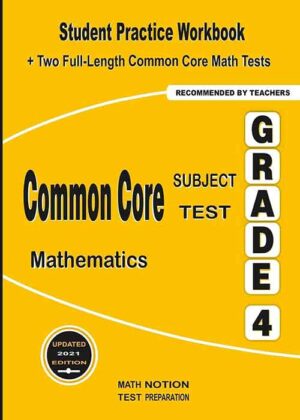 Common Core Mathematics Subject Test Grade 4: Student Practice Workbook + Two Full-Length Common Core Math Tests Original price was: $18.99.$12.99Current price is: $12.99.Download
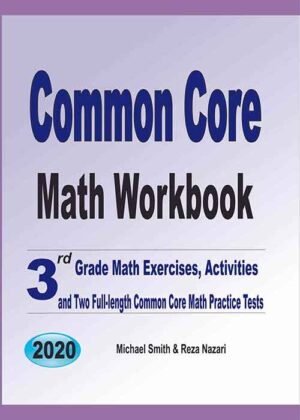 Common Core Math Workbook: 3rd Grade Math Exercises, Activities, and Two Full-Length Common Core Math Practice Tests Original price was: $18.99.$12.99Current price is: $12.99.Download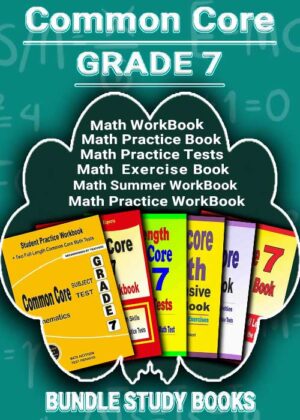
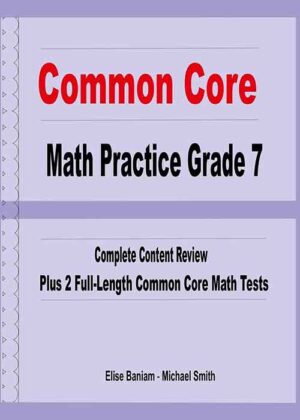 Common Core Math Practice Grade 7:Complete Content Review Plus 2 Full-length Common Core Math Tests Original price was: $18.99.$12.99Current price is: $12.99.Download
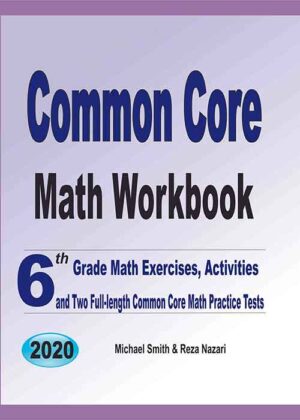 Common Core Math Workbook: 6th Grade Math Exercises, Activities, and Two Full-Length Common Core Math Practice Tests Original price was: $18.99.$12.99Current price is: $12.99.Download
 5th Grade Common Core Math Exercise Book: Review of Essential Skills and Concepts With 2 Common Core Math Practice Tests Original price was: $18.99.$12.99Current price is: $12.99.Download
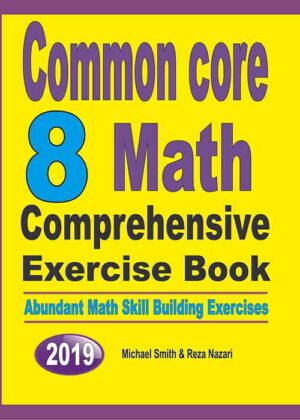 Common Core 8 Math Comprehensive Exercise Book: Abundant Math Skill Building Exercises Original price was: $18.99.$12.99Current price is: $12.99.Download
 What is the Common Core Math?
 How Common Core Math Works (and Why It Teaches That Way)
 Common Core Math: Pros, Cons, and What the Debate Means for Your Child
 Introduction to the Common Core State Standards (CCSS)
 DAT Math Score: What Is a Good Quantitative Reasoning Score?
How to Help Your Child With Common Core Math

If your child’s math homework looks nothing like the math you remember, you’re not alone, and the reason is usually the Common Core. Helping your child with Common Core math can feel confusing at first, because it emphasizes understanding and reasoning over the memorized procedures many of us grew up with. But once you understand what it’s trying to do, supporting your child becomes much easier. This guide explains what Common Core math is, why it works the way it does, and exactly how to help your child build the skills it asks for, and the confidence to use them.
The most effective support combines a calm, encouraging attitude with steady, standards-aligned practice. Below we’ll cover what makes Common Core math different, the thinking behind it, common sticking points, and how consistent Common Core math practice at home, with the right materials, helps your child thrive on the standards their school and state tests are built around.
What Common Core math is
The Common Core State Standards are a set of learning goals, adopted in some form by most states, that spell out what students should know in math at each grade. They were designed to be focused and coherent, building deep understanding of key concepts rather than rushing through a long list of topics superficially. Nearly every modern state math test is built on or influenced by these standards.
For parents, the key point is that Common Core isn’t a curriculum or a particular textbook; it’s a set of goals. Schools choose how to teach toward them, which is why approaches vary. Understanding that the aim is genuine understanding, not just right answers, helps make sense of the unfamiliar methods your child brings home.
Why it emphasizes understanding over memorization
The biggest shift in Common Core math is its focus on understanding why procedures work, not just how to execute them. Where older approaches often had students memorize steps, the standards ask students to understand the reasoning, so they can apply skills flexibly to new problems rather than only the ones they’ve seen before. This is why your child may learn several strategies for the same operation.
This approach can look slower or more roundabout at first, but it builds a sturdier foundation. A child who understands why borrowing works in subtraction, or why a fraction divides the way it does, is far better equipped for algebra and beyond. The goal is durable, transferable understanding, which pays off enormously as the math grows harder.
The methods that look unfamiliar
Many parents are thrown by methods like number bonds, area models, decomposing numbers, or multiple strategies for a single problem. These aren’t there to complicate things; they’re designed to make the underlying math visible, so children grasp what’s really happening with numbers before moving to faster, abstract procedures.
The reassuring news is that these methods lead to the same answers you’d get the traditional way, they just build understanding first. If a particular strategy confuses you, it’s fine to learn it alongside your child, or to focus on the standard method while respecting the one their teacher is using. What matters most is that your child understands and can reach correct answers confidently.
What Common Core math covers by grade
The standards progress logically grade by grade. In the elementary years, the focus is on number sense, place value, the four operations, and an introduction to fractions, with each grade deepening the last. By the upper-elementary and middle grades, students work with fractions and decimals fluently, then ratios, proportions, and the beginnings of algebra through expressions and equations.
In the middle grades, the math builds into proportional reasoning, rational numbers, expressions and equations, geometry, and introductory statistics, all leading toward high-school algebra. Because each grade’s standards assume mastery of the previous grade’s, gaps tend to compound, which is exactly why steady, grade-aligned practice matters so much.
How to help your child at home
The single most effective thing you can do is build a short, consistent practice routine. Fifteen to twenty minutes a few times a week keeps skills fresh and prevents the slow forgetting that causes children to fall behind. A standards-aligned workbook makes this easy because the content already matches what your child is learning and being tested on.
Beyond practice, talk through math in everyday life, splitting a bill, doubling a recipe, comparing prices, so your child sees the reasoning the standards emphasize at work. Keep the tone encouraging; children who feel capable tackle hard problems instead of freezing. Steady Common Core math practice plus a supportive attitude does more than any amount of pressure.
Focus on explaining, not just answering
Because Common Core values reasoning, one of the best habits you can build is asking your child to explain their thinking. After they solve a problem, ask how they got the answer and why their method works. This deepens their understanding and mirrors exactly what state tests reward, since many now include questions asking students to justify their reasoning.
You don’t need to know the fanciest method to do this; simply prompting “how did you figure that out?” pushes your child to think and articulate. Over time, this habit builds the flexible, confident understanding the standards aim for, and it reveals misunderstandings early, while they’re still easy to fix.
Common sticking points and how to help
Certain Common Core topics trip up children predictably. Fractions are a frequent stumbling block, since the standards treat them deeply and early. Multi-step word problems challenge students who can compute but struggle to plan an approach. And the multiple-strategy approach can confuse children who’d rather just learn one way.
For each, steady, targeted practice helps. Spend extra time on fractions until they feel solid, since so much later math depends on them. Teach your child to read word problems carefully and plan before computing. And if multiple strategies overwhelm them, it’s fine to anchor on the one that makes the most sense to them while understanding the others exist.
Why standards-aligned practice matters
It’s worth understanding why a standards-aligned workbook beats a generic math book or random printables. Because state tests are built on these standards in a specific sequence, practice that matches that sequence ensures every minute your child spends is relevant. Generic worksheets often use older approaches or skip the reasoning the standards emphasize, which can leave gaps.
When practice lines up precisely with the Common Core-based standards your child is taught and tested on, you gain confidence that strong practice performance predicts strong results. There’s no guesswork about whether your child is studying the right things, which is why aligned materials are so valuable for steady progress.
A simple study routine
Here’s a routine that fits real family life. Pick three short sessions a week, fifteen to twenty minutes each, and rotate through your child’s grade-level topics so nothing goes stale. Spend a little extra time on the areas your child finds hardest, especially fractions and word problems, since targeted work yields the biggest gains.
Always review mistakes together rather than just marking them wrong, asking your child to explain where their thinking went astray. Understanding why an answer was off, and reworking it correctly, is what prevents the same error next time. Short, steady, and reflective beats long and occasional every single time.
Keeping math positive
Perhaps the most important thing you can do is keep your child’s relationship with math positive. The Common Core’s emphasis on understanding gives children a real chance to feel genuinely capable, but only if they’re not made to feel that struggle means failure. Treat mistakes as a normal, useful part of learning, and praise effort and progress over speed or innate cleverness.
Your own attitude matters too. Even if your school math was a struggle, avoid passing that along; approach your child’s math with curiosity and calm. A child who believes they can improve at math, and who sees their parent treat it as approachable, is far more willing to persist, and persistence is exactly what builds skill.
The workbook that supports Common Core math
The simplest way to keep practice aligned with the Common Core-based standards your child learns is a workbook written for their grade and state. Math Notion’s grade-level workbooks build exactly the number sense, fractions, reasoning, and algebra the standards emphasize, with clear lessons and step-by-step answer explanations that help you support your child even if the methods are unfamiliar to you.
Because every chapter maps to the standards your child is taught and tested on, you’re never guessing whether the practice is relevant. The books are instant downloads, so you can start a steady routine tonight. Browse the full Math Notion collection → to find the right grade for your child.
How Common Core prepares kids for the future
It can help to remember the bigger purpose behind all this. The Common Core’s emphasis on reasoning, problem-solving, and flexible thinking isn’t just about test scores; it’s aimed at the skills children will actually need in higher math, in college, and in careers that increasingly demand quantitative reasoning. A student who can explain their thinking and adapt a method to a new situation is far better prepared than one who only memorized steps.
That long-term payoff is worth keeping in mind on the days when an unfamiliar method feels frustrating. The deeper understanding your child builds now becomes the foundation for algebra, geometry, and beyond, and the habit of reasoning carefully about numbers serves them for life. Supporting Common Core math at home is really an investment in that durable, transferable capability.
Building confidence one step at a time
Confidence grows through repeated experiences of working hard at a problem and succeeding, so help your child experience plenty of those. Start practice at a level where they can succeed, then increase difficulty gradually, celebrating progress along the way. Each small win retrains your child to see math as something they can do, rather than something that happens to them.
Keep the long view, too. Progress in math is often uneven, with concepts that suddenly click after weeks of effort. Steady, encouraging practice with materials aligned to your child’s grade builds both skill and the belief that they can keep improving. That combination of competence and confidence is the real goal, and it’s well within reach for any family willing to keep a light, consistent routine.
Frequently asked questions
What is Common Core math?
It’s a set of grade-by-grade learning standards, adopted by most states, that emphasizes understanding and reasoning over memorized procedures. Most state math tests are built on these standards.
Why does Common Core use unfamiliar methods?
Methods like number bonds and area models make the underlying math visible, building understanding before students move to faster, abstract procedures. They lead to the same answers.
How can I help if the methods confuse me?
Learn alongside your child, focus on understanding and correct answers, and ask them to explain their thinking. A standards-aligned workbook with clear explanations also helps a lot.
What topics give children the most trouble?
Fractions and multi-step word problems are common sticking points. Steady, targeted practice on these areas, especially fractions, makes a big difference.
Math Notion makes standards-aligned math workbooks and test prep for learners at every level and across all 50 states. See the full collection.
Posted by Math Notion Team · Published on August 5, 2021

