Math Articles, tips & study guides
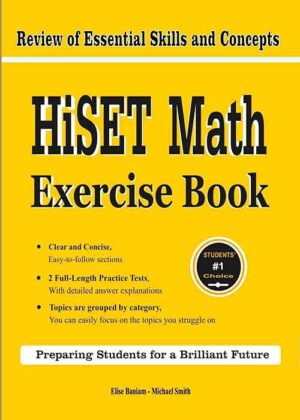 HiSET Math Exercise Book: Review of Essential Skills and Concepts With 2 HiSET Math Practice Tests Original price was: $18.99.$12.99Current price is: $12.99.Download
 HiSET Math Workbook: Essential Learning Math Skills Plus Two Complete HiSET Math Practice Tests Original price was: $18.99.$12.99Current price is: $12.99.Download
 HiSET Math Practice Book: Complete Content Review Plus 2 Full-length HiSET Math Tests Original price was: $18.99.$12.99Current price is: $12.99.Download
 HiSET Math Workbook: Abundant Exercises and Two Full-Length HiSET Math Practice Tests Original price was: $18.99.$12.99Current price is: $12.99.Download
 HiSET Math Practice Book 2020: Extra Exercises and Two Full Length HiSET Math Tests to Ace the Exam Original price was: $18.99.$12.99Current price is: $12.99.Download
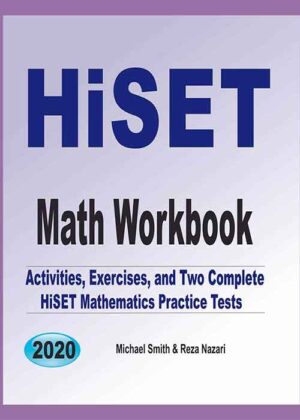 HiSET Math Workbook: Activities, Exercises, and Two Complete HiSET Mathematics Practice Tests Original price was: $18.99.$12.99Current price is: $12.99.Download
 6 Full-Length HiSET Math Practice Tests: Extra Test Prep to Help Ace the HiSET Math Test Original price was: $18.99.$12.99Current price is: $12.99.Download
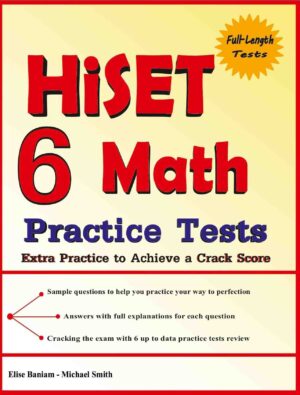 6 HiSET Math Practice Tests: Extra Practice to Achieve a Crack Score Original price was: $18.99.$12.99Current price is: $12.99.Download
 HiSET Math Comprehensive Exercise Book: Abundant Math Skill Building Exercises Original price was: $18.99.$12.99Current price is: $12.99.Download
 GED & HiSET Math Formula Cheat Sheet (Essential Formulas)
 How to Prepare for the HiSET Math Test (Step by Step)
 Top 10 HESI Math Formulas You Must Memorize
 Math Exams Explained: A Guide to the Major Standardized Tests
 Big News: The Math Notion Blog Is Here
HiSET Score Explained: What You Need to Pass the Math

If you’re earning your high school equivalency through the HiSET, understanding the scoring is key to knowing what you’re aiming for. The HiSET score system, how each subtest is scored, what you need to pass, and how the math fits in, can seem confusing at first, but it’s straightforward once explained. This guide breaks down HiSET scoring in plain language, with a focus on the math subtest, so you know exactly what target to hit and how to reach it with confidence.
The HiSET is one of the tests states accept as proof of high school-level achievement, and its math subtest is the one many adult learners worry about most. Below we’ll cover how the scoring works, the passing requirements, what the math covers, and how focused HiSET math practice gets you to a passing HiSET math score.
How HiSET scoring works
The HiSET consists of five subtests, math, reading, writing, science, and social studies, and each is scored on a scale from 1 to 20. Your math subtest score, like the others, falls somewhere in that range based on your performance. The scoring is designed so that scores are comparable across different versions of the test.
To earn your HiSET credential, you generally need to meet minimum scores on each subtest, reach a minimum total across all five, and meet a requirement on the essay portion of the writing test. Understanding these three components, individual subtest minimums, a total-score minimum, and the essay, is the foundation for knowing what you need.
What you need to pass the math subtest
For the math subtest specifically, you typically need to score at least 8 out of 20 to meet the individual subtest minimum, though you’ll also want your math score to contribute to meeting the overall total requirement. Because requirements can vary slightly by state, it’s wise to confirm the exact passing scores your state requires.
The practical takeaway is that you don’t need a perfect or even high score to pass the math, you need to clear the minimum, commonly around 8, while helping meet the total. Aiming a bit above the minimum gives you a cushion, but the bar is very achievable with preparation, which should be reassuring if math worries you.
What the HiSET math subtest covers
The HiSET math subtest covers four areas: numbers and operations on numbers, including fractions, decimals, percentages, and ratios; algebraic concepts, including expressions, equations, inequalities, and functions; geometric concepts, including area, perimeter, volume, and shapes; and data analysis, probability, and statistics.
The problems are framed in practical, applied contexts, the everyday math of money, measurement, and data, which is fitting for an adult equivalency test. None of it is advanced; it’s standard high-school math, finite and learnable. A complete workbook covers all four areas in order, building from the foundations toward the harder algebraic material.
How the math subtest is administered
The HiSET math subtest contains about 50 multiple-choice questions with roughly 90 minutes to complete them, so pacing is manageable rather than frantic. A calculator is permitted, which is a real advantage if you’ve practiced with one, and the test is available in both computer-based and paper formats depending on your testing center.
Knowing the format ahead of time, the number of questions, the time, the calculator, lets you plan your approach and removes test-day surprises. Practicing under similar conditions, including with a calculator, means the real subtest feels familiar rather than new, which supports both your pacing and your score.
Why your math score matters
Your math subtest score matters for two reasons: it must clear the individual minimum, and it contributes to your total score across all five subtests. A low math score can jeopardize both, so even if math isn’t your strength, it’s worth ensuring it’s solid enough to pass on its own and to support your total.
The good news is that math is very improvable with focused practice, so it’s often the most controllable piece of your HiSET result. Bringing a weak math score up to a comfortable passing level is achievable for almost anyone willing to practice, and doing so removes a common obstacle to earning the credential.
What if you don’t pass the math
If you don’t reach the math minimum on your first attempt, you can retake just that subtest, you don’t have to redo the whole HiSET. Retakes are available, usually with a short waiting period, so a first-attempt miss is far from final. Many test-takers pass the math on a retake after targeted practice.
If you do retake, use your score report to focus on the areas that held you back, which makes the retake far more productive. This ability to retake individual subtests means the HiSET is forgiving of a single difficult day, especially in math, as long as you prepare and try again with a focused plan.
How to raise your HiSET math score
Raising your math score comes down to focused practice on the four content areas, with extra attention to your weak spots. Rebuild the fundamentals, fractions, decimals, and percentages, first, since they underpin everything, then work up through algebra, geometry, and data. Practice with a calculator so you use it efficiently, and review every mistake.
Take a full-length practice subtest under realistic conditions to build pacing and reveal weak areas, then target those. Study consistently in short sessions rather than cramming, since math skills consolidate with steady practice. This focused, foundation-first approach reliably lifts a HiSET math score above the passing line.
Practice with HiSET math worksheets
Targeted practice is the engine of improvement. Math Notion offers free, printable HiSET math worksheets covering the numbers, algebra, geometry, and data the subtest measures, so you can drill exactly the areas you need at your own pace.
Browse the full library on our math worksheets page for more practice. Work each worksheet carefully, then review every problem, especially the misses, to understand where you went wrong. This focused, repeatable practice on the exact content the HiSET measures is one of the most efficient ways to reach a passing score.
Manage test anxiety
For many adult learners, nerves are as much a hurdle as the math. The best antidote is thorough, familiar preparation: when the topics, question types, and format feel routine from practice, the subtest holds far fewer surprises, and confidence grows from competence. Familiarity is what calms anxiety.
It also helps to remember that the math minimum is achievable, that a calculator is provided, and that you can retake the subtest if needed. Rest well beforehand, work one question at a time, and trust your preparation. A calm, prepared test-taker performs much closer to their true ability than an anxious one.
The workbook that gets you to passing
For thorough preparation, a complete workbook ties everything together. The HiSET Mathematics Practice Workbook covers exactly the numbers, algebra, geometry, and data the HiSET math subtest measures, with clear lessons, full-length practice, and step-by-step answer explanations you can follow on your own to rebuild any rusty skills.
Paired with the free HiSET worksheets for targeted practice, a workbook gives you both complete instruction and focused drilling. It’s an instant download, so you can start preparing tonight and work toward clearing the math minimum with confidence. Browse all our HiSET math resources → to find the right fit.
HiSET versus GED scoring
If you have a choice between the HiSET and the GED, it helps to know they’re scored differently even though they test similar math. The HiSET uses a 1-to-20 scale per subtest with its own minimums and a total requirement, while the GED uses a 100-to-200 scale with 145 to pass each section. Your state, or your testing center, usually determines which test you’ll take.
Despite the different scales, the underlying math is nearly identical, so preparation transfers completely between the two. Whichever you take, building the same foundational skills, arithmetic, fractions, percentages, algebra, geometry, and data, prepares you to pass. Don’t let the different scoring systems confuse you; focus on the math, and the score will follow on either test.
Aim comfortably above the minimum
While you only need to clear the math minimum, it’s smart to aim comfortably above it. A small cushion protects you against an off day or a few tricky questions, and a stronger math score also helps your total across all five subtests, which you must also meet. So rather than targeting the bare minimum, set your sights a few points higher.
Aiming higher also tends to make the actual minimum feel easy, which reduces test-day anxiety. When you’ve prepared to score well above the bar, clearing it becomes almost automatic. This margin-of-safety approach, preparing for more than you strictly need, is one of the simplest ways to ensure you pass the math comfortably the first time.
Build a steady study routine
The most reliable path to a passing HiSET math score is a steady study routine rather than last-minute cramming. Set aside short, regular sessions, even fifteen or twenty minutes several times a week, and work through the content areas systematically, starting with the fundamentals. Consistency lets math skills consolidate and prevents the forgetting that undermines occasional studiers.
Use your practice results to keep steering toward weak spots, and take a full practice subtest as your test date approaches to build pacing and confidence. This calm, consistent approach, supported by aligned worksheets and a workbook, turns HiSET math from a worry into a manageable, well-prepared-for step toward your credential. Steady effort, more than anything else, is what carries you across the passing line.
In short, the HiSET math score you need is achievable: clear the subtest minimum of around 8, help meet your total, and you’ve passed the part that worries most people. With foundation-first practice, a calculator you’re comfortable using, and the option to retake if needed, a passing HiSET math score is well within your reach.
Frequently asked questions
How is the HiSET scored?
Each of the five subtests is scored from 1 to 20. To earn the credential, you generally need to meet a minimum on each subtest, reach a minimum total across all five, and meet the essay requirement.
What score do I need to pass HiSET math?
Typically at least 8 out of 20 on the math subtest, while also contributing to the total-score minimum. Confirm the exact requirements with your state, and aim a bit above the minimum for a cushion.
Can I use a calculator on the HiSET math subtest?
Yes, a calculator is permitted. Practicing with the type you’ll use helps you work quickly and confidently on test day.
What if I don’t pass the math?
You can retake just the math subtest, not the whole HiSET, usually after a short waiting period. Use your score report to target weak areas, and many test-takers pass on a retake.
Math Notion makes standards-aligned math workbooks and test prep for learners at every level and across all 50 states. See the full collection.
Posted by Math Notion Team · Published on August 16, 2024