Math Articles, tips & study guides
 Georgia Milestones Assessment System 5 Math Practice Book 2020: Extra Exercises and Two Full Length GMAS Math Tests to Ace the Exam Original price was: $18.99.$12.99Current price is: $12.99.Download
 6 Full-length Georgia Milestones Assessment System Grade 7 Math Practice Tests: Extra Test Prep to Help Ace the GMAS Grade 7 Math Test Original price was: $18.99.$12.99Current price is: $12.99.Download
 Georgia Milestones Assessment System 4 Math Practice Book 2020: Extra Exercises and Two Full Length GMAS Math Tests to Ace the Exam Original price was: $18.99.$12.99Current price is: $12.99.Download
 6 Full-Length Georgia Milestones Assessment System Grade 4 Math Practice Tests: Extra Test Prep to Help Ace the GMAS Grade 4 Math Test Original price was: $18.99.$12.99Current price is: $12.99.Download
 Georgia Milestones Assessment System Grade 6 Summer Math Workbook: Essential Summer Learning Math Skills plus Two Complete GMAS Math Practice Tests Original price was: $18.99.$12.99Current price is: $12.99.Download
 Georgia Milestones Assessment System 7 Math Practice Book 2020: Extra Exercises and Two Full Length GMAS Math Tests to Ace the Exam Original price was: $18.99.$12.99Current price is: $12.99.Download
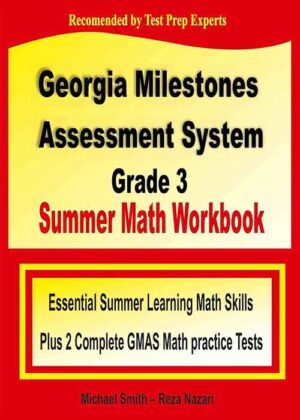 Georgia Milestones Assessment System Grade 3 Summer Math Workbook: Essential Summer Learning Math Skills plus Two Complete GMAS Math Practice Tests Original price was: $18.99.$12.99Current price is: $12.99.Download
 GMAS Scores Explained: Understanding Your Child Results
 How to Prepare for the GMAS Math Test (Georgia)
 Georgia Milestones Math: What Is Tested by Grade
 NSCAS Sequences & Series Practice — Nebraska Guide
 KSA 4th Grade Prep: Kentucky Math Guide
How to Ace the GMAS Math Test: Top Strategies

Helping your child do their very best on the Georgia Milestones comes down to a handful of smart, proven strategies, and the good news is that none of them require being a math whiz. To ace the GMAS math test, students mostly need steady, well-aimed practice, familiarity with the test’s format, and the confidence that comes from knowing what to expect. The Georgia Milestones Assessment System measures the grade-level math your child is already learning, so the path to a strong score is far more about preparation habits than natural talent. This guide shares the most effective strategies for excelling, from how to study to how to handle test day itself.
The foundation of every strategy here is consistent, grade-aligned GMAS math practice throughout the year, not a last-minute scramble. Below we’ll walk through the tactics that genuinely lift scores on the Georgia Milestones, plus the worksheets and workbook that make putting them into action simple and low-stress for your family.
Understand what the GMAS measures
The first strategy is simply knowing what you’re preparing for. The Georgia Milestones tests math in grades 3 through 8 with End-of-Grade assessments, and high-school courses with End-of-Course exams, all aligned to Georgia’s state standards. Because it measures the regular curriculum, the best preparation reinforces exactly what your child’s teacher is covering, rather than chasing unfamiliar material.
Knowing the test is built on grade-level standards takes a lot of the mystery and fear out of it. There are no trick topics or hidden surprises, just the math your child should be learning this year. That understanding lets you focus preparation efficiently and approach the test as a manageable, known quantity rather than an intimidating unknown.
Start practicing early
The single biggest mistake families make is waiting until the weeks before the test, then cramming. Math skills build through steady practice over time, so a child who practices a little throughout the year arrives far better prepared than one rushing at the end. Early, consistent practice also prevents the slow forgetting that quietly drags down scores.
You don’t need long sessions, just regular ones. Fifteen to twenty minutes a few times a week keeps skills sharp and turns preparation into a low-stress habit. Starting early is genuinely one of the most powerful strategies there is, because it gives your child time to master each topic and to address any weak spots well before test day arrives.
Practice the way the test works
The GMAS is administered online with a mix of multiple-choice and technology-enhanced questions, where students enter answers, drag values, or interact with the problem. A key strategy is to practice in formats that mirror this, so the interface and question styles feel routine on test day rather than unfamiliar and time-consuming.
Doing some practice on a computer, and working a variety of question types rather than only standard multiple choice, removes a layer of surprise. Students who have rehearsed entering answers and working interactive problems can focus their energy on the math itself. Matching your practice to the real test format is a simple but effective way to protect your child’s score.
Target weak areas, don’t review everything
A smart strategy is to focus practice where it will help most. Rather than reviewing every topic equally, identify the areas your child finds hardest, whether fractions, ratios, or geometry, and spend extra time there. Targeted practice on genuine weak spots yields far bigger score gains than spreading effort thinly across material your child already knows.
Any practice tests, classwork, or benchmark results can guide this targeting by showing where your child struggles. Treating those weak areas as the priority, and practicing them until they feel solid, is how thoughtful preparation turns a middling score into a strong one. Work smarter, not just harder, by aiming your effort precisely.
Master the fundamentals
Because math builds on itself, shaky fundamentals quietly undermine performance across the whole test. A student who isn’t fluent with fractions, decimals, or basic operations will make errors on many questions that depend on them. Strengthening these foundations is one of the highest-leverage strategies for acing the GMAS.
It may feel like review, but solidifying the basics pays off immediately. When fundamentals are automatic, your child can devote full attention to the grade-level reasoning the test rewards rather than wrestling with the arithmetic underneath. A strong foundation makes every other topic easier and every practice session more productive.
Practice with grade-level worksheets
Targeted worksheets are perfect for building the specific skills the GMAS measures. Math Notion offers free, grade-level math worksheets you can match directly to your child’s grade: Grade 3, Grade 4, Grade 5, Grade 6, Grade 7, and Grade 8.
Browse the full library on our math worksheets page. Use the worksheets to drill exactly the topics your child needs, work a focused set, then review every problem together, especially the misses. This repeatable, skill-by-skill practice on Georgia-standard content is one of the most efficient ways to lift a GMAS score.
Review mistakes the right way
How you handle mistakes is itself a strategy. Rather than just marking a problem wrong, study it with your child to understand why the answer was off, then have them rework it correctly. This turns every error into a specific, fixable lesson and prevents the same mistake from recurring on the real test.
Keeping a simple running list of recurring errors reveals patterns worth targeting. A child who keeps missing word problems needs practice reading carefully and setting up the math; one who keeps slipping on fractions needs focused fraction work. Reviewing mistakes thoughtfully is what makes practice genuinely productive rather than just busywork.
Teach test-day strategies
Beyond the math, a few test-taking habits help students ace the GMAS. Teach your child to read each question carefully, manage their pace so they reach every question, and skip and return to anything that’s eating up time rather than getting stuck. On technology-enhanced and any open-ended items, showing work clearly can earn partial credit.
These habits, practiced beforehand, can lift a score independent of how much math a child knows. Encourage them to check their answers when time allows and to stay calm if a question feels hard, one tough problem doesn’t define the test. Smart test-taking turns solid preparation into the best possible result on the day.
Build confidence and manage nerves
Confidence is a real advantage on test day, and it comes from preparation and encouragement. Children who feel capable tackle hard problems instead of freezing, so keep your tone positive and celebrate progress. Remind your child that the GMAS is just a way for teachers to see what to work on next, not a judgment of how smart they are.
Familiarity is the best calmer for nerves: the more the format and content feel routine from practice, the less there is to fear. On test days, keep mornings unhurried, make sure your child is rested and fed, and send them off with encouragement. A calm, prepared child performs much closer to their true ability than an anxious one.
Make math part of everyday life
One often-overlooked strategy is weaving math into daily routines so it feels useful and natural rather than confined to worksheets. Cooking and doubling a recipe, counting change, comparing prices, and figuring out time all reinforce the very skills the GMAS measures, while showing your child that math is a practical, everyday tool.
These low-stakes moments build number sense and comfort with math in a way that feels like life, not study. Combined with formal practice, they deepen understanding and reduce anxiety, because math stops feeling like a scary school subject and starts feeling like something your child does, and is good at, all the time.
Pair worksheets with a complete workbook
Worksheets are perfect for targeted practice, but a complete, grade-level workbook ties everything together with clear lessons and full coverage of Georgia’s standards. For example, a grade-aligned Georgia math workbook covers exactly the ratios, fractions, expressions, and geometry the GMAS assesses, with step-by-step answer explanations a parent can follow even if it’s been years since your own math classes.
Used together, free worksheets and a structured workbook give your child both focused repetition and complete, sequenced instruction, the ideal combination for acing the test. The workbook is an instant download, so you can start tonight. Browse the full Georgia math collection → to find your child’s grade.
Use full practice sessions to build stamina
As the test approaches, one of the most effective strategies is to have your child sit a full, timed practice section under realistic conditions. Real tests demand sustained focus, and a child used only to short bursts of practice can lose steam partway through. A complete practice run builds the stamina and pacing the actual GMAS requires, so test day feels familiar rather than exhausting.
Just as valuable is the review afterward: go through every question, celebrate what went well, and turn each miss into a targeted lesson for the remaining days. This combination of a realistic dry run plus careful review gives your child both confidence and a clear, focused plan for any last weak spots, which is exactly what acing the test requires.
Keep the long view in mind
Finally, the best strategy of all is to treat GMAS preparation as part of building genuine, lasting math skills rather than teaching to a single test. The number sense, fractions, ratios, and reasoning your child strengthens for the Georgia Milestones are the same skills they’ll carry into the next grade and beyond, so the effort pays off far past one spring morning.
Keeping that perspective also keeps the pressure healthy. When the goal is real understanding rather than just a score, practice feels purposeful and your child stays motivated. Steady GMAS math practice aligned to Georgia’s standards, paired with encouragement and good test-day habits, gives your child both outcomes at once: a strong Milestones result and the durable skills that set them up for ongoing success.
Frequently asked questions
How can my child do well on the GMAS math test?
Start practicing early, target weak areas, master the fundamentals, practice in the test’s online format, review mistakes carefully, and use grade-aligned worksheets and a workbook.
What is a passing GMAS score?
The GMAS uses four levels, Beginning, Developing, Proficient, and Distinguished. Proficient indicates on-grade-level performance and is the benchmark most families aim for.
When should we start preparing?
Early, with steady practice throughout the year. Consistent short sessions beat last-minute cramming, because math skills build over time and regular practice prevents forgetting.
Where can I find GMAS practice?
Math Notion offers free grade-level math worksheets aligned to Georgia’s standards, plus complete grade-level workbooks, on our worksheets and shop pages.
Math Notion makes standards-aligned math workbooks and test prep for learners at every level and across all 50 states. See the full collection.
Posted by Math Notion Team · Published on January 24, 2024



Related Posts
GMAS Scores Explained: Understanding Your Child Results

6 thoughts on “How to Ace the GMAS Math Test: Top Strategies”
Comments are closed.
What an insightful article! Your ability to break down complex topics into easily understandable points is truly commendable. I appreciate the thorough research and the engaging writing style that keeps readers hooked from start to finish. For anyone who found this piece as fascinating as I did and is eager to dive deeper into related subjects. Thank you for sharing your knowledge and providing such valuable content. I look forward to reading more of your work in the future!
I’m so glad this article was helpful to you. I invite you to stay with us. More up-to-date content will be published in the near future.
This article offers a fascinating perspective on the subject. The depth of research and clarity in presentation make it a valuable read for anyone interested in this topic. It’s refreshing to see such well-articulated insights that not only inform but also provoke thoughtful discussion. I particularly appreciated the way the author connected various aspects to provide a comprehensive understanding. It’s clear that a lot of effort went into compiling this piece, and it certainly pays off. Looking forward to reading more from this author and hearing other readers’ thoughts. Keep up the excellent work!
Fantastic article! I appreciate how clearly you explained the topic. Your insights are both informative and thought-provoking. I’m curious about your thoughts on the future implications of this. How do you see this evolving over time? Looking forward to more discussions and perspectives from others. Thanks for sharing!
Thank you for your feedback. I would be happy to continue contributing articles to our website in the future. Our team is committed to publishing fresh and up-to-date perspectives in this field.
Great article! I found your perspective on this topic both enlightening and thought-provoking. The way you break down complex ideas into understandable insights is truly commendable. It’s interesting to see how these developments could shape our future. I’m particularly intrigued by your point about potential challenges and would love to dive deeper into that.
For those who are interested in exploring this topic further, I recommend checking out this resource for more detailed information. It offers additional insights that complement what’s discussed here.
Looking forward to hearing others’ thoughts and continuing this discussion. Thanks for sharing such valuable information!