Math Articles, tips & study guides
 Algebra 2: Student Practice Workbook + Two Full-Length Algebra 2 Exams Original price was: $18.99.$12.99Current price is: $12.99.Download
 Algebra 2 Workbook: Essential Learning Math Skills Plus Two Algebra 2 Practice Tests Original price was: $18.99.$12.99Current price is: $12.99.Download
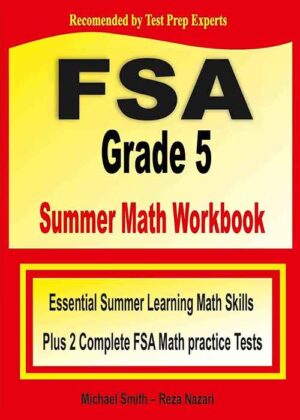 FSA Grade 5 Summer Math Workbook: Essential Summer Learning Math Skills plus Two Complete FSA Math Practice Tests Original price was: $18.99.$12.99Current price is: $12.99.Download
 DAT Subject Test Mathematics: Student Practice Workbook + Two Full-Length DAT Math Tests Original price was: $18.99.$12.99Current price is: $12.99.Download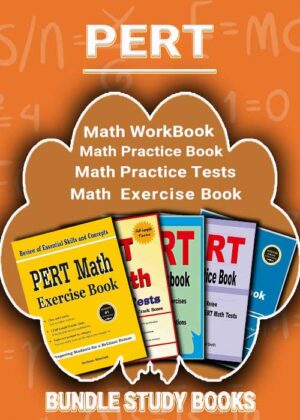
 Common Core Math Prep Grade 8: The Ultimate Step by Step Guide Plus Two Full-Length Common Core Practice Tests Original price was: $18.99.$12.99Current price is: $12.99.Download
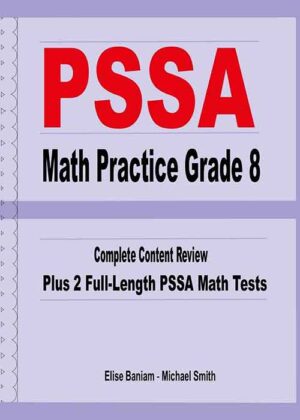 PSSA Math Practice Grade 8: Complete Content Review Plus 2 Full-length PSSA Math Tests Original price was: $18.99.$12.99Current price is: $12.99.Download
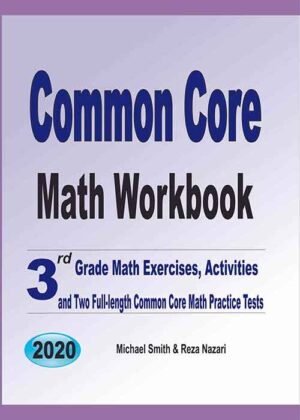 Common Core Math Workbook: 3rd Grade Math Exercises, Activities, and Two Full-Length Common Core Math Practice Tests Original price was: $18.99.$12.99Current price is: $12.99.Download
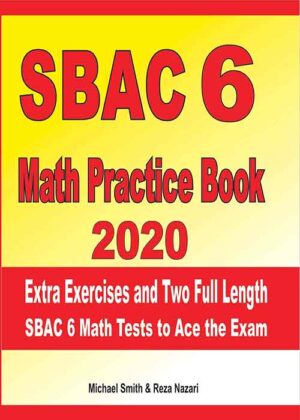 SBAC Grade 6 Math Practice Book 2020: Extra Exercises and Two Full Length SBAC Math Tests to Ace the Exam Original price was: $18.99.$12.99Current price is: $12.99.Download
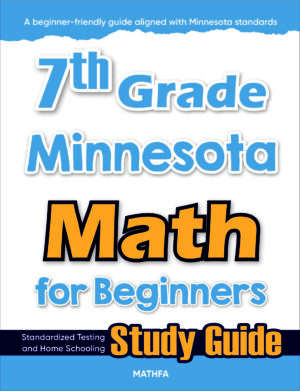 7th Grade Minnesota Math for Beginners Original price was: $21.99.$14.99Current price is: $14.99.Download
 STAAR Math Test Prep for Grades 6-8: A Parent’s Guide (2026)
 6th Grade South Carolina Math: SC READY Guide (2026)
 6th Grade South Dakota Math: Smarter Balanced Guide (2026)
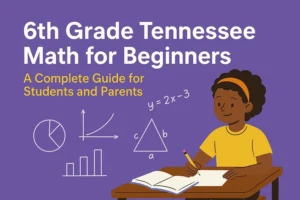 6th Grade Tennessee Math: TNReady Guide (2026)
 6th Grade Utah Math: RISE Test Guide (2026)
The Role of Algebra 2: Why It Matters and How to Succeed


Algebra 2 has a reputation as a tough, abstract course, and many students wonder whether it really matters. The short answer is yes: Algebra 2 plays a pivotal role in a student’s education, serving as the gateway to advanced math, a key factor in college admissions, and the foundation for countless careers. Understanding why Algebra 2 matters, and how to succeed in it, helps students approach the course with purpose rather than dread. This guide explains the role Algebra 2 plays, what it covers, and how to thrive in it.
Far from being an arbitrary hurdle, Algebra 2 builds the reasoning and skills that higher math and quantitative fields depend on. Below we’ll explore what the course covers, why it’s so important, how it connects to the future, and how steady Algebra 2 practice with the right support helps students master this crucial subject.
What Algebra 2 is
Algebra 2 is the math course that typically follows Geometry and Algebra 1 in the high-school sequence, extending and deepening the algebra students learned earlier. It moves beyond linear equations into more complex and powerful concepts, building the toolkit students need for precalculus, calculus, and college-level math.
Where Algebra 1 introduces the basics of working with variables and equations, Algebra 2 expands the range dramatically, tackling functions of many kinds, complex numbers, and advanced problem-solving. It’s where algebra grows into the versatile, powerful language used throughout science, engineering, and higher mathematics, which is exactly why it occupies such an important place in the curriculum.
What Algebra 2 covers
Algebra 2 covers a substantial range of topics. Students work with quadratic functions and equations, polynomial functions, and rational expressions. They explore exponential and logarithmic functions, which model growth and decay. They study systems of equations, complex numbers, sequences and series, and often an introduction to probability and statistics.
A central theme is functions, understanding different families of functions, how they behave, how to graph them, and how to use them to model situations. This focus on functions is one of the most important things Algebra 2 teaches, because functions are the foundation of calculus and a key tool across the quantitative sciences.
Why Algebra 2 is the gateway to advanced math
One of Algebra 2’s most important roles is preparing students for advanced mathematics. Precalculus and calculus build directly on the functions, equations, and reasoning Algebra 2 develops, so students who master it are well-positioned for those courses, while those who don’t often struggle. It’s the essential bridge to the highest levels of high-school and college math.
This gateway role means Algebra 2 has outsized importance for any student considering a STEM path. The exponential and logarithmic functions, the polynomial work, the deep understanding of functions, all become indispensable in calculus and beyond. Succeeding in Algebra 2 keeps the door to advanced math, and the opportunities it unlocks, wide open.
Why Algebra 2 matters for college
Algebra 2 also matters significantly for college admissions and readiness. Many colleges expect applicants to have completed Algebra 2, and selective programs often look for math beyond it. The course also appears prominently on college entrance exams like the SAT and ACT, so mastering it directly supports test scores that affect admissions.
Beyond admissions, Algebra 2 builds the quantitative readiness colleges expect. Students who arrive having truly understood it are prepared for college math and for the data-heavy reasoning many majors require. In a real sense, success in Algebra 2 keeps a wide range of college and career options available, which is a powerful reason to take it seriously.
How Algebra 2 connects to careers
The reasoning and skills Algebra 2 builds reach far into the working world. Careers in engineering, computer science, medicine, finance, architecture, data analysis, and the sciences all rely on the mathematical thinking Algebra 2 develops. Even fields not obviously mathematical increasingly value the logical, quantitative reasoning the course builds.
Exponential and logarithmic functions, for instance, model everything from population growth to compound interest to radioactive decay, ideas used across science and finance. The problem-solving and abstract reasoning Algebra 2 cultivates are transferable skills valued in almost any career. Understanding this helps students see the course as preparation for their future, not just a requirement.
How Algebra 2 builds on Algebra 1
Algebra 2 leans heavily on Algebra 1, so a solid foundation there is the single best predictor of success. The skills of working with variables, solving equations, manipulating expressions, and understanding functions are all extended in Algebra 2, so gaps from Algebra 1 quickly become obstacles in the harder course.
This means that if a student struggled with Algebra 1, shoring up those fundamentals is the first step to succeeding in Algebra 2. Reviewing and strengthening earlier algebra skills, rather than pushing forward on a shaky foundation, prevents the cascading difficulties that derail so many Algebra 2 students. The connection between the courses is direct and unforgiving, which is why foundations matter so much.
Why students find Algebra 2 challenging
Algebra 2 is genuinely demanding, and it helps to understand why. It introduces more abstract concepts, complex numbers, logarithms, advanced functions, that can feel removed from everyday experience. It also moves quickly and builds relentlessly, so falling behind compounds. And it demands strong Algebra 1 fundamentals that not every student has solidified.
Recognizing these challenges helps students and parents respond well. The difficulty isn’t a sign a student can’t do it; it’s a sign the course requires steady effort, solid foundations, and consistent practice. With the right approach, the abstraction becomes manageable and the pace navigable, which is exactly what good preparation provides.
How to succeed in Algebra 2
Success in Algebra 2 comes from a few key habits. Keep your Algebra 1 fundamentals sharp, since everything builds on them. Practice consistently rather than cramming, because the course’s cumulative nature rewards steady work. And focus on understanding the concepts, especially functions, rather than just memorizing procedures, since understanding is what transfers to harder material.
It’s also vital to address confusion quickly rather than letting it pile up, because Algebra 2 builds so fast that small gaps become big ones. Steady Algebra 2 practice, with attention to understanding and prompt help when stuck, is the reliable path through the course. None of it requires special talent, just consistent, focused effort.
Practice with algebra worksheets
Targeted practice is essential for mastering Algebra 2’s many topics. Math Notion’s algebra worksheets let students drill expressions, equations, and core algebra skills one at a time, building the fluency Algebra 2 demands, and the grade-level worksheets reinforce the foundations the course relies on.
Browse the full library on our math worksheets page to find practice at the right level. Used regularly, with careful review of every problem, worksheets turn shaky Algebra 2 topics into solid ones. They’re a practical, skill-by-skill way to build the mastery the course requires.
The role of a strong support system
Because Algebra 2 is challenging, the support a student has matters. Clear instruction, good practice materials, and prompt help when stuck make an enormous difference in whether a student thrives or struggles. A workbook with step-by-step explanations acts like a patient tutor, helping students understand each concept and work through difficulties independently.
Parents can help too, even without remembering all the math, by encouraging consistent practice, keeping a positive attitude, and ensuring their student gets help, from a teacher, tutor, or clear materials, when confusion arises. A strong support system turns Algebra 2 from a struggle into a manageable, even rewarding, course.
The workbook that supports Algebra 2 success
For thorough support, a complete algebra workbook ties the course’s many topics together with clear lessons and step-by-step solutions. Math Notion’s algebra resources build and reinforce the functions, equations, and reasoning Algebra 2 demands, explaining each concept clearly so students can understand, not just memorize, the material.
Used alongside the algebra worksheets for targeted drilling, a workbook gives students both complete instruction and focused practice, the combination that builds Algebra 2 mastery. The resources are instant downloads, so students can start strengthening their algebra today. Browse the full Math Notion collection → to find the right fit.
Why functions are the heart of Algebra 2
If there’s one idea that captures the role of Algebra 2, it’s the deep study of functions. Students meet whole families of them, quadratic, polynomial, rational, exponential, and logarithmic, and learn how each behaves, how to graph it, and how to use it to model real situations. This focus on functions is what makes Algebra 2 so powerful and so important for what comes next.
Understanding functions deeply pays off enormously in calculus, which is essentially the study of how functions change, and in any field that models the world mathematically. A student who leaves Algebra 2 genuinely comfortable with functions has acquired one of the most transferable tools in all of mathematics. That’s why it’s worth giving functions extra attention and practice, they are the conceptual core the rest of higher math is built around.
Making Algebra 2 feel relevant
One way to ease the abstraction of Algebra 2 is to connect its concepts to real situations. Exponential functions describe how savings grow with compound interest or how a population expands; logarithms underlie the scales used for earthquakes and sound; quadratic functions model the path of a thrown ball. Pointing out these connections helps students see that the abstract math describes the real world.
This relevance matters for motivation as much as understanding. When students grasp that Algebra 2 isn’t arbitrary but a language for describing genuine phenomena, the effort feels more worthwhile and the concepts stick better. Looking for the real-world meaning behind each new function or technique turns Algebra 2 from a set of rules to memorize into a genuinely useful and even interesting subject, which is exactly how the most successful students come to see it.
Frequently asked questions
Why is Algebra 2 important?
It’s the gateway to advanced math like precalculus and calculus, matters for college admissions and entrance exams, and builds reasoning used in STEM and many careers. It keeps future options open.
What does Algebra 2 cover?
Quadratic, polynomial, rational, exponential, and logarithmic functions; systems of equations; complex numbers; sequences and series; and an introduction to probability and statistics, with a central focus on functions.
Why do students find Algebra 2 hard?
It’s abstract, moves quickly, builds relentlessly on Algebra 1, and demands strong fundamentals. The difficulty reflects the course’s demands, not a student’s inability, and is manageable with steady practice.
How can I succeed in Algebra 2?
Keep Algebra 1 fundamentals sharp, practice consistently, focus on understanding functions and concepts, address confusion quickly, and use clear materials and worksheets for steady, targeted practice.
Math Notion makes standards-aligned math workbooks and test prep for learners at every level and across all 50 states. See the full collection.
Posted by Math Notion Team · Published on October 13, 2024