Math Articles, tips & study guides
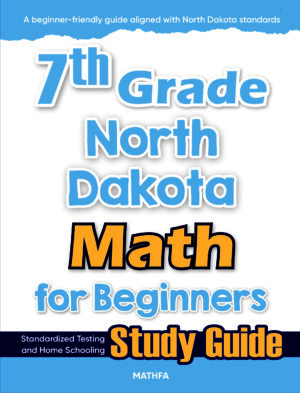 7th Grade North Dakota Math for Beginners Original price was: $21.99.$14.99Current price is: $14.99.Download
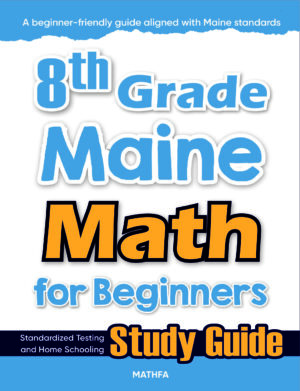 8th Grade Maine Math for Beginners Original price was: $21.99.$14.99Current price is: $14.99.Download
 AFOQT Math Workbook: Essential Learning Math Skills Plus Two Complete AFOQT Math Practice Tests Original price was: $18.99.$12.99Current price is: $12.99.Download
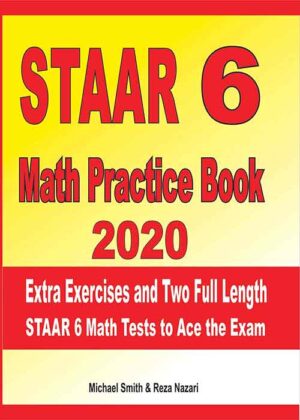 STAAR Grade 6 Math Practice Book 2020: Extra Exercises and Two Full Length STAAR Math Tests to Ace the Exam Original price was: $18.99.$12.99Current price is: $12.99.Download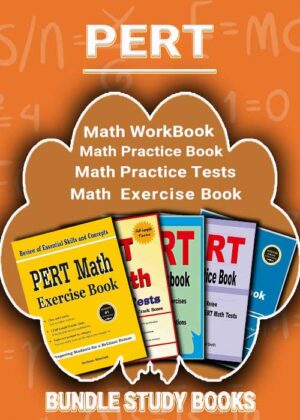
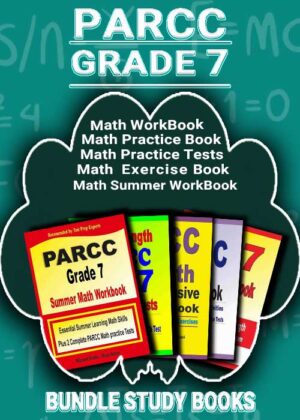
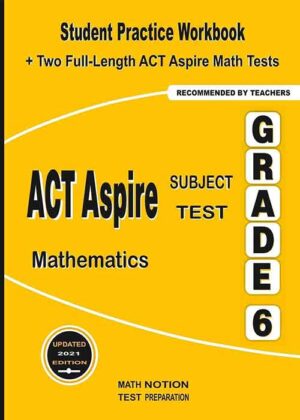 ACT Aspire Subject Test Mathematics Grade 6: Student Practice Workbook + Two Full-Length ACT Aspire Math Tests Original price was: $18.99.$12.99Current price is: $12.99.Download
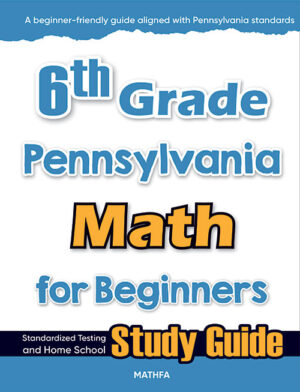 6th Grade Pennsylvania Math for Beginners Original price was: $21.99.$14.99Current price is: $14.99.Download
 FSA Subject Test Mathematics Grade 6: Student Practice Workbook + Two Full-Length Florida FSA Math Tests Original price was: $18.99.$12.99Current price is: $12.99.Download
 PSSA Grade 6 Summer Math Workbook: Essential Summer Learning Math Skills plus Two Complete PSSA Math Practice Tests Original price was: $18.99.$12.99Current price is: $12.99.Download
 What Is Algebra 1? Why It Matters and How to Succeed
 The Role of Algebra 2: Why It Matters and How to Succeed
 Algebra 1 for Beginners: How to Start and Succeed
 How to Prepare for Algebra: A Beginner Guide
 How to Prepare for an Algebra Test (and Pass It)
How to Study Algebra Effectively (Methods That Work)


Algebra has a reputation for being tough, but much of the struggle comes down to how students study it, not whether they’re capable. Learning how to study algebra effectively can completely change your experience of the subject, turning confusion into clarity and frustration into steady progress. Algebra rewards a particular kind of studying, active, consistent, and built on understanding, and once you adopt the right habits, it becomes far more manageable. This guide lays out exactly how to study algebra so that the concepts click and stay, whether you’re learning it for the first time or trying to turn a struggling grade around.
The core idea is simple: algebra is learned by doing, not by watching or reading. Below we’ll cover the study methods that actually work for algebra, the habits to avoid, and how steady algebra practice with the right materials builds genuine, lasting understanding rather than fragile memorization.
Understand, don’t memorize
The single biggest shift in studying algebra well is moving from memorizing procedures to understanding why they work. Students who only memorize steps can handle problems exactly like the examples but fall apart when a question is phrased differently. Students who understand the underlying logic can adapt to new problems, which is exactly what algebra demands.
So when you study, always ask why a step works, not just what the step is. Why do you do the same thing to both sides of an equation? Why does a negative times a negative give a positive? Understanding the reasoning builds flexible knowledge that transfers to unfamiliar problems, which is the kind of understanding that earns strong grades and lasts.
Practice actively, every session
Algebra is a skill, like playing an instrument, and skills are built by doing. Reading your textbook or watching a video can feel productive, but it’s passive, and passive review gives a false sense of understanding. The real work, and the real learning, happens when you put the notes aside and solve problems yourself.
Make working problems the center of every study session. Aim to do more problems than you read about, and when you finish a worked example, cover the solution and try a similar one unaided. This active practice is the most effective way to study algebra, and it’s what separates students who understand from those who only think they do.
Study consistently, not in bursts
Algebra builds relentlessly, with each topic resting on the ones before, so consistency matters enormously. A student who practices a little most days stays on top of the material, while one who ignores it for two weeks then crams falls badly behind, because the gaps compound. Short, regular study sessions beat occasional marathons every time.
Aim for frequent, focused sessions rather than rare long ones. Even fifteen or twenty minutes of algebra practice several times a week keeps your skills sharp and prevents the slow slide that catches up to inconsistent students at exam time. Consistency is arguably the single most important study habit for algebra success.
Master each topic before moving on
Because algebra is cumulative, trying to move forward while a previous topic is still shaky is a recipe for frustration. If you haven’t mastered solving basic equations, you’ll struggle with systems of equations; if exponents are unclear, polynomials will be a nightmare. Each weak link makes everything after it harder.
So study in a way that confirms mastery before advancing. After working a topic, test yourself, can you solve a range of problems without help? If not, spend more time there before moving on. This patient, build-a-solid-foundation approach feels slower at first but prevents the cascading struggles that derail so many algebra students.
Keep your fundamentals sharp
Algebra leans constantly on arithmetic and pre-algebra, fractions, negative numbers, order of operations, so weak fundamentals quietly sabotage your studying. A student who’s slow or error-prone with fractions will make mistakes throughout algebra, not because the algebra is too hard, but because the foundation isn’t solid.
If you notice recurring errors tracing back to the basics, make a point of strengthening them. A little dedicated practice on fractions and integer operations pays off across every algebra topic. Keeping your fundamentals automatic frees your attention for the actual algebra rather than the arithmetic underneath it.
Use worksheets to drill skills
Targeted worksheets are one of the best tools for studying algebra, because they let you drill a single skill until it’s automatic. Math Notion’s algebra worksheets focus on expressions, equations, and core algebra skills one at a time, and our grade-level worksheets, like Grade 7 and Grade 8, cover the pre-algebra foundations.
Browse the full library on our math worksheets page. Use worksheets to practice exactly the topic you’re studying, work a focused set, and review every problem. This repeatable, skill-by-skill drilling is one of the most efficient ways to turn a shaky algebra concept into a solid one.
Learn from your mistakes
How you handle mistakes largely determines how fast you improve at algebra. Every error is information: it tells you exactly what you don’t yet understand. Instead of just noting that an answer was wrong, study the mistake, figure out where your reasoning went off track, and rework the problem correctly.
Keeping a running list of your recurring errors is especially powerful, because patterns reveal what to focus on. A student who keeps making sign errors knows to slow down with negatives; one who botches distributing knows to drill that skill. Treating mistakes as your most useful feedback turns them from discouraging into genuinely productive.
Show your work neatly
Algebra problems often involve several steps, and trying to do them in your head invites errors and confusion. Writing out each step neatly helps you keep track of what you’re doing, catch mistakes as they happen, and follow the logic of a problem. It also builds the habit that earns partial credit on tests.
Make showing your work a standard part of how you study, not just something you do on exams. Neat, step-by-step work is a study aid in itself, because it makes your reasoning visible and reviewable. When you can see exactly what you did, you can find exactly where you went wrong.
Explain it to someone else
One of the most powerful study techniques is teaching what you’ve learned to someone else, or even explaining it out loud to yourself. If you can clearly explain why a method works and walk through a problem step by step, you truly understand it. If you stumble, you’ve found a gap to address.
This works because explaining forces you to organize your understanding and exposes anything fuzzy. Study with a friend and take turns teaching each other, or simply narrate your problem-solving aloud. This active, articulate engagement deepens understanding far more than silent rereading ever could.
Build a productive study environment
Where and how you study affects how well you learn algebra. Choose a quiet, distraction-free spot, put your phone away, and work in focused blocks rather than scattered, interrupted sessions. Algebra requires concentration, and constant distractions fracture the sustained attention that working through a problem demands.
Short, focused sessions with genuine attention beat long sessions full of interruptions. Give algebra your real focus for a manageable stretch, take a break, and return refreshed. Protecting your study environment is a simple change that makes every minute of practice more effective.
Pair worksheets with a complete workbook
Worksheets are great for drilling specific skills, but a complete workbook ties everything together with clear lessons and full, sequenced coverage. Math Notion’s grade-level and Algebra workbooks explain each concept and provide step-by-step answer explanations, so you can study independently and actually understand the methods, not just memorize them.
Used together, free worksheets and a structured workbook give you both targeted drill and complete instruction. The workbooks are instant downloads, so you can start tonight. Browse the full Math Notion collection → to find the right book for your level.
Use spaced repetition to remember
One of the most research-backed study techniques is spaced repetition: revisiting material at increasing intervals rather than all at once. For algebra, this means returning to topics you studied earlier even after you’ve moved on, so they stay fresh. A skill you practiced two weeks ago can fade if you never touch it again, but a quick review brings it right back and cements it for good.
Build this into your routine by mixing older topics into your current practice. When you sit down to study, don’t only work the newest material; throw in a few problems from earlier units too. This spacing strengthens long-term retention dramatically, which matters enormously for a cumulative subject like algebra where everything keeps coming back.
Make a growth mindset your default
How you think about your own ability shapes how well you study algebra. Students who believe they’re simply “bad at math” tend to give up the moment something gets hard, while those who see ability as something built through effort push through the confusion and come out understanding more. Algebra is learnable by anyone willing to practice; it is not a fixed talent.
So treat difficulty as a normal, temporary part of learning rather than proof you can’t do it. When a concept doesn’t click immediately, that’s not failure, it’s the feeling of your brain building a new skill. Approaching algebra with patience and the belief that you can improve is, on its own, one of the most powerful study advantages you can have.
Get help before you fall behind
Finally, don’t let confusion pile up. Because algebra is cumulative, a misunderstanding left unaddressed makes everything after it harder, so the smartest move is to get help early, while a gap is still small. Ask your teacher, work with a classmate, use clear practice materials with worked explanations, or revisit the relevant worksheets the moment something stops making sense.
There’s no shame in needing help; the strongest math students seek it out routinely. Catching and clearing up confusion quickly keeps you moving forward instead of slipping further behind. Combined with consistent algebra practice and an understanding-first approach, this habit of addressing gaps early is what keeps algebra manageable and steadily builds real mastery.
Frequently asked questions
What’s the best way to study algebra?
Focus on understanding rather than memorizing, practice problems actively every session, study consistently in short sessions, master each topic before moving on, and learn from every mistake.
Why do I keep struggling with algebra even though I study?
Often because studying is passive (rereading, watching) rather than active (working problems), or because a shaky foundation in fundamentals like fractions is undermining you.
How often should I study algebra?
A little most days beats occasional cramming. Algebra is cumulative, so frequent, short practice keeps skills sharp and prevents gaps from compounding.
Where can I find algebra practice?
Math Notion offers free algebra worksheets and grade-level math worksheets on our worksheets pages, plus complete workbooks for independent study.
Math Notion makes standards-aligned math workbooks and test prep for learners at every level and across all 50 states. See the full collection.
Posted by Math Notion Team · Published on December 9, 2023