Math Articles, tips & study guides
 AFOQT Subject Test Mathematics: Student Practice Workbook + Two Realistic AFOQT Math Tests Paperback Original price was: $18.99.$12.99Current price is: $12.99.Download
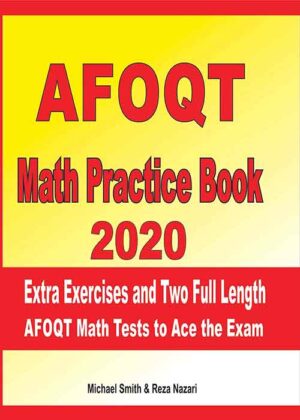 AFOQT Math Practice Book 2020: Extra Exercises and Two Full Length AFOQT Math Tests to Ace the Exam Original price was: $18.99.$12.99Current price is: $12.99.Download
 AFOQT Math Workbook: Essential Learning Math Skills Plus Two Complete AFOQT Math Practice Tests Original price was: $18.99.$12.99Current price is: $12.99.Download
 AFOQT Math Workbook: Activities, Exercises, and Two Complete AFOQT Mathematics Practice Tests Original price was: $18.99.$12.99Current price is: $12.99.Download
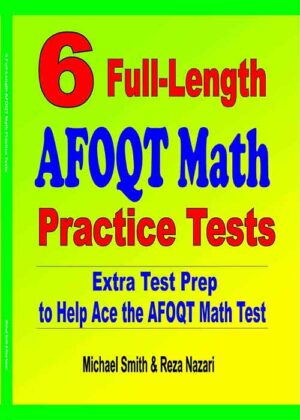 6 Full-Length AFOQT Math Practice Tests: Extra Test Prep to Help Ace the AFOQT Math Test Original price was: $18.99.$12.99Current price is: $12.99.Download
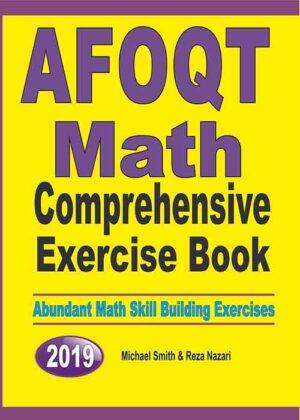 AFOQT Math Comprehensive Exercise Book: Abundant Math Skill Building Exercises Original price was: $18.99.$12.99Current price is: $12.99.Download
 AFOQT Math Prep: The Ultimate Step-by-Step Guide Plus Two Full-Length AFOQT Practice Tests Original price was: $18.99.$12.99Current price is: $12.99.Download
 Algebra 1: Student Practice Workbook + Two Full-Length Algebra 1 Exams Original price was: $18.99.$12.99Current price is: $12.99.Download
 6 Full-Length GED Math Practice Tests: Extra Test Prep to Help Ace the GED Math Test Original price was: $18.99.$12.99Current price is: $12.99.Download
 How to Prepare for the AFOQT Math Test
 Math Exams Explained: A Guide to the Major Standardized Tests
 Big News: The Math Notion Blog Is Here
 7 MCAs Math Prep Tips for Minnesota Students
 STAAR Math Test Prep for Grades 6-8: A Parent’s Guide (2026)
AFOQT Score: How It Works and How Math Affects It

If you’re pursuing an Air Force or Space Force officer commission, your AFOQT scores can open or close doors to specific career paths, including coveted pilot slots. Understanding the AFOQT score, how the test is scored, what the composites mean, and how math factors in, helps you set the right targets and prepare strategically. This guide explains the AFOQT scoring system in plain language, with a focus on how the math sections shape your results, so you know exactly what you’re aiming for.
The AFOQT produces several composite scores that different career fields weigh differently, and the math subtests feed into more than one of them. Below we’ll break down how AFOQT scoring works, what the composites are, what counts as competitive, and how targeted AFOQT math practice strengthens the math composites that influence your AFOQT math results.
How AFOQT scoring works
Unlike a simple pass-or-fail test, the AFOQT reports your results as a set of composite scores expressed in percentiles. A percentile tells you how you performed relative to a reference group of other candidates, so a score in the 80th percentile means you did better than about 80 percent of that group. This relative scoring is why aiming high matters.
Your answers across the various subtests, including the math sections, are combined in different ways to produce these composites. Rather than one overall score, you get several, each relevant to different qualifications. Understanding that the AFOQT is percentile-based and composite-driven is the first step to interpreting your results and setting smart targets.
The AFOQT composite scores
The AFOQT produces composites including the Pilot, Combat Systems Officer, Air Battle Manager, Academic Aptitude, Verbal, and Quantitative composites. Each combines different subtests, and each is used to qualify candidates for different roles. The Pilot composite, for example, matters for aspiring pilots, while Academic Aptitude reflects overall academic ability.
For math specifically, the Quantitative composite is built directly from the math subtests, and math also feeds the Academic Aptitude composite and indirectly supports others. This means your math performance influences several composites at once, so strengthening it has broad benefits across the qualifications that matter for your goals.
How math factors into your scores
The AFOQT includes two math-focused subtests: Arithmetic Reasoning, which tests word problems and quantitative reasoning, and Mathematics Knowledge, which tests algebra and math concepts. Together these drive the Quantitative composite and contribute to the Academic Aptitude composite, making math central to a strong overall AFOQT profile.
Because math affects multiple composites, a weak math performance can drag down several scores at once, while a strong one lifts them. This is why the math sections deserve serious preparation, even for candidates whose strengths lie elsewhere. Balanced strength across both math subtests gives you the best, most flexible set of composite scores.
What counts as a competitive AFOQT score
Because scoring is percentile-based, competitive AFOQT scores are high percentiles. There are minimum qualifying scores for certain composites, but meeting the minimum isn’t the goal, especially for selective paths like pilot training, where strong applicants often score well into the upper percentiles. Aim as high as you can rather than just clearing a floor.
What’s competitive depends on your target career field and the current selection environment, since these can shift. The safest approach is to prepare thoroughly and aim for the highest percentiles you can reach, which keeps the most options open. Strong math scores, in particular, broaden the range of composites where you’re competitive.
Why the math composites are improvable
Here’s encouraging news: the math subtests, and the composites they feed, are among the most improvable parts of the AFOQT. Because Arithmetic Reasoning and Mathematics Knowledge test finite, learnable skills, arithmetic, algebra, and applied problem-solving, focused practice can raise these scores in a relatively predictable way.
This means that if your math composites are lower than you’d like, targeted practice can lift them, and with them several of your composite scores. For many candidates, strengthening math is the most efficient way to improve their overall AFOQT profile. Treating the math sections as a genuine, improvable priority is a smart, high-return strategy.
What the math subtests cover
Arithmetic Reasoning focuses on word problems: rates, ratios, proportions, percentages, averages, and practical quantitative reasoning. Mathematics Knowledge focuses on algebra and concepts: equations and inequalities, exponents, polynomials, factoring, fractions, and basic geometry. Both are multiple choice, and no calculator is permitted, so by-hand fluency and speed matter.
None of this goes beyond core high-school math, so it’s all learnable with practice. Because the two subtests emphasize different skills, word-problem reasoning versus direct algebra, balanced practice across both is the most effective way to strengthen your math composites. A complete set of materials covers everything so no topic catches you off guard.
How to raise your math composites
Raising your math composites comes down to targeted, timed practice. Drill the specific skills the subtests test, work plenty of practice problems, and review every mistake to understand the method. Because the AFOQT is timed and allows no calculator, also build speed and mental-math fluency, since pacing affects many candidates’ scores.
Focus early effort on shoring up arithmetic fundamentals and core algebra, the highest-value areas, then round out the rest. This focused, practice-heavy approach reliably lifts the math composites, because the AFOQT rewards familiarity with its question types and the efficient application of foundational math under time pressure.
Practice with AFOQT math worksheets
Focused practice is the engine of score improvement. Math Notion offers free, printable AFOQT math worksheets covering the arithmetic reasoning and mathematics knowledge the test measures, so you can rehearse exactly the right content and build toward stronger composites.
Browse the full library on our math worksheets page for more practice. Work each worksheet carefully, then review every problem, especially the misses, to understand why an answer was wrong. This targeted, repeatable practice on the exact content the AFOQT measures is one of the most efficient ways to lift your math composites.
Build speed for the timed test
Because the AFOQT is tightly timed and allows no calculator, speed and accuracy together drive your scores. The way to build speed is repetition: the more you practice a problem type, the more automatic it becomes. Drill mental math, fraction and percentage operations, and common algebra moves until they’re second nature, which directly improves your pace.
Practice timed sets so you learn to manage the clock without panic, and develop the discipline to mark a tough question and move on. Answering everything you can and making educated guesses on the rest protects your score, since the percentile scoring rewards every correct answer. Building these habits in practice makes them automatic on test day.
Can you retake the AFOQT?
The AFOQT can be retaken, but there are limits and waiting periods between attempts, and your most recent scores typically count. This means a disappointing first result isn’t necessarily final, but it also means you shouldn’t count on multiple tries, prepare thoroughly and aim for your best result the first time.
If you do retake, use your previous scores to target exactly the areas that held you back, especially the math composites if those were weak. Many candidates raise their math performance on a retake after focused practice, so a low first score can become a competitive one with the right, targeted preparation.
The workbook that strengthens your math composites
For thorough preparation, a complete workbook ties your AFOQT math practice together. The AFOQT Mathematics Practice Workbook covers exactly the arithmetic reasoning and mathematics knowledge the test measures, with clear lessons, timed-style practice, and step-by-step answer explanations you can follow on your own to strengthen the composites that matter.
Paired with the free AFOQT worksheets for targeted drilling, a workbook gives you both complete instruction and focused practice on the math the test rewards. It’s an instant download, so you can start building stronger composites tonight. Browse all our AFOQT math resources → to find the right fit.
A study plan to lift your math composites
To raise the math composites efficiently, build a focused plan. Start with a diagnostic across both math subtests to see where you stand, then spend the first week or two making arithmetic fundamentals and mental math automatic, since these underpin everything and offer quick gains. Work problems by hand, the way the test requires, and time some of your practice to build pace.
Over the following weeks, work systematically through ratios, percentages, and word problems for Arithmetic Reasoning, and equations, exponents, polynomials, and geometry for Mathematics Knowledge. Reserve time near the end for full, timed practice sections and careful review of every miss. Short, regular sessions beat cramming, and this targeted approach steadily lifts the math composites that shape your AFOQT profile.
Why balanced math strength matters most
Because the math subtests feed multiple composites, the smartest approach is to build balanced strength across both Arithmetic Reasoning and Mathematics Knowledge rather than leaning on one. A candidate strong in word problems but rusty on algebra, or vice versa, leaves points on the table that a little targeted practice would secure, and weakens composites that could have been strong.
This balance also future-proofs your options. Since different career fields weigh the composites differently, being solid across both math subtests keeps more paths open rather than narrowing your possibilities. Steady, balanced AFOQT math practice, with honest review and timed drills, is what builds the even, well-rounded math strength that produces the strongest and most flexible set of composite scores on test day.
In short, your AFOQT score is really a set of percentile composites, and math sits at the heart of several of them. Because those math composites are so improvable, focused, timed, by-hand practice on both subtests is one of the highest-return investments you can make, lifting your scores and keeping your career options as wide as possible.
Frequently asked questions
How is the AFOQT scored?
As a set of composite scores expressed in percentiles, comparing you to other candidates, rather than a single pass-or-fail number. The math subtests feed the Quantitative and Academic Aptitude composites.
What is a competitive AFOQT score?
High percentiles, well above the minimums, especially for selective paths like pilot training. Aim as high as you can, since strong scores keep the most career fields open.
How does math affect my AFOQT scores?
The Arithmetic Reasoning and Mathematics Knowledge subtests drive the Quantitative composite and contribute to Academic Aptitude, so math influences several composites at once.
Can I improve my AFOQT math scores?
Yes. The math subtests test finite, learnable skills, so targeted, timed practice can raise them meaningfully, and the AFOQT can be retaken within limits. Free worksheets and a workbook both help.
Math Notion makes standards-aligned math workbooks and test prep for learners at every level and across all 50 states. See the full collection.
Posted by Math Notion Team · Published on August 14, 2024