Math Articles, tips & study guides
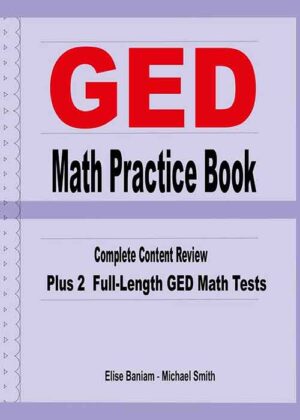 GED Math Practice Book: Complete Content Review Plus 2 Full-length GED Math Tests Original price was: $18.99.$12.99Current price is: $12.99.Download
 GED Math Workbook: Activities, Exercises, and Two Complete GED Mathematics Practice Tests Original price was: $18.99.$12.99Current price is: $12.99.Download
 GED Math Exercise Book: Review of Essential Skills and Concepts with 2 GED Math Practice Tests Original price was: $18.99.$12.99Current price is: $12.99.Download
 6 GED Math Practice Tests: Extra Practice to Achieve a Crack Score Original price was: $18.99.$12.99Current price is: $12.99.Download
 GED Math Practice Book 2020: Extra Exercises and Two Full Length GED Math Tests to Ace the Exam Original price was: $18.99.$12.99Current price is: $12.99.Download
 GED Subject Test Mathematics: Student Practice Workbook + Two Realistic GED Math Tests Original price was: $18.99.$12.99Current price is: $12.99.Download
 GED Math Workbook: Mathematical Reasoning for General Educational Development Exam With 2 Full-Length Practice Tests Original price was: $18.99.$12.99Current price is: $12.99.Download
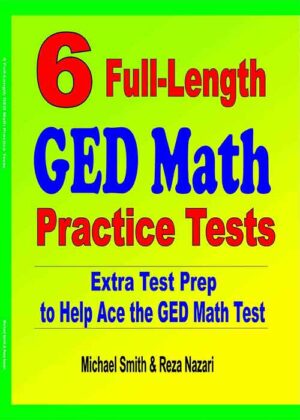 6 Full-Length GED Math Practice Tests: Extra Test Prep to Help Ace the GED Math Test Original price was: $18.99.$12.99Current price is: $12.99.Download
 GED Math Prep: The Ultimate Step by Step Guide Plus Two Full-Length GED Practice Tests Original price was: $18.99.$12.99Current price is: $12.99.Download
 GED Math for Beginners: A Step-by-Step Starter Guide
 GED & HiSET Math Formula Cheat Sheet (Essential Formulas)
 How Long Is the GED Math Test? Timing and Pacing Explained
 Math Topics on the GED: A Complete Breakdown
 The GED Math Test: A Complete Overview
How to Retake and Pass the GED Math Test


If you didn’t pass the GED math test the first time, take heart: you are in very good company, and a retake is not a setback so much as a second, better-prepared attempt. Math is the section that trips up the most GED candidates, but the good news is that knowing how to retake the GED math test strategically, by targeting exactly what held you back, makes the second attempt far more likely to succeed. This guide walks through how the retake works, how to learn from your first score, and the specific steps that turn a near-miss into a pass.
A failed attempt actually gives you something valuable: information about exactly where you need to improve. With focused GED math practice aimed at your weak spots, most candidates pass on a retake. Below we’ll cover the retake rules, how to use your score report, a targeted study plan, common mistakes, and the resources that make your GED math retake a success.
How GED retakes work
The GED is designed to be retaken. Each subject, including Mathematical Reasoning, can be taken multiple times, and you only need to retake the section you didn’t pass, not the whole test. Many testing jurisdictions offer reduced fees for the first couple of retakes, and there’s usually a short waiting period between attempts.
This structure works in your favor. You don’t have to start over; you simply focus on math and try again once you’re better prepared. Knowing that the system expects and supports retakes should take the sting out of a first-attempt miss, it’s a normal, built-in part of the process, not a final judgment.
Why math is the hardest section for many
Math is the GED section people most often have to retake, and there are understandable reasons. Many adults have been away from formal math for years, so skills like algebra and fractions have gone rusty. Math also builds on itself, so a few foundational gaps can undermine many questions. And math anxiety can interfere with performance independent of actual ability.
Recognizing this helps you approach the retake without discouragement. You didn’t fail because you can’t do math; you likely faced predictable, fixable obstacles, rusty fundamentals, a few specific weak topics, or nerves. Each of those has a clear remedy, which is exactly what a focused retake strategy addresses.
Use your score report as a roadmap
Your first-attempt score report is the single most valuable tool for your retake, because it shows which areas cost you points. The GED reports performance by content area, so you can see whether you struggled more with quantitative problem-solving or algebraic reasoning, and focus your study there.
This is a huge advantage over your first attempt, when you were preparing blind. Now you have a roadmap. Rather than reviewing everything equally, concentrate your effort on the specific areas the report flags as weak. Targeted practice on your actual gaps is far more efficient and far more likely to lift your score above the passing threshold.
Know the passing score and aim above it
The GED Mathematical Reasoning test is scored from 100 to 200, and you need 145 to pass. If your first attempt landed close to but below 145, you may only need to strengthen a few areas; if it was further below, you’ll want a more thorough review. Either way, aim comfortably above 145 to give yourself a cushion.
Knowing your starting score relative to 145 tells you how much ground you need to make up, which helps you plan a realistic study timeline. A candidate who scored 140 is in a very different position from one who scored 115, and tailoring your effort to the gap is part of a smart retake strategy.
Rebuild your fundamentals first
Because math builds on itself, the fastest way to raise a GED math score is often to shore up the fundamentals, fractions, decimals, percentages, and integer operations, that underpin everything else. Weak basics quietly cause errors throughout the test, so making them automatic lifts performance across many questions at once.
Spend the early part of your retake preparation confirming these foundations are solid before moving to harder topics. It may feel like review, but it’s the highest-leverage work you can do. A candidate fluent in the fundamentals can then focus on the algebra and geometry that often make the difference between 140 and a passing 150.
Practice with GED math worksheets
Targeted practice is the engine of a successful retake. Math Notion offers free, printable GED math worksheets covering the arithmetic, algebra, geometry, and data skills the test measures, so you can drill exactly the areas your score report flagged.
Browse the full library on our math worksheets page for additional practice. Work each worksheet carefully, then review every problem, especially the misses, to understand why an answer was wrong. This focused, repeatable practice on your specific weak areas is the most efficient way to push your score past 145.
Master the calculator and formula sheet
The GED math test provides an on-screen calculator for most questions and a formula sheet, and using both well can recover points you may have lost the first time. If you weren’t fully comfortable with the calculator, practice with the same type so you’re fast and confident, and study the formula sheet so you know what’s available and how to apply it.
Many candidates lose time or make errors simply because they weren’t fluent with these tools. A retake is the perfect opportunity to fix that. Practicing with the calculator and formula sheet during your preparation means you’ll use them smoothly on test day rather than fumbling, which protects your score.
A targeted retake study plan
Build your plan around your score report. In the first week or two, rebuild any shaky fundamentals and review the content areas the report flagged as weakest. In the following weeks, work steadily through those topics with practice problems and worksheets, spending the most time where you lost the most points.
As your retake date approaches, take a full-length practice test under timed conditions to check your progress and build pacing, then review every miss. Short, regular study sessions over several weeks beat cramming, because skills consolidate with spaced practice. This focused, report-driven plan is what reliably turns a first-attempt miss into a pass.
Common mistakes to fix on the retake
Retaking gives you a chance to correct the habits that cost you points. Rushing word problems leads to wrong setups, so practice reading carefully and writing out each step. Shaky fractions and percentages undermine harder questions, so drill those. And neglecting the calculator and formula sheet wastes built-in help, so practice with both.
By identifying which of these affected you and addressing them directly, you remove the obstacles that held you back. The retake isn’t just another roll of the dice; it’s a targeted second attempt informed by exactly what went wrong the first time, which is why preparation makes such a difference.
Manage test anxiety on the retake
If nerves affected your first attempt, know that thorough preparation is the best remedy. When you’ve rebuilt your fundamentals, practiced your weak areas, and taken a timed practice test, the retake holds far fewer surprises, and confidence replaces dread. Familiarity is what calms anxiety.
It also helps to reframe the retake itself: you’ve seen the test now, you know what to expect, and you’ve prepared specifically for what challenged you. That’s a strong position to be in. Rest well beforehand, work through the test one question at a time, and trust the focused effort you’ve put in.
The workbook that gets you to a pass
For a thorough, structured retake preparation, a complete GED math workbook ties everything together. Math Notion’s GED math resources cover exactly the arithmetic, algebra, geometry, and data the test rewards, with clear lessons, full-length practice, and step-by-step answer explanations you can follow on your own to rebuild any rusty skills.
Paired with the free GED worksheets for targeted drilling, a workbook gives you both complete review and focused practice on your weak areas. It’s an instant download, so you can start your retake preparation tonight. Browse all our GED math resources → to find the right fit.
Turn a near-miss into momentum
If your first attempt landed just below 145, you’re closer than it feels, and that’s genuinely encouraging. A small gap usually means a handful of specific, fixable weak spots rather than a broad problem, so a few weeks of targeted work is often all it takes to clear the bar. Treat that near-miss as proof you’re almost there, not evidence you can’t do it, and channel the disappointment into focused practice.
Even a larger gap is entirely surmountable with steady effort, because the GED math content is finite and learnable. Plenty of people who scored well below passing on a first attempt have gone on to pass comfortably after rebuilding their skills. The difference is always preparation, not innate ability, and the retake puts you in control of exactly that. Each focused study session moves you measurably closer to the credential.
Keep your eyes on the goal
It helps to remember why you’re doing this. Passing the GED math test, and earning your credential, opens doors to college, training programs, and better jobs, and the quantitative skills you build along the way serve you well beyond the test. On the discouraging days, that bigger purpose can carry you through another practice session.
So approach your GED math retake as the final stretch of a worthwhile journey rather than a repeat of a failure. You’ve already done the hard part of showing up and trying; now you simply prepare smarter, guided by what you learned the first time. With a targeted plan, steady practice, and the right resources, the retake is very winnable, and the credential waiting on the other side is well worth the effort.
Frequently asked questions
Can I retake just the GED math section?
Yes. You only need to retake the section you didn’t pass, not the whole GED, and the math test can be taken multiple times, usually with a short waiting period between attempts.
What score do I need to pass GED math?
You need 145 on the Mathematical Reasoning section. Aim comfortably above 145 on your retake to give yourself a cushion.
How should I prepare for a GED math retake?
Use your score report to target your weakest areas, rebuild your fundamentals, practice with GED worksheets and a workbook, and take a timed practice test before your retake.
How long should I study before retaking?
It depends on how far below 145 you scored, but a few focused weeks of targeted practice is realistic for most candidates, especially when guided by the score report.
Math Notion makes standards-aligned math workbooks and test prep for learners at every level and across all 50 states. See the full collection.
Posted by Math Notion Team · Published on January 29, 2024