Math Articles, tips & study guides
 GED Math Practice Book 2020: Extra Exercises and Two Full Length GED Math Tests to Ace the Exam Original price was: $18.99.$12.99Current price is: $12.99.Download
 GED Math Exercise Book: Review of Essential Skills and Concepts with 2 GED Math Practice Tests Original price was: $18.99.$12.99Current price is: $12.99.Download
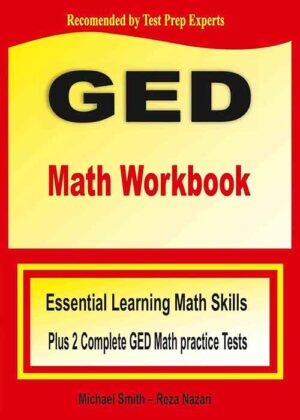 GED Math Workbook: Essential Learning Math Skills Plus Two Complete GED Math Practice Tests Original price was: $18.99.$12.99Current price is: $12.99.Download
 GED Math Workbook: Activities, Exercises, and Two Complete GED Mathematics Practice Tests Original price was: $18.99.$12.99Current price is: $12.99.Download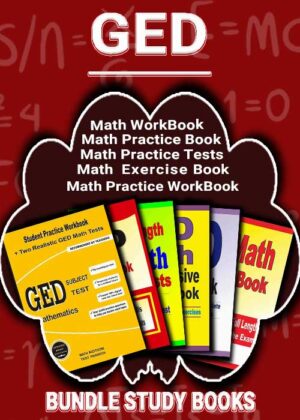
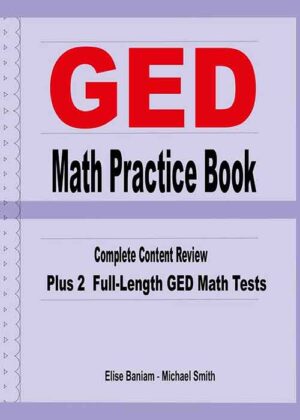 GED Math Practice Book: Complete Content Review Plus 2 Full-length GED Math Tests Original price was: $18.99.$12.99Current price is: $12.99.Download
 GED Math Prep: The Ultimate Step by Step Guide Plus Two Full-Length GED Practice Tests Original price was: $18.99.$12.99Current price is: $12.99.Download
 6 GED Math Practice Tests: Extra Practice to Achieve a Crack Score Original price was: $18.99.$12.99Current price is: $12.99.Download
 6 Full-Length GED Math Practice Tests: Extra Test Prep to Help Ace the GED Math Test Original price was: $18.99.$12.99Current price is: $12.99.Download
 GED Math Workbook: Mathematical Reasoning for General Educational Development Exam With 2 Full-Length Practice Tests Original price was: $18.99.$12.99Current price is: $12.99.Download
 GED Math for Beginners: A Step-by-Step Starter Guide
 GED & HiSET Math Formula Cheat Sheet (Essential Formulas)
 How Long Is the GED Math Test? Timing and Pacing Explained
 Math Topics on the GED: A Complete Breakdown
 The GED Math Test: A Complete Overview
How to Prepare for the GED Math Test (Step by Step)

For many adults, the math section is the toughest part of earning a GED, and it’s often the reason people put off finishing. Learning how to prepare for the GED math test the right way takes that fear off the table, because the Mathematical Reasoning section is built around a predictable set of skills that anyone can master with steady practice. Whether your last math class was two years ago or twenty, you can absolutely pass. This guide explains what the GED math test covers, how it’s scored, and exactly how to prepare so the numbers feel familiar instead of frightening on test day.
The single most reliable way to raise your score is consistent GED math practice using a resource built for this exact test. Below we’ll walk through the format, the content, scoring, common mistakes, a study plan, and the workbook that pulls your GED math test prep together so you can study confidently on your own schedule.
What the GED math test is
The GED Mathematical Reasoning test is one of four subjects in the GED, the credential accepted nationwide as the equivalent of a high school diploma. The math section measures the quantitative and algebraic problem-solving skills expected of a high school graduate, framed in practical, real-world contexts rather than abstract puzzles.
Crucially, none of the content is exotic; it’s standard high-school math. That’s exactly why a complete, well-sequenced workbook works so well as preparation. The skills are finite and knowable, the question styles repeat, and the math doesn’t change from year to year, so the time you invest translates directly into points on test day.
How the GED math test works
The Mathematical Reasoning test is taken on a computer and runs about 115 minutes. It includes a variety of question types, multiple choice, fill-in-the-blank, drag-and-drop, and drop-down items, so you build or enter answers rather than just picking from a list. Understanding this format ahead of time removes a layer of surprise.
An on-screen calculator is available for most of the test, with a short opening portion designed to be done without one. There’s also a formula sheet provided, so you don’t need to memorize every formula. Practicing with these same tools beforehand means you won’t waste time figuring them out on test day.
The two parts of the test
The GED math splits roughly into two areas. Quantitative problem-solving covers number operations, fractions, decimals, percentages, ratios, proportions, and basic measurement and data. Algebraic problem-solving covers expressions, equations, inequalities, exponents, polynomials, and interpreting graphs and functions.
Together these two areas make up the whole test, and they build on each other, since algebra leans on solid arithmetic. A good workbook covers both in a logical order, starting with the foundations and progressing toward the harder algebraic material, which is exactly how durable understanding is built.
What’s on the GED math test
In more detail, you can expect questions on operations with whole numbers, fractions, and decimals; percentages and their applications; ratios, rates, and proportions; and basic geometry like area, perimeter, and volume. The algebra side includes solving linear equations and inequalities, working with exponents and polynomials, and reading and interpreting graphs.
The problems are framed in the applied, real-world style the GED favors, money, measurement, data, so you’re not just practicing abstract procedures but learning to recognize and solve the kinds of problems you’ll actually see. That alignment between practice and the real test is what makes preparation pay off.
How the GED math test is scored
The GED reports each subject on a scale from 100 to 200. A score of 145 is the passing threshold for math, while higher tiers, around 165 and 175, indicate college readiness and possible college credit. You don’t need a perfect score to pass; you need to clear 145, which is very achievable with preparation.
Knowing this takes pressure off, because the goal isn’t perfection, it’s demonstrating solid, high-school-level competence. It also helps to know that if you don’t pass on the first attempt, retakes are available, so a single difficult day won’t derail your plans. Aim comfortably above 145 to give yourself a cushion.
Why a structured workbook beats scattered studying
Many adults try to prepare with random worksheets and videos, and the result is usually patchy. A well-built workbook solves this by laying out the material so each concept builds on the one before, so you never hit a wall because a prerequisite skill was skipped. It also removes the daily question of what to study next with a clear path from start to finish.
That structure matters enormously for busy adults who don’t have time to design their own curriculum. Open the book, work the next lesson, check your answers against worked explanations, and move on. The plan is already there, which keeps your GED math practice steady and low-stress.
Clear lessons and step-by-step explanations
A common fear is that you won’t be able to teach yourself the harder material. The right workbook is built precisely for independent study, with plain-language lessons that explain each concept before the practice begins, and step-by-step answer explanations that show not just the right answer but how to reach it.
This matters because an answer key with only final answers tells you nothing about where you went wrong. Worked-out explanations let you find your mistakes, understand the correct method, and fix the underlying gap, which is how real learning happens. For someone studying alone, that guidance functions like a patient tutor.
Use the calculator and formula sheet wisely
Because the GED provides an on-screen calculator and a formula sheet, learning to use them well is part of smart preparation. Practice with the same type of calculator the test uses so you’re fast and confident, and get familiar with the formula sheet so you know what’s there and how to apply it rather than scrambling on test day.
That said, don’t lean on these tools to replace understanding. The opening no-calculator questions reward solid mental math, and the formula sheet only helps if you know which formula a problem calls for. Practicing with the tools while still building real skill gives you the best of both.
Common mistakes and how to avoid them
GED test-takers tend to lose points in predictable ways. Rushing word problems leads to setting up the wrong calculation, so reading carefully and writing out the setup pays off. Shaky fractions and percentages quietly undermine harder problems, which is why front-loading those fundamentals matters.
Another common issue is neglecting to practice with the on-screen tools, then losing time on test day. By practicing the exact question styles and reviewing worked solutions, you train yourself out of these habits before they cost you. Thorough preparation turns vague weaknesses into specific, fixable skills.
A simple eight-week study plan
In weeks one and two, take a full-length practice test to find your weakest areas, then begin the foundational number-sense and fraction-and-percentage lessons. In weeks three and four, keep building those fundamentals while easing into ratios and proportions.
In weeks five and six, move into algebra, equations, exponents, and graphs. Reserve week seven for a second full-length practice test under timed conditions, followed by a careful review of every miss, and use week eight for light, targeted review plus good rest. Short daily sessions throughout beat occasional cramming.
Managing test anxiety as an adult learner
For many adults returning to math, nerves are as much a hurdle as the content. The most effective antidote is thorough, familiar preparation: when the topics, question types, and format are all familiar, there are far fewer surprises to trigger anxiety, and confidence grows from competence.
It also helps to remember that the GED is designed to be passable with preparation, and that retakes exist if needed. Rest well beforehand, work through the test one question at a time, and trust the steady effort you’ve put in. A calm, prepared test-taker performs much closer to their true ability.
Who should use a dedicated GED math workbook
A complete workbook suits anyone preparing for the GED, but it’s especially valuable for adults who’ve been out of school a while and want a single, self-contained path back to math confidence. If your last math class was years ago, the right book starts gently enough to rebuild from the ground up while carrying you to the level the test demands.
It also works for learners who passed other GED subjects but stumbled on math, letting you target exactly the area that held you back. Because the explanations assume no outside help, the book adapts to your pace, so you move quickly through what you remember and slow down on what you don’t.
The workbook that pulls your prep together
The most reliable way to prepare is a workbook built specifically for the GED. The GED Subject Test Math workbook covers exactly the arithmetic, algebra, geometry, and data skills the test rewards, with clear lessons, full-length practice, and step-by-step answer explanations you can follow on your own. It’s an instant download, so you can start tonight. Browse all our math practice books → to find the right fit.
From the GED to what comes next
It’s worth remembering why this effort matters: passing the GED math test opens real doors. A GED is accepted by colleges, training programs, and employers across the country, and the quantitative skills you build preparing for it carry directly into college placement tests, technical coursework, and everyday financial decisions. The work you put in now pays off well beyond the exam itself.
That bigger picture can be motivating on the days when practice feels slow. Every fraction you master, every equation you learn to solve, is not just a test point but a genuine skill you’ll keep. Approaching your GED math test prep as an investment in your future, rather than a hurdle to clear and forget, makes the steady daily practice feel worthwhile, and steady practice is exactly what carries you to a passing score and the credential that follows.
Frequently asked questions
What score do I need to pass the GED math test?
You need a score of 145 on the Mathematical Reasoning section to pass. Scores of about 165 and 175 indicate college readiness and possible college credit. Aim comfortably above 145.
Can I use a calculator on the GED math test?
Yes, an on-screen calculator is available for most of the test, with a short opening section to be done without one. A formula sheet is also provided.
How long is the GED math test?
The Mathematical Reasoning section runs about 115 minutes and includes multiple-choice and interactive question types.
What if I don’t pass the first time?
Retakes are available, usually after a short waiting period, so one difficult day won’t end your plans. Many people retake specifically to raise their math score.
Math Notion makes standards-aligned math workbooks and test prep for learners at every level and across all 50 states. See the full collection.
Posted by Math Notion Team · Published on October 3, 2021

