Math Articles, tips & study guides
 7th Grade Rhode Island Math for Beginners Original price was: $21.99.$14.99Current price is: $14.99.Download
 Rhode Island Algebra 1 for Beginners Original price was: $22.99.$16.99Current price is: $16.99.Download
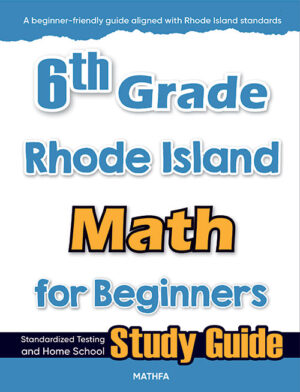 6th Grade Rhode Island Math for Beginners Original price was: $21.99.$14.99Current price is: $14.99.Download
 8th Grade Rhode Island Math for Beginners Original price was: $21.99.$14.99Current price is: $14.99.Download
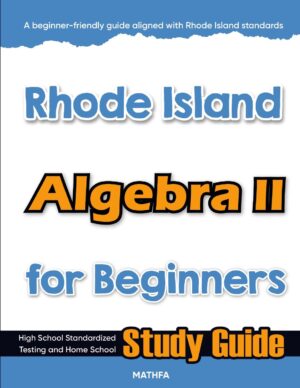 Rhode Island Algebra II for Beginners – Algebra 2 Test Prep & Study Guide Original price was: $22.99.$18.99Current price is: $18.99.Download
 SBAC Congruence and Similarity Practice — California Guide
 SDCA Math Prep: South Dakota Student Guide
 WVGSA Math Prep: West Virginia Student Guide
 7 MCAs Math Prep Tips for Minnesota Students
 STAAR Math Test Prep for Grades 6-8: A Parent’s Guide (2026)
6th Grade Rhode Island Math: RICAS Guide (2026)

If your child is heading into the Rhode Island Comprehensive Assessment System, smart 6th grade Rhode Island math preparation can make all the difference. The RICAS is challenging, but it is absolutely beatable with steady, focused practice. This guide explains what the RICAS measures in sixth grade, how the test is structured, the skills your child needs, and exactly how to help them prepare with confidence.
What is the RICAS test?
RICAS stands for the Rhode Island Comprehensive Assessment System. First administered in 2018, it is Rhode Island’s statewide test for students in grades 3–8 in English language arts and mathematics. The math assessment is closely aligned to the Common Core State Standards, and Rhode Island shares its test framework with Massachusetts, so RICAS mirrors the well-regarded MCAS. You can review the official program on the Rhode Island Department of Education RICAS page.
How the grade 6 RICAS math test is structured
The grade 6 mathematics test is a next-generation assessment given primarily online, with a paper version available as an accommodation. Rather than relying only on multiple choice, it mixes several question types so students show their reasoning in different ways:
- Selected-response items (multiple choice and multiple-select).
- Technology-enhanced items, such as dragging values, plotting points, and building models on screen.
- Constructed-response items, where students explain their thinking and show work for partial or full credit.
Because the test rewards reasoning and explanation, RICAS math practice should go beyond quick recall — your child needs to practice writing out steps and justifying answers.
What’s on the grade 6 RICAS math test
Sixth grade is a major conceptual step up, and the RICAS reflects that. The grade 6 math test focuses on four big areas:
Ratios and proportional relationships
Students work with ratios, unit rates, and percentages, and solve real-world problems involving proportional reasoning. This is one of the highest-leverage topics on the test.
The number system
Sixth graders divide fractions by fractions, work with multi-digit decimals, and are introduced to negative numbers, the coordinate plane, and absolute value. Shaky fraction and decimal skills show up quickly here.
Expressions and equations
Students write and evaluate expressions with exponents, solve one-variable equations and inequalities, and explore the relationship between dependent and independent variables.
Geometry, statistics, and probability
The test covers area, surface area, and volume, along with an introduction to statistical thinking — describing distributions, measures of center, and variability.
How to help your child prepare for RICAS math
You do not need to be a math teacher to make a real difference. A few consistent habits go a long way toward strong Rhode Island RICAS math results:
- Start early and keep sessions short. Fifteen to twenty minutes several times a week beats cramming. Begin well before the spring testing window.
- Target weak spots first. For most sixth graders, that means fractions, ratios, and negative numbers. Fix the foundation before moving on.
- Practice explaining answers. Since RICAS includes constructed-response items, have your child talk through how they solved a problem, not just the final number.
- Use full-length practice tests. These build stamina and familiarity with the online tools so test day feels routine.
- Review mistakes, not just scores. Understanding why an answer was wrong is where real learning happens.
Common grade 6 RICAS math mistakes to avoid
- Skipping the explanation. Leaving constructed-response items blank or writing only an answer forfeits easy partial-credit points.
- Rushing word problems. Most items are multi-step; underlining what’s being asked prevents careless errors.
- Ignoring the online tools. The equation editor and graphing tools take practice — learn them before test day.
- Practicing only easy questions. Growth happens at the edge of difficulty, so include the harder reasoning items.
Free RICAS math practice resources
Rhode Island publishes real, previously administered questions, which are some of the best free practice available. Explore the official RIDE released items and practice tests so your child sees the exact format and online tools they’ll face. Pair these authentic items with structured lessons and full-length practice for the best results.
How RICAS grade 6 math is scored
RICAS results are reported in four achievement levels, and understanding them helps you set realistic goals for your child’s RICAS math practice:
- Exceeding Expectations — the student demonstrates strong command of grade-6 content and is well prepared for the next grade.
- Meeting Expectations — the student is on track, with a solid grasp of grade-level material.
- Partially Meeting Expectations — the student understands some content but has clear gaps to close.
- Not Meeting Expectations — the student needs significant support with on-grade skills.
Each student also receives a scaled score. For most families, the goal is to move steadily from “Partially Meeting” toward “Meeting” and “Exceeding” — and consistent, targeted practice is what powers that climb. Treat the score as a roadmap of what to work on next, not a verdict on ability.
An 8-week RICAS math study plan
You don’t need an elaborate system — just a steady one. This eight-week plan keeps 6th grade Rhode Island math preparation manageable:
- Weeks 1–2: Diagnose. Have your child take a full-length practice test and note the weakest areas — usually ratios, fractions, or negative numbers.
- Weeks 3–4: Rebuild foundations. Spend most sessions on the two weakest topics. A strong number-sense base makes everything else easier.
- Weeks 5–6: Practice the question types. Drill technology-enhanced and constructed-response items so your child is comfortable explaining work and using the online tools.
- Week 7: Full-length rehearsal. Take a second timed practice test under test-like conditions, then review every missed item’s explanation together.
- Week 8: Light review and rest. Short confidence-building sessions, then ease off the day before the test.
Fifteen to twenty minutes a day across eight weeks beats a frantic weekend of cramming every time.
How parents can support RICAS math at home
You are your child’s most important study partner, and supporting Rhode Island RICAS math doesn’t require advanced math of your own. Build a consistent routine — the same time and quiet place each day signals that practice is normal. Talk through problems out loud; asking “what is the question really asking?” trains the careful reading that multi-step RICAS items demand. Normalize mistakes, treating each wrong answer as information about what to practice next. Connect math to daily life, too: cooking, budgeting, sports stats, and shopping all reinforce the ratios, rates, and proportional reasoning the grade-6 test rewards. Finally, keep the tone calm and encouraging — a confident, low-stress student almost always outperforms an anxious one who studied the same amount.
From grade 6 to grade 7: why this year matters
Sixth-grade math is the gateway to the proportional reasoning, expressions, and equations that dominate grade 7 and beyond. Students who finish sixth grade fluent in fractions, ratios, and integer operations walk into seventh grade ready to build, rather than scrambling to catch up. That’s why strong RICAS preparation pays off long after test day — it locks in the foundation the rest of middle-school math is built on.
Sample grade 6 RICAS-style math questions
Here are a few practice problems in the spirit of the grade 6 RICAS. Have your child solve them and explain each step — that explanation is exactly what constructed-response items reward.
- Ratios: A recipe uses 3 cups of flour for every 2 cups of sugar. How many cups of sugar are needed for 12 cups of flour? (Answer: 8 cups — the ratio 3:2 scales by 4.)
- Dividing fractions: What is 3/4 ÷ 1/8? (Answer: 6 — multiply 3/4 by the reciprocal 8/1.)
- Negative numbers: On a number line, which is greater, −7 or −3? (Answer: −3, because it is closer to zero.)
- Expressions: Evaluate 2x + 5 when x = 4. (Answer: 13.)
- Area: A rectangle is 8 cm long and 3.5 cm wide. What is its area? (Answer: 28 square cm.)
Notice how each problem rewards careful reading and a clear method. Practicing this way — solving and then explaining — builds the exact habits the RICAS measures.
The bottom line on RICAS grade 6 math
The RICAS asks sixth graders to reason, model, and explain, not just recall facts — but none of that changes the fundamental truth: students who practice consistently with realistic, standards-aligned material walk in prepared and walk out confident. Start early, focus on the weak spots, rehearse the online question types, and keep the tone encouraging. Pair a structured 6th grade Rhode Island math workbook with the free released items from RIDE, follow a simple weekly plan, and your child will be ready to show what they know.
Turning RICAS prep into lasting math confidence
The real win of good RICAS math practice isn’t just a higher score — it’s a child who believes they can tackle hard problems. Every time your sixth grader works through a tricky ratio problem or explains how they divided a fraction, they’re building both skill and self-belief. Keep sessions short, celebrate progress over perfection, and remind your child that the RICAS simply shows what to practice next. With that mindset and steady, standards-aligned practice, Rhode Island students don’t just pass the test — they head into seventh grade genuinely ready for what comes next.
6th grade Rhode Island math practice workbook
The fastest way to turn this guide into results is consistent, standards-aligned practice. Our 6th Grade Rhode Island Math Practice Workbook is built around the Common Core standards RICAS measures, with clear lessons, full-length practice, worksheets, and step-by-step answer explanations — ideal for homeschool, classroom, or after-school RICAS math practice. It’s an instant PDF download, so your child can start today. Browse all Math Notion math practice books →
Frequently asked questions
When is the RICAS math test given?
RICAS is administered in the spring. Check with your child’s school for exact dates each year.
Is RICAS the same as MCAS?
They share the same test framework. Rhode Island adopted the Massachusetts-developed assessment, so the format and rigor are very similar.
Is the grade 6 RICAS math test online?
Yes, it is primarily computer-based, with a paper version available as an accommodation, so practicing with digital question types helps.
What score does my child need on RICAS math?
There is no single pass mark, but reaching “Meeting Expectations” signals your child is on track for the next grade. Many families aim to move from “Partially Meeting” to “Meeting” with steady practice.
How many practice tests should my child take?
Two to three full-length practice tests across the prep window is ideal: one to diagnose, one mid-way, and one final rehearsal.
How early should we start RICAS math prep?
Begin in winter with short, regular sessions. Steady practice over several months builds lasting confidence.
Math Notion provides standards-aligned math practice workbooks and test prep for students across Rhode Island and all 50 states. See our full collection.
Posted by Math Notion Team · Published on December 31, 2025