Math Articles, tips & study guides
 6 Full-length TABE Math Practice Tests: Extra Test Prep to Help Ace the TABE Math Test Original price was: $18.99.$12.99Current price is: $12.99.Download
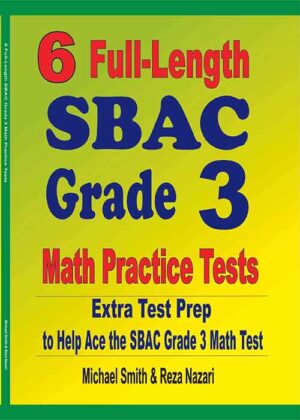 6 Full-Length SBAC Grade 3 Math Practice Tests: Extra Test Prep to Help Ace the SBAC Grade 3 Math Test Original price was: $18.99.$12.99Current price is: $12.99.Download
 PSSA Grade 8 Math Practice Book 2020: Extra Exercises and Two Full Length PSSA Math Tests to Ace the Exam Original price was: $18.99.$12.99Current price is: $12.99.Download
 8th Grade New Mexico Math for Beginners Original price was: $21.99.$14.99Current price is: $14.99.Download
 6 Full-Length ACT Aspire Grade 8 Math Practice Tests: Extra Test Prep to Help Ace the ACT Aspire Grade 8 Math Test Original price was: $18.99.$12.99Current price is: $12.99.Download
 ACT Math Comprehensive Exercise Book: Abundant Math Skill Building Exercises Original price was: $18.99.$12.99Current price is: $12.99.Download
 MCAS Grade 3 Math Comprehensive Exercise Book: Abundant Math Skill Building Exercises Original price was: $18.99.$12.99Current price is: $12.99.Download
 Summer Math Workbook Grade 6: Essential Learning Math Skills Plus Two Complete Math Practice Tests Original price was: $18.99.$12.99Current price is: $12.99.Download
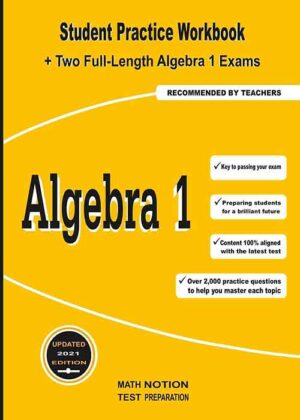 Algebra 1: Student Practice Workbook + Two Full-Length Algebra 1 Exams Original price was: $18.99.$12.99Current price is: $12.99.Download
 SDCA Math Prep: South Dakota Student Guide
 WVGSA Math Prep: West Virginia Student Guide
 7 MCAs Math Prep Tips for Minnesota Students
 STAAR Math Test Prep for Grades 6-8: A Parent’s Guide (2026)
 7 Proven Accuplacer Math Prep Strategies
The Most Useful AI Tutors for Math (and How to Use Them)


Artificial intelligence has changed math learning, and a growing number of AI tutors for math now offer on-demand explanations, step-by-step help, and personalized practice that once required a human tutor. But the tools vary widely in what they do well, and the best choice depends on the learner and the need. This guide reviews the most useful AI math tutors available today, what each is good for, and how to use them effectively, alongside the real practice that turns AI-assisted understanding into lasting skill.
AI tutors are powerful, but they work best as part of a balanced approach rather than a replacement for genuine practice. Below we’ll cover the leading tools, how to choose among them, their limits, and how to combine an AI math tutor with steady practice for the best results. For a deeper look at the topic, see our companion guide on how to use an AI math tutor.
What AI math tutors do
AI math tutors use artificial intelligence to explain concepts, walk students through problems step by step, answer questions, and adapt to individual needs. The best ones aim to build understanding, guiding learners toward answers and identifying where their thinking breaks down, rather than just providing solutions. In effect, they try to replicate the patient, responsive help of a one-on-one tutor.
What makes them remarkable is their availability and patience: an AI tutor is there at any hour, never tires of re-explaining, and can give personalized attention at a scale no human system could match. That combination of on-demand access and individualized help is why AI tutors have become such a popular part of math learning.
Khanmigo: best for guided, structured learning
Khanmigo, Khan Academy’s AI tutor, is widely regarded as one of the best options, especially for younger students, because it uses a Socratic approach, guiding learners to answers with questions rather than simply revealing them, and ties directly into Khan Academy’s comprehensive, curriculum-aligned math library. This builds genuine understanding rather than dependence.
For students who want structured, build-real-understanding support tied to a full curriculum, Khanmigo is an excellent choice. Its emphasis on guiding rather than answering makes it particularly good for learning, not just getting unstuck, which is exactly what you want from a tutor meant to develop lasting skill.
Photomath: best for quick homework help
Photomath is unmatched for quick, on-the-spot homework help. Point your phone’s camera at a problem, and it scans, solves, and shows the steps using optical character recognition combined with AI. For a student stuck on a specific problem, or a parent trying to recall how to explain one, Photomath delivers fast, clear, step-by-step solutions.
The key with Photomath is to use it to understand the steps, not just copy the answer. Used well, studying the worked solution to learn the method, it’s a powerful homework helper. Used poorly, as an answer machine, it teaches little. For quick, mobile, step-by-step help, though, it remains one of the most useful tools available.
Wolfram Alpha: best for advanced computation
For higher-level math, Wolfram Alpha is the long-standing gold standard. This computational engine handles advanced algebra, calculus, statistics, and more, providing detailed solutions and the ability to compute and visualize complex problems. For college students and anyone working with advanced material, it’s an invaluable resource.
Wolfram Alpha is less a Socratic tutor than a powerful computational and reference tool, so it’s best for checking work, exploring advanced concepts, and handling computation, rather than building foundational understanding from scratch. For students at the advanced end of math, though, few tools are more capable or useful.
Socratic and general AI assistants
Socratic by Google uses AI to help students understand problems across subjects, including math, by providing explanations and resources. More broadly, general AI assistants like ChatGPT and Claude can explain math concepts, walk through problems, and answer questions in natural language, making them flexible, conversational tutors for many levels.
These general assistants are remarkably versatile, able to explain a concept many different ways until it clicks, but they require some care: on complex problems they can occasionally produce a confident but wrong step. Used to understand concepts and explanations, with answers double-checked, they’re a powerful, flexible addition to a learner’s toolkit.
How to choose the right AI tutor
The best AI tutor depends on your need. For structured, build-understanding learning, especially for kids, Khanmigo is ideal. For quick homework help, Photomath excels. For advanced computation, Wolfram Alpha leads. For flexible, conversational explanation across levels, general assistants like ChatGPT or Claude work well.
Many learners benefit from using more than one, a guided tutor for learning, a camera solver for quick help, a computational tool for advanced work. Matching the tool to the task, and to the learner’s age and level, is the key to getting real value. There’s no single best AI tutor, only the best one for a given purpose.
The strengths of AI tutors
AI tutors offer genuine strengths: they’re available anytime, infinitely patient, often free or low-cost, and able to personalize help to the individual. They’re superb for instant homework help, unlimited re-explanation, and meeting a student exactly where they are. For many learners, they make quality math help accessible in a way that wasn’t possible before.
They also reduce the intimidation factor: many students feel freer asking an AI a question they’d be embarrassed to ask in class. This combination of access, patience, personalization, and low pressure makes AI tutors a valuable resource, particularly for filling gaps, reinforcing lessons, and providing on-demand explanation.
The limits of AI tutors
AI tutors also have real limits worth knowing. General chatbots can occasionally give a confident but wrong step, especially on tricky multi-step problems, so answers shouldn’t be trusted blindly. Tools that hand over answers too readily can foster dependence rather than understanding. And no AI fully replaces human accountability, motivation, and the ability to read a struggling child’s emotional state.
Crucially, AI tutors explain, but mastery comes from doing. A student who only watches an AI solve problems, without practicing themselves, builds little durable skill. Understanding these limits lets you use AI for what it’s good at, explanation and on-demand help, while ensuring genuine practice and human support fill the rest.
Why AI tutors need real practice alongside them
The most important principle for using AI tutors well is that they must be paired with genuine practice. An AI can make a concept perfectly clear, but understanding an explanation and being able to produce a solution yourself are different skills. The bridge between them is working problems by hand, which builds the fluency tests and real life demand.
So the ideal approach uses an AI tutor to understand a concept and get unstuck, then switches to hands-on practice to cement the skill. This is where worksheets and workbooks come in: after an AI clarifies a topic, your child works problems independently to truly master it. AI plus real practice is far more powerful than AI alone.
Using AI tutors safely, especially for kids
When children use AI tutors, a little oversight matters. Favor reputable, education-focused tools with clear privacy practices, especially for younger learners, and keep an eye on how the tools are used, since the temptation to copy answers is real. Setting the expectation that AI is for understanding, then practicing alone, keeps it in its proper place.
It also helps to stay involved enough to ensure your child is genuinely learning, not just clicking to answers. Framed and supervised well, AI tutors are a safe, valuable asset; used without any guardrails, they can become a shortcut that erodes skill. A bit of structure ensures children get the benefits without the pitfalls.
Combining AI tutors with workbooks
The most effective setup pairs AI tutors for explanation with structured materials for practice. Use an AI tutor to understand a concept and clear up confusion, then use a workbook to practice it thoroughly with clear lessons and step-by-step solutions. This combination delivers both the instant, patient explanation of AI and the durable skill that comes from practice.
Math Notion’s workbooks are ideal for this practice role, building genuine mastery across every grade, standard, and major test, with step-by-step explanations that complement AI help. Paired with free math worksheets for extra reps, they turn AI-assisted understanding into real skill. Browse the full Math Notion collection → to find the right resource.
The bottom line on AI math tutors
AI has made high-quality math help more available, affordable, and patient than ever, and the best AI tutors genuinely build understanding. Khanmigo for guided learning, Photomath for quick help, Wolfram Alpha for advanced work, and capable general assistants for flexible explanation each have their place in a modern learner’s toolkit.
But technology alone doesn’t create mastery; practice does. The students who benefit most use AI tutors to understand and then put in the reps with structured practice until skills are automatic. Think of an AI tutor as a brilliant explainer and a workbook as the gym where skills get built, and use them together for the best results.
A simple routine for using AI tutors well
To get real value from AI tutors, build a simple routine around them. When your child hits a concept they don’t understand, let them use an AI tutor, ideally a guided one like Khanmigo, to get a clear, patient explanation. Once the idea clicks, close the app and have them work several similar problems by hand from a worksheet or workbook, without the AI, to prove they can do it independently.
Then review any mistakes together, using the workbook’s worked solutions to see exactly where reasoning slipped. This loop, understand with AI, practice by hand, review carefully, captures the best of both worlds: the instant, tireless explanation of modern AI and the durable skill that only comes from doing the math yourself. Followed consistently, it turns powerful AI tools into genuine, lasting math ability rather than a crutch, which is exactly how the most successful learners use them.
Frequently asked questions
What is the most useful AI tutor for math?
It depends on the need: Khanmigo for guided, structured learning (great for kids), Photomath for quick camera-based homework help, Wolfram Alpha for advanced computation, and general assistants for flexible explanation.
Are AI math tutors accurate?
Specialized tools are usually reliable, but general chatbots can occasionally give a wrong step on complex problems. Have students check the reasoning rather than trusting answers blindly.
Can an AI tutor replace practice?
No. AI tutors explain well, but mastery comes from working problems yourself. Use AI to understand, then practice independently with worksheets or a workbook to build real skill.
Are AI tutors safe for children?
Used with reputable, education-focused tools and a little oversight, yes. Favor tools with clear privacy practices, and set the expectation that AI is for understanding, followed by independent practice.
Math Notion makes standards-aligned math workbooks and test prep for learners at every level and across all 50 states. See the full collection.
Posted by Math Notion Team · Published on November 30, 2025