
Math Articles, tips & study guides
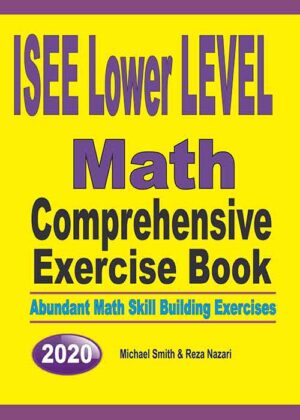 ISEE Lower Level Math Comprehensive Exercise Book: Abundant Math Skill Building Exercises Original price was: $18.99.$12.99Current price is: $12.99.Download
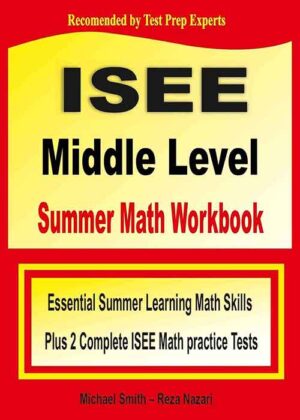 ISEE Middle Level Summer Math Workbook: Essential Summer Learning Math Skills plus Two Complete ISEE Middle Level Math Practice Tests Original price was: $18.99.$12.99Current price is: $12.99.Download
 ISEE Upper Level Summer Math Workbook: Essential Summer Learning Math Skills plus Two Complete ISEE Upper Level Math Practice Tests Original price was: $18.99.$12.99Current price is: $12.99.Download
 ISEE Lower-Level Subject Test Mathematics: Student Practice Workbook + Two Full-Length ISEE Middle-Level Math Tests Original price was: $18.99.$12.99Current price is: $12.99.Download
 6 Full-Length ISEE Middle Level Math Practice Tests: Extra Test Prep to Help Ace the ISEE Middle-Level Math Test Original price was: $18.99.$12.99Current price is: $12.99.Download
 ISEE Lower Level Summer Math Workbook: Essential Summer Learning Math Skills plus Two Complete ISEE Lower Level Math Practice Tests Original price was: $18.99.$12.99Current price is: $12.99.Download
 6 Full-Length ISEE Lower Level Math Practice Tests: Extra Test Prep to Help Ace the ISEE Lower-Level Math Test Original price was: $18.99.$12.99Current price is: $12.99.Download
 ISEE Math Questions: Topics, Samples, and How to Practice
 ISEE Lower Level Math: How to Prepare Your Child
 ISEE Middle Level Math: What to Know and How to Prepare
 ACAP Geometry Basics Practice: Alabama Student Guide
 Math Exams Explained: A Guide to the Major Standardized Tests
How to Prepare for the ISEE Math Test

If your child is applying to a private or independent school, the ISEE is often a central part of the admissions process, and the math sections can feel intimidating for families who don’t know what to expect. Learning how to prepare for the ISEE math test gives your child a genuine advantage, because the exam rewards familiarity with its specific question styles as much as raw ability. The encouraging news is that the math covers a defined range of grade-appropriate skills, so with steady, supportive practice your child can walk in feeling calm and confident. This guide explains what the ISEE is, what its math covers, how it’s scored, and exactly how to help.
Consistent ISEE math practice with materials matched to your child’s level is the most reliable path to a strong score and a competitive application. Below we’ll cover the test format, the content, scoring, common mistakes, a study plan, and the workbook that keeps your child’s ISEE math prep on target so test day feels familiar rather than frightening.
What the ISEE is
The ISEE, or Independent School Entrance Exam, is a standardized admissions test administered by the Educational Records Bureau and used by many private and independent schools. It comes in four levels, Primary, Lower, Middle, and Upper, matched to the grade your child is applying for, and it measures verbal reasoning, reading comprehension, quantitative reasoning, mathematics achievement, and includes a writing sample. Two of those sections are math, which makes math performance especially important to a strong overall result.
Schools use ISEE results both to evaluate applicants and, in some cases, for placement decisions. Because admission to selective schools can be competitive, thorough preparation helps your child stand out from the applicant pool. Understanding that the ISEE is a comparative admissions tool rather than a pass-fail school test clarifies why thoughtful, sustained preparation is genuinely worth the effort.
How the ISEE math sections work
The ISEE includes two math sections: Quantitative Reasoning, which focuses on problem-solving and reasoning rather than computation, and Mathematics Achievement, which tests grade-level math knowledge directly. Both are multiple choice, and importantly, calculators are not permitted, so your child needs to be comfortable working problems by hand and reasoning efficiently under time pressure.
Each section is timed, so pacing is a real part of the challenge. The most effective way to build comfort with both the content and the timing is to practice under realistic conditions ahead of time. Knowing the format in advance, two math sections, no calculator, a mix of reasoning and achievement questions, removes a layer of surprise that can otherwise rattle a young test-taker on the day.
What’s on the ISEE math test
The math content matches your child’s level but generally spans number sense and operations, fractions, decimals, and percentages, ratios and proportions, and basic algebra through expressions and simple equations. It also includes geometry, area, perimeter, and properties of shapes, along with data interpretation from charts and graphs and introductory probability and statistics.
At the Upper Level, the algebra and geometry grow more demanding, while the Lower and Middle Levels stay closer to core arithmetic and pre-algebra. Because the test draws on grade-appropriate material plus a distinctive reasoning style, the best preparation reinforces exactly the skills your child is learning while also building familiarity with ISEE-style questions. A level-matched workbook covers all of this in a logical sequence.
How the ISEE is scored
ISEE results are reported as scaled scores along with percentile rankings and stanines, a nine-point scale that compares your child to other applicants of the same grade. Admissions offices typically focus on the stanines and percentiles, since they show how your child performed relative to the applicant pool rather than against a fixed passing bar. There’s no single passing score.
This comparative scoring is why aiming high matters: you’re not just clearing a threshold, you’re trying to stand out, especially for competitive admissions. What counts as a strong score depends on the schools your child is applying to, so researching the typical scores at your target schools helps you set a realistic and motivating goal for your child’s preparation.
One important scoring note
A reassuring feature of the ISEE is that it does not penalize wrong answers, there’s no deduction for guessing. That means your child should never leave a question blank; if they’re unsure or running low on time, an educated guess can only help. Teaching this simple strategy can meaningfully raise a score, and it’s the kind of thing families who prepare know and others miss.
It also takes some pressure off, since a hard question carries no extra risk. Encourage your child to attempt everything, mark and move past anything that’s eating up time, and return to it if they can. Practicing this approach during full-length practice sections turns it into an automatic habit by test day, protecting points that would otherwise be left on the table.
Why a level-matched workbook helps
Because the ISEE comes in distinct levels, using a workbook matched to your child’s level is far more efficient than generic practice. A level-appropriate book lays out the material so each concept builds on the one before, which means your child won’t get stuck on a problem that assumed a skill they hadn’t reached, or waste time on content well above their level.
That structure also removes the daily guesswork of what to study next. Open the book, work the next lesson, check the answer, and move on. The plan is already there, which keeps your child’s ISEE math practice steady and focused, exactly what builds genuine skill without overwhelming a young learner or burning them out before the test.
Clear lessons and step-by-step explanations
Since the ISEE allows no calculator and rewards real understanding, your child needs to truly grasp the methods, not just recognize answers. The right workbook supports this with plain-language lessons that explain each concept before the practice begins, and step-by-step answer explanations that show the full method so a child can learn from every single problem they work.
This matters because an answer key with only final answers can’t teach a child where they went wrong. Worked solutions let your child, or you alongside them, find the mistake, understand the correct approach, and fix the gap. For independent study at home, that built-in guidance acts like a patient tutor your child can rely on whenever they sit down.
Practice the no-calculator skills
Because calculators aren’t allowed, mental math and by-hand computation deserve special attention. Make sure your child is fluent with multiplication facts, fraction operations, and percentages without a calculator, since shaky arithmetic slows them down and causes errors on problems they otherwise understand perfectly well. Building this fluency is one of the highest-value parts of ISEE preparation.
Short, regular practice sessions are the way to develop it, a little each day rather than occasional cramming. As the by-hand skills become automatic, your child frees up mental energy for the reasoning the harder questions require. Practicing the way the test is actually administered, on paper without a calculator, is what makes test day feel genuinely familiar.
Common mistakes and how to avoid them
ISEE test-takers tend to lose points in predictable ways. Rushing through reasoning questions leads to misreading what’s asked, so teaching your child to read carefully and underline key information pays off. Weak no-calculator arithmetic quietly undermines harder problems, which is why those fundamentals deserve early attention in any study plan.
Another common issue is leaving questions blank, which, given the no-penalty scoring, simply wastes opportunities. Practicing full sections under realistic conditions fixes pacing and guessing habits alike. By rehearsing the exact question styles and reviewing worked solutions, your child arrives having already practiced the situations that trip up unprepared applicants.
A simple study plan
Start by having your child take a practice section to see where they stand and which topics need work. In the first couple of weeks, focus on shoring up arithmetic fundamentals and the by-hand skills the test requires. In the following weeks, work systematically through fractions, percentages, ratios, basic algebra, and geometry, spending extra time on weak areas.
As the test approaches, mix in full, timed practice sections so your child builds stamina and pacing, and review every mistake together. Short, regular sessions beat long, infrequent ones, because skills consolidate with steady repetition. This gradual approach builds both competence and the calm that comes from knowing exactly what to expect on test day.
Helping an anxious young test-taker
Standardized tests can be stressful for children, so your calm support matters as much as the math itself. Remind your child that the ISEE is just one part of their application and that doing their best is what counts. Familiarity is the best calmer: the more the format and question types feel routine from practice, the less there is to fear when the real test arrives.
Keep preparation positive and bounded so it doesn’t become a source of dread, and praise effort and progress rather than fixating on scores. On test day, make sure your child is rested and fed, and send them off with encouragement. A confident, unflustered child performs much closer to their true ability than an anxious one who studied the same amount.
The workbook that keeps prep on target
The simplest way to keep practice matched to the ISEE is a workbook written for your child’s level. The ISEE Lower Level Mathematics Practice Workbook covers exactly the number sense, fractions, algebra, and geometry the test assesses, with clear lessons and step-by-step answer explanations you and your child can follow together, no calculator required. It’s an instant download, so you can start tonight, and Math Notion offers books for each ISEE level. Browse our ISEE math collection → to find the right one.
How parents can support at home
Beyond formal practice, you can reinforce ISEE skills in everyday life. Involve your child in real-world math, calculating change, doubling recipes, comparing prices, so the skills feel useful and natural rather than abstract. Play math games and logic puzzles that build number sense and reasoning while feeling like fun, which also strengthens the quantitative-reasoning skills the test rewards. Keep a steady, encouraging routine rather than cramming, and sit with your child during practice when you can, offering support rather than taking over. Your involvement signals that the test matters and that you believe in their ability, both of which help a child stay motivated through weeks of preparation and arrive on test day feeling backed up rather than alone.
Frequently asked questions
Can my child use a calculator on the ISEE?
No, calculators are not permitted, so it’s important to practice by-hand arithmetic and build fluency with operations, fractions, and percentages.
Does the ISEE penalize wrong answers?
No. There’s no deduction for guessing, so your child should answer every question, even when unsure, rather than leaving any blank.
What is a good ISEE math score?
Scores are reported as percentiles and stanines comparing your child to peers, so there’s no fixed passing score. Research typical scores at your target schools to set a goal.
What levels does the ISEE have?
Four: Primary, Lower, Middle, and Upper, matched to the grade your child is applying for. Use practice materials that match your child’s level.
Math Notion makes standards-aligned math workbooks and test prep for learners at every level and across all 50 states. See the full collection.
Posted by Math Notion Team · Published on August 27, 2021

