Math Articles, tips & study guides
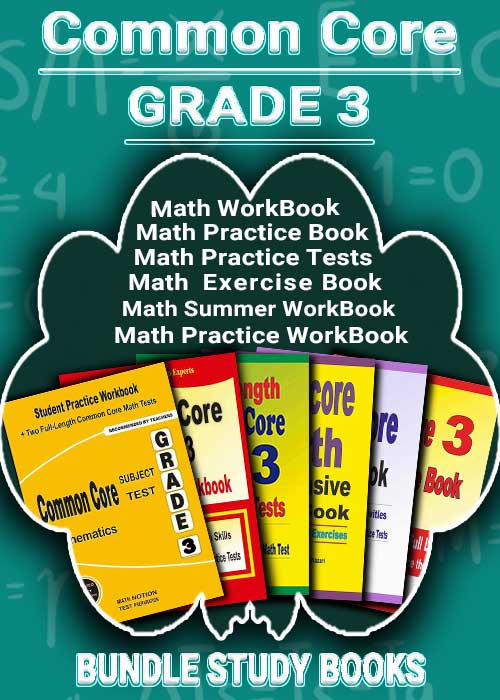
 Common Core Grade 3 Summer Math Workbook: Essential Summer Learning Math Skills plus Two Complete Common Core Math Practice Tests Original price was: $18.99.$12.99Current price is: $12.99.Download
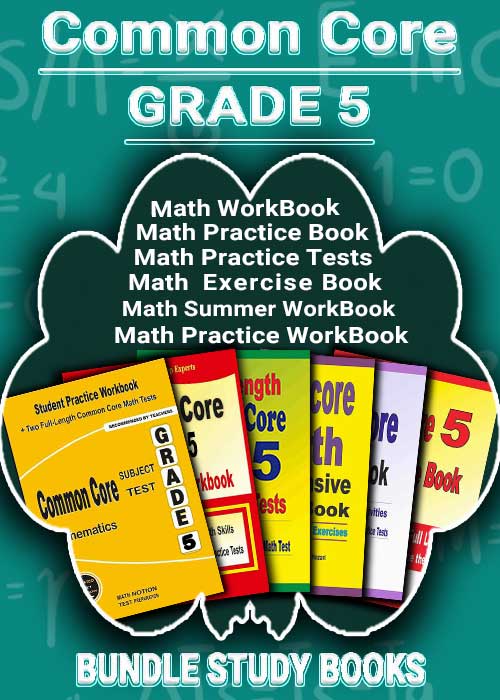
 Common Core Subject Test Mathematics Grade 5: Student Practice Workbook + Two Full-Length Common Core Math Tests Original price was: $18.99.$12.99Current price is: $12.99.Download
 Common Core Math Practice Grade 8: Complete Content Review Plus 2 Full-Length Common Core Math Tests Original price was: $18.99.$12.99Current price is: $12.99.Download
 Common Core 3 Math Practice Book 2020: Extra Exercises and Two Full Length Common Core Math Tests to Ace the Exam Original price was: $18.99.$12.99Current price is: $12.99.Download
 Common Core Math Practice Grade 4: Complete Content Review Plus 2 Full-length Common Core Math Tests Original price was: $18.99.$12.99Current price is: $12.99.Download
 Common Core 6 Math Practice Book 2020: Extra Exercises and Two Full Length Common Core Math Tests to Ace the Exam Original price was: $18.99.$12.99Current price is: $12.99.Download
 Common Core 4 Math Comprehensive Exercise Book: Abundant Math Skill Building Exercises Original price was: $18.99.$12.99Current price is: $12.99.Download
 6 Common Core Math Practice Tests Grade 5: Extra Practice to Achieve a Crack Score Original price was: $18.99.$12.99Current price is: $12.99.Download
 How Common Core Math Works (and Why It Teaches That Way)
 Common Core Math: Pros, Cons, and What the Debate Means for Your Child
 Introduction to the Common Core State Standards (CCSS)
 How to Help Your Child With Common Core Math
 DAT Math Score: What Is a Good Quantitative Reasoning Score?
What is the Common Core Math?


Common Core Math is a widely discussed topic in the education sector, often generating strong opinions from educators, parents, and policymakers alike. Its primary goal is to standardize math education across the United States, ensuring that all students, regardless of their state of residence, receive a high-quality education that prepares them for college and careers. But what exactly is Common Core Math, and why is it so important? This article delves into the intricacies of Common Core Math, its development, implementation, benefits, and challenges, providing a comprehensive overview of this significant educational reform. I invite you to stay with us until the end of this article.

1. Historical Context
1.1. Origins of Common Core Standards
The Common Core Standards were introduced as a response to the fragmented educational system in the United States. Before their implementation, each state had its own set of academic standards, leading to inconsistencies in the quality of education. The idea was to create a unified set of standards to ensure all students, regardless of their geographic location, would have access to the same high-quality education. The initiative began in 2009, spearheaded by the National Governors Association (NGA) and the Council of Chief State School Officers (CCSSO), with significant input from educators, researchers, and policymakers.
1.2. Development Process
Developing the Common Core Standards was a meticulous process involving multiple stakeholders. Educational experts, teachers, and researchers collaborated to create a set of standards that were research-based and benchmarked against international standards. The goal was to ensure that American students could compete globally and possess the critical thinking and problem-solving skills necessary for success in the 21st century.
1.3. Adoption by States
Adoption of the Common Core Standards by states was voluntary, but incentives from federal programs like Race to the Top encouraged many states to adopt the standards. By 2010, most states had adopted the Common Core Standards, although some have made modifications or opted out entirely.
2. Key Principles of Common Core Math
2.1. Focus on Understanding
One of the core principles of Common Core Math is a deep focus on understanding mathematical concepts rather than just memorizing procedures. This approach encourages students to comprehend the “why” behind mathematical operations, fostering a more profound and lasting understanding.
2.2. Emphasis on Problem-Solving
Common Core Math places a significant emphasis on developing students’ problem-solving skills. Students are encouraged to think critically and approach problems from multiple angles, which helps in nurturing their analytical abilities.
2.3. Progressive Learning Pathways
The Common Core Standards are designed to be progressive, with each grade level building on the knowledge and skills acquired in the previous year. This scaffolding approach ensures students develop a strong foundation before moving on to more complex concepts.
3. Structure of Common Core Math
3.1. Grade-Level Standards
Common Core Math standards are organized by grade level, from kindergarten through 12th grade. Each grade level has specific standards that outline the expected knowledge and skills students should acquire by the end of the year.
3.2. Mathematical Practices
In addition to content standards, the Common Core also includes eight Standards for Mathematical Practice. These practices describe varieties of expertise that mathematics educators at all levels should seek to develop in their students, including reasoning abstractly, constructing viable arguments, and modeling with mathematics.
3.3. Content Areas
The content standards are divided into domains that span across different grade levels. These domains include Numbers and Operations, Algebra, Geometry, Statistics, and Probability. Each domain is revisited at different grade levels with increasing complexity.
4. Benefits of Common Core Math
4.1. Consistency Across States
Common Core Math’s most significant benefit is its consistency in education across the United States. With a unified set of standards, students moving from one state to another can have a smoother transition without significant educational gaps or overlaps.
4.2. Enhanced Critical Thinking Skills
Common Core is designed to enhance students’ critical thinking and problem-solving skills. Students develop skills crucial for success in higher education and the workforce by focusing on understanding and application rather than rote memorization.
4.3. Better Preparation for Higher Education and Careers
The rigorous standards of Common Core ensure that students are better prepared for the challenges of college and careers. The emphasis on critical thinking, problem-solving, and analytical skills aligns well with the demands of higher education and the modern workplace.
5. Challenges and Criticisms
5.1. Implementation Hurdles
Implementing Common Core Math has not been without challenges. Many schools faced difficulties adjusting curricula, training teachers, and providing the necessary resources to meet the new standards. These implementation hurdles have led to varying degrees of success across different states and districts.
5.2. Teacher Training Issues
Effective implementation of Common Core requires significant teaching method changes, necessitating comprehensive teacher training. However, many educators have reported inadequate training and support, making it challenging to adopt the new standards effectively.
5.3. Public Perception and Misunderstandings
Public perception of Common Core has been mixed, with some parents and educators expressing frustration and confusion over the new methods and standards. Misunderstandings about the goals and benefits of Common Core have also contributed to resistance and criticism.
6. Comparative Analysis
6.1. Traditional Math vs. Common Core Math
Traditional math education often focuses on memorization and procedural fluency, while Common Core Math emphasizes understanding and application. This shift aims to develop deeper mathematical comprehension and problem-solving abilities in students.
6.2. International Comparisons
Compared to international standards, Common Core Math aims to raise the bar for American students, making them more competitive globally. By benchmarking against high-performing countries, the Common Core seeks to close the achievement gap and improve educational outcomes.
7. Technology and Common Core
7.1. Digital Tools for Learning
Technology plays a significant role in the implementation of Common Core Math. Digital tools and resources, such as interactive math programs and online tutorials, support students’ learning and provide additional practice and reinforcement.
7.2. Online Resources and Platforms
Numerous online platforms are dedicated to Common Core Math, offering resources for students and teachers. These platforms provide lesson plans, practice problems, and instructional videos that align with the Common Core standards.
7.3. Future Technological Innovations
The future of Common Core Math will likely see further technology integration, with advancements such as adaptive learning software and virtual reality environments offering new ways to engage students and enhance their understanding of mathematical concepts.
8. Real-life Applications and Success Stories
8.1. Case Studies from Different States
Several states have reported success stories with the implementation of Common Core Math. Case studies highlight how schools have improved student outcomes by embracing the standards and providing adequate support and resources.
8.2. Personal Testimonials from Students and Teachers
Personal testimonials from students and teachers provide insights into the real-life impact of Common Core Math. Many students report a better understanding of math concepts, while teachers appreciate the focus on critical thinking and problem-solving.
9. Expert Insights
9.1. Opinions from Educators
Educators’ opinions on Common Core Math vary, but many agree that the standards provide a more coherent and rigorous framework for teaching math. Experts emphasize the importance of proper implementation and support for teachers to maximize the benefits of Common Core Math.
9.2. Views from Policy Makers
Policymakers highlight the potential of Common Core Math to improve educational equity and raise overall student achievement. They advocate for continued investment in training and resources to ensure successful implementation.
9.3. Academic Research Findings
Academic research supports the efficacy of Common Core Math in enhancing students’ mathematical understanding and skills. Studies show that students who learn under the Common Core framework perform better in critical thinking and problem-solving tasks than those who follow traditional methods.
10. Future of Common Core Math
10.1. Potential Reforms
As with any educational initiative, Common Core Math will likely undergo reforms and updates to address emerging challenges and incorporate new research findings. Continuous evaluation and feedback from educators and stakeholders will drive these changes.
10.2. Evolving Educational Standards
Educational standards are not static, and Common Core Math will evolve to meet the changing needs of students and society. Future updates may include greater integration of technology, interdisciplinary approaches, and new methods for assessing student progress.
10.3. Long-Term Impact on Education
The long-term impact of Common Core Math on education will be seen in the improved readiness of students for college and careers. By fostering critical thinking and problem-solving skills, Common Core Math aims to produce a generation of well-equipped learners to tackle future challenges.
11. FAQs about Common Core Math
Q1: What is Common Core Math? A1: Common Core Math is a set of educational standards for mathematics that aim to provide a consistent, clear understanding of what students are expected to learn, ensuring they are prepared for college and careers.
Q2: Why was Common Core Math created? A2: It was designed to address the inconsistencies in educational standards across different states and to ensure that all students receive a high-quality education that prepares them for the global economy.
Q3: How does Common Core Math differ from traditional math? A3: Common Core Math focuses on understanding and applying mathematical concepts rather than rote memorization. It emphasizes problem-solving, critical thinking, and the practical application of math skills.
Q4: What are the critical components of Common Core Math? A4: Key components include grade-level standards, Standards for Mathematical Practice, and content areas such as Numbers and Operations, Algebra, Geometry, and Statistics and Probability.
Q5: What are the benefits of Common Core Math? A5: Benefits include consistency across states, enhanced critical thinking skills, better preparation for higher education and careers, and a stronger foundation in mathematical understanding.
Q6: What challenges are associated with Common Core Math? A6: Challenges include implementation hurdles, inadequate teacher training, and public perception and misunderstandings about the standards and their goals.
Q7: How is technology integrated into Common Core Math? A7: Technology is integrated through digital tools, online resources, and platforms that provide interactive learning experiences and support for students and teachers.
Q8: What does the future hold for Common Core Math? A8: The future of Common Core Math includes potential reforms, evolving educational standards, and greater integration of technology to enhance teaching and learning.
What Common Core math means for parents
For most families, the practical takeaway about Common Core math is simple: your child’s school teaches toward these standards, and your job is to support their understanding of the math they’re actually learning. You don’t need to master every method or take a side in any debate; you need to help your child grasp the concepts and reach correct answers, learning alongside them where the methods are unfamiliar.
Keeping a calm, positive attitude matters, since children absorb our feelings about math. If a particular strategy puzzles you, ask your child to show you how their teacher demonstrated it, or lean on clear materials with step-by-step explanations. Focusing on your child’s understanding, rather than on the standards themselves, is the most useful thing you can do, and it keeps homework time productive and low-stress.
How practice supports Common Core learning
Whatever methods a classroom uses, one thing helps under every approach: steady practice. Math skills, conceptual or procedural, consolidate through regular use, so a short, consistent practice routine reinforces whatever your child is learning and prevents the gaps that cause frustration. Practice is the bedrock that makes the Common Core’s emphasis on understanding actually stick.
Math Notion’s free, grade-level math worksheets support your child’s learning whatever methods their school uses, because they build the underlying grade-level skills the standards, and state tests, require. Organized by grade, they let you reinforce skills and target weak areas, the steady practice that turns Common Core understanding into lasting ability. Browse the worksheets by grade to find the right level for your child.
Posted by Math Notion Team · Published on June 4, 2024