
Math Articles, tips & study guides
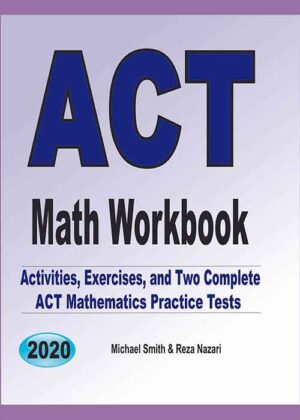 ACT Math Workbook: Exercises, Activities, and Two Full-Length ACT Math Practice Tests Original price was: $18.99.$12.99Current price is: $12.99.Download
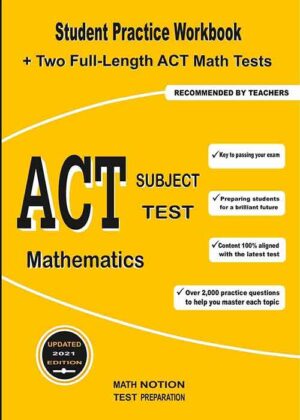 ACT Subject Test Mathematics: Student Practice Workbook + Two Full-Length ACT Math Tests Original price was: $18.99.$12.99Current price is: $12.99.Download
 ACT Math Comprehensive Exercise Book: Abundant Math Skill Building Exercises Original price was: $18.99.$12.99Current price is: $12.99.Download
 ACT Summer Math Workbook: Essential Summer Learning Math Skills plus Two Complete ACT Math Practice Tests Original price was: $18.99.$12.99Current price is: $12.99.Download
 6 Full-Length ACT Math Practice Tests: Extra Test Prep to Help Ace the ACT Math Test Original price was: $18.99.$12.99Current price is: $12.99.Download
 ACT Math Practice Book 2020: Extra Exercises and Two Full Length ACT Math Tests to Ace the Exam Original price was: $18.99.$12.99Current price is: $12.99.Download
 Act Aspire Subject Test Mathematics Grade 3: Student Practice Workbook + Two Full-Length Act Aspire Math Tests Paperback Original price was: $18.99.$12.99Current price is: $12.99.Download
 ACT Aspire Subject Test Mathematics Grade 4: Student Practice Workbook + Two Full-Length ACT Aspire Math Tests Paperback Original price was: $18.99.$12.99Current price is: $12.99.Download
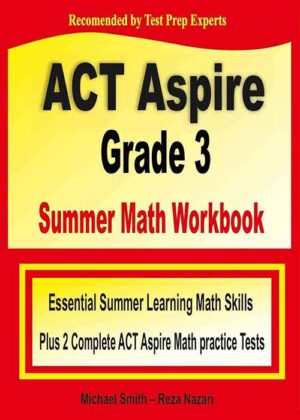 ACT Aspire Grade 3 Summer Math Workbook: Essential Summer Learning Math Skills plus Two Complete ACT Aspire Math Practice Tests Original price was: $18.99.$12.99Current price is: $12.99.Download
 ACAP Business Math Practice — Alabama Guide
 OST Pre-Calculus Practice — Ohio Guide
 ILEARN Geometry Basics Practice — Indiana Guide
 WFE Rounding and Estimation Practice — Wisconsin Guide
 RISE Measurement & Units Practice — Utah Guide
How ACT Aspire Scores Work: A Parent Score Guide


When your child takes the ACT Aspire, the score report can be puzzling, full of numbers, ranges, and benchmarks that don’t obviously explain how your child is doing. Understanding how ACT Aspire scores work, what the numbers mean, how they’re calculated, and what counts as a good score, turns that confusing report into useful information you can act on. This guide breaks down the ACT Aspire scoring system in plain language, focusing on the math results, so you can read your child’s report with confidence and know exactly how to support their growth.
The ACT Aspire is a longitudinal assessment for grades 3 through 10, designed to track progress toward college and career readiness, so its scores are built to show growth over time. Below we’ll explain the score scales, the readiness benchmarks, the reporting categories, and how to use it all, plus how targeted ACT Aspire math practice turns score insights into real improvement.
How the ACT Aspire scoring scale works
The ACT Aspire reports a scale score for each subject, including math, rather than a simple percentage. These scale scores fall within grade-specific ranges and are designed so you can compare your child’s performance from one year to the next, watching growth across grades. Each grade has its own range, so a score is always interpreted relative to that grade level.
Because the scale is vertical, meaning it connects across grades, a rising scale score over the years shows genuine academic growth. This is one of the most valuable features of the system: it isn’t just a one-time snapshot but a way to track whether your child is progressing steadily toward readiness. Understanding the scale is the first step to reading the report well.
Readiness benchmarks: the key number
The most important part of an ACT Aspire score report is the readiness benchmark for your child’s grade. The benchmark is the score that indicates a student is on track for college and career readiness in that subject at that grade. Meeting or exceeding it is the goal, while falling below signals that some focused work would help.
These benchmarks are research-based, tied to the scores associated with later success on the ACT and in college coursework. So when your child meets the math benchmark, it’s a meaningful sign they’re progressing well; when they fall short, it’s an early, actionable signal, with years still ahead to strengthen the gaps before the ACT itself.
Understanding the reporting categories
Beyond the overall math score, the ACT Aspire breaks performance into reporting categories that show how your child did in different areas of math, such as number and operations, algebra, geometry, and statistics and probability, depending on the grade. This breakdown is the most useful part of the report for guiding practice.
Instead of a single vague number, the categories give you a map of strengths and weaknesses. Maybe your child is strong in number sense but struggling with algebra; the report tells you exactly where to focus. This precision lets you target practice efficiently rather than reviewing everything equally, which is the fastest route to improvement.
What counts as a good ACT Aspire math score
The clearest definition of a good ACT Aspire math score is one that meets or exceeds the readiness benchmark for your child’s grade. Because the benchmark indicates being on track for college readiness, hitting it means your child is progressing as they should. Scores comfortably above the benchmark indicate they’re ahead, while scores below point to areas needing attention.
Rather than fixating on a single universal number, focus on two things: is your child meeting the benchmark, and is their scale score growing over time? A child below the benchmark who is steadily climbing is on a good path, and a child above it should be encouraged to keep building. Both the level and the trend matter.
The STEM and composite scores
The ACT Aspire also reports a STEM score, which combines math and science performance to indicate readiness for science, technology, engineering, and math pathways. For families whose children lean toward those fields, the STEM score offers an extra window into how well-prepared they are, since strong math is central to STEM readiness.
Like the subject scores, the STEM score is most meaningful read alongside the benchmark and over time. A strong, growing STEM score suggests a solid foundation for advanced science and math coursework later. It’s another piece of the overall picture the ACT Aspire paints of your child’s academic trajectory.
How the scores predict ACT readiness
Because the ACT Aspire is aligned to the same standards as the ACT, your child’s scores offer an early prediction of how they might perform on the college-entrance exam. Strong, on-benchmark Aspire scores suggest a solid foundation for the ACT, while lagging areas are exactly the ones worth strengthening now, with plenty of time to spare.
This forward-looking quality is one of the assessment’s biggest benefits. Rather than discovering math gaps in junior year of high school, you get years of early signals. Acting on them, by reinforcing weak reporting categories steadily, gives your child a real head start toward a strong ACT score and the college options it can open.
Turning scores into a practice plan
The whole point of understanding the score report is to act on it. Identify the one or two reporting categories where your child fell below the benchmark, and make those the focus of practice for the next stretch. Targeted work on specific weak areas is far more efficient than generic review of everything.
Grade-level worksheets are ideal for this, because you can pull practice on exactly the category your child needs. Work a focused set, review every problem together, especially the misses, and revisit the area periodically to keep it solid. This results-driven loop turns a confusing score report into steady, visible improvement over time.
Practice with the right worksheets
Math Notion offers free, grade-level math worksheets you can match directly to the reporting categories on your child’s report: Grade 3, Grade 4, Grade 5, Grade 6, Grade 7, and Grade 8.
For older students working toward the ACT, our ACT math worksheets are a natural next step. Browse the full library on our math worksheets page to find practice that matches the areas your child’s scores show need work.
Why a single score isn’t the whole story
It’s important not to over-interpret one year’s score. The ACT Aspire is built to measure growth, so a single below-benchmark result is an early signal, not a verdict, especially given how many years remain before the ACT. The most encouraging story a report can tell is steady growth in the scale score over time.
So when you read the report, look at both the level (is the benchmark met?) and the trend (is the score growing?). A child climbing steadily, even from below the benchmark, is on a good trajectory. Keeping this perspective helps you respond to scores with encouragement and a plan rather than alarm.
How to support your child after the report
Once you understand the scores, the best support is a short, consistent practice routine targeting the weak areas the report revealed. Fifteen to twenty minutes a few times a week, focused on the right reporting categories, steadily lifts scores, and because the ACT Aspire measures growth, that steady effort is exactly what it rewards.
Keep the tone encouraging and celebrate progress year over year rather than fixating on any single number. Children who feel supported and see their own growth stay motivated, and that motivation, paired with targeted ACT Aspire math practice, is what produces rising scores and genuine readiness over time.
Pair worksheets with a complete workbook
Worksheets are perfect for targeting specific reporting categories, but a complete, grade-level workbook ties everything together with clear lessons and full coverage. Math Notion’s grade-level workbooks build exactly the number sense, algebra, geometry, and data skills the ACT Aspire measures, with step-by-step answer explanations for independent study.
Used together, free worksheets and a structured workbook give your child both targeted practice and complete instruction. The workbooks are instant downloads, so you can start tonight. Browse the full Math Notion collection → to find the right grade for your child.
Reading growth over time, not just one report
Because the ACT Aspire connects scores across grades, the most powerful way to read it is to compare reports year over year. A child whose math scale score rises steadily is demonstrating exactly the kind of growth the system is built to capture, even if they haven’t yet hit every benchmark. Conversely, a flat or declining score, even one above the benchmark, is worth a closer look, since it may signal that a child needs a fresh challenge or some shoring up.
Keeping last year’s report on hand when this year’s arrives makes this comparison easy and far more informative than viewing a single year in isolation. Over time, this longitudinal view tells a richer story than any one number: it shows the trajectory, which is what truly predicts where your child is heading. Reading scores this way keeps your focus on steady progress rather than the ups and downs of any single test day.
Keeping scores in healthy perspective
Finally, it helps both you and your child to keep test scores in perspective. The ACT Aspire is a useful tool for understanding academic growth, but it’s one measure among many, and a number on a report doesn’t define a child’s intelligence or worth. Framing the score as helpful feedback, information about what to practice next, rather than a judgment keeps your child motivated and prevents test anxiety from taking root.
Children who see scores as a guide rather than a verdict are more willing to work on weak areas without feeling discouraged. So when you sit down with a report, lead with what it tells you about next steps, and pair any area of concern with a calm, concrete plan to practice it. That supportive framing, combined with steady practice, is what turns score insights into real, lasting growth.
Frequently asked questions
How are ACT Aspire scores calculated?
Each subject, including math, gets a scale score within a grade-specific range, designed to track growth across grades. Performance is also broken into reporting categories.
What is a good ACT Aspire math score?
One that meets or exceeds the readiness benchmark for your child’s grade, which indicates they’re on track for college and career readiness. A growing scale score over time is also a great sign.
What are the reporting categories?
They show how your child performed in different math areas, such as number and operations, algebra, geometry, and statistics, helping you target practice precisely.
Should I worry about one low score?
Not necessarily. The ACT Aspire measures growth over time, so a single below-benchmark score is an early signal you can address with targeted practice, not a final verdict.
Math Notion makes standards-aligned math workbooks and test prep for learners at every level and across all 50 states. See the full collection.
Posted by Math Notion Team · Published on February 14, 2024