Math Articles, tips & study guides
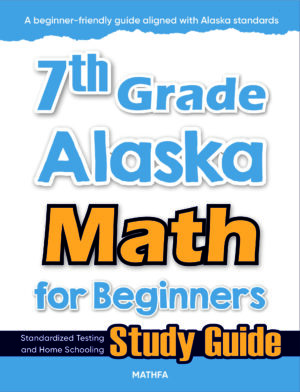 7th Grade Alaska Math for Beginners Original price was: $21.99.$14.99Current price is: $14.99.Download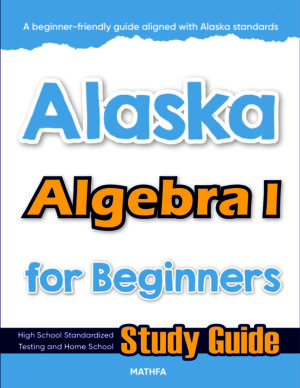
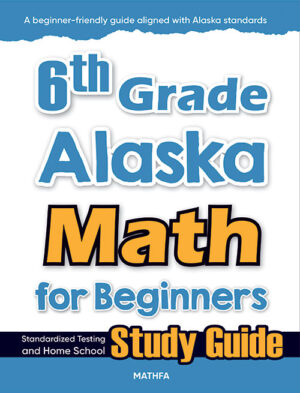 6th Grade Alaska Math for Beginners Original price was: $21.99.$14.99Current price is: $14.99.Download
 8th Grade Alaska Math for Beginners Original price was: $21.99.$14.99Current price is: $14.99.Download
 STAAR Math Workbook: 8th Grade Math Exercises, Activities, and Two Full-Length STAAR Math Practice Tests Original price was: $18.99.$12.99Current price is: $12.99.Download
 8th Grade Pennsylvania Math for Beginners Original price was: $21.99.$14.99Current price is: $14.99.Download
 HiSET Math Comprehensive Exercise Book: Abundant Math Skill Building Exercises Original price was: $18.99.$12.99Current price is: $12.99.Download
 Common Core 3 Math Comprehensive Exercise Book: Abundant Math Skill Building Exercises Original price was: $18.99.$12.99Current price is: $12.99.Download
 How to Pass the Alaska Math Test: 7 Strategies
 6th Grade Alaska Math: AK STAR Guide (2026)
 KSA 4th Grade Prep: Kentucky Math Guide
 How to Pass the RISE Math Test in Utah
 WFE Rounding and Estimation Practice — Wisconsin Guide
7 AK STAR Middle School Prep Tips (Alaska)


📖 Reading time: 11 min
Quick answer: Effective AK STAR middle school prep combines daily 15–20 minute practice sessions targeting Alaska’s grade-level math standards — ratios, expressions, geometry, and data analysis — with targeted review of weak areas starting at least 8 weeks before test day.
Who this is for: Alaska middle school students preparing for the AK STAR math assessment, parents looking for practical ways to support their child at home, and teachers seeking structured review strategies aligned to Alaska math standards.
Here’s something that surprises many Alaska families: the jump from elementary to middle school math isn’t just one step up — it’s several. Concepts that once felt manageable, like basic fractions and simple equations, suddenly appear inside multi-step word problems, coordinate planes, and proportional reasoning tasks. For many students, that gap is where math confidence quietly breaks down.
AK STAR middle school prep matters more than most families realize until test day arrives. The AK STAR (Alaska System of Academic Readiness) is Alaska’s statewide academic assessment, and the math section measures how deeply students understand the Alaska mathematics standards — not just whether they can recall a formula. According to data published by the Alaska – AK STAR Math Assessment, students at grades 3 through 10 participate in annual testing, meaning middle schoolers face this assessment every single year as the difficulty compounds.
In this post, you’ll learn the exact skills Alaska middle schoolers need, where students most often get stuck, how to build a realistic daily practice routine, and how parents can support without taking over. You’ll also find worked examples of real middle school math problem types and a clear list of free and paid resources aligned to Alaska math standards middle school expectations.
Key Math Skills Alaska Middle Schoolers Must Master for the AK STAR
The Core Domains Tested at the Middle School Level
The AK STAR (Alaska System of Academic Readiness) math assessment at the middle school level measures student mastery across several interconnected content domains rooted in Alaska’s grade-level math standards. Understanding exactly which skills are tested helps students and parents focus practice time where it counts most rather than reviewing everything at once.
At grades 6, 7, and 8, the math content grows more abstract and relational. Students move away from purely procedural arithmetic and into reasoning — understanding why a process works, not just how to execute it. That shift is one of the biggest reasons middle school math feels harder. The Alaska math standards middle school framework draws heavily from nationally recognized grade-level benchmarks, including Common Core math progressions, which means the skills your student builds here will carry forward into high school algebra and geometry.
Here are the core skill areas that appear across all three middle school grade levels on the Alaska AK STAR middle school assessment:
- Ratios, Rates, and Proportional Reasoning: Students must connect ratio concepts to real-world situations — unit rates, percent problems, and scale factors. This domain appears heavily in grade 6 and grade 7 and forms the bridge into linear functions in grade 8. Practice converting between fractions, decimals, and percents fluently, and work through at least 10 ratio word problems per week.
- Expressions, Equations, and Inequalities: Starting in grade 6, students write and evaluate algebraic expressions. By grade 8, they solve linear equations, work with systems of equations, and analyze inequalities on number lines. These skills are non-negotiable for passing the math test and for success in Algebra 1.
- Geometry — Area, Surface Area, and Volume: Middle schoolers calculate the area of triangles, quadrilaterals, and polygons in grade 6. In grades 7 and 8, they extend this to circles, 3D figures, and the Pythagorean theorem. Geometry questions often appear in multi-step formats, so students need both formula recall and problem-solving stamina.
- The Number System — Fractions, Integers, and Rational Numbers: Grade 6 students master dividing fractions and locating rational numbers on a number line. Grade 7 adds operations with negative numbers. Grade 8 introduces irrational numbers and square roots. Students who struggle with fraction fluency in 6th grade carry that weakness all the way into 8th grade equation work.
- Statistics and Probability: Students analyze data displays — dot plots, histograms, box plots — and calculate measures of center (mean, median, mode) and variability (range, interquartile range). In grade 7, they connect probability to data, and by grade 8, they work with scatter plots and linear associations.
- Functions and Linear Relationships (Grade 8): Grade 8 is a gateway year. Students define functions, interpret slope and y-intercept in context, and compare proportional and non-proportional linear relationships. This content overlaps directly with Algebra 1, which is why mastering it now pays dividends for years.
Why Procedural Fluency AND Conceptual Understanding Both Matter
Many students can execute a formula when prompted but freeze when the same concept appears inside a word problem or a multi-step task. The AK STAR doesn’t just test whether you can calculate — it tests whether you understand what you’re calculating. That’s a meaningful difference.
Procedural fluency means doing things like multiplying fractions or solving a two-step equation quickly and accurately. Conceptual understanding means knowing that dividing by a fraction is the same as multiplying by its reciprocal — and being able to explain why. Both matter. A student who has only memorized steps will struggle the moment the problem format changes. Build both by practicing a variety of problem types, not just the ones that look familiar.
For middle school AK STAR math practice to be effective, students should aim to answer a mix of straightforward procedural questions and applied reasoning tasks in every study session. That balance mirrors exactly what the actual test presents.
How Alaska Math Standards Build from Elementary to Middle School
The Progression Every Parent Should Understand
Alaska’s middle school math standards don’t appear out of nowhere — they build directly on what students learned in grades 3, 4, and 5. Understanding that progression helps parents and teachers identify the exact point where a student’s understanding broke down, which makes intervention far more targeted and effective.
In elementary school, students work heavily with whole numbers, basic fractions, and foundational geometry. By the end of grade 5, Alaska’s math curriculum expects students to add and subtract fractions with unlike denominators, multiply fractions, understand place value through thousandths, and classify geometric shapes by their properties. These aren’t just nice-to-haves — they are the direct prerequisite knowledge for 6th grade math.
When a student reaches grade 6 and encounters ratio concepts, the underlying skill is fraction fluency. When they see negative integers for the first time in grade 7, the underlying skill is understanding the number line from elementary school. When grade 8 introduces slope, students need their ratio and proportional reasoning from grades 6 and 7 to be solid. Every new middle school topic has roots in something previously learned. A gap at any level creates a chain reaction upward.
This is exactly why the U.S. Department of Education has consistently emphasized the importance of diagnostic assessment — knowing where a student’s understanding actually is, not where you assume it should be based on grade level. Before starting any Alaska AK STAR middle school prep plan, take 20 minutes to identify which elementary concepts your student still needs to consolidate. That diagnostic step alone can cut prep time in half.
Grade-by-Grade Transition: What Changes and When
The transition from grade 5 to grade 6 is often the steepest. Students encounter variables for the first time in a formal way, fractions inside equations, and negative numbers on a coordinate plane. Many students describe this year as the point where “math stopped making sense.” That’s not a reflection of ability — it’s a reflection of how significant the conceptual leap is.
Grade 7 to grade 8 brings another important shift: proportional relationships become linear functions, and arithmetic with rational numbers deepens into algebraic manipulation. Students who haven’t fully internalized proportional reasoning in grade 7 often hit a wall in grade 8 when functions and slope appear. This is also the year when middle school AK STAR math practice should begin incorporating Algebra 1 preview topics, because many Alaska 8th graders take Algebra 1 as a high school credit course.
For students aiming to truly ace the math test at the grade 8 level, a resource like Alaska Algebra 1 for Beginners offers structured, step-by-step coverage of every major algebraic concept — from expressions and equations through functions and linear relationships — making it an ideal companion for the transition into formal algebra content that appears on the grade 8 AK STAR assessment.
🎯 Recommended Math Book
Alaska Algebra 1 for Beginners — $16.99
Category: Alaska, Algebra 1, General, Test
Comprehensive Algebra 1 Study Guide & Workbook
Perfect for classroom learning, homeschooling,
or extra practice at home.
Common Roadblocks at the Middle School Level — and How to Break Through Them
The single most common roadblock for Alaska middle school students is fraction weakness carried forward from elementary school. A student who never fully understood how to multiply or divide fractions in grade 5 will struggle with ratio tables in grade 6, percent calculations in grade 7, and solving equations with rational coefficients in grade 8. The fix isn’t re-teaching middle school content — it’s going back and solidifying the fraction foundation first. Even two weeks of targeted fraction review can unlock significant progress across multiple middle school topics.
Math anxiety is another real obstacle, and it tends to peak during middle school. Students become more aware of how they compare to peers, and a single bad test experience can create avoidance behavior that compounds over time. The most effective way to overcome math anxiety at this level is through small, frequent wins — short daily practice sessions where the student gets more right than wrong, gradually increasing in challenge. Confidence is built through repetition and success, not through marathon study sessions the night before a test.
Abstract thinking is a third challenge. Middle school is when math shifts from concrete (here are 3 apples and 2 apples) to abstract (here is a variable representing any number). Some students need additional time with concrete representations — drawings, manipulatives, or real-world scenarios — before the abstract notation clicks. That’s not a learning disability; that’s a normal developmental process. Rushing past it creates lasting confusion.
AK STAR Middle School Prep: Daily Routines, Resources, and Proven Strategies
The most effective AK STAR middle school prep doesn’t require hours of studying every day — it requires consistency. Research on skill acquisition consistently shows that short, frequent practice sessions outperform occasional long study marathons. Here’s a practical, structured approach that works for middle school students and fits into a real family schedule.
- Build a 15–20 Minute Daily Math Practice Habit: Choose a consistent time — right after school, before dinner, or after homework — and protect that window every day. Within those 20 minutes, spend 5 minutes reviewing one concept (watch a short video or re-read class notes), 10 minutes solving 5–8 practice problems, and 3–5 minutes checking work and identifying errors. This rhythm builds math fluency steadily without burnout. Students who practice daily for 6–8 weeks before the AK STAR see the most consistent improvement in middle school AK STAR math practice outcomes.
- Prioritize Weakest Topics First, Not Easiest: It feels better to practice what you already know. But on a timed math assessment, students lose the most points on the topics they’ve avoided. Start each week’s prep plan by identifying one area that scored lowest on the most recent quiz or practice test. Dedicate the first three days of the week to that topic before moving on. This targeted approach is far more efficient than reviewing everything uniformly.
- Use Free Practice Worksheets Aligned to Alaska Math Standards: Free practice worksheets are one of the most underused resources available to middle school families. Sites like Khan Academy offer grade-specific exercises mapped to Common Core math and Alaska math standards. Printable free practice worksheets from state education resources allow students to practice in a format similar to the actual AK STAR math test. Print two or three worksheets per week and work through them without a calculator first, then check with one.
- Practice Word Problems Every Single Session: Word problems are where middle school math scores diverge most dramatically. Students who only practice naked computation (solve: 3x + 5 = 20) struggle when the same concept appears embedded in a real-world scenario. Incorporate at least two word problems into every daily practice session, starting from day one of prep. Read the problem twice, underline what’s being asked, identify the operation needed, then solve. That three-step reading strategy alone improves word problem accuracy significantly.
- Review Errors Immediately — Don’t Skip Them: The most valuable part of any practice session is understanding why a wrong answer was wrong. When your student misses a problem, don’t just mark it incorrect and move on. Walk through the correct solution step by step. Identify whether the error was a conceptual misunderstanding (didn’t know how to set up the problem), a procedural mistake (arithmetic error), or a careless reading error. Each type of error requires a different fix, and catching the pattern early prevents the same mistake on test day.
- Mix Problem Types Within Each Session: Blocked practice (doing 20 fraction problems in a row) builds short-term fluency but weak long-term retention. Interleaved practice (mixing fractions, equations, and geometry within one session) builds the flexible retrieval skills the AK STAR actually tests. After your student has learned a new concept for 2–3 days, start mixing it with previously learned material. This feels harder — and that difficulty is exactly what strengthens long-term mathematical reasoning.
- Know When to Use a Calculator — and When Not To: The AK STAR math assessment includes both calculator and non-calculator sections. Students who over-rely on calculators during practice are often unprepared for the non-calculator portions. Practice all mental math, estimation, and basic computation without a calculator. Reserve calculator practice for the problem types that appear in the calculator-permitted section — multi-step real-world problems, large number operations, and statistical calculations.
How Parents Can Help Without Doing the Work
The most helpful thing a parent can do during Alaska AK STAR middle school prep is create the environment and the structure — not solve the problems. When a parent sits down and works through a math problem for their child, the child learns that asking for help means getting the answer handed to them. That pattern doesn’t build the independence needed for a timed test.
Instead, parents can ask guiding questions: “What information does the problem give you? What does it ask you to find? What operation do you think connects those two things?” These questions push the student to think without giving the solution away. If your student genuinely doesn’t know where to start, point them to the relevant section in their notes or textbook rather than explaining it yourself. That retrieval effort — even if it’s frustrating — builds memory and mathematical reasoning far more effectively than passive listening.
Parents can also help by reviewing completed work after the fact. Sit with your student after a practice session and ask them to explain what they did on two or three problems, especially ones they got right. Explaining correct reasoning out loud strengthens understanding and reveals whether the student truly understood or just got lucky. If the explanation doesn’t match the correct process, that’s important information to address before the test.
Free and Paid Resources Aligned to Alaska Middle School Math Standards
For free resources, Khan Academy’s grade 6, 7, and 8 math courses are directly aligned to grade-level math standards and provide immediate feedback on every practice problem — making them ideal for independent daily review. The Alaska Department of Education also publishes sample AK STAR test items and blueprints that show exactly which standards are assessed at each grade, so students can cross-reference their weakest areas with the actual test blueprint.
For paid resources, structured workbooks provide the scaffolded instruction and progressive problem sets that free online tools often lack. A well-organized math curriculum resource walks students through concepts in a logical sequence, includes worked examples before asking students to solve independently, and provides review sections that spiral back to previously learned material. This kind of structured approach is especially valuable for students who need more than video instruction to internalize a concept.
Signs Your Student Needs Extra Help or a Tutor
Daily 20-minute practice works for most students — but some need more targeted support. Watch for these indicators that your student may benefit from tutoring or a more intensive intervention:
- Consistently scores below grade level on in-class tests even after regular home practice
- Expresses significant frustration or avoidance around math homework more than 3 times per week
- Can’t explain how they solved a problem, only recite steps without understanding
- Scores on practice tests aren’t improving after 4+ weeks of consistent daily review
- Gaps in elementary math (fractions, basic operations) are still unresolved despite review attempts
A tutor who understands Alaska math standards middle school expectations can pinpoint the exact conceptual gaps driving the struggle and address them in a way that general classroom instruction can’t. Even 6–8 sessions with a skilled math tutor focused on two or three foundational gaps can produce dramatic improvement across multiple topic areas.
Worked Examples: Typical AK STAR Middle School Math Problems
Example 1: Proportional Reasoning (Grade 6–7)
Problem: A recipe calls for 3 cups of flour to make 24 cookies. How many cups of flour are needed to make 40 cookies?
Step 1: Set up a proportion. Write the known ratio: 3 cups / 24 cookies. Write the unknown ratio: x cups / 40 cookies.
Step 2: Cross-multiply to solve. 3 × 40 = 24 × x → 120 = 24x
Step 3: Divide both sides by 24. x = 120 ÷ 24 = 5
Answer: 5 cups of flour are needed. This problem tests proportional reasoning — a core AK STAR skill at grades 6 and 7. Notice that setting up the proportion correctly is half the battle. Students who rush through the setup often get the right calculation with the wrong answer because they flipped the ratio.
Example 2: Solving a Two-Step Equation (Grade 7–8)
Problem: Solve for x: 4x − 7 = 21
Step 1: Isolate the term with the variable. Add 7 to both sides: 4x − 7 + 7 = 21 + 7 → 4x = 28
Step 2: Divide both sides by 4: 4x ÷ 4 = 28 ÷ 4 → x = 7
Step 3: Check your answer by substituting back: 4(7) − 7 = 28 − 7 = 21 ✓
Answer: x = 7. Always check by substituting the solution back into the original equation. This takes 10 seconds and catches arithmetic errors before they cost you points on the AK STAR. This problem type appears consistently across grade 7 and grade 8 assessments in Alaska.
Example 3: Calculating Mean and Interpreting a Data Set (Grade 6)
Problem: A student recorded the number of minutes she spent on math homework each day for one week: 25, 30, 20, 35, 15, 40, 25. What is the mean number of minutes? What does it tell you about her week?
Step 1: Add all values together: 25 + 30 + 20 + 35 + 15 + 40 + 25 = 190
Step 2: Divide by the number of values (7 days): 190 ÷ 7 ≈ 27.1
Answer: The mean is approximately 27.1 minutes per day. This means that on average, the student spent about 27 minutes each day on math homework. The AK STAR often pairs a calculation question with an interpretation question — “What does this tell you?” — so practice explaining what your answer means in context, not just computing the number.
Frequently Asked Questions
What math topics are covered on the AK STAR middle school math test?
The AK STAR middle school math test covers ratios and proportional reasoning, the number system, expressions and equations, geometry, and statistics and probability at grades 6 and 7, with functions and linear relationships added at grade 8. These domains align to Alaska’s grade-level math standards and follow the same progression as Common Core math. Students should review all five domains but prioritize any area where their most recent classroom test scores were below 70%.
How long should my student study for the AK STAR math test each day?
For most middle school students, 15–20 minutes of focused daily middle school AK STAR math practice is more effective than long weekend sessions. Daily practice builds math fluency through consistent retrieval, while sporadic marathon sessions produce short-term cramming with poor retention. Start your prep routine 6–8 weeks before the test date, and use the first week to identify weak topics through a short diagnostic practice test before beginning targeted review.
What should I do if my student keeps making the same mistakes on math tests?
Repeated errors on the same type of problem are almost always a signal of a conceptual gap rather than carelessness. First, identify whether the mistake is in the problem setup, the calculation, or the interpretation of the answer. Then go back to the foundational concept — often one or two grade levels earlier — and rebuild understanding from there. Free practice worksheets targeting that specific skill, worked one problem at a time with explanation, are the most efficient way to close the gap before the next Alaska AK STAR middle school assessment.
📚 More from Math Notion
Key Takeaways
- The AK STAR middle school math test covers six major domains — ratios, expressions and equations, the number system, geometry, statistics, and (in grade 8) functions — and tests both procedural skill and conceptual understanding.
- Alaska math standards middle school expectations build directly on elementary foundations; identifying and closing gaps in fraction fluency and proportional reasoning from earlier grades is the highest-leverage prep action a student can take.
- A 15–20 minute daily practice routine mixing problem types, prioritizing weak topics, and reviewing errors systematically is more effective than occasional long study sessions — start at least 6–8 weeks before test day.
- Parents support best by asking guiding questions, creating consistent study time, and reviewing completed work — not by explaining or solving problems for the student.
- For students moving into grade 8 algebra content, Alaska Algebra 1 for Beginners provides structured, step-by-step coverage perfectly aligned to what Alaska’s AK STAR assesses at the middle-to-high school transition.
Every middle school student who walks into the AK STAR math assessment prepared has one thing in common: they practiced consistently, reviewed their mistakes honestly, and didn’t wait until the last week to start. The strategies in this post give your student a clear, actionable path to that same outcome. For more math prep resources aligned to Alaska standards and every major US assessment, visit mathnotion.com/tests/.
Posted by Math Notion Team · Published on June 12, 2026