
Math Articles, tips & study guides
 8th Grade Louisiana Math for Beginners Original price was: $21.99.$14.99Current price is: $14.99.Download
 6th Grade Louisiana Math for Beginners Original price was: $21.99.$14.99Current price is: $14.99.Download
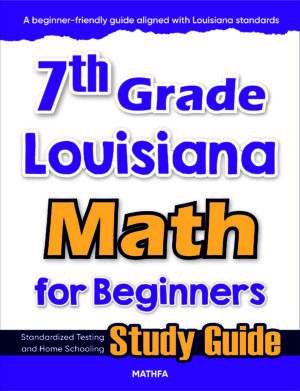 7th Grade Louisiana Math for Beginners Original price was: $21.99.$14.99Current price is: $14.99.Download
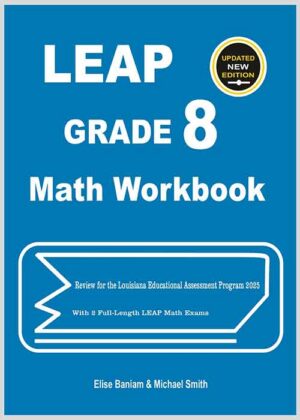 LEAP Grade 8 Math Workbook: Review for the Louisiana Educational Assessment Program 2025 With 2 Full-Length LEAP Math Exams Original price was: $18.99.$12.99Current price is: $12.99.Download
 Louisiana Algebra 1 for Beginners Original price was: $22.99.$16.99Current price is: $16.99.Download
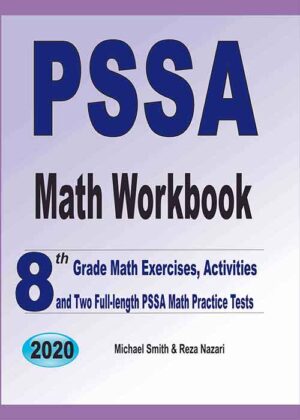 PSSA Math Workbook: 8th Grade Math Exercises, Activities, and Two Full-Length PSSA Math Practice Tests Original price was: $18.99.$12.99Current price is: $12.99.Download
 STAAR Grade 6 Math Practice Book 2020: Extra Exercises and Two Full Length STAAR Math Tests to Ace the Exam Original price was: $18.99.$12.99Current price is: $12.99.Download
 Louisiana LEAP Math: A 6th Grade Guide (2026)
 How to Master the LEAP Math Test (Louisiana)
 WVGSA Math Prep: West Virginia Student Guide
 7 MCAs Math Prep Tips for Minnesota Students
 STAAR Math Test Prep for Grades 6-8: A Parent’s Guide (2026)
How to Pass the Louisiana Math Test: 7 Strategies


For Louisiana families, the LEAP is the test that measures how well your child is mastering grade-level math, and passing it is well within reach with the right approach. Helping your child pass the Louisiana math test comes down to steady, standards-aligned practice and familiarity with the test rather than any special talent. The Louisiana Educational Assessment Program, or LEAP, tests the math your child is already learning in class, so the most effective preparation simply reinforces that learning. This guide explains the test, its scoring, and exactly how to help your child succeed.
The foundation is consistent LEAP math practice throughout the year, matched to Louisiana’s standards. Below we’ll cover the test format, content by grade, the achievement levels, a practical study routine, and the worksheets and workbook that keep your child’s Louisiana math preparation on target so test day feels manageable.
What the Louisiana math test is
Louisiana uses the LEAP, the Louisiana Educational Assessment Program, as its statewide assessment. In math, students in grades 3 through 8 take the test, with end-of-course assessments in high school, all aligned to the Louisiana Student Standards. This means the test measures precisely what students are expected to learn at each grade, the same content their teachers cover all year.
For parents, the reassuring point is that LEAP isn’t testing anything beyond the regular curriculum. It checks grade-level mastery against the state standards, so reinforcing classroom learning at home is the most effective preparation. A Louisiana-aligned workbook covers exactly the right material, taking the guesswork out of getting ready.
How the test works
LEAP is administered online and uses several question types. Beyond traditional multiple-choice items, students face technology-enhanced questions, where they enter answers or interact with the problem, and constructed-response questions that ask them to show their work and explain their reasoning. So genuine problem-solving and clear communication, not just recognition, are required.
Because the test is online and timed, your child benefits from being comfortable with both the math and the format. Practicing on a computer and working a range of question styles, including the constructed-response items, removes a layer of unfamiliarity. Knowing what to expect ahead of time is one of the simplest ways to keep test-day nerves in check.
What’s on the test by grade
LEAP math content follows the Louisiana Student Standards grade by grade. In the elementary grades, the focus is on number sense, operations, fractions, and introductory measurement and data. By the upper-elementary and middle grades, students work with ratios and proportional reasoning, decimals and percentages, and the beginnings of algebra through expressions and equations.
In the middle grades, the math deepens into proportional relationships, rational numbers, expressions and equations, geometry such as area, surface area, and volume, and introductory statistics and probability. Because each grade builds on the one before, addressing gaps early keeps small struggles from compounding into bigger ones as your child moves up.
How the test is scored
LEAP results are reported in five achievement levels: Unsatisfactory, Approaching Basic, Basic, Mastery, and Advanced. Mastery is the level Louisiana sets as the goal indicating a student is well-prepared for the next grade, while Basic is the minimum proficiency and Advanced reflects exceptional performance. Most families aim for Mastery or above.
Read these levels as a snapshot rather than a final judgment. A child sitting just below Mastery usually has a few specific, fixable gaps rather than a broad weakness, and targeted practice in those areas is far more effective than anxious, across-the-board review. Knowing where your child stands tells you exactly where to focus their preparation.
Start early and stay consistent
The most common preparation mistake is waiting until the weeks before the test and then cramming. Math skills build through steady practice over time, so a child who practices a little throughout the year is far better prepared than one scrambling in spring. Consistent practice also prevents the slow forgetting that quietly lowers scores when material isn’t revisited.
Short, regular sessions are all it takes, fifteen to twenty minutes a few times a week keeps skills fresh and makes preparation a calm habit. Starting early gives your child time to master each topic thoroughly and to shore up any weak areas long before test day, which is the surest route to reaching Mastery on the Louisiana math test.
Don’t overlook the constructed-response questions
A distinctive feature of LEAP is its constructed-response questions, which ask students to show their work and explain their reasoning. These items reward clear, organized thinking, and they’re a place where unprepared students leave easy points on the table by writing too little or skipping them entirely.
Help your child practice showing their steps neatly and explaining how they reached an answer. Partial credit is available on these questions, so a student who writes out their reasoning, even if they don’t finish, often earns points a blank response wouldn’t. Practicing this skill with constructed-response-style problems pays off directly on test day.
Target weak areas and review mistakes
Smart preparation focuses effort where it helps most. Rather than reviewing every topic equally, identify the areas your child finds hardest and spend extra time there, since targeted practice on genuine weak spots yields the biggest gains. Classwork and practice results can guide this by showing where your child struggles most.
How you handle mistakes is equally important. Rather than just marking a problem wrong, study it with your child to understand why, then have them rework it correctly. This turns every error into a specific, fixable lesson and keeps the same mistakes from recurring. Thoughtful review is what makes practice genuinely productive.
Master the fundamentals
Because math builds on itself, shaky fundamentals quietly undermine performance across the whole test. A student who isn’t fluent with fractions, decimals, or basic operations will make errors on many questions that depend on them. Strengthening these foundations is one of the highest-leverage things you can do to help your child pass the Louisiana math test.
Solidifying the basics may feel like review, but it pays off immediately. When fundamentals are automatic, your child can devote full attention to the grade-level reasoning the test rewards rather than wrestling with the arithmetic underneath. A strong foundation makes every other topic easier and every practice session more productive.
Practice with grade-level worksheets
Targeted worksheets are an excellent way to build the grade-level skills LEAP measures. Math Notion offers free, grade-level math worksheets you can match directly to your child’s grade: Grade 3, Grade 4, Grade 5, Grade 6, Grade 7, and Grade 8.
Browse the full library on our math worksheets page. Because the worksheets are organized by grade and aligned to grade-level standards, you can practice exactly the skills LEAP assesses. Have your child work a focused set, then review it together, especially the misses, to turn each mistake into a fixable lesson.
Get comfortable with the format
Beyond the math itself, familiarity with the online, technology-enhanced format reduces anxiety and protects your child’s score. Since LEAP is computer-based, have your child practice on a device so the interface and answer entry feel routine. Doing a full, timed practice session, including constructed-response problems, builds pacing and makes test day feel familiar.
A child who knows what to expect, both the content and the format, walks in far calmer, which lets their true ability show through. This combination of content practice and format familiarity is exactly what turns a nervous test-taker into a confident one, and it’s well within reach with a little preparation on a computer.
Keep math positive and manage nerves
Your attitude shapes your child’s experience of testing. Frame LEAP as just a way for teachers to see what to work on next, not a judgment of how smart your child is, and keep practice encouraging rather than stressful. Children who feel capable tackle hard problems instead of freezing, while those under pressure often shut down.
Familiarity is the best calmer for nerves: the more the format and content feel routine from practice, the less there is to fear. On test days, keep mornings unhurried, make sure your child is rested and fed, and send them off with encouragement. A calm, prepared child performs much closer to their true ability than an anxious one.
Pair worksheets with a complete workbook
Worksheets are perfect for targeted practice, but a complete, grade-level workbook ties everything together with clear lessons and full coverage of Louisiana’s standards. For a sixth grader, the 6th Grade Louisiana Math for Beginners covers exactly the ratios, fractions, expressions, and geometry LEAP assesses, with step-by-step answer explanations a parent can follow even if it’s been years since your own math classes.
Used together, free worksheets and a structured workbook give your child both focused repetition and complete, sequenced instruction. The workbook is an instant download, so you can start a routine tonight, and Math Notion offers a matching book for each grade. Browse the full Louisiana math collection → to find your child’s grade.
Build a steady weekly routine
A practical way to prepare is three short sessions a week, each focused on one grade-level topic so practice stays varied, fractions one day, ratios another, geometry a third. Pull the matching grade-level worksheet, have your child complete it carefully, and review it together while the problems are fresh. As the test approaches, add an occasional longer, computer-based practice set, including constructed-response problems, to build stamina and comfort with the full format. After any benchmark, use the results to steer the next few weeks toward the topics that came back weakest, so every minute of practice targets what LEAP will actually ask.
The bottom line for Louisiana families
Passing the Louisiana math test really comes down to a few things done consistently: keep a short, regular practice routine, use materials matched to Louisiana’s standards and your child’s grade, practice the constructed-response format, review mistakes together, and stay encouraging. None of it requires being a math expert yourself, just steady support and the right resources. Approach LEAP as a year-long habit rather than a single stressful event, aim for Mastery, and your child will walk in prepared, calm, and ready to show what they’ve learned.
Frequently asked questions
What is the Louisiana math test?
Louisiana uses the LEAP, the Louisiana Educational Assessment Program, given online in grades 3 through 8 (with high-school end-of-course exams) and aligned to the Louisiana Student Standards.
What is a passing LEAP score?
LEAP uses five levels: Unsatisfactory, Approaching Basic, Basic, Mastery, and Advanced. Mastery is the state’s goal indicating readiness for the next grade and is what most families aim for.
How can I help my child pass the Louisiana math test?
Build a short, consistent routine with a Louisiana-standards workbook and grade-level worksheets, practice on a computer, practice constructed-response questions, target weak areas, and review mistakes together.
When should we start preparing?
Early. Steady practice throughout the year beats last-minute cramming, because math skills build over time and consistent practice prevents forgetting.
Math Notion makes standards-aligned math workbooks and test prep for learners at every level and across all 50 states. See the full collection.
Posted by Math Notion Team · Published on June 1, 2025