
Math Articles, tips & study guides
 SAT Math Comprehensive Exercise Book: Abundant Math Skill Building Exercises Original price was: $18.99.$12.99Current price is: $12.99.Download
 SAT Summer Math Workbook: Essential Summer Learning Math Skills plus Two Complete SAT Math Practice Tests Original price was: $18.99.$12.99Current price is: $12.99.Download
 6 Full-Length SAT Math Practice Tests: Extra Test Prep to Help Ace the SAT Math Test Original price was: $18.99.$12.99Current price is: $12.99.Download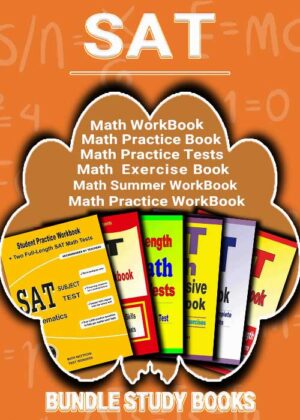
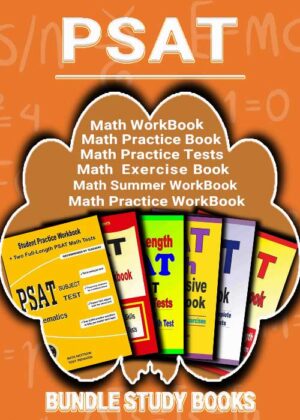
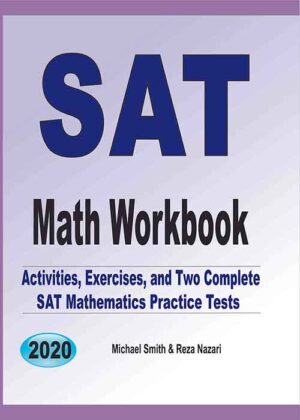 SAT Math Workbook: Exercises, Activities, and Two Full-Length SAT Math Practice Tests Original price was: $18.99.$12.99Current price is: $12.99.Download
 SAT Math Practice Book 2020: Extra Exercises and Two Full Length SAT Math Tests to Ace the Exam Original price was: $18.99.$12.99Current price is: $12.99.Download
 SAT Subject Test Mathematics: Student Practice Workbook + Two Full-Length SAT Math Tests Original price was: $18.99.$12.99Current price is: $12.99.Download
 SSAT Middle Level Math Comprehensive Exercise Book: Abundant Math Skill Building Exercises Original price was: $18.99.$12.99Current price is: $12.99.Download
 SSAT Upper Level Math Practice Book 2020: Extra Exercises and Two Full Length SSAT Upper Level Math Tests to Ace the Exam Original price was: $18.99.$12.99Current price is: $12.99.Download
 SSAT Math: What It Covers and How to Prepare
 How to Prepare for the PSAT/NMSQT Math
 How to Prepare for the SAT Math Section
 How to Prepare for the SSAT Math Test
 OST Pre-Calculus Practice — Ohio Guide
SAT Math Score: What Is Good and How to Raise It

Few numbers feel as weighty to a high schooler as their SAT math score, and for good reason: it’s a major factor in college admissions and scholarships. The encouraging news is that the SAT math section is highly preparable, because it tests a defined set of skills in predictable ways, so focused practice genuinely moves the number. This guide explains how the SAT math section works, what counts as a good score, and exactly how to raise yours, from understanding the format to practicing the right way to managing the test itself.
The most reliable path to a higher score is consistent, targeted SAT math practice on the specific content the test measures. Below we’ll cover the digital SAT’s format, the scoring, what a strong score looks like, common mistakes, a study plan, and the worksheets and workbook that make your SAT math prep efficient and effective.
How the SAT math section works
The SAT is now a digital, adaptive test. The Math section is delivered in two modules, and your performance on the first module influences the difficulty of the second, which lets the test measure your level efficiently. A calculator is permitted on the entire math section, and a built-in graphing calculator is provided within the testing app.
Understanding this format matters for your preparation. Because the test adapts, doing well early leads to a harder, higher-scoring second module. And because a calculator is always allowed, the challenge is less about computation and more about setting up problems correctly and reasoning through them. Practicing in this same digital, calculator-available style helps the real test feel familiar.
What the SAT math section covers
The SAT math content falls into a few main areas. Algebra covers linear equations, inequalities, and systems. Advanced Math covers nonlinear functions, quadratics, and polynomials. Problem-Solving and Data Analysis covers ratios, percentages, proportions, and interpreting data. And a smaller Geometry and Trigonometry portion covers area, volume, angles, and right-triangle relationships.
None of this goes beyond high-school math, which is encouraging, the content is finite and learnable. Because the test draws most heavily from algebra and data analysis, those areas deserve the most practice, though you’ll want to be solid across all of them. A complete set of practice materials covers every area in a logical order so nothing catches you off guard.
How the SAT math section is scored
The SAT Math section is scored on a scale from 200 to 800, which combines with the Reading and Writing section for a total score from 400 to 1600. Your math score reflects how many questions you answered correctly, adjusted for difficulty through the adaptive format, with no penalty for wrong answers, so you should never leave a question blank.
Because there’s no guessing penalty, answering every question, with an educated guess when unsure, can only help your score. This is one of the simplest strategies to apply, yet students who don’t know it leave points on the table. Always fill in an answer for every question, even the ones you’re unsure about.
What counts as a good SAT math score
What qualifies as a “good” SAT math score depends on your goals, especially the colleges you’re targeting. As a general guide, a score around the national average sits in the mid-500s, a score above 600 is solid, above 700 is strong, and approaching 800 is exceptional and competitive at highly selective schools. The best target is the score range of admitted students at your specific colleges.
Rather than chasing a universal number, research the middle 50 percent SAT math scores at the schools you’re interested in and aim for the upper end of that range. This gives you a concrete, motivating goal, and it keeps your preparation focused on reaching the score that actually matters for your plans.
Why targeted practice raises scores
Because the SAT tests predictable content in predictable ways, targeted practice is remarkably effective at raising scores. The key is to practice the specific skills and question types the test uses, then review your mistakes to understand exactly what to fix. This focused approach moves the number far more than vague, unfocused studying.
Many students see meaningful score gains simply by practicing consistently and learning from their errors. The SAT rewards familiarity, the more comfortable you are with its question styles and the digital format, the better you perform, independent of any new math you learn. That’s why SAT math practice with real-style questions is the heart of effective prep.
Practice with SAT worksheets
Focused practice is the engine of score improvement, and worksheets are perfect for drilling the SAT’s question types. Math Notion offers free, printable SAT math worksheets covering the algebra, advanced math, data analysis, and geometry the test measures, so you can rehearse exactly the right content at your own pace.
Browse the full library on our math worksheets page for additional practice. Work each worksheet carefully, then review every problem, especially the misses, to understand why an answer was wrong. This targeted, repeatable practice on the exact content the SAT tests is one of the most efficient ways to lift your math score.
Take full, timed practice tests
Beyond worksheets, full-length, timed practice tests are essential. They build the stamina and pacing the real SAT demands, reveal which topics still need work, and make the actual test feel familiar rather than intimidating. Practicing on the digital format, ideally with the official testing app’s practice tests, gets you comfortable with the adaptive structure and tools.
After each practice test, review every mistake carefully, this review is where most of the score gains come from. Identify patterns in your errors and target those areas in your next round of practice. A few full practice tests in the weeks before your SAT are among the highest-value things you can do.
Common mistakes and how to avoid them
SAT test-takers lose points in predictable ways. The biggest is poor time management, spending too long on hard questions and running out of time. Another is misreading the question, especially missing what’s actually being asked in a word problem. And leaving questions blank, despite no penalty for guessing, simply wastes opportunities.
Avoid these by pacing yourself, reading each question carefully, and always entering an answer. Using the provided calculator wisely, for computation, not for thinking, also helps. By practicing these habits beforehand, you make them automatic, protecting your score independent of how much math you know.
A simple study plan
Start by taking a full practice test to get a baseline and see where you stand relative to your target. In the first weeks, focus on your weakest content areas, usually algebra and data analysis offer the most points, using worksheets to drill specific skills. Review every mistake to understand the method.
As your test date approaches, take additional full, timed practice tests to build pacing and stamina, and keep targeting weak spots. Short, regular study sessions over several weeks beat last-minute cramming, because skills consolidate with spaced practice. This steady, practice-heavy approach is what reliably raises an SAT math score.
Manage test-day nerves
The SAT is high-stakes, so nerves are natural, but thorough preparation is the best antidote. When the format, question types, and pacing feel familiar from practice, the real test holds far fewer surprises, and confidence replaces dread. The work you put in beforehand is exactly what steadies you on the day.
On test day, get good rest beforehand, eat a proper meal, and take a few slow breaths before each module. Start by handling the questions you find easiest to build momentum, and don’t let one hard problem rattle you. A calm, prepared student performs much closer to their true ability than an anxious one.
Pair worksheets with a complete workbook
Worksheets are great for targeted drilling, but a complete workbook ties everything together with clear lessons and full coverage of the SAT math content. The our SAT math workbooks builds exactly the algebra, advanced math, data analysis, and geometry the test measures, with step-by-step answer explanations and practice that prepare you for the digital, adaptive format.
Used together, free worksheets and a structured workbook give you both targeted practice and complete, sequenced preparation. It’s an instant download, so you can start tonight and work toward your target score. Browse all our SAT math resources → to find the right fit.
Why algebra and data analysis deserve the most focus
If you want the most efficient path to a higher SAT math score, concentrate your early effort on algebra and problem-solving and data analysis, because together they make up the largest share of the section. Mastering linear and nonlinear equations, ratios, percentages, and data interpretation covers a great many of the points available, so strengthening these areas tends to move your score faster than anything else.
That doesn’t mean ignoring geometry and advanced math, but it does mean prioritizing wisely. When study time is limited, spending it where the most points live is simply smart strategy. Use your practice-test results to confirm which of these areas is weakest for you, then target it specifically, that data-driven focus is how thoughtful students turn steady SAT math prep into real score gains.
Give yourself enough time to improve
One of the biggest factors in raising an SAT math score is simply starting early enough. Meaningful improvement comes from spaced practice over weeks or months, not from a frantic week of cramming. Students who begin preparing well ahead of their test date have time to identify weaknesses, work on them, and take several full practice tests, all of which compound into a higher score.
If you can, plan your preparation around your test date with comfortable margin, and consider that many students take the SAT more than once to improve. Because superscoring and retakes are common, an early, steady preparation effort, followed by a retake if needed, gives you the best chance of reaching your target. Patience and consistency, more than last-minute intensity, are what produce the score you’re aiming for.
Frequently asked questions
What is a good SAT math score?
It depends on your target colleges, but generally above 600 is solid, above 700 is strong, and near 800 is exceptional. Aim for the upper range of admitted students at your schools.
Can I use a calculator on the SAT math section?
Yes, a calculator is allowed on the entire math section of the digital SAT, and a graphing calculator is built into the testing app.
Is there a penalty for wrong answers?
No. There’s no penalty for guessing, so you should always answer every question, even when you’re unsure.
How can I raise my SAT math score?
Practice the specific content and question types with worksheets and full timed practice tests, review every mistake, and target your weakest areas. Consistent practice reliably raises scores.
Math Notion makes standards-aligned math workbooks and test prep for learners at every level and across all 50 states. See the full collection.
Posted by Math Notion Team · Published on August 16, 2018