
Math Articles, tips & study guides
 SAT Summer Math Workbook: Essential Summer Learning Math Skills plus Two Complete SAT Math Practice Tests Original price was: $18.99.$12.99Current price is: $12.99.Download
 SAT Math Comprehensive Exercise Book: Abundant Math Skill Building Exercises Original price was: $18.99.$12.99Current price is: $12.99.Download
 SAT Subject Test Mathematics: Student Practice Workbook + Two Full-Length SAT Math Tests Original price was: $18.99.$12.99Current price is: $12.99.Download
 SAT Math Practice Book 2020: Extra Exercises and Two Full Length SAT Math Tests to Ace the Exam Original price was: $18.99.$12.99Current price is: $12.99.Download
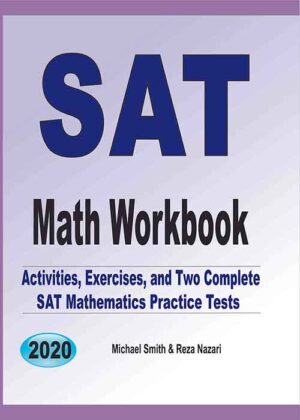 SAT Math Workbook: Exercises, Activities, and Two Full-Length SAT Math Practice Tests Original price was: $18.99.$12.99Current price is: $12.99.Download
 6 Full-Length SAT Math Practice Tests: Extra Test Prep to Help Ace the SAT Math Test Original price was: $18.99.$12.99Current price is: $12.99.Download
 CLEP College Subject Test Mathematics: Student Practice Workbook + Two Full-Length College Mathematics Exams Original price was: $18.99.$12.99Current price is: $12.99.Download
 SSAT Math: What It Covers and How to Prepare
 How to Prepare for the PSAT/NMSQT Math
 How to Prepare for the SSAT Math TestSAT Math Score: What Is Good and How to Raise It
 7 OST Math Study Habits for Ohio Students
How to Prepare for the SAT Math Section


For most students aiming at college, the SAT is one of the most important tests they’ll take, and math makes up half of the total score. Knowing how to prepare for the SAT, especially the math sections, can meaningfully raise your score and open doors to admissions and scholarships. Effective SAT prep isn’t about cramming; it’s a steady plan that builds skills and familiarity. Since SAT math is so heavily weighted, focused preparation there delivers a strong return. This guide lays out how to prepare effectively.
Understand the SAT and its math
The SAT is a college admissions test scored on a 400 to 1600 scale, with the Math section worth up to 800 points, half of the total. The math covers algebra, problem-solving and data analysis, and some advanced math, plus a bit of geometry and trigonometry. The test is now digital and adaptive in format. You can find official information through the College Board. Understanding the structure is the first step to preparing efficiently.
Start with a diagnostic test
Before building a study plan, take a full-length practice SAT to see where you stand. The results show which math topics are strong and which need work. Most students find that certain areas, often algebra or data analysis, cost them the most points. A diagnostic turns vague worry into a clear target, so your SAT prep focuses where it will help most. You can’t study efficiently without knowing your starting point.
Make a steady study plan
Consistency beats cramming. Rather than long, exhausting sessions, plan short, regular study blocks over the weeks or months before the test. Give extra time to your weakest math areas, and mix in full-length practice as the test approaches. A written schedule keeps your SAT math preparation organized and prevents last-minute panic. Students who study a little regularly outperform those who rely on a final scramble.
Master the heavily-tested topics
The SAT math section emphasizes algebra above all, linear equations, systems, and expressions appear constantly. Problem-solving and data analysis, including ratios, percentages, and interpreting graphs and tables, is also heavily represented. Advanced math topics like quadratics and functions round it out. Focusing your preparation on these high-frequency areas, especially algebra, gives the biggest score boost for your effort.
Practice with and without the calculator
The digital SAT allows a calculator on the math section, and a built-in graphing calculator is provided. But strong mental and by-hand skills still matter for speed and for catching errors. Practice both ways, using the calculator efficiently for complex computation while handling simpler steps by hand. Knowing when to calculate and when to reason keeps you moving quickly through the section.
Learn to manage your time
The SAT math section is timed, so pacing is a real skill. Practice working efficiently, doing the questions you find easy first and flagging tougher ones to return to. Build timed practice into your routine so the pace feels familiar. Running out of time is a common, avoidable reason for a lower score, and rehearsing under realistic conditions prevents it. Knowing how to prepare for the SAT includes preparing for the clock.
Review every mistake
The most valuable part of practice is the review afterward. Don’t just note which questions you missed, understand why. Was it a content gap, a careless error, or a timing issue? Each cause has a different fix. Keeping a simple log of recurring mistakes helps you spot patterns and address them before test day. Students who learn from their errors improve far faster than those who just keep taking practice tests.
Keep test day calm
All your preparation works best with a clear, calm mind. In the days before the SAT, taper off heavy studying, get good sleep, and arrive early. Remember that you’ve prepared and can take it one question at a time. A confident, well-rested test-taker performs much closer to their true ability than an anxious, exhausted one. Confidence built through practice is one of your biggest assets.
Boost your SAT math with focused practice
Since math is half the SAT, strong math skills are central to a good score. Math Notion’s workbooks build the algebra, data-analysis, and advanced-math skills the SAT rewards, with clear lessons, full-length practice, and step-by-step answer explanations you can work through on your own. Browse all our math practice books → and build the skills behind a stronger SAT score.
SAT math scoring in detail
Understanding how the SAT math score is built helps you set realistic goals. The Math section contributes up to 800 points to your 1600 total, and your score reflects both how many questions you answered correctly and the difficulty of those questions on the adaptive test. Colleges often look at your overall composite, but competitive STEM programs pay special attention to the math score. Knowing your target, based on the schools and scholarships you’re aiming for, lets you set a concrete goal and track your progress toward it with each practice test, which keeps your SAT prep focused and motivating.
An 8-week SAT math study plan
A structured plan keeps preparation manageable. In weeks one and two, take a full practice test and pinpoint your two weakest math areas. Spend weeks three and four rebuilding those foundations, since most score gains come from fixing weak spots rather than polishing strengths. Use weeks five and six to drill the heavily-tested topics, especially algebra and data analysis, and to practice the digital format and built-in calculator. Reserve week seven for a second full-length, timed test under realistic conditions, followed by a careful review of every miss. Then keep week eight light, with short reviews and good sleep. Across these eight weeks, short and steady beats a frantic final push every time.
Common SAT math mistakes to avoid
A handful of habits quietly cost points. Reading too quickly leads to solving the wrong thing, since many SAT math questions are multi-step and reward careful reading. Over-relying on the calculator slows students down on problems that are faster by hand. Poor time management causes students to spend too long on hard early questions and rush the rest. And practicing only comfortable problems skips the harder reasoning questions where real growth happens. Being aware of these traps, and rehearsing against them, protects easy points that prepared students often lose.
Try a few SAT-style math questions
Practicing the kind of reasoning the SAT rewards helps. For example: if 3x minus 7 equals 14, what is x? (The answer is 7.) A shirt is discounted 20% from $40, so what is the sale price? ($32.) If a line passes through the points (0, 2) and (3, 8), what is its slope? (2.) And what is the value of the expression 2(x plus 3) when x equals 5? (16.) Each of these mirrors the algebra and reasoning emphasis of the real test, and explaining your steps out loud as you solve builds the careful thinking the SAT measures.
Building test-day confidence
Confidence on the SAT comes from genuine preparation, but a few habits help on the day itself. Get a full night’s sleep, eat a normal breakfast, and arrive early so the morning isn’t rushed. Take a few slow breaths before the math section begins, and tackle the test one question at a time rather than worrying about the whole thing. Remember that you can flag a tough question and return to it. A calm, well-prepared student applies their skills far more reliably than an anxious one, which is why building confidence is part of effective how to prepare for the SAT strategy.
How the digital SAT format affects your strategy
The digital SAT is adaptive, which means the difficulty of the second math module depends on how you perform in the first. This rewards strong, steady early performance, so it pays to be careful and accurate from the start rather than rushing. The digital format also provides built-in tools, a graphing calculator and a reference sheet of formulas, so part of your SAT prep should be getting comfortable with these on-screen resources. Practicing in the official digital testing app, or one that mirrors it, removes the friction of an unfamiliar interface and lets you focus your energy on the math itself rather than the mechanics of the screen.
Using official practice tests effectively
Official, full-length practice tests are the gold standard of preparation, because they match the real test’s content, difficulty, and digital format. Take them under realistic conditions, timed, quiet, and uninterrupted, so the experience feels like the real thing. The score matters less than the review: go through every missed question and identify whether the cause was a content gap, a careless error, or a timing issue. This diagnostic-and-review cycle, repeated a few times across your preparation, is what produces steady, measurable improvement in your SAT math performance.
The role of consistent daily practice
Short, daily practice beats occasional marathons because math skills consolidate through repeated, spaced exposure. Even fifteen or twenty focused minutes a day keeps concepts fresh and steadily builds fluency, so that by test day the algebra and data-analysis skills the SAT emphasizes feel automatic. Consistency also reduces stress, since you arrive at the test having quietly prepared over weeks rather than cramming at the end. This steady rhythm is the quiet engine behind most strong scores, and it’s available to any student willing to commit to it.
What to do the week before the SAT
In the final week, shift from learning new material to light review and rest. Do a few short, mixed-topic practice sets to keep your skills sharp, review the formula sheet so it’s familiar, and get comfortable with the calculator one more time. Avoid heavy cramming, which tends to raise anxiety more than scores. Prioritize sleep, especially the night before, and prepare what you’ll need for test day in advance so the morning is calm. Arriving rested and unhurried lets your preparation show.
Turning SAT prep into lasting skills
The real benefit of strong SAT math preparation goes beyond the score. The algebra, data analysis, and problem-solving you sharpen are exactly the skills that support college coursework in math, science, economics, and many other fields. Approaching SAT prep as a chance to genuinely strengthen your math, rather than just to game a test, means the effort pays dividends long after test day. With steady practice and a clear plan, a higher score and stronger skills come together.
Frequently asked questions
How is the SAT math scored?
The Math section is worth up to 800 of the 1600 total points, half of your overall score.
Is a calculator allowed on the SAT?
Yes, the digital SAT provides a built-in graphing calculator for the math section, though strong by-hand skills still help.
How long should I prepare?
A few weeks to a few months of short, regular study works best, with extra time on your weakest math areas.
What’s the fastest way to raise my math score?
Focus on the heavily-tested topics, especially algebra, target your weak spots, and practice timing.
Math Notion makes standards-aligned math workbooks and test prep for students at every level and across all 50 states. See the full collection.
Posted by Math Notion Team · Published on September 15, 2021