Math Articles, tips & study guides
 6 Full-Length ACT Math Practice Tests: Extra Test Prep to Help Ace the ACT Math Test Original price was: $18.99.$12.99Current price is: $12.99.Download
 ACT Math Comprehensive Exercise Book: Abundant Math Skill Building Exercises Original price was: $18.99.$12.99Current price is: $12.99.Download
 ACT Math Workbook: Exercises, Activities, and Two Full-Length ACT Math Practice Tests Original price was: $18.99.$12.99Current price is: $12.99.Download
 ACT Summer Math Workbook: Essential Summer Learning Math Skills plus Two Complete ACT Math Practice Tests Original price was: $18.99.$12.99Current price is: $12.99.Download
 ACT Subject Test Mathematics: Student Practice Workbook + Two Full-Length ACT Math Tests Original price was: $18.99.$12.99Current price is: $12.99.Download
 ACT Math Practice Book 2020: Extra Exercises and Two Full Length ACT Math Tests to Ace the Exam Original price was: $18.99.$12.99Current price is: $12.99.Download
 TSI Math Practice Book 2020: Extra Exercises and Two Full Length TSI Math Tests to Ace the Exam Original price was: $18.99.$12.99Current price is: $12.99.Download
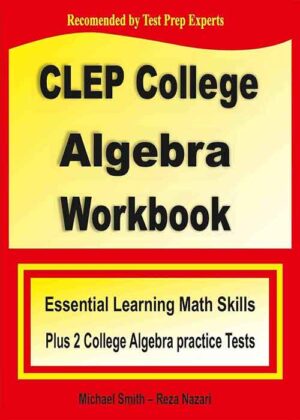 CLEP College Algebra Workbook: Essential Learning Math Skills Plus Two College Algebra Practice Tests Original price was: $18.99.$12.99Current price is: $12.99.Download
 ACAP Business Math Practice — Alabama Guide
 OST Pre-Calculus Practice — Ohio Guide
 ILEARN Geometry Basics Practice — Indiana Guide
 WFE Rounding and Estimation Practice — Wisconsin Guide
 RISE Measurement & Units Practice — Utah Guide
How to Prepare for the ACT Math Section


The ACT is one of the most widely accepted college admissions tests, and a strong score can boost both your admissions chances and your scholarship opportunities. Knowing how to prepare for the ACT, with a special focus on the math section, gives you a real edge. Good ACT prep isn’t about cramming; it’s a steady plan that builds skills and test-day familiarity. Because ACT math is a quarter of your composite score, focused preparation there pays off directly. This guide lays out a complete approach.
Understand the ACT and its math
The ACT has four sections, English, Math, Reading, and Science, each scored from 1 to 36, with your composite being their average. The math section is 60 questions in 60 minutes, covering content through the start of grade 12: pre-algebra, elementary and intermediate algebra, coordinate and plane geometry, and a little trigonometry. A calculator is allowed throughout. You can find official information through the ACT organization. Knowing the structure helps you prepare efficiently.
Start with a diagnostic test
Begin your ACT prep by taking a full-length practice test to see where you stand. The results reveal which sections and math topics need the most attention. Most students find geometry and intermediate algebra trip them up more than the basics. A diagnostic gives you a clear target, so your study time goes where it counts rather than being spread thin. You can’t build an efficient plan without knowing your starting point.
Build a focused study schedule
Plan short, regular study sessions over the weeks or months before the test rather than cramming. Give extra time to your weakest math areas, practice the question types you’ll see, and add full-length, timed practice as the test approaches. A written schedule keeps your preparation organized and prevents last-minute panic. Students who study a little consistently outperform those who rely on a final scramble, because their skills have time to settle.
Master the high-frequency math topics
The ACT math section rewards solid algebra and geometry. Pre-algebra and elementary algebra make up a large share, so fluency with fractions, percentages, equations, and basic functions is essential. Geometry, including area, volume, angles, and coordinate geometry, is also well represented. Focusing your preparation on these high-frequency areas covers most of the test. Trigonometry appears too, but in smaller amounts, so prioritize accordingly.
Practice your timing
With 60 questions in 60 minutes, the ACT math section moves quickly, so pacing is a skill of its own. That’s about a minute per question, and they get harder toward the end. Practice moving efficiently through the easier early questions and flagging tough ones to return to. Timed practice builds the rhythm that keeps a capable student from running out of time, which is a common and avoidable reason for a lower score.
Use your calculator wisely
A calculator is allowed on the entire ACT math section, but relying on it for everything can slow you down. Strong mental and by-hand skills let you handle many problems faster, saving the calculator for genuinely complex computation. Practicing both ways helps you decide quickly when to calculate and when to reason. Efficient calculator use is part of good how to prepare for the ACT strategy.
Review every mistake
The most valuable part of practice is the review afterward. Don’t just note missed questions, understand why. A content gap, a careless slip, and a timing issue each need a different fix. Keeping a simple log of recurring mistakes helps you spot patterns and address them before test day. Students who learn from their errors improve far faster than those who just keep taking practice tests without reflection.
Keep test day calm
All your preparation works best with a clear, calm mind. In the days before the ACT, taper off heavy studying, get good sleep, and arrive early. Remind yourself that you’ve prepared and can take it one question at a time. A confident, well-rested test-taker performs much closer to their true ability. Confidence built through steady practice is one of your strongest assets on test day.
Boost your ACT math with focused practice
Since math is a quarter of your ACT composite, strong math skills are central to a good score. Math Notion’s workbooks build the algebra, geometry, and trigonometry skills the ACT rewards, with clear lessons, full-length practice, and step-by-step answer explanations you can work through on your own. Browse all our math practice books → and build the skills behind a stronger ACT score.
ACT math scoring in detail
The ACT math section is scored from 1 to 36, and that score is one of four that average into your composite. Unlike some tests, the ACT has no penalty for wrong answers, so you should answer every question, even if it means an educated guess near the end. Colleges look closely at the composite, but STEM-focused programs and many scholarships weigh the math score heavily. Knowing your target, based on the schools and scholarships you’re after, lets you set a concrete goal and track progress with each practice test, keeping your ACT prep focused.
An 8-week ACT math study plan
A simple structure keeps preparation manageable. In weeks one and two, take a full practice test and identify your two weakest math areas, often geometry or intermediate algebra. Spend weeks three and four rebuilding those foundations. Use weeks five and six to drill the high-frequency topics and to practice pacing, since the section moves fast. Reserve week seven for a second timed, full-length practice test, then review every miss. Keep week eight light, with short reviews and good sleep. Short, steady sessions across these weeks beat a final cram, and they build the stamina the test demands.
Mastering ACT pacing strategy
With 60 questions in 60 minutes, pacing is one of the most important ACT math skills. A useful approach is to move quickly through the easier early questions, banking those points, and flag harder ones to return to. Since the difficulty rises toward the end, don’t get stuck early. Because there’s no guessing penalty, make sure every answer bubble is filled before time runs out, even if your last few are educated guesses. Practicing this rhythm under realistic time limits is what keeps a capable student from running out of time.
Common ACT math mistakes to avoid
A few habits quietly cost points. Reading too quickly leads to solving the wrong thing on multi-step problems. Over-relying on the calculator slows you down on questions that are faster by hand. Getting stuck on a hard early question burns time needed for easier ones later. And leaving answers blank, when there’s no penalty for guessing, simply throws away points. Avoiding these traps, rehearsed during practice, protects the easy points that prepared students often lose.
Try a few ACT-style math questions
Practicing the test’s style helps. For example: if 4x minus 3 equals 13, what is x? (x equals 4.) What is the slope of the line through (2, 1) and (5, 7)? (2.) A circle has radius 3; what is its area in terms of pi? (9 pi.) And what is 30% of 90? (27.) These mirror the algebra, geometry, and reasoning emphasis of the real ACT math section, and explaining each step aloud builds the careful thinking the test rewards.
Using your calculator wisely
A calculator is allowed on the entire ACT math section, and an approved graphing calculator can speed up complex computation. But strong mental and by-hand skills let you handle many problems faster, so don’t reach for the calculator on every question. Knowing when to calculate and when to reason is part of efficient test-taking, and it comes from practicing both ways. Make sure your calculator is on the approved list and that you’re comfortable with it well before test day.
Targeting your weakest topics first
The fastest score gains usually come from the topics you find hardest, because that’s where the most points are slipping away. Rather than re-practicing what you already know, use a practice test to identify your weak areas, then focus there. Master one topic, then move to the next. This targeted approach makes your study time far more efficient than spreading effort evenly across everything, and it’s the most reliable way to raise an ACT math score.
How to use practice tests effectively
Official, full-length practice tests are the gold standard, because they match the real test’s content, difficulty, and pacing. Take them timed and uninterrupted, then review every miss to identify whether the cause was a content gap, a careless error, or a timing issue. This diagnose-study-retest cycle, repeated a few times across your preparation, produces steady, measurable improvement. The score on any single practice test matters far less than what you learn from reviewing it.
What to do the week before the ACT
In the final week, shift from learning new material to light review and rest. Do a few short, mixed-topic practice sets to keep your skills sharp, review your most common mistakes, and make sure your calculator is ready. Avoid heavy cramming, which raises anxiety more than scores. Prioritize sleep, especially the night before, and prepare what you’ll need for test day in advance so the morning is calm. Arriving rested and unhurried lets your preparation show.
Building test-day confidence
Confidence comes mostly from genuine preparation, but a few habits help on the day. Get a full night’s sleep, eat a normal breakfast, and arrive early. Take a few slow breaths before the math section, and tackle it one question at a time rather than worrying about the whole test. Remember you can flag a tough question and return to it, and never leave a bubble blank. A calm, well-prepared student applies their skills far more reliably than an anxious one.
Turning ACT prep into lasting skills
The real value of strong ACT math preparation reaches beyond the score. The algebra, geometry, and reasoning you sharpen support college coursework in many fields, from engineering to economics. Approaching how to prepare for the ACT as a chance to genuinely strengthen your math, rather than just to game a test, means the effort pays dividends long after test day. With a clear plan and steady practice, a higher score and stronger skills come together.
Frequently asked questions
How is the ACT scored?
Each of the four sections is scored 1 to 36, and your composite is their average, so math is a quarter of the total.
Is a calculator allowed on the ACT?
Yes, an approved calculator is permitted on the entire math section, though strong by-hand skills still help with speed.
How long should I prepare?
A few weeks to a few months of short, regular study works best, with extra time on your weakest math areas.
What raises a math score fastest?
Targeting your weakest high-frequency topics, practicing timing, and reviewing every mistake.
Math Notion makes standards-aligned math workbooks and test prep for students at every level and across all 50 states. See the full collection.
Posted by Math Notion Team · Published on September 13, 2021