Math Articles, tips & study guides
 8th Grade Idaho Math for Beginners Original price was: $21.99.$14.99Current price is: $14.99.Download
 6 PSSA Math Practice Tests Grade 8: Extra Practice to Achieve a Crack Score Original price was: $18.99.$12.99Current price is: $12.99.Download
 7th Grade District of Columbia Math for Beginners Original price was: $21.99.$14.99Current price is: $14.99.Download
 North Dakota Algebra 1 for Beginners Original price was: $22.99.$16.99Current price is: $16.99.Download
 6 Common Core Math Practice Tests Grade 7: Extra Practice to Achieve a Crack Score Original price was: $18.99.$12.99Current price is: $12.99.Download
 Common Core Math Workbook: 7th Grade Math Exercises, Activities, and Two Full-Length Common Core Math Practice Tests Original price was: $18.99.$12.99Current price is: $12.99.Download
 West Virginia Algebra 1 for Beginners Original price was: $22.99.$16.99Current price is: $16.99.Download
 Common Core Math Practice Grade 8: Complete Content Review Plus 2 Full-Length Common Core Math Tests Original price was: $18.99.$12.99Current price is: $12.99.Download
 Pre-Algebra: Student Practice Workbook + Two Full-Length Pre-Algebra Exams Original price was: $18.99.$12.99Current price is: $12.99.Download
 What Is Algebra 1? Why It Matters and How to Succeed
 The Role of Algebra 2: Why It Matters and How to Succeed
 Algebra 1 for Beginners: How to Start and Succeed
 How to Study Algebra Effectively (Methods That Work)
 How to Prepare for an Algebra Test (and Pass It)
How to Prepare for Algebra: A Beginner Guide

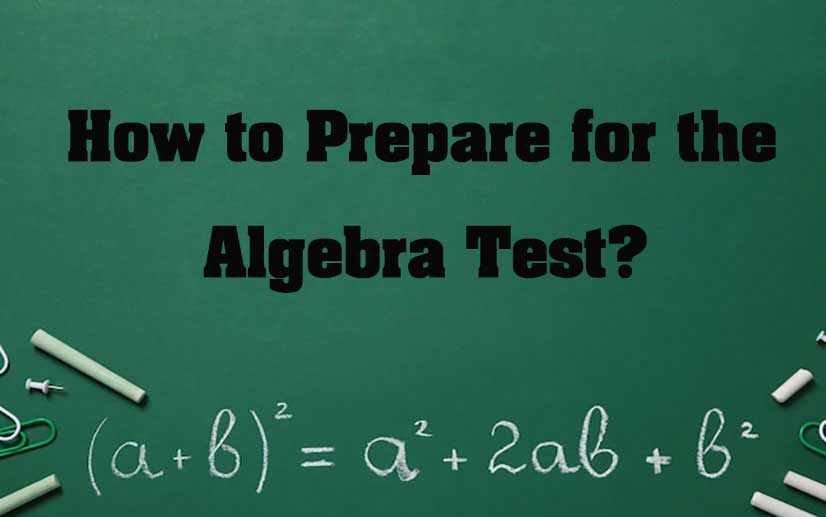
Starting algebra is a big milestone, and for many students (and their parents) it comes with a flutter of nerves. Algebra is where math shifts from working with numbers to working with symbols and relationships, and that leap can feel daunting if a student isn’t ready for it. The good news is that learning how to prepare for algebra is entirely doable, and the students who build the right foundation first tend to thrive. This guide explains what algebra is, which skills you need before you start, and exactly how to get ready so that first algebra course feels like a manageable next step rather than a cliff.
Whether you’re a student getting ready for Algebra 1 or a parent helping your child prepare, the key is solid algebra readiness, the pre-algebra fundamentals that everything in algebra is built on. Below we’ll cover what algebra involves, the skills to master first, common stumbling blocks, and how steady practice with the right materials builds the confidence to succeed.
What algebra actually is
Algebra is the branch of math where letters and symbols stand in for numbers, letting you describe relationships and solve for unknown values. Instead of just calculating 3 plus 4, you might solve for x in an equation like x plus 4 equals 7. This shift from concrete arithmetic to abstract reasoning is what makes algebra powerful, and also what makes it feel new.
Understanding this helps take the mystery out of it. Algebra isn’t a different kind of math disconnected from what you already know; it’s an extension of arithmetic into more general, flexible thinking. Students who see it that way, as the next natural step rather than an alien subject, approach it with far more confidence and far less fear.
Why preparation makes such a difference
Algebra builds directly on the arithmetic and pre-algebra skills students learn earlier, so gaps in those foundations are the single biggest reason students struggle. A student shaky on fractions or negative numbers will find algebra constantly tripping them up, not because algebra itself is too hard, but because the prerequisites weren’t solid.
This is actually encouraging news, because it means much of algebra success is within your control before the course even begins. By shoring up the foundational skills first, you remove the obstacles that cause most algebra frustration. A few weeks of focused algebra readiness work can transform how that first course feels.
The pre-algebra skills you need first
Several specific skills form the foundation algebra is built on. Fluency with fractions, decimals, and percentages is essential, since these appear constantly in algebraic problems. Comfort with negative numbers and integer operations is crucial, because algebra works with the full number line. And a solid grasp of the order of operations keeps multi-step problems from falling apart.
Beyond these, you’ll want confidence with ratios and proportions, basic exponents, and translating word problems into mathematical expressions. These pre-algebra skills are the toolkit every algebra problem draws on, so making them automatic before you start means you can focus your energy on the new algebraic ideas rather than wrestling with the basics.
Master fractions above all
If there’s one skill worth extra attention before algebra, it’s fractions. Algebra is full of fractions, in equations, in slopes, in rational expressions, and students who aren’t fluent with them struggle constantly. Adding, subtracting, multiplying, and dividing fractions should feel automatic, not effortful, by the time you start.
It’s worth spending dedicated time here, because the payoff is enormous. A student who can handle fractions confidently removes one of the most common sources of algebra errors and frustration. If fractions feel shaky, prioritize them in your preparation; few things will smooth the path into algebra more.
Get comfortable with negative numbers
Negative numbers are another frequent stumbling block. Algebra works across the entire number line, so adding, subtracting, multiplying, and dividing with negatives comes up constantly. Sign errors, like mishandling a minus sign, are among the most common mistakes in early algebra, and they trace back to shaky comfort with negatives.
Practicing integer operations until they’re second nature pays off immediately once algebra begins. When you can confidently work with negative numbers without stopping to think, you avoid a whole category of careless errors and free your attention for the actual algebra. This is foundational work that’s well worth doing before you start.
Practice with grade-level worksheets
Targeted practice is the best way to build algebra readiness, and worksheets are ideal for it. Math Notion offers free, grade-level math worksheets that cover the pre-algebra fundamentals, including the Grade 7 and Grade 8 worksheets, which focus on exactly the fractions, integers, ratios, and early algebraic thinking that prepare students for Algebra 1. For algebra-specific drill, our algebra worksheets target expressions and equations one skill at a time.
Browse the full library on our math worksheets page to find practice at the right level. Work a focused set on one skill at a time, review every problem, especially the misses, and revisit weak areas until they feel solid. This steady, targeted practice is the most efficient way to build a strong foundation.
Translating words into math
One skill that bridges arithmetic and algebra is translating word problems into mathematical expressions. Algebra leans heavily on this, taking a real-world situation and expressing it as an equation. Students who practice turning phrases like “five more than a number” into expressions like x plus 5 enter algebra with a real advantage.
You can build this skill with practice and by talking through everyday situations mathematically. The more comfortable you become recognizing the math hidden in words, the more naturally algebraic thinking will come. It’s a skill that rewards practice, and it pays off throughout algebra and well beyond into higher math.
Building a growth mindset for algebra
Just as important as the math skills is the right mindset. Many students arrive at algebra convinced they’re “not a math person,” and that belief becomes a self-fulfilling prophecy. The truth is that algebra is a learnable skill like any other, built through practice, not a talent some are born with and others lack.
Approaching algebra with the belief that you can improve with effort, treating difficulty as a normal part of learning rather than proof you can’t do it, makes an enormous difference. Students who persist through the inevitable confusing moments, instead of giving up, are the ones who succeed. Confidence built on preparation is the best foundation of all.
A simple preparation plan
Here’s a practical way to get ready over a few weeks. Start by honestly assessing which pre-algebra skills feel shaky, fractions, negatives, order of operations, ratios, and prioritize those. Spend the first week or two making fractions and integer operations automatic, since these underpin everything.
In the following weeks, work through ratios, proportions, exponents, and translating word problems, using grade-level worksheets to target each skill. Keep sessions short and regular, fifteen to twenty minutes several times a week, and review every mistake. By the time algebra begins, these fundamentals will feel comfortable, letting you focus on the new ideas.
How parents can help
If you’re a parent, your support matters as much as any worksheet. Keep a calm, encouraging tone, especially if your own algebra memories are stressful, since children absorb our attitudes. Help your child build a steady practice routine, and treat mistakes as normal, useful parts of learning rather than failures.
You don’t need to remember all your algebra to help; clear practice materials with step-by-step explanations do the teaching, while you provide encouragement and accountability. Celebrating progress and reinforcing that algebra is learnable gives your child the confidence to tackle it head-on, which is half the battle.
Pair worksheets with a complete workbook
Worksheets are perfect for targeting specific skills, but a complete workbook ties everything together with clear lessons and full coverage. Math Notion’s grade-level and Algebra workbooks build exactly the fractions, integers, expressions, and equations that prepare students for and carry them through algebra, with step-by-step answer explanations for independent study.
Used together, free worksheets and a structured workbook give you both targeted practice and complete, sequenced instruction. The workbooks are instant downloads, so you can start tonight. Browse the full Math Notion collection → to find the right book for your level.
Common early-algebra mistakes to expect
Knowing the typical stumbling points ahead of time helps you avoid them. Sign errors with negative numbers top the list, followed by mishandling the order of operations in multi-step problems and losing track of fractions within equations. None of these mean a student can’t do algebra; they’re predictable slips that careful, foundational practice prevents before the course even starts.
Another common early issue is rushing, treating algebra like quick arithmetic instead of writing out each step. Algebra rewards showing your work, because it lets you catch errors and keep track of what you’re doing. Building the habit of working neatly and step by step, during your readiness practice, carries straight into the course and saves countless careless mistakes down the line.
Why algebra is worth the effort
It can help to remember why algebra matters so much. It’s the gateway to nearly all higher mathematics, from geometry and trigonometry to calculus and statistics, and it’s foundational for science, engineering, finance, and countless careers. A strong start in algebra opens doors throughout a student’s education and beyond, which is why getting ready properly is such a worthwhile investment.
Beyond the practical payoff, algebra builds a powerful kind of reasoning, the ability to think abstractly, recognize patterns, and solve for the unknown. These skills extend far past math class into everyday problem-solving. Approaching algebra as a valuable skill worth mastering, and preparing for it with steady algebra readiness practice, sets a student up not just to pass a course but to genuinely thrive in everything that builds on it.
Start strong and keep going
The best algebra students aren’t necessarily the ones who found it easy from day one; they’re the ones who arrived prepared and kept practicing steadily. Build your pre-algebra fundamentals until they feel automatic, approach the subject believing you can learn it, and keep a regular practice routine once the course begins. With a solid foundation and steady effort, algebra becomes not a wall to climb but a logical, even satisfying, next step in your math journey, and the confidence you build carries forward into every course that follows.
Frequently asked questions
What skills do I need before starting algebra?
Fluency with fractions, decimals, percentages, negative numbers, order of operations, ratios, and basic exponents, plus the ability to translate word problems into expressions.
Why do students struggle with algebra?
Most often because of gaps in pre-algebra fundamentals, especially fractions and negative numbers, rather than the algebra itself being too hard.
How long does it take to prepare for algebra?
A few focused weeks of shoring up pre-algebra skills makes a big difference, especially if you target your weakest areas first.
Where can I find algebra readiness practice?
Math Notion offers free grade-level math worksheets, including Grade 7 and 8, that cover the pre-algebra fundamentals, on our math worksheets page.
Math Notion makes standards-aligned math workbooks and test prep for learners at every level and across all 50 states. See the full collection.
Posted by Math Notion Team · Published on August 25, 2021

