
Math Articles, tips & study guides
 6 Full-Length AFOQT Math Practice Tests: Extra Test Prep to Help Ace the AFOQT Math Test Original price was: $18.99.$12.99Current price is: $12.99.Download
 AFOQT Subject Test Mathematics: Student Practice Workbook + Two Realistic AFOQT Math Tests Paperback Original price was: $18.99.$12.99Current price is: $12.99.Download
 AFOQT Math Practice Book 2020: Extra Exercises and Two Full Length AFOQT Math Tests to Ace the Exam Original price was: $18.99.$12.99Current price is: $12.99.Download
 AFOQT Math Workbook: Activities, Exercises, and Two Complete AFOQT Mathematics Practice Tests Original price was: $18.99.$12.99Current price is: $12.99.Download
 AFOQT Math Workbook: Essential Learning Math Skills Plus Two Complete AFOQT Math Practice Tests Original price was: $18.99.$12.99Current price is: $12.99.Download
 AFOQT Math Comprehensive Exercise Book: Abundant Math Skill Building Exercises Original price was: $18.99.$12.99Current price is: $12.99.Download
 AFOQT Math Prep: The Ultimate Step-by-Step Guide Plus Two Full-Length AFOQT Practice Tests Original price was: $18.99.$12.99Current price is: $12.99.Download
 Algebra 1: Student Practice Workbook + Two Full-Length Algebra 1 Exams Original price was: $18.99.$12.99Current price is: $12.99.Download
 6 Full-Length GED Math Practice Tests: Extra Test Prep to Help Ace the GED Math Test Original price was: $18.99.$12.99Current price is: $12.99.Download
 AFOQT Score: How It Works and How Math Affects It
 Math Exams Explained: A Guide to the Major Standardized Tests
 Big News: The Math Notion Blog Is Here
 7 MCAs Math Prep Tips for Minnesota Students
 STAAR Math Test Prep for Grades 6-8: A Parent’s Guide (2026)
How to Prepare for the AFOQT Math Test

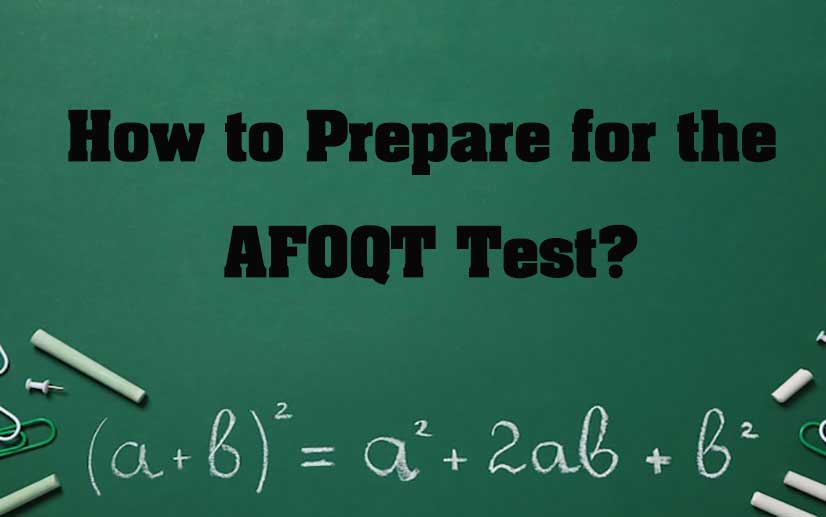
If you’re pursuing a commission in the U.S. Air Force or Space Force, the AFOQT stands between you and many officer and aviation career paths, and the math portions carry real weight in your scores. Learning how to prepare for the AFOQT math sections can directly affect which opportunities open up for you, because strong quantitative scores feed into the composites that selection boards and training pipelines care about. The reassuring news is that the math is built around a predictable set of skills, and with focused practice you can raise your scores meaningfully. This guide explains what the AFOQT is, what its math covers, how it’s scored, and exactly how to get ready.
The most reliable way to improve is steady AFOQT math practice on the specific skills the test measures. Below we’ll walk through the format, the content, scoring, common mistakes, a study plan, and the workbook that pulls your AFOQT math prep together so you can study confidently on your own schedule.
What the AFOQT is
The AFOQT, or Air Force Officer Qualifying Test, is a multi-subject exam used to select and classify candidates for Air Force and Space Force officer programs, including pilot and combat systems officer training. It includes subtests covering verbal and quantitative aptitude, aviation knowledge, spatial reasoning, and more, and the results feed into several composite scores used for different career fields.
Two of those subtests are math: Arithmetic Reasoning, which tests word-problem and quantitative reasoning, and Mathematics Knowledge, which tests algebra and math concepts directly. Because these contribute to multiple composites, including those that matter for competitive paths, your math performance can shape your options. Understanding how central the math is clarifies why dedicated preparation is genuinely worthwhile.
How the AFOQT math sections work
The AFOQT is a timed, multiple-choice test, and the math subtests are no exception, each gives you a set number of questions within a fixed time, so pacing matters. Calculators are not permitted, which means you’ll need to be comfortable working problems by hand quickly and accurately, including the kind of mental arithmetic that saves precious time.
Because the test is tightly timed and spans many subtests, stamina and efficiency are part of the challenge. The best way to build both is to practice under realistic conditions ahead of time. Knowing the format in advance, two math subtests, no calculator, a steady clock, removes a layer of surprise and lets you focus your energy on solving problems rather than adjusting to the format.
What’s on the AFOQT math test
The Arithmetic Reasoning subtest focuses on word problems: rates, ratios, proportions, percentages, averages, and practical quantitative reasoning. The Mathematics Knowledge subtest focuses on algebra and math concepts: equations and inequalities, exponents, polynomials, factoring, fractions, and basic geometry. Together they cover the core high-school math that underpins quantitative thinking.
None of it is calculus or advanced trigonometry; it’s foundational arithmetic and algebra, applied and tested under time pressure. Because the two subtests emphasize different skills, word-problem reasoning versus direct algebra, balanced practice across both is the most effective approach. A complete workbook covers everything in a logical order so no topic catches you off guard on test day.
How the AFOQT is scored
AFOQT results are reported as composite scores expressed in percentiles, comparing you to other candidates, rather than as a simple pass-fail. The math subtests feed into composites such as the Quantitative and the AA (Academic Aptitude) composite, and indirectly support the Pilot composite. Different career fields weight different composites, so strong math helps across several paths.
Because scoring is percentile-based, your goal is to score as high as you can, not merely to clear a minimum, since competitive programs favor higher percentiles. It’s also worth noting that retake policies exist but are limited, so it pays to prepare thoroughly and aim for your best result the first time rather than counting on multiple attempts.
Why a dedicated workbook beats scattered studying
Many candidates prepare by grabbing random worksheets or watching scattered videos, and the results are uneven. A well-built workbook solves this by laying out the material so each concept builds on the one before, which means you won’t hit a wall because a question assumed knowledge you skipped. It also answers the daily question of what to study next with a clear path from start to finish.
That structure is invaluable when you’re balancing test prep with a job, school, or military duties. Open the book, work the next lesson, check your answers against worked explanations, and move on. The plan is already there, which keeps your AFOQT math practice steady and efficient rather than scattered and stressful, and steady practice is what produces score gains.
Clear lessons and step-by-step explanations
A common worry is whether you can rebuild your math without a tutor, especially if it’s been a while since your last class. The right workbook is built for exactly that, with plain-language lessons that explain each concept before the practice begins and step-by-step answer explanations that show not just the correct answer but the full method behind it.
This matters because an answer key with only final answers tells you nothing about where you went wrong. Worked-out solutions let you pinpoint your mistake, understand the proper approach, and close the gap, which is how real improvement happens. For someone studying alone, that built-in guidance works like a patient tutor available whenever you sit down to study.
Build speed for the timed format
Because the AFOQT is tightly timed and allows no calculator, speed and accuracy together are essential. The right way to get faster is through repetition: the more you practice a given problem type, the more automatic it becomes, and speed follows naturally. Drilling mental math, fraction and percentage operations, and common algebra moves until they’re second nature directly improves your pace.
Practice timed sections so you learn to manage the clock without panicking, and develop the discipline to mark a tough question and move on rather than burning minutes on it. When time is short, answering every question you can, and making educated guesses on the rest, protects your score. Building these habits in practice makes them automatic on test day.
Common mistakes and how to avoid them
AFOQT candidates tend to lose points in predictable ways. The biggest is poor time management, spending too long on hard questions and running out of time for easier ones. Another is weak fundamentals, shaky arithmetic, fractions, or basic algebra, that slow you down and cause errors under pressure. A third is neglecting the no-calculator mental math the test demands.
By practicing the exact question styles under timed conditions and reviewing every miss, you train yourself out of these habits before they cost you. Thorough AFOQT math prep turns vague weaknesses into specific, fixable skills, and building speed through repetition ensures you can actually finish. Preparation is what separates a strong composite from a disappointing one.
A simple study plan
Start by taking a diagnostic practice set across both math subtests to see where you stand. In the first week or two, shore up arithmetic fundamentals and the mental-math skills the test rewards, since these underpin everything and offer quick gains. Work problems by hand, the way the test requires.
Over the following weeks, move systematically through ratios, percentages, and word problems for Arithmetic Reasoning, and equations, exponents, polynomials, and geometry for Mathematics Knowledge. Reserve time near the end for full, timed practice sections and a careful review of every miss. Short, regular sessions beat cramming, because skills consolidate with steady, spaced repetition.
Managing test-day nerves
With so much riding on the AFOQT, nerves are natural, but thorough, familiar preparation is the most reliable antidote. When the question types and timing feel routine from practice, there are far fewer surprises to trigger anxiety, and confidence grows out of competence rather than wishful thinking. The work you put in beforehand is what steadies you on the day.
On test day, get good rest beforehand, pace yourself across the subtests, and start each section by quickly handling the questions you find easiest to build momentum. Remember the scoring is percentile-based, so every correct answer helps your standing. Trust your preparation, work steadily, and let your practiced skills carry you through.
The workbook that pulls your prep together
The most reliable way to prepare is a workbook built specifically for the AFOQT math subtests. The AFOQT Mathematics Practice Workbook covers exactly the arithmetic reasoning and mathematics knowledge skills the test measures, with clear lessons, ample timed-style practice, and step-by-step answer explanations you can follow on your own. It’s an instant download, so you can start tonight and aim for your strongest composite scores. Browse all our math practice books → to find the right fit.
Why both math subtests deserve attention
It can be tempting to focus only on the subtest you find easier, but the AFOQT rewards balanced strength across both Arithmetic Reasoning and Mathematics Knowledge, because they feed into different composites. A candidate strong in word-problem reasoning but rusty on algebra, or vice versa, leaves points on the table that a little targeted practice would secure. Treat the two as equally important and split your study time accordingly.
This balanced approach also future-proofs your options. Since various career fields weight the math composites differently, being solid across both subtests keeps more paths open rather than narrowing your possibilities. A workbook that covers both areas thoroughly lets you build that even, well-rounded readiness, which is exactly what gives you the strongest and most flexible set of composite scores on test day.
Make every practice session count
The candidates who improve most are the ones who treat each practice problem as a learning opportunity rather than just a test of what they already know. Work each problem carefully, check the worked solution, and when you miss one, figure out exactly why before moving on. This habit of deliberate review turns scattered practice into steady, measurable improvement, because every mistake becomes a specific skill to strengthen.
Pair that careful review with timed practice as the test approaches, so you build both accuracy and speed. Steady, focused AFOQT math practice, a little each day with honest review, builds the fluency the timed, no-calculator format demands far better than last-minute cramming ever could, and it’s the surest route to the composite scores your goals require.
Frequently asked questions
Can I use a calculator on the AFOQT?
No, calculators are not permitted, so practicing mental math and by-hand computation, especially speed, is an essential part of preparation.
What math is on the AFOQT?
Two subtests: Arithmetic Reasoning (word problems, rates, ratios, percentages) and Mathematics Knowledge (algebra, exponents, polynomials, basic geometry).
What is a good AFOQT math score?
Scores are percentile-based composites, so aim as high as you can. Competitive programs, especially pilot slots, favor higher percentiles, so strong math helps across several composites.
How long should I study for the AFOQT?
A few focused weeks is realistic for most candidates, especially if you build mental-math speed first and practice both math subtests under timed conditions.
Math Notion makes standards-aligned math workbooks and test prep for learners at every level and across all 50 states. See the full collection.
Posted by Math Notion Team · Published on August 23, 2021