
Math Articles, tips & study guides
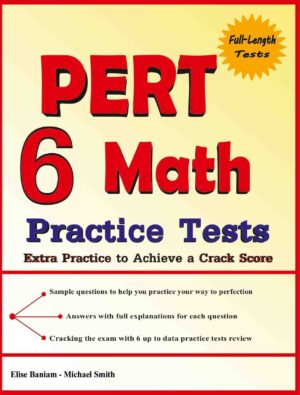 6 PERT Math Practice Tests: Extra Practice to Achieve a Crack Score Original price was: $18.99.$12.99Current price is: $12.99.Download
 PERT Math Practice Book: Complete Content Review Plus 2 Full-length PERT Math Tests Original price was: $18.99.$12.99Current price is: $12.99.Download
 PERT Math Workbook: Practice Questions for the Florida Postsecondary Education Readiness Test With 2 Full-Length PERT Math Exams Original price was: $18.99.$12.99Current price is: $12.99.Download
 PERT Math Exercise Book: Review of Essential Skills and Concepts With 2 PERT Math Practice Tests Original price was: $18.99.$12.99Current price is: $12.99.Download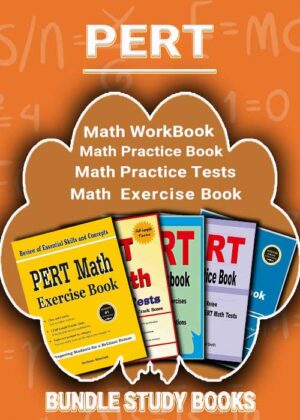
 PERT Math Workbook: The Most Effective Exercises and Review PERT Math Questions Original price was: $18.99.$12.99Current price is: $12.99.Download
 SAT Summer Math Workbook: Essential Summer Learning Math Skills plus Two Complete SAT Math Practice Tests Original price was: $18.99.$12.99Current price is: $12.99.Download
 ACT Summer Math Workbook: Essential Summer Learning Math Skills plus Two Complete ACT Math Practice Tests Original price was: $18.99.$12.99Current price is: $12.99.Download
 ACT Math Comprehensive Exercise Book: Abundant Math Skill Building Exercises Original price was: $18.99.$12.99Current price is: $12.99.Download
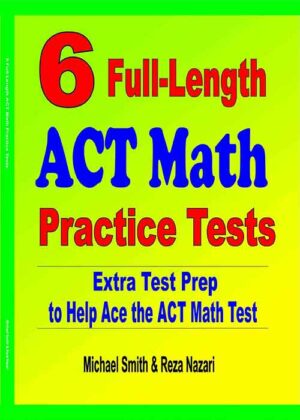 6 Full-Length ACT Math Practice Tests: Extra Test Prep to Help Ace the ACT Math Test Original price was: $18.99.$12.99Current price is: $12.99.Download
 What Is on the PERT Math Test? Topics and How to Prepare
 PERT Math Formulas You Need to Know
 How to Prepare for the PERT Math Test (Florida Placement)
 OST Pre-Calculus Practice — Ohio Guide
 ILEARN Geometry Basics Practice — Indiana Guide
5 PERT Math Prep Secrets Nobody Tells You


📖 Reading time: 11 min
Quick answer: To pass the PERT math test on your first try, focus on pre-algebra, algebra, and geometry fundamentals, practice 30–40 PERT math problems daily for 4–8 weeks, and learn to eliminate wrong answers on multiple-choice questions before committing to a solution.
Who this is for: Florida college students placing into credit-bearing courses, adult learners returning to school after time away, and tutors and parents helping someone prepare for Florida placement math for the first time.
More than 60% of first-time college students in Florida place into remedial math after taking the PERT — and that single score can add a full semester or more to their degree timeline. That statistic, drawn from Florida College System placement data, catches many students off guard. They assume the test is a formality. It isn’t. The PERT (Postsecondary Education Readiness Test) is a computer-adaptive placement exam that determines whether you take credit-bearing math or spend time — and money — in developmental courses first.
The good news is that strong PERT math prep genuinely works. This isn’t a test that rewards raw talent over effort. It rewards students who know exactly which question types appear, how the adaptive format works, and where test-takers typically lose points without realizing it. Every section of this post is built around those three things.
Here’s what you’ll learn: how the PERT math section is structured and scored, how to pace yourself during the exam, the five question types you’ll see most often, a full worked-example walkthrough, the most common mistakes (and how to avoid them), a 4-week and 8-week study schedule, and exactly what to do on test day. Work through each section and you’ll walk into that testing room with a real plan.
What the PERT Math Section Covers and How It’s Scored
The PERT Math Format: Adaptive, Untimed, and Placement-Focused
The PERT math section is a computer-adaptive placement test that adjusts question difficulty based on your responses as you go. It contains 30 questions and has no official time limit, though most test centers expect you to finish within about 75 to 90 minutes. Because the test is adaptive, two students sitting side by side may see completely different question sets — the exam tailors itself to your demonstrated skill level in real time.
The PERT is owned and administered by the Florida College System. Scores range from 50 to 150. A score of 114 or higher typically places students into college-level math (such as College Algebra or Liberal Arts Math), while scores below 114 generally result in placement into developmental math courses. The exact cutoff can vary slightly by institution, so check with your specific Florida college before test day.
Unlike the SAT or ACT, the PERT is not a pass/fail test in the traditional sense. There is no single “passing score” — your score simply determines your starting math course. That said, your goal is always to score as high as possible so you skip developmental coursework entirely. Every point matters on this exam.
The U.S. Department of Education has consistently noted that students who place directly into college-level courses are significantly more likely to complete their degrees on time. Developmental math sequences can extend a student’s college timeline by one to two full semesters, which makes effective PERT math prep one of the most high-value investments a Florida college student can make before enrollment.
The Three Content Domains on the PERT Math Test
The PERT math section draws from three broad content domains. Understanding these domains is the first step in targeted preparation.
- Arithmetic and Pre-Algebra: This domain covers number sense, place value, fractions, decimals, percentages, ratios, proportions, and basic operations with integers. It also includes order of operations, absolute value, and foundational number properties. For many students returning to school after time away, this is the domain that needs the most review. Spend time on fraction operations — adding, subtracting, multiplying, and dividing fractions with unlike denominators — because these show up repeatedly across all difficulty levels.
- Algebra: This domain tests your ability to work with variables, expressions, equations, and inequalities. You’ll need to solve linear equations, simplify algebraic expressions, factor polynomials, and work with functions. The adaptive nature of the PERT means that if you answer arithmetic questions correctly, you’ll likely see more algebra questions. Mastering slope-intercept form, systems of equations, and basic quadratic equations will serve you well in this domain.
- Geometry and Measurement: This domain covers area, perimeter, volume, angles, triangles, the Pythagorean theorem, and coordinate geometry. You don’t need trigonometry for the PERT, but you do need to know the standard area and volume formulas for common shapes. A reference sheet is not provided, so memorizing formulas for rectangles, triangles, circles, and rectangular prisms is essential preparation.
How the Adaptive Algorithm Affects Your Score
Because the PERT adapts based on your answers, there’s a specific strategy implication: getting early questions right matters more than getting later questions right. The algorithm uses your first several responses to calibrate your ability level. A strong start pushes the test toward higher-difficulty questions, which ultimately maps to a higher placement score. This means you should never rush through the opening questions. Take your time, check your work, and treat every early problem as high-stakes — because algorithmically, it is.
That said, don’t panic if a question seems much harder than expected. A harder question is often a sign that the algorithm thinks you’re performing well. Stay composed, work through the problem methodically, and remember that one wrong answer on a 30-question adaptive test does not derail your score.
Top 5 PERT Math Question Types and Pacing Yourself
The Five Question Types You’ll See Most Often
Every question on the PERT math section falls into recognizable categories. Students who identify these patterns during PERT math practice are far better prepared than those who study topics without context. Here are the five question types that appear with the highest frequency.
- Linear Equation and Inequality Problems: These questions ask you to solve for a variable in one or two steps, or to interpret a solution on a number line. A typical problem might look like: “Solve for x: 3x − 7 = 11.” You’ll also see inequality versions — “Solve for x: 2x + 4 ≥ 14” — where you need to remember that multiplying or dividing by a negative number flips the inequality sign. These problems are among the most common on the PERT, and practicing 20 to 30 of them before test day builds the speed and accuracy you need.
- Fraction, Decimal, and Percent Conversions: The PERT regularly tests your ability to move fluently between fractions, decimals, and percentages. You might be asked to find 35% of 240, to convert 0.625 to a fraction in lowest terms, or to compare the values of ¾ and 0.7. These questions punish students who don’t practice the mechanics regularly — but they reward anyone who drills the conversions until they’re automatic. Build a conversion chart and memorize the most common fraction-to-decimal equivalents: ½ = 0.5, ⅓ ≈ 0.333, ¼ = 0.25, ⅖ = 0.4, and so on.
- Word Problems Requiring Algebraic Setup: The PERT frequently wraps algebra in a real-world scenario. “A store sells pencils for $0.25 each. Maria spends $3.75. How many pencils did she buy?” seems simple, but the exam adds layers — rate problems, mixture problems, and distance-rate-time problems all appear. The key skill is translating words into an equation before solving. Students who jump to arithmetic without setting up the equation first tend to make errors on these questions.
- Geometry and Measurement Calculations: Expect to calculate the area of a composite shape, the volume of a rectangular prism, or the missing side of a right triangle using the Pythagorean theorem. You’ll also see questions about coordinate geometry — finding the midpoint between two points, calculating slope, or identifying the equation of a line from a graph. Since no formula sheet is provided, memorizing the core formulas is non-negotiable. Flashcards work extremely well here.
- Polynomial and Rational Expression Simplification: At higher difficulty levels, the PERT tests your ability to factor quadratic expressions, simplify rational expressions, and work with exponent rules. Questions might ask you to factor x² + 5x + 6 into (x + 2)(x + 3), or to simplify (x³ · x²) using the product rule of exponents. These appear more often if you’re scoring well on earlier questions. Don’t skip this material during prep — performing well on these questions is what separates a 110 score from a 120+ score.
How to Pace Yourself on the PERT Math Test
The PERT has no official time limit, but test centers typically block 90 minutes or less for the math section. At 30 questions, that gives you roughly 3 minutes per question — which sounds generous until you hit a complex word problem or a multi-step algebra question. Research compiled by the Institute of Education Sciences shows that math test-takers who practice under timed conditions consistently outperform those who only study content without time pressure. Pacing practice matters.
A smart pacing strategy has two parts. First, budget 2 minutes for questions you recognize immediately and up to 4 minutes for questions that require multiple steps. Second, mark any question where you’re genuinely stuck, make your best educated guess using the process of elimination, and move on. You cannot go back and change answers on the PERT, so “move on” here means commit to your best answer and proceed — not skip and return.
On simpler arithmetic and pre-algebra questions, train yourself to solve them in under 90 seconds. Speed on the easy questions buys you time for the harder algebra and geometry problems later. During your PERT math practice sessions, set a timer for each problem and log how long each question type takes you. Over two to three weeks, you’ll identify exactly where you’re losing time and can target that specifically.
For students looking for structured practice materials, mathnotion.com offers over 500 math workbooks and practice tests covering every major exam and grade level — including Florida placement math resources with timed practice sets that mirror the real PERT format.
Proven PERT Math Tips, Study Schedules, and Free Resources
7 PERT Math Tips You Can Use Starting Today
Effective PERT math prep isn’t about studying harder — it’s about studying smarter. These seven strategies are drawn directly from what works for students who place into college-level math on their first attempt.
- Take a diagnostic practice test on Day 1: Before you study a single topic, take a full PERT math practice test under realistic conditions. Time yourself, work through all 30 questions, and score your results. This diagnostic gives you a map — you’ll see exactly which domains are strong and which need the most attention. Without this baseline, you risk spending valuable study time reviewing material you already know while ignoring the gaps that will cost you points on the real test. Use a free PERT study guide or a released practice set from the Florida College System as your diagnostic tool.
- Drill fraction operations until they’re automatic: Fraction problems appear at every difficulty level on the PERT, from basic addition of unlike fractions all the way to rational expression simplification. Many students lose points not because they don’t understand fractions conceptually, but because they make mechanical errors under pressure. Spend at least 10 minutes daily on fraction math drills — use printable math worksheets, a prep book, or an online drill generator. The goal is zero hesitation on fraction operations by test day.
- Memorize the 10 most common geometry formulas: No reference sheet is allowed on the PERT. The formulas you need most are: area of a rectangle (l × w), area of a triangle (½ × b × h), area of a circle (πr²), circumference (2πr), volume of a rectangular prism (l × w × h), the Pythagorean theorem (a² + b² = c²), slope formula ((y₂ − y₁)/(x₂ − x₁)), midpoint formula, distance formula, and the standard form of a linear equation. Write these on a flashcard set and review them every morning during your prep period.
- Practice translating word problems into equations: Word problems trip up more PERT test-takers than any other question type, and almost always for the same reason: the student starts calculating before they finish reading. Train yourself to read the entire problem first, identify what the question is actually asking, assign a variable, write the equation, and only then solve. This four-step process — read, identify, assign, solve — takes about 20 extra seconds but dramatically reduces errors on rate, mixture, and work problems.
- Use elimination on every multiple-choice question: The PERT presents four answer choices per question. On any question where you’re uncertain, immediately eliminate the one or two answers that are clearly unreasonable. This raises your probability of a correct guess from 25% to 50% or higher, and it often points you toward the right answer even if you can’t solve the problem perfectly. Elimination is not guessing — it’s a legitimate math test strategy that every strong test-taker uses consistently.
- Focus your final week on algebra review: Algebra questions represent the largest single content area on the PERT and the area where higher-scoring students are most heavily tested. In the final week before your exam, prioritize: solving multi-step linear equations, graphing lines using slope-intercept form, factoring trinomials, and simplifying expressions with exponents. These four algebra topics account for a disproportionate share of the questions that separate a 100-level score from a 115+ score.
- Simulate real test conditions at least twice before exam day: Taking practice test questions at home on your couch with the TV on is not PERT math prep — it’s PERT math entertainment. Real preparation means sitting at a desk, phone out of reach, working through a 30-question set with a 90-minute timer. Do this at least twice in the two weeks before your exam. Students who simulate test conditions score measurably higher because test-day anxiety has far less room to derail them.
4-Week and 8-Week PERT Math Study Schedules
Your ideal prep timeline depends on how far your current skills are from the 114 placement threshold. If you placed into developmental math on a previous attempt, or if you haven’t taken a math class in several years, the 8-week schedule gives you the time you need. If your diagnostic score is close to 114, the 4-week schedule is sufficient.
4-Week Schedule (30–45 minutes per day):
Week 1 — Arithmetic and Pre-Algebra review: fractions, decimals, percentages, ratios, order of operations. Complete 20 practice problems per session using math practice sheets or a prep workbook.
Week 2 — Algebra fundamentals: linear equations, inequalities, slope, graphing, and systems of two equations. Focus on word-problem translation and practice test questions daily.
Week 3 — Geometry and measurement: area, perimeter, volume, Pythagorean theorem, and coordinate geometry. Memorize all 10 core formulas by end of Week 3.
Week 4 — Mixed review and two full timed practice tests. Analyze every wrong answer to identify the underlying concept, not just the computational error. Use the final two days for light review and rest.
8-Week Schedule (30 minutes per day):
Weeks 1–2 — Number sense and arithmetic: integers, place value, mental math, estimation, and fraction operations from the ground up.
Weeks 3–4 — Pre-algebra: ratios, proportions, percentages, and basic equation solving with one variable.
Weeks 5–6 — Algebra: multi-step equations, inequalities, functions, slope, graphing, factoring, and exponent rules.
Week 7 — Geometry and coordinate geometry: formulas, the Pythagorean theorem, area of composite shapes, and graphing lines.
Week 8 — Full mixed review, two complete timed practice tests, and test-day strategy preparation. Identify and reinforce your two weakest topic areas before the final few days.
Overcoming math anxiety is a real part of both schedules — not just content mastery. Short, consistent daily sessions reduce the psychological weight of studying far more effectively than long, infrequent cramming sessions. If you find yourself dreading study time, shorten each session to 20 minutes and increase frequency rather than duration. Momentum matters more than marathon sessions.
Worked Examples: PERT Math Practice Problems
Example 1: Solving a Two-Step Linear Equation
Problem: Solve for x: 4x − 9 = 23
Step 1: Isolate the term with the variable by adding 9 to both sides.
4x − 9 + 9 = 23 + 9
4x = 32
Step 2: Divide both sides by 4 to solve for x.
4x ÷ 4 = 32 ÷ 4
x = 8
Answer: x = 8. To verify, substitute back into the original equation: 4(8) − 9 = 32 − 9 = 23. ✓ This question type appears frequently in the algebra domain — practice it until two-step equations take you fewer than 60 seconds.
Example 2: Percent Word Problem
Problem: A jacket originally costs $85. It is on sale for 30% off. What is the sale price?
Step 1: Calculate the discount amount.
30% of $85 = 0.30 × 85 = $25.50
Step 2: Subtract the discount from the original price.
$85.00 − $25.50 = $59.50
Answer: The sale price is $59.50. A common mistake here is forgetting to subtract the discount — some students stop at Step 1 and select $25.50 as their answer. Always re-read the question to confirm what it’s actually asking for before selecting an answer choice.
Example 3: Area of a Composite Shape
Problem: A floor plan consists of a rectangle measuring 10 ft by 6 ft, with a square room measuring 4 ft by 4 ft attached to one end. What is the total area of the floor plan?
Step 1: Calculate the area of the rectangle.
Area of rectangle = length × width = 10 × 6 = 60 sq ft
Step 2: Calculate the area of the square.
Area of square = side × side = 4 × 4 = 16 sq ft
Step 3: Add the two areas together.
Total area = 60 + 16 = 76 sq ft
Answer: The total floor area is 76 square feet. Composite shape problems require you to break the figure into recognizable shapes — rectangles, triangles, circles — calculate each area separately, and then add or subtract as needed. This is a high-frequency geometry question type on the PERT.
Example 4: Factoring a Trinomial
Problem: Factor the expression: x² + 7x + 12
Step 1: Identify two numbers that multiply to 12 (the constant) and add to 7 (the coefficient of x).
3 × 4 = 12 and 3 + 4 = 7 ✓
Step 2: Write the factored form.
x² + 7x + 12 = (x + 3)(x + 4)
Answer: The factored form is (x + 3)(x + 4). Verify by expanding: (x + 3)(x + 4) = x² + 4x + 3x + 12 = x² + 7x + 12. ✓ Factoring trinomials appears at higher difficulty levels on the PERT — mastering it is what pushes a borderline score into college-level placement territory.
Frequently Asked Questions
What is a passing score on the PERT math test?
There is no single passing score — a PERT math score of 114 or higher typically places students into college-level math courses, while scores below 114 generally result in developmental math placement. The exact cutoff varies slightly by Florida college, so confirm the threshold with your specific institution before testing. Scoring 114 or above means you skip developmental coursework and proceed directly into a credit-bearing math class.
How long does PERT math prep take?
Most students need 4 to 8 weeks of consistent PERT math prep to score at the college-level placement threshold. Students with strong pre-algebra foundations may need only 3 to 4 weeks focused on algebra and geometry. Students who haven’t studied math in several years typically benefit from a full 8-week plan that rebuilds skills from arithmetic through algebra. Thirty minutes of daily PERT math practice is more effective than occasional long study sessions.
Can I use a calculator on the PERT math test?
Yes — the PERT math section provides a built-in on-screen calculator within the testing platform. However, not every question allows calculator use; some questions are designated as no-calculator items. This makes mental math fluency and number sense important parts of PERT math prep, even though a calculator is available for many problems. Practice both with and without a calculator during your study sessions to prepare for both question types.
What are the most common mistakes on the PERT math test?
The most common PERT math mistakes are: rushing through early questions without checking work, forgetting to flip the inequality sign when multiplying or dividing by a negative number, stopping a percent problem too early (calculating the discount instead of the final price), and making sign errors in multi-step algebra problems. A simple habit — writing out every step rather than solving in your head — eliminates most of these errors during math review and on test day.
📚 More from Math Notion
🎯 Explore Our Math Books
Browse 500+ math eBooks at Math Notion — for every grade, exam, and skill level.
Key Takeaways
- The PERT math test is a 30-question computer-adaptive exam with scores from 50 to 150 — a score of 114 or higher typically places you into college-level math, saving you an entire semester of developmental coursework.
- The three content domains are arithmetic/pre-algebra, algebra, and geometry — and algebra questions carry the most weight at higher difficulty levels, so they deserve the most focused preparation time.
- The five highest-frequency question types are linear equations, fraction/decimal/percent conversions, algebraic word problems, geometry calculations, and polynomial simplification — master these five and you’ve covered the core of what the PERT tests.
- A 4-week study schedule works if your skills are close to the placement threshold; an 8-week schedule is better if you haven’t done formal math in several years — both schedules work when you practice consistently, 30 minutes every day.
- For structured practice materials that match the PERT format, mathnotion.com offers over 500 math workbooks and practice tests covering every major exam and grade level — including Florida placement math prep resources you can start using today.
Strong PERT math prep is the difference between starting college in a credit-bearing course on day one and spending a semester — and real money — in a class that doesn’t count toward your degree. The strategies in this post give you a complete roadmap: know the format, drill the five question types, follow a structured schedule, simulate real test conditions, and walk in on test day with confidence earned through preparation. Your score reflects your preparation, and your preparation starts now.
Ready to get started? Visit mathnotion.com/math-practice/ to browse PERT math prep workbooks, practice test questions, and Florida placement math study guides built for exactly this exam.
Posted by Math Notion Team · Published on June 4, 2026