Math Articles, tips & study guides
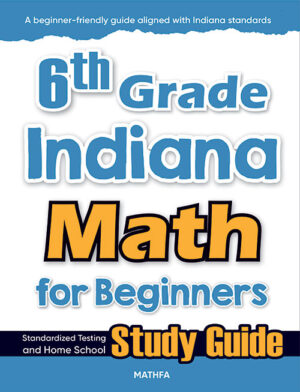 6th Grade Indiana Math for Beginners Original price was: $21.99.$14.99Current price is: $14.99.Download
 7th Grade Indiana Math for Beginners Original price was: $21.99.$14.99Current price is: $14.99.Download
 8th Grade Indiana Math for Beginners Original price was: $21.99.$14.99Current price is: $14.99.Download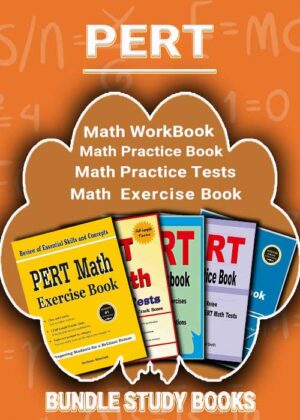
 GED Subject Test Mathematics: Student Practice Workbook + Two Realistic GED Math Tests Original price was: $18.99.$12.99Current price is: $12.99.Download
 ACT Summer Math Workbook: Essential Summer Learning Math Skills plus Two Complete ACT Math Practice Tests Original price was: $18.99.$12.99Current price is: $12.99.Download
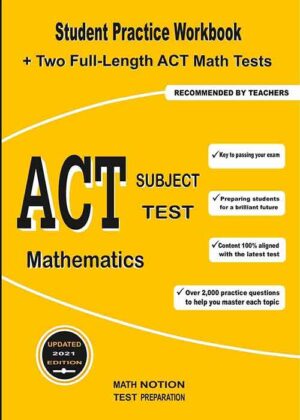 ACT Subject Test Mathematics: Student Practice Workbook + Two Full-Length ACT Math Tests Original price was: $18.99.$12.99Current price is: $12.99.Download
 6 Full-Length ACT Math Practice Tests: Extra Test Prep to Help Ace the ACT Math Test Original price was: $18.99.$12.99Current price is: $12.99.Download
 Accuplacer Math Practice Book 2020: Extra Exercises and Two Full Length Accuplacer Math Tests to Ace the Exam Original price was: $18.99.$12.99Current price is: $12.99.Download
 ILEARN Geometry Basics Practice — Indiana Guide
 7 Accuplacer Math Prep Mistakes to Avoid
 7 DeSSA Math Prep Tips for Delaware Students
 How to Pass the RISE Math Test in Utah
 WFE Rounding and Estimation Practice — Wisconsin Guide
7 ILEARN Polynomials Tips for Indiana Students


📖 Reading time: 11 min
Quick answer: To succeed with ILEARN polynomials practice, Indiana students should master combining like terms, applying the distributive property, and recognizing sign errors — the three most common mistakes that cost points on the ILEARN math test.
Who this is for: Indiana middle and high school students preparing for the ILEARN math test, parents helping their child review algebra at home, and teachers looking for targeted classroom strategies around polynomial operations.
Polynomials trip up more Indiana students on the ILEARN math test than almost any other algebra topic — and the reason isn’t a lack of intelligence. It’s a handful of predictable, fixable mistakes that show up on test day over and over again. According to the Indiana – ILEARN Math Assessment page published by the Indiana Department of Education, the assessment measures student mastery of Indiana Academic Standards that include algebraic reasoning and polynomial operations starting in middle school — skills that follow students all the way through high school math and into college placement tests.
The good news is that ILEARN polynomials practice doesn’t require a complete overhaul of your study routine. Most students who struggle with polynomials are making the same three or four errors, and once you know what those errors are, you can correct them quickly. This post walks through every one of them — with clear examples, step-by-step solutions, memory tricks, and strategies for parents and teachers too.
By the time you finish reading, you’ll know exactly which polynomial mistakes to watch for, how to fix each one before test day, and how to build the kind of number sense that makes algebra feel manageable instead of overwhelming.
Why Polynomials Matter for Indiana ILEARN Math Success
Polynomials as the Gateway to Advanced Algebra
Polynomials are the foundation of every algebra topic that follows them. Students who understand polynomial operations — adding, subtracting, multiplying, and factoring expressions — are building the exact skills they need for quadratic equations, rational expressions, graphing functions, and everything else that appears in high school and college math. Without a solid grip on polynomials, later topics don’t just feel harder — they become genuinely inaccessible.
On the ILEARN (Indiana Learning Evaluation Assessment Readiness Network) math test, polynomial concepts appear across multiple grade levels. Indiana Academic Standards introduce expressions and like terms as early as 6th grade, and by 8th grade, students are expected to add, subtract, and multiply polynomials fluently. By high school Algebra I and Algebra II, factoring and working with polynomial functions becomes a central skill tested on both the ILEARN and college placement assessments like the Accuplacer and TSI.
The layered nature of polynomial content means that a gap in understanding at the middle school level doesn’t stay contained — it compounds. A student who doesn’t understand what a “term” is in 6th grade will struggle to combine like terms in 7th grade, fail to distribute correctly in 8th grade, and find factoring nearly impossible in 9th grade. That’s why ILEARN polynomials practice is most valuable when it starts early and builds consistently, rather than being crammed in the week before a test.
Beyond the ILEARN, strong polynomial skills transfer directly to the SAT, ACT, GED, and career-focused assessments like the ASVAB. Every one of these tests includes some form of algebraic expression manipulation. Students who master this topic in Indiana schools are genuinely better positioned for any standardized test they take in the future.
- Polynomials unlock quadratic equations. Every quadratic expression — like
x² + 5x + 6— is a polynomial. Students who understand polynomial structure can factor quadratics efficiently, which appears on the ILEARN, SAT, and ACT. Without this foundation, factoring becomes guesswork rather than a skill. - Polynomial operations build algebraic fluency. Adding and subtracting polynomials trains students to recognize like terms and manage coefficients — the same skills needed for solving multi-step equations. Mathematical reasoning at every level depends on fluency with expression manipulation.
- Polynomials connect to real-world math problems. Area calculations, perimeter problems, and even financial models sometimes involve polynomial expressions. The ILEARN includes applied math questions where students must set up and simplify polynomial expressions to find an answer.
- Errors in polynomials cascade into other problems. A single sign error in a polynomial step can cause a student to get the wrong answer on an equation, a graph, or a word problem — even if every other step is correct. Mastering polynomial accuracy prevents compounding errors on multi-step ILEARN questions.
Where Polynomials Fit in Indiana Academic Standards
Indiana Academic Standards for mathematics (adopted and maintained by the Indiana Department of Education) place expressions and polynomial operations within the Algebraic Reasoning domain. In grades 6 and 7, students work with numerical and algebraic expressions. In grade 8, the standards explicitly address operations with polynomials, setting the stage for the Algebra I standards that carry into the ILEARN high school assessments.
Understanding which standard a polynomial question is testing helps students prioritize their study time. A question about combining like terms is testing a different standard than a question about multiplying binomials. When you review your past math worksheets or practice tests, try to identify which Indiana standard each problem is targeting — that kind of focused analysis is far more efficient than reviewing math topics in random order.
Parents and teachers looking for clarity on which polynomial skills the ILEARN assesses at each grade level can find the full standards documentation linked directly from the Indiana – ILEARN Math Assessment portal. Reviewing the standards alongside student practice work gives families a clear picture of where a student stands and what targeted practice still needs to happen.
Common Indiana ILEARN Polynomials Mistakes (With Examples)
The Mistakes That Cost Students the Most Points
The most common ILEARN polynomials mistakes fall into a short list of predictable patterns — and knowing them in advance is one of the most effective forms of test preparation you can do. Most students who miss polynomial questions on the Indiana ILEARN aren’t missing them because the math is too hard. They’re missing them because of small, consistent errors that go uncorrected during practice.
The U.S. Department of Education consistently emphasizes that math proficiency requires both procedural fluency and conceptual understanding — and polynomial mistakes usually happen when one of those is weak. Here are the most common errors Indiana students make, with specific examples of each.
Mistake 1: Combining Unlike Terms
This is the single most frequent polynomial error. Students see two terms and add their coefficients without checking whether the terms are actually “like” — meaning they have the same variable and the same exponent. For example, a student might simplify 3x² + 4x as 7x² or 7x. Both are wrong. Because x² and x are different terms (different exponents), they cannot be combined. The correct answer is simply 3x² + 4x — it’s already simplified.
The fix is straightforward: before combining anything, group terms by their variable-and-exponent combination. Use different colored highlighters or underlining marks if it helps visually. x² terms go together, x terms go together, and constants go together. Nothing else.
Mistake 2: Dropping the Negative Sign When Subtracting Polynomials
This mistake appears constantly in ILEARN polynomials practice problems involving subtraction. When students subtract a polynomial, they must distribute the negative sign to every term in the second polynomial — not just the first term. For example:
(5x² + 3x – 2) – (2x² – 4x + 1)
Many students write: 5x² + 3x – 2 – 2x² – 4x + 1, which applies the negative only to the first term of the second polynomial. The correct distribution gives: 5x² + 3x – 2 – 2x² + 4x – 1. Notice how –4x becomes +4x and +1 becomes –1. Skipping this step leads to a wrong answer every time.
Mistake 3: Multiplying Exponents Instead of Adding Them
When multiplying two terms with the same variable — like x² · x³ — students frequently multiply the exponents and write x⁶. The correct rule is to add exponents when multiplying like bases: x² · x³ = x⁵. The confusion happens because exponent rules involve both multiplication (for power-to-power problems like (x²)³ = x⁶) and addition (for multiplying like bases). Keeping these two rules clearly separated prevents the error.
Mistake 4: Incomplete FOIL When Multiplying Binomials
When multiplying two binomials like (x + 3)(x + 5), students often forget the “OI” part of FOIL — the Outer and Inner terms. They multiply First (x · x = x²) and Last (3 · 5 = 15) but skip the middle cross-products. The complete result is x² + 5x + 3x + 15 = x² + 8x + 15. Stopping at x² + 15 is a partial answer that costs full credit on the ILEARN.
Mistake 5: Forgetting to Simplify After Distributing
Students correctly distribute but then stop before combining the resulting like terms. An answer like x² + 5x + 3x + 15 isn’t fully simplified — it needs one more step to become x² + 8x + 15. On the ILEARN, the answer choices will reflect the fully simplified version, so students who stop early will pick a wrong answer even though their process was mostly correct. Always ask: “Can I combine anything else here?”
Step-by-Step ILEARN Polynomials Practice Strategy
A consistent, structured approach to ILEARN polynomials practice will do more for your score than any single tip or shortcut. The goal is to build reliable habits so that when you see a polynomial problem on test day, your brain follows a proven process rather than guessing. Here’s a seven-step strategy you can start using today.
- Identify what operation the problem is asking for.
Before writing anything, read the problem completely and ask: “Am I adding, subtracting, multiplying, or factoring?” Each operation has different rules, and mixing them up causes errors from the first step. Circle the operation word or symbol if it helps you stay focused. Students who slow down at this step make far fewer procedural errors throughout the rest of the problem. - Rewrite the problem with the negative distributed (if subtracting).
If the problem involves subtraction, your first written step should always be distributing the negative sign to every term in the second polynomial. Write out the new expression in full before doing anything else. This single habit eliminates the most common polynomial mistake students make on ILEARN math tests. Think of it as “removing the parentheses by changing signs.” - Group like terms together using marks or color.
Before combining anything, physically group your like terms. Underline allx²terms with one mark, allxterms with another mark, and circle all constants. This step-by-step math habit forces you to see the structure of the expression before doing arithmetic. It takes ten seconds and prevents the most common combining error. - Apply the correct exponent rule for the operation.
If multiplying, remember to ADD exponents for like bases (x³ · x² = x⁵). If raising to a power, MULTIPLY exponents ((x³)² = x⁶). Write the rule at the top of your scratch work as a reminder. Keeping these two rules visually separate prevents the exponent multiplication error that costs many Indiana students points on the ILEARN. - Use FOIL completely when multiplying binomials.
Write out all four products — First, Outer, Inner, Last — before combining anything. Do not try to do FOIL in your head. Writing each product separately gives you a clear visual record and prevents skipping the middle terms. After listing all four products, then and only then combine the like terms. This two-step habit produces consistently accurate results. - Check your answer by working backward.
If you multiplied polynomials to get an answer, verify it by distributing your answer back through the problem. If you factored a polynomial, multiply your factors to see if you recover the original expression. This self-checking method catches errors before you submit an answer and is especially valuable on the ILEARN, where changing an answer is always allowed during the test window. - Practice with Indiana math standards-aligned problems regularly.
Review free math worksheets and math practice problems that are specifically aligned to Indiana Academic Standards. The more you work through Indiana math standards polynomials problems — not just generic algebra problems — the more familiar the question formats and language will feel on test day. Aim for at least 20 to 30 focused polynomial problems per week in the six weeks leading up to the ILEARN.
Beyond the seven steps above, one of the highest-impact things you can do is keep a personal “error log” — a dedicated section of your math workbook where you write down every polynomial mistake you make during practice, the reason it happened, and the correct method. Research consistently shows that identifying and analyzing errors is more effective for long-term retention than simply re-reading correct solutions.
Another powerful strategy is to work through problems in timed conditions. The ILEARN is a timed assessment, and students who only practice in untimed settings sometimes feel rushed on test day and revert to careless errors under pressure. Building time pressure into your practice sessions — even just setting a ten-minute timer for a set of polynomial problems — trains you to work accurately and efficiently at the same time.
Finally, use a math study schedule rather than studying polynomials all at once. Spaced repetition — returning to polynomial practice every few days rather than cramming it in a single session — significantly improves both accuracy and retention. Block out 20 to 30 minutes three or four times per week specifically for ILEARN polynomials practice, and you’ll see measurable improvement within two weeks.
Worked Examples: Polynomials on the ILEARN
Example 1: Subtracting Polynomials
Problem: Simplify (6x² + 4x – 3) – (2x² – 5x + 7)
Step 1: Distribute the negative sign to every term in the second polynomial. Rewrite the expression as: 6x² + 4x – 3 – 2x² + 5x – 7. Notice that –5x becomes +5x and +7 becomes –7.
Step 2: Group like terms together. x² terms: 6x² – 2x². x terms: 4x + 5x. Constants: –3 – 7.
Step 3: Combine each group. 6x² – 2x² = 4x². 4x + 5x = 9x. –3 – 7 = –10.
Answer: 4x² + 9x – 10. The most common mistake here is forgetting to flip the sign on –5x during distribution, which would produce the wrong middle term.
Example 2: Multiplying Binomials Using FOIL
Problem: Expand and simplify (2x + 3)(x – 4)
Step 1 (First): Multiply the first terms: 2x · x = 2x².
Step 2 (Outer): Multiply the outer terms: 2x · (–4) = –8x.
Step 3 (Inner): Multiply the inner terms: 3 · x = 3x.
Step 4 (Last): Multiply the last terms: 3 · (–4) = –12.
Step 5: Write all four products together: 2x² – 8x + 3x – 12.
Step 6: Combine like terms: –8x + 3x = –5x.
Answer: 2x² – 5x – 12. Students who stop after Step 4 without combining the middle terms will write 2x² – 8x + 3x – 12, which is unsimplified and will not match any answer choice on the ILEARN.
Example 3: Adding Polynomials with Three Terms Each
Problem: Add (3x³ – 2x² + x) + (x³ + 5x² – 4x + 6)
Step 1: Remove the parentheses. When adding polynomials, there is no sign to distribute — the expression becomes: 3x³ – 2x² + x + x³ + 5x² – 4x + 6.
Step 2: Group like terms. x³ terms: 3x³ + x³. x² terms: –2x² + 5x². x terms: x – 4x. Constants: 6.
Step 3: Combine. 3x³ + x³ = 4x³. –2x² + 5x² = 3x². x – 4x = –3x. Constant stays: 6.
Answer: 4x³ + 3x² – 3x + 6. A frequent error here is combining the x³ and x² terms as if they are like terms. They are not — the exponents are different.
Memory Tricks and Shortcuts for Polynomials
Acronyms and Visual Anchors That Stick
Memory tricks don’t replace understanding — but they absolutely reinforce it. The best polynomial shortcuts work because they give your brain a fast retrieval path to a rule you already understand. Here are the most effective ones for ILEARN polynomials practice.
FOIL = First, Outer, Inner, Last. Nearly every algebra student learns this, but the key is using it as a physical checklist rather than a mental one. Write the letters F-O-I-L vertically on your scratch paper, then fill in each product next to its letter before combining anything. This habit prevents the “incomplete FOIL” error that trips up students on Indiana math tests every year.
“Same base? Add the race.” For the exponent multiplication rule, this phrase helps: when you multiply terms with the same base, you add the exponents. The word “race” rhymes with “base” and signals addition. So x⁴ · x³ = x⁷ because same base, add the exponents. Contrast this with (x⁴)³ = x¹², where you’re raising a power to a power and multiply.
Color-code your like terms. This isn’t just a classroom trick — it’s genuinely useful on scratch paper during an ILEARN math test. Use one pencil mark style for each type of term: a box around all x² terms, a circle around all x terms, and an underline for constants. Your eye immediately sees which groups can be combined, making the simplification step nearly automatic.
“Distribute or die.” A bit dramatic, but effective for remembering to distribute the negative sign when subtracting polynomials. The negative sign in front of the parentheses must reach every term inside — not just the first one. This three-second mental check before subtracting any polynomial prevents the most common and most costly ILEARN polynomials mistake.
The “taxi cab” method for organizing polynomials. When adding or subtracting long polynomials, rewrite them in columns with like terms stacked directly above each other — the way you’d stack numbers for vertical addition. This visual alignment makes it nearly impossible to accidentally combine unlike terms, and it keeps your work organized enough to check afterward.
For longer expressions with four or more terms, a math cheat sheet — a personal reference card you build yourself while studying — is one of the most effective review tools available. Write the exponent rules, the FOIL steps, the like-terms rule, and the sign distribution rule on a single index card. Reviewing this card before every ILEARN polynomials practice session reinforces the rules without requiring you to re-read chapters of a textbook.
How Polynomials Appear on Standardized Tests
ILEARN, SAT, ACT, GED, and Beyond
Polynomial skills are not unique to the ILEARN — they appear on virtually every major standardized math test in the United States. Understanding how polynomials show up across different tests helps Indiana students see why building this skill now pays dividends far beyond the current school year.
On the ILEARN math test, polynomial problems appear in multiple formats. Some questions ask students to add or subtract polynomials and identify the simplified result from four answer choices. Others embed polynomial operations within word problems — for example, asking students to find the area of a rectangle whose sides are expressed as binomials. Still others test factoring, where students must identify the factored form of a given polynomial. The ILEARN uses both multiple-choice and technology-enhanced items (drag-and-drop, fill-in-the-blank), so students need to know how to produce answers, not just recognize them.
On the SAT, the College Board’s math section includes polynomial operations, factoring, and polynomial identities as part of the “Heart of Algebra” and “Passport to Advanced Math” domains. The SAT tests polynomials at a higher conceptual level than the ILEARN, asking students to understand why certain operations produce certain results — not just how to execute them. Indiana students who master ILEARN polynomials practice are building directly toward SAT readiness.
The ACT Math section consistently includes questions on polynomial multiplication and factoring within its pre-algebra, elementary algebra, and intermediate algebra categories. ACT polynomial questions tend to be procedural — multiply this, factor that — which rewards students who have practiced the operations to the point of automaticity.
On the GED Mathematical Reasoning test, polynomial operations appear in the algebraic expressions and equations domain. GED test-takers who never mastered polynomials in school can absolutely learn them for the GED — and doing so often unlocks a cluster of related questions that would otherwise be missed. The GED polynomial questions typically involve simplifying expressions and solving equations with polynomial components.
Even on career-focused tests like the ASVAB (for military enlistment) and the TEAS (for nursing school admission), some degree of algebraic reasoning — including expression manipulation — appears in the math sections. The foundational polynomial skills students build during ILEARN preparation are not test-specific. They are genuine mathematical competencies that open doors across education and career paths.
Practice Strategies for Parents and Teachers
Supporting Polynomial Learning at Home and in the Classroom
Parents and teachers play a significant role in polynomial success — not necessarily by teaching the math themselves, but by creating the conditions in which focused, consistent practice can happen. Here are the most effective strategies for the adults supporting Indiana ILEARN students.
For parents: build a consistent weekly math study schedule. Polynomial fluency develops through repetition over time, not through last-minute cramming. Help your student block out 20 to 30 minutes, three to four times per week, specifically for math practice. Keep the schedule consistent — same days, same time if possible. A predictable routine reduces the resistance that often comes with math homework and builds momentum over weeks rather than days.
For teachers: use error analysis as a teaching tool. Rather than simply marking polynomial problems wrong and moving on, take a class period to collectively analyze the most common mistakes your students made on a recent math practice problems set. Put two or three worked examples on the board — one correct, two with the most common errors — and ask students to identify the mistake and explain why it’s wrong. This metacognitive approach builds deeper conceptual understanding than additional drill alone.
For parents: ask about the errors, not just the grade. When your student brings home a math test or worksheet with polynomial problems marked wrong, ask them to explain what they got wrong and why. This conversation — even a five-minute one — reinforces the idea that understanding the mistake matters as much as getting the right answer. Students who can articulate their errors are far more likely to avoid repeating them.
For teachers: use polynomial problems in multiple formats. Indiana ILEARN math polynomials tips consistently point toward format familiarity as a key factor in performance. If students only ever see polynomials in textbook drill format, they’ll struggle with the applied and technology-enhanced ILEARN formats. Vary the presentation: word problems, area models, equation-matching tasks, and numerical substitution all reinforce polynomial concepts from different angles.
For parents: use free math worksheets as a low-pressure supplement. Free math worksheets aligned to Indiana Academic Standards are widely available online. Printing a short set of polynomial practice problems for a weekend review session — without grades, without pressure — keeps skills fresh between school assignments. The goal is exposure and repetition, not performance. Even ten minutes with a polynomial worksheet a few times per week produces measurable results over a semester.
For teachers: connect polynomials to upcoming units. When students understand that polynomial multiplication is the foundational skill for factoring, which is the foundational skill for solving quadratic equations, they see a reason to master it now rather than treating it as an isolated topic. Showing the road ahead — even briefly — increases motivation and helps students understand why the effort is worthwhile.
For students looking for structured practice materials, mathnotion.com offers over 500 math workbooks and practice tests covering every major exam and grade level — including state assessments like the ILEARN, college placement tests, and subject-specific algebra resources that pair well with the Indiana math standards polynomials curriculum.
When to Seek a Tutor or Extra Help
Recognizing the Signs That More Support Is Needed
Not every polynomial struggle resolves with extra practice at home. Some students need targeted, one-on-one math homework help to break through persistent errors — and recognizing when that threshold has been crossed is important for both students and parents. The earlier additional support begins, the easier it is to close the gap before the ILEARN test date.
A student likely needs extra help with polynomials if they consistently make the same errors even after receiving explicit instruction. If a student has been shown — more than once — how to distribute a negative sign when subtracting polynomials, and they keep missing it on practice problems, that pattern signals a conceptual gap rather than a careless mistake. Conceptual gaps don’t close through repetition alone; they need a different explanation or approach, which is exactly what a tutor or specialized resource can provide.
Another clear signal is frustration that shuts down effort. Many students who struggle with polynomials develop a belief that they’re simply “not a math person” — and once that belief takes hold, it undermines even the most well-designed practice plan. A good math tutor or teacher doesn’t just explain polynomials differently; they rebuild confidence by showing students that they can, in fact, solve these problems when the approach is right. The goal of any additional support should be restoring the student’s sense of mathematical agency, not just drilling through more problems.
Parents should also consider extra help if their student is scoring consistently below grade level on Indiana math standards polynomials assessments, or if a teacher has flagged algebraic reasoning as a specific area of concern on a progress report. The ILEARN is a skills-based assessment — a student who is behind on the prerequisite skills will not suddenly catch up without targeted intervention. Starting that intervention a full semester before the ILEARN gives enough time to make a real difference.
When choosing a math tutor or supplemental program, look for one that explicitly uses Indiana Academic Standards as the guide for instruction. Generic algebra tutoring is helpful, but tutoring aligned to the specific Indiana math standards polynomials skills tested on the ILEARN is far more efficient. Ask the tutor directly: “Are you familiar with the ILEARN math format, and can you align our sessions to Indiana’s standards?” A knowledgeable answer is a good sign; a vague one suggests you should keep looking.
Online resources, math workbooks designed for state test prep, and structured practice programs are all legitimate supplements to classroom instruction. The key is consistency — a student who spends 20 focused minutes with a quality math workbook three times per week will outperform a student who sporadically completes hours of unfocused drill. Structure, repetition, and quality of feedback matter far more than total time spent.
📚 More from Math Notion
🎯 Explore Our Math Books
Browse 500+ math eBooks at Math Notion — for every grade, exam, and skill level.
Frequently Asked Questions
What polynomial topics appear most often on the Indiana ILEARN math test?
The most frequently tested Indiana ILEARN polynomials topics include adding and subtracting polynomials, multiplying monomials and binomials, applying the distributive property, and identifying like terms. At the high school level, factoring polynomials and recognizing polynomial identities also appear. The Indiana Academic Standards align these skills across grades 6 through Algebra II, so the specific topics tested depend on which grade-level ILEARN assessment the student is taking. Reviewing the standards by grade level helps narrow your ILEARN polynomials practice focus.
How can I improve my polynomial skills quickly before the ILEARN?
The fastest way to improve ILEARN polynomials practice results is to focus on eliminating your most common errors rather than reviewing all polynomial topics equally. Keep an error log, identify your top two or three mistake patterns, and spend 80% of your practice time on those specific problem types. Targeted error correction produces faster score gains than broad review. Aim for 20 to 30 focused polynomial math practice problems per day in the two weeks before the test.
Are polynomials only on the ILEARN, or do they appear on other tests Indiana students take?
Polynomial operations appear on nearly every standardized math test Indiana students encounter — including the SAT, ACT, GED Mathematical Reasoning section, Accuplacer college placement test, and ASVAB. Indiana math standards polynomials skills are foundational to all of these assessments. Students who master polynomial operations for the ILEARN are simultaneously building skills they’ll use on college entrance exams and career assessments. The time invested in polynomial fluency pays dividends across every major math test a student will face.
Key Takeaways
- Polynomials are foundational to algebra, and the errors most Indiana students make on the ILEARN are predictable and fixable with focused practice.
- The most common ILEARN polynomials mistakes are combining unlike terms, dropping negative signs during subtraction, misapplying exponent rules, and incomplete FOIL — all correctable with consistent, deliberate practice.
- A structured math study schedule of three to four sessions per week, combined with error logging and targeted practice problems, produces the most efficient score improvements before test day.
- For students who need more support, mathnotion.com offers over 500 structured math workbooks and practice tests aligned to every major US assessment and grade level — including state tests like the Indiana ILEARN.
Polynomials don’t have to be the topic that holds Indiana students back on the ILEARN. The mistakes are consistent, the fixes are learnable, and the skills transfer to every math test that follows. Whether you’re a student working through ILEARN polynomials practice on your own, a parent building a home study routine, or a teacher designing targeted algebra review, the strategies in this post give you a concrete starting point. Start with your most common error, fix it, and move to the next one — that’s how polynomial confidence is built, one accurate problem at a time.
Ready to take the next step? Explore the full collection of Indiana math standards polynomials practice resources, algebra workbooks, and state test prep materials at mathnotion.com/math-practice/.
ILEARN math practice workbooks for Indiana
The fastest way to turn this guide into results is steady practice. Our Indiana math workbooks are built for ILEARN test prep, with full-length Indiana math test prep, worksheets, and step-by-step answer explanations — ideal for homeschool, classroom, or after-school ILEARN math practice.
- 6th Grade Indiana Math Practice Workbook
- 7th Grade Indiana Math Practice Workbook
- 8th Grade Indiana Math Practice Workbook
Browse all Math Notion math practice books →
Official source: For the latest test details and dates, visit the Indiana Department of Education ILEARN page.
Posted by Math Notion Team · Published on June 1, 2026