
Math Articles, tips & study guides
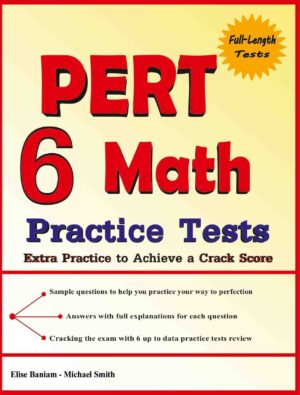 6 PERT Math Practice Tests: Extra Practice to Achieve a Crack Score Original price was: $18.99.$12.99Current price is: $12.99.Download
 PERT Math Workbook: The Most Effective Exercises and Review PERT Math Questions Original price was: $18.99.$12.99Current price is: $12.99.Download
 PERT Math Workbook: Practice Questions for the Florida Postsecondary Education Readiness Test With 2 Full-Length PERT Math Exams Original price was: $18.99.$12.99Current price is: $12.99.Download
 PERT Math Exercise Book: Review of Essential Skills and Concepts With 2 PERT Math Practice Tests Original price was: $18.99.$12.99Current price is: $12.99.Download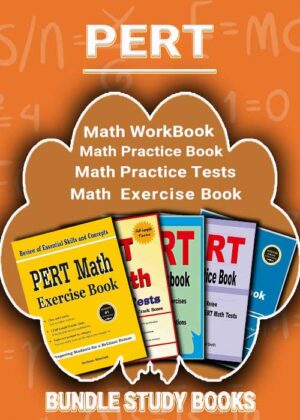
 PERT Math Practice Book: Complete Content Review Plus 2 Full-length PERT Math Tests Original price was: $18.99.$12.99Current price is: $12.99.Download
 FSA Grade 3 Summer Math Workbook: Essential Summer Learning Math Skills plus Two Complete FSA Math Practice Tests Original price was: $18.99.$12.99Current price is: $12.99.Download
 FSA Math Practice Grade 4: Complete Content Review Plus 2 Full-length FSA Math Tests Original price was: $18.99.$12.99Current price is: $12.99.Download
 FSA Math Workbook: 8th Grade Math Exercises, Activities, and Two Full-Length FSA Math Practice Tests Original price was: $18.99.$12.99Current price is: $12.99.Download
 FSA Subject Test Mathematics Grade 6: Student Practice Workbook + Two Full-Length Florida FSA Math Tests Original price was: $18.99.$12.99Current price is: $12.99.Download
 5 PERT Math Prep Secrets Nobody Tells You
 PERT Math Formulas You Need to Know
 How to Prepare for the PERT Math Test (Florida Placement)
 7 Accuplacer Math Prep Mistakes to Avoid
 OST Pre-Calculus Practice — Ohio Guide
What Is on the PERT Math Test? Topics and How to Prepare

If you’re heading to a Florida college, the PERT math test is likely the exam that decides which math course you start in, so knowing exactly what’s on it helps you prepare with focus. The Postsecondary Education Readiness Test is Florida’s common placement test, and its math section centers on a defined, predictable set of algebra skills. This guide breaks down what’s on the PERT math test, how it works, and how to prepare, so you walk in knowing precisely what to expect.
Understanding the content is the first step to placing into college-level math rather than a developmental course. Below we’ll cover the test’s format, the specific topics it tests, sample question types, and how steady PERT math practice with the right resources prepares you for a strong result and a college-level PERT math placement.
What the PERT math test is
The PERT, or Postsecondary Education Readiness Test, is Florida’s placement exam, used by the Florida College System to determine whether incoming students are ready for college-level coursework in math, reading, and writing. The math section specifically places you into either college-level math or a developmental course based on your skills.
It’s important to understand that the PERT isn’t a pass-or-fail test; it’s a placement tool. Your goal is to demonstrate enough skill to place into college-level math, which saves time and money. Knowing this takes pressure off, the aim is simply to show readiness, which focused preparation makes very achievable.
How the PERT math section works
The PERT math section is computer-adaptive, meaning it adjusts the difficulty based on your answers, and it’s untimed, so you can work carefully at your own pace. It contains roughly thirty multiple-choice questions, and the adaptive design lets it pinpoint your level efficiently.
The untimed format is a real advantage: with no clock pressure, you can read each question carefully, work it out fully, and check your answer. Knowing the format ahead of time, adaptive, untimed, multiple choice, removes test-day surprises and lets you focus entirely on the math itself, working in the careful, deliberate style the test rewards.
The PERT math test is mostly algebra
The defining feature of the PERT math content is its focus on algebra. Unlike some placement tests that include a lot of arithmetic, the PERT centers on algebraic skills, the gateway abilities college math courses assume. This means your preparation should concentrate heavily on algebra, since that’s where most of the questions live.
Understanding this focus helps you prepare efficiently. While solid arithmetic underpins everything, the PERT specifically tests your ability to work with equations, expressions, and algebraic reasoning. Concentrating your practice on these algebra skills is the most effective way to prepare for what the test actually asks.
Linear equations and inequalities
A core topic on the PERT is linear equations and inequalities. You’ll need to solve linear equations, work with inequalities (remembering to flip the sign when multiplying or dividing by a negative), and understand linear relationships, including slope and graphing. These appear frequently and are foundational to the rest of the test.
Being fluent with solving and graphing linear equations is essential, since so many PERT questions build on these skills. Practicing until you can solve linear equations and inequalities quickly and accurately, without second-guessing the sign rules, builds a strong base for the harder algebra the test also includes.
Expressions, exponents, and polynomials
The PERT tests your ability to work with algebraic expressions, including simplifying them, applying the rules of exponents, and operating with polynomials. You may need to add, subtract, and multiply polynomials, factor expressions, and simplify using exponent rules. These skills extend your algebraic toolkit beyond basic equations.
These topics can feel mechanical, but they follow consistent patterns that become automatic with practice. Knowing the exponent rules cold, recognizing common factoring patterns, and being comfortable manipulating polynomials lets you handle this substantial portion of the test efficiently and accurately.
Literal equations and the coordinate plane
The PERT also includes literal equations, where you solve for one variable in terms of others, and coordinate-plane work, including plotting points, understanding the relationship between equations and their graphs, and working with lines on the plane. These connect algebra to geometry and to real-world modeling.
Literal equations test whether you truly understand the algebra of rearranging formulas, a skill used throughout science and higher math. Coordinate-plane questions reward understanding how equations and graphs relate. Practicing both ensures you’re ready for these characteristic PERT question types.
Word problems and applied algebra
The PERT includes word problems that ask you to translate a real-world situation into an equation and solve it. These applied questions test whether you can use algebra, not just perform it, by setting up the right equation from a description and finding the answer. Reading carefully and setting up the problem correctly is key.
Word problems trip up many test-takers, not because the math is hard but because translating words into equations takes practice. Working plenty of applied problems builds the habit of identifying what’s being asked and structuring the algebra to solve it, which is exactly the skill these PERT questions reward.
What’s not on the PERT math test
It’s just as useful to know what the PERT doesn’t test. It does not include advanced topics like calculus or trigonometry, and it’s lighter on pure arithmetic than some placement tests. This means you can focus your preparation on the algebra and applied skills that actually appear, rather than reviewing everything.
Knowing the boundaries of the test makes your preparation efficient. There’s no need to study advanced math; instead, concentrate on mastering the algebra topics the PERT does test. This focused approach is the smartest way to prepare, directing your effort exactly where it will help your placement.
How the PERT is scored and placement works
Your PERT math score falls into ranges that Florida colleges map to specific course placements. A higher score places you into college-level math like College Algebra, while lower scores route you into developmental or preparatory courses. Because cutoffs can vary by institution, check your college’s placement chart for the score you need.
The practical goal is to reach the range for college-level math, which keeps you on the fastest, most affordable path through your program. Aiming comfortably above the cutoff gives you a cushion, and because the test is untimed and focused on learnable algebra, that target is very achievable with preparation.
How to prepare for the PERT math test
Effective preparation concentrates on the algebra the test covers. Start by shoring up any shaky fundamentals, then drill linear equations and inequalities, expressions and exponents, polynomials and factoring, literal equations, and word problems. Practice in the untimed, careful style you’ll use on test day, and review every mistake.
Because the PERT is so algebra-focused, targeted practice on these specific topics is far more efficient than general review. A few focused weeks of practice on the exact content the test includes reliably builds the skills needed for a college-level placement, which is well worth the effort given what it saves you.
Practice with PERT math worksheets
Focused practice is the key to PERT readiness. Math Notion offers free, printable PERT math worksheets covering the algebra, equations, and applied problems the test includes, so you can drill exactly the right content at your own pace.
Browse the full library on our math worksheets page for more practice. Work each worksheet carefully, then review every problem, especially the misses, to understand where you went wrong. This focused, repeatable practice on the exact algebra the PERT tests is one of the most efficient ways to prepare for a strong placement.
Use the untimed format to your advantage
Because the PERT math section is untimed, smart test-takers lean into it. With no clock, you can read each question twice, write out your steps, and check your answer before moving on. Practicing in this same deliberate style makes careful work automatic, so on test day you catch the small errors that otherwise lower a placement score.
This is especially helpful if test anxiety or rushing has hurt you before. The PERT removes time pressure, so you can focus entirely on accuracy. Building patient, methodical habits in practice means you’ll use the test’s generous time to your full advantage when it counts.
The workbook that prepares you for the PERT
For complete, structured preparation, a workbook ties everything together. The PERT Math Practice Workbook covers exactly the algebra, equations, polynomials, and applied problems the PERT math test includes, with clear lessons that explain each topic and step-by-step answer explanations you can follow on your own.
Paired with the free PERT worksheets for targeted practice, a workbook gives you both complete instruction and focused drilling on the content the test covers. It’s an instant download, so you can start preparing tonight and aim for college-level placement. Browse all our PERT math resources → to find the right fit.
Why placing into college-level math matters
It’s worth remembering the stakes that make PERT preparation worthwhile. Placing into a developmental math course can add a semester of study and tuition that often doesn’t count toward your degree, delaying your progress and adding cost. Placing directly into college-level math avoids that detour and gets you moving toward graduation sooner.
Viewed that way, the few weeks of focused practice it takes to prepare for the PERT math test is one of the highest-return investments you can make before college. Because the test covers a finite, learnable set of algebra skills and gives you unlimited time, a college-level placement is genuinely within reach for anyone willing to put in steady, targeted PERT math practice on the topics this guide describes.
In short, the PERT math test is a focused, untimed, algebra-centered placement exam, which is good news: you know exactly what to study, you have time to work carefully, and the skills are entirely learnable. Concentrate your practice on the algebra topics it covers, and a college-level placement is well within your reach.
Frequently asked questions
What’s on the PERT math test?
Mostly algebra: linear equations and inequalities, expressions, exponents and polynomials, factoring, literal equations, the coordinate plane, and applied word problems. It does not include calculus or trigonometry.
Is the PERT math test timed?
No, the math section is untimed and computer-adaptive, with about thirty multiple-choice questions, so you can work carefully and check your answers.
What score do I need on the PERT?
Enough to place into college-level math, which varies by college. Check your school’s placement chart and aim comfortably above the cutoff for the course you want.
How should I prepare for the PERT math test?
Concentrate on the algebra the test covers, practice with PERT worksheets and a workbook, work in the untimed careful style, and review every mistake to build a college-level placement.
Math Notion makes standards-aligned math workbooks and test prep for learners at every level and across all 50 states. See the full collection.
Posted by Math Notion Team · Published on August 26, 2024