Math Articles, tips & study guides
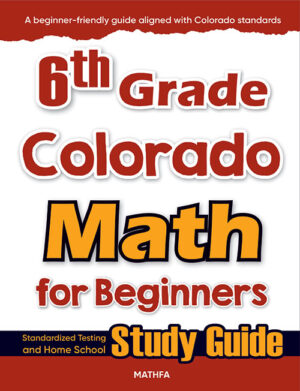 6th Grade Colorado Math for Beginners Original price was: $21.99.$14.99Current price is: $14.99.Download
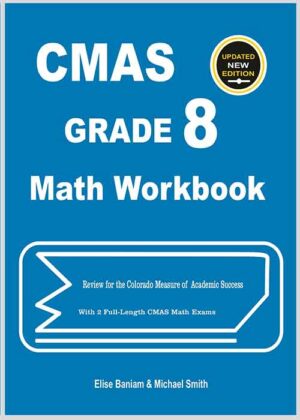 CMAS Grade 8 Math Workbook: Review for the Colorado Measure of Academic Success With 2 Full-Length CMAS Math Exams Original price was: $18.99.$12.99Current price is: $12.99.Download
 FTCE Math Prep (General Knowledge Test): The Ultimate Step by Step Guide Plus Two Full-Length FTCE Practice Tests Original price was: $18.99.$12.99Current price is: $12.99.Download
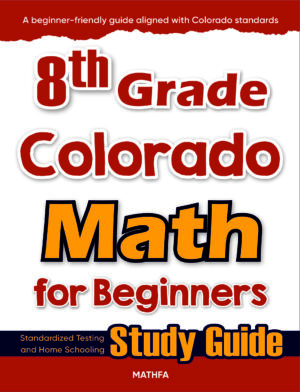 8th Grade Colorado Math for Beginners Original price was: $21.99.$14.99Current price is: $14.99.Download
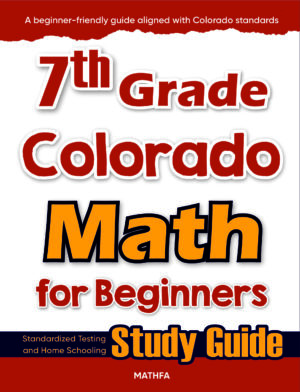 7th Grade Colorado Math for Beginners Original price was: $21.99.$14.99Current price is: $14.99.Download
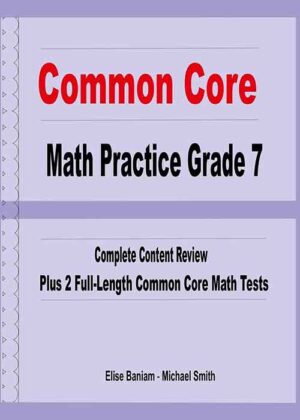 Common Core Math Practice Grade 7:Complete Content Review Plus 2 Full-length Common Core Math Tests Original price was: $18.99.$12.99Current price is: $12.99.Download
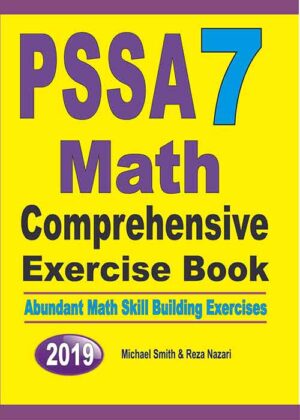 PSSA Grade 7 Math Comprehensive Exercise Book: Abundant Math Skill Building Exercises Original price was: $18.99.$12.99Current price is: $12.99.Download
 SBAC Grade 8 Summer Math Workbook: Essential Summer Learning Math Skills plus Two Complete SBAC Math Practice Tests Original price was: $18.99.$12.99Current price is: $12.99.Download
 NSCAS Sequences & Series Practice — Nebraska Guide
 KSA 4th Grade Prep: Kentucky Math Guide
 7 Accuplacer Math Prep Mistakes to Avoid
 ACAP Business Math Practice — Alabama Guide
 7 DeSSA Math Prep Tips for Delaware Students
How to Use CMAS Practice Tests to Boost Your Child Math Score

If your child takes the CMAS in Colorado, one of the smartest ways to help them prepare is to use practice tests well. Knowing how to use CMAS practice tests effectively, not just taking them, but learning from them, can turn a source of stress into a powerful tool for improvement. The Colorado Measures of Academic Success assesses the grade-level math your child is already learning, so realistic practice that mirrors the real test builds exactly the familiarity and confidence they need. This guide explains what the CMAS is and, especially, how to get the most out of practice tests and targeted practice.
The principle behind it all is simple: practice that resembles the real test, reviewed carefully, prepares your child far better than passive review. Below we’ll cover what the CMAS measures, how to use practice tests step by step, how to turn mistakes into gains, and the worksheets and workbook that make consistent CMAS math practice easy to sustain at home.
What the CMAS is
CMAS stands for the Colorado Measures of Academic Success, the state’s assessment program. In math, students are tested in grades 3 through 8, with the content aligned to the Colorado Academic Standards, so the test measures exactly what students are expected to learn at each grade level. It’s administered online, like most modern state assessments.
For parents, the key point is that the CMAS isn’t testing obscure material; it’s checking whether your child has mastered the grade-level math their teacher has been covering all year. That means reinforcing the regular curriculum, and rehearsing it through realistic practice, is the most effective preparation you can provide.
Why practice tests are so valuable
Practice tests are uniquely useful because they do several things at once. They reveal which topics your child has mastered and which still need work, they build the stamina and pacing a full test requires, and they make the real exam feel familiar rather than intimidating. No other single study tool offers all three benefits together.
Crucially, a practice test is only as valuable as how you use it. Simply taking one and noting the score teaches little; the real gains come from the review afterward. Used thoughtfully, practice tests become the centerpiece of effective CMAS math practice, guiding your child’s preparation toward exactly what will help most.
Take practice tests under real conditions
To get the full benefit, have your child take a practice test under conditions that mirror the real CMAS as closely as possible. Since the CMAS is online, practice on a computer when you can, so the format feels routine. Set aside a quiet, uninterrupted stretch of time, and have your child work without help, just as they will on test day.
Recreating test conditions matters because part of what you’re building is comfort with the experience itself, sitting and focusing for a full session, navigating an online interface, and pacing the work. A child who has rehearsed this is far less likely to be rattled on the actual test, and far more likely to perform at their true level.
Review every mistake carefully
The single most important step is the review. After a practice test, resist the urge to simply tally the score. Instead, go through every missed question with your child and figure out why it was wrong. Was it a careless slip, a misread, or a genuine gap in understanding? Each calls for a different fix.
This active review is where most of the learning happens, because it turns each mistake into a specific, fixable lesson. A workbook with step-by-step answer explanations makes this far easier, since you can see exactly how each problem should be solved. Reviewing thoughtfully is what transforms a practice test from a measurement into a genuine teaching tool.
Turn results into a focused plan
Use what the practice test reveals to guide the next stretch of study. If your child consistently missed fraction problems or struggled with geometry, make those the focus of practice for the coming weeks. Targeted work on the specific weak areas a practice test exposes is far more efficient than reviewing everything equally.
This results-driven loop, practice, review, target, practice again, is the engine of real improvement. Each practice test sharpens your understanding of where your child stands and what to work on next, so their preparation gets more precise and more effective over time. It’s a simple cycle, but a powerful one.
Practice with grade-level worksheets
Between full practice tests, targeted worksheets let your child drill the specific skills they need. Math Notion offers free, grade-level math worksheets you can match directly to the areas a practice test flags: Grade 3, Grade 4, Grade 5, Grade 6, Grade 7, and Grade 8.
Browse the full library on our math worksheets page. Because the worksheets are organized by grade and aligned to grade-level standards, you can practice exactly the skills the CMAS measures. Pairing full practice tests with focused worksheet drilling gives your child both realistic rehearsal and targeted skill-building.
What the CMAS math test covers
The content follows the Colorado Academic Standards grade by grade. In the elementary grades, the focus is on number sense, operations, fractions, and introductory measurement and data. By the upper-elementary and middle grades, students work with ratios and proportional reasoning, decimals and percentages, and the beginnings of algebra through expressions and equations.
In the middle grades, the math deepens into proportional relationships, rational numbers, expressions and equations, geometry, and introductory statistics. Because each grade builds on the one before, practice tests that reveal gaps early let you address them before they compound, which is one more reason to use them throughout the year rather than only at the end.
How the CMAS is scored
CMAS results are reported in performance levels that indicate whether a student met, approached, or exceeded grade-level expectations, along with a scale score. The on-grade-level benchmark is what most families aim for, while higher levels reflect above-grade mastery. Practice tests help your child get comfortable with the kinds of questions that determine these levels.
Reading the eventual results as a snapshot, not a verdict, is healthiest. A child near but below the benchmark usually has a few specific, fixable gaps, exactly the kind of thing practice tests and targeted review are designed to reveal and close. Knowing where your child stands tells you precisely where to focus.
Common mistakes to avoid
The biggest mistake is treating practice tests as a one-time event right before the real test, rather than a recurring tool used throughout the year. Another is taking them but skipping the review, which forfeits most of their value. And practicing only on paper when the real test is online can leave a child unfamiliar with the format.
Avoid these by spacing practice tests across the year, always reviewing thoroughly, and doing some practice on a computer. Used this way, practice tests become a steady source of insight and improvement rather than a last-minute stressor, which is exactly how the most successful families approach them.
Keep practice positive and steady
How you frame practice matters as much as the practice itself. Keep sessions short, regular, and low-pressure rather than long and stressful, and treat practice tests as helpful checkpoints, not high-stakes judgments. Children who feel supported and capable engage more fully and learn more from every session.
Praise effort and progress, and celebrate improvement from one practice test to the next rather than fixating on a single score. This steady, encouraging approach builds both skill and confidence, and a confident child who has rehearsed the test through realistic practice walks into the real CMAS calm and ready.
Pair worksheets with a complete workbook
Practice tests and worksheets work best alongside a complete, grade-level workbook that ties everything together with clear lessons and full coverage of Colorado’s standards. For a sixth grader, the 6th Grade Colorado Math for Beginners covers exactly the ratios, fractions, expressions, and geometry the CMAS assesses, with step-by-step answer explanations that make reviewing practice-test mistakes easy.
Used together, free worksheets, practice tests, and a structured workbook give your child realistic rehearsal, targeted drilling, and complete instruction. The workbook is an instant download, so you can start tonight. Browse the full Colorado math collection → to find your child’s grade.
Build a year-long practice rhythm
The families who get the most from CMAS practice tests treat them as part of a steady, year-long rhythm rather than a spring scramble. A good approach is to take a full practice section near the start of the year to set a baseline, then shorter, targeted practice through the months, with another full practice test or two as spring approaches to check progress and build pacing. This spacing mirrors how the brain actually learns and prevents last-minute panic.
Between practice tests, keep the routine light and consistent, three short sessions a week is plenty, focused on the areas your most recent practice test flagged. This combination of periodic full rehearsals and steady targeted practice keeps your child’s skills sharp all year and means the real CMAS arrives as a familiar, well-prepared-for event rather than a sudden challenge.
Help your child stay calm on test day
All the realistic practice in the world pays its biggest dividend in one place: a calm, confident child on test day. Because your child has rehearsed the format, paced a full session, and worked through the question types, the real CMAS holds few surprises, and that familiarity is the best antidote to nerves. Remind them that it’s simply a chance to show what they’ve been practicing.
On the actual test days, keep mornings unhurried, make sure your child is rested and well fed, and send them off with encouragement rather than warnings. A child who feels prepared and supported approaches the test steadily and performs much closer to their true ability. That calm readiness, built through thoughtful use of practice tests, is exactly what helps a child do their best.
Frequently asked questions
What is the CMAS math test?
The Colorado Measures of Academic Success math assessment, given in grades 3 through 8, aligned to the Colorado Academic Standards and administered online.
How should my child use CMAS practice tests?
Take them under realistic, timed conditions on a computer, then review every mistake carefully to understand why it was wrong, and use the results to target weak areas.
How often should we do practice tests?
Space them across the year rather than cramming them all in before the test, so you can spot and address gaps with time to spare.
Where can I find CMAS practice?
Math Notion offers free grade-level math worksheets aligned to grade standards, plus complete Colorado grade-level workbooks, on our worksheets and shop pages.
Math Notion makes standards-aligned math workbooks and test prep for learners at every level and across all 50 states. See the full collection.
Posted by Math Notion Team · Published on February 26, 2024