Math Articles, tips & study guides
 8th Grade Indiana Math for Beginners Original price was: $21.99.$14.99Current price is: $14.99.Download
 7th Grade Indiana Math for Beginners Original price was: $21.99.$14.99Current price is: $14.99.Download
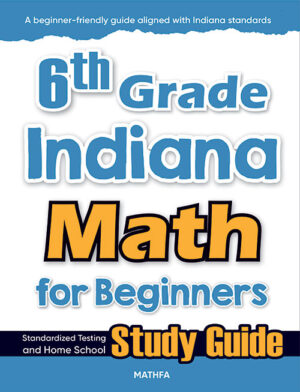 6th Grade Indiana Math for Beginners Original price was: $21.99.$14.99Current price is: $14.99.Download
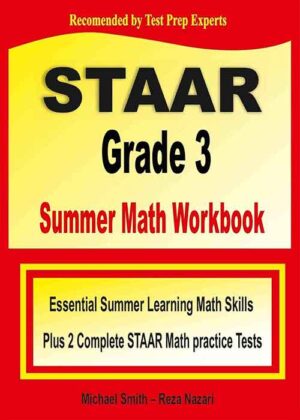 STAAR Grade 3 Summer Math Workbook: Essential Summer Learning Math Skills plus Two Complete STAAR Math Practice Tests Original price was: $18.99.$12.99Current price is: $12.99.Download
 6 Full-Length MCAS Grade 8 Math Practice Tests: Extra Test Prep to Help Ace the MCAS Grade 3 Math Test Original price was: $18.99.$12.99Current price is: $12.99.Download
 PARCC Grade 5 Summer Math Workbook: Essential Summer Learning Math Skills plus Two Complete PARCC Math Practice Tests Original price was: $18.99.$12.99Current price is: $12.99.Download
 ACT Subject Test Mathematics: Student Practice Workbook + Two Full-Length ACT Math Tests Original price was: $18.99.$12.99Current price is: $12.99.Download
 7 ILEARN Polynomials Tips for Indiana Students
 7 Accuplacer Math Prep Mistakes to Avoid
 7 DeSSA Math Prep Tips for Delaware Students
 ACAP Geometry Basics Practice: Alabama Student Guide
 WVGSA Math Prep: West Virginia Student Guide
ILEARN Geometry Basics Practice — Indiana Guide


📖 Reading time: 11 min
Quick answer: To master ILEARN geometry basics practice, Indiana students in grades 4–12 should focus on the core Indiana Academic Standards geometry strands — shapes, area, perimeter, volume, angles, and coordinate geometry — and work through targeted practice problems at least four days a week for six to eight weeks before test day.
Who this is for: Indiana students in grades 4–12 preparing for the ILEARN math assessment, as well as parents and teachers looking for proven, step-by-step strategies to build geometry confidence at home or in the classroom.
More than one in three Indiana students score below proficiency on the state math assessment — and geometry is one of the most commonly missed content areas. If your student freezes when they see a question about area, volume, or angles, they are not alone. Geometry concepts look deceptively simple on the surface, but the ILEARN math test expects students to apply those concepts in unfamiliar ways, which is where most students lose points. Consistent ILEARN geometry basics practice, paired with a clear understanding of the underlying rules, is the most reliable path to a better score.
This guide walks you through everything: why geometry basics matter so much for long-term math success, the most common mistakes students make and how to fix them, a step-by-step approach to solving geometry problems, worked examples you can try right now, memory tricks to make formulas stick, and practical strategies for parents and teachers. By the time you finish reading, you will have a concrete action plan you can start today.
The Indiana – ILEARN Math Assessment is built around the Indiana Academic Standards (IAS), and geometry appears across every tested grade level — from area and perimeter in grade 4 all the way through coordinate geometry and surface area in grades 8 and beyond. Understanding exactly what those standards require is the first step toward a stronger score.
Why Geometry Basics Are Foundational for Indiana ILEARN Math Success
Geometry Is Not Optional — It Runs Through Every Grade
Geometry is one of the four major content domains tested on the ILEARN (Indiana Learning Evaluation and Readiness Network) math assessment, alongside number sense, algebraic thinking, and data analysis. Students who skip geometry review are leaving a significant portion of the test unprepared. More importantly, geometry skills compound: a student who never fully masters area in grade 4 will struggle with surface area in grade 6, volume in grade 7, and coordinate geometry in grade 8. The foundational concepts are not isolated — they stack directly on top of each other.
The Indiana Academic Standards define geometry expectations at every grade level, and those standards are the blueprint for every question on the ILEARN math test. At the elementary level, students must recognize and classify shapes, measure angles, and calculate perimeter and area of rectangles and triangles. At the middle school level, the focus shifts to two- and three-dimensional figures, surface area, volume of prisms and cylinders, and coordinate plane graphing. High school students encounter more abstract geometry — slope, distance between points, properties of circles, and transformation of figures. Each of these builds directly on what came before.
Beyond the test itself, geometry literacy supports real mathematical reasoning. When students understand why the area of a triangle is half the base times the height — rather than just memorizing the formula — they develop the kind of flexible problem-solving that transfers to algebra, physics, and data analysis. Strong geometry fundamentals also improve a student’s ability to visualize math, which is a skill that research consistently links to higher overall math achievement. According to the U.S. Department of Education, spatial reasoning and geometry proficiency in middle school are among the strongest predictors of high school math readiness.
What the Indiana Academic Standards Require at Each Level
Understanding the Indiana math standards geometry basics expectations by grade band helps students and teachers focus their practice time efficiently. Here is a quick breakdown of what the ILEARN tests at each level:
- Grades 3–5 — Shapes, Perimeter, and Area: Students classify two-dimensional shapes by their properties (number of sides, angle types, parallel sides), calculate the perimeter of polygons, and find the area of rectangles and triangles. They also begin working with the coordinate plane by plotting points in the first quadrant. At this stage, building a visual understanding of shapes and practicing area calculations with real-world contexts — like finding the area of a room — makes the biggest difference.
- Grades 6–7 — Surface Area, Volume, and Angle Relationships: The geometry standards expand significantly at this level. Students find the area of composite figures, calculate surface area of rectangular prisms and pyramids, find the volume of prisms and cylinders, and explore angle relationships including supplementary, complementary, vertical, and adjacent angles. These are high-frequency ILEARN topics, and students who struggle here almost always have a gap in understanding area from earlier grades.
- Grade 8 — Coordinate Geometry and Transformations: Grade 8 geometry standards require students to apply the Pythagorean theorem, find distance and slope on the coordinate plane, and describe transformations (translations, reflections, rotations, and dilations) both graphically and algebraically. This is where geometry and algebra formally merge, and students who are not fluent in both domains will find these questions particularly challenging.
- Grades 9–12 — Formal Geometry Reasoning: High school ILEARN math assessments draw on Euclidean geometry proofs, properties of circles, triangle congruence and similarity theorems, and trigonometric ratios. Students must be able to construct logical arguments and recognize valid geometric reasoning — not just plug numbers into formulas.
Each of these levels requires consistent, targeted practice. Reviewing the specific Indiana math standards geometry basics for your grade before starting any test prep session ensures you spend time on the concepts that actually appear on your version of the ILEARN math test.
Common Mistakes Indiana Students Make with ILEARN Geometry Basics
The Errors That Cost the Most Points
The most common geometry mistake on the ILEARN math test is confusing area and perimeter — two concepts that students learn together and therefore mix up under pressure. Area measures the space inside a shape (square units), while perimeter measures the distance around the outside of a shape (linear units). On a typical ILEARN geometry question, a student might be asked to find how many square feet of carpet cover a room, which requires area — but a student who is anxious or rushing might add up the side lengths instead. This single mix-up accounts for a surprisingly large number of incorrect answers across all grade levels.
A second frequent error involves forgetting to apply the correct formula for the shape given. Many students memorize the area formula for a rectangle (length × width) but then apply it incorrectly to a triangle. The area of a triangle is ½ × base × height — not base × height. When a triangle problem appears, students who skip the ½ will get an answer that is exactly double the correct value, which is a recognizable pattern on answer choices. Test designers sometimes include that doubled value as a distractor, knowing students commonly make this mistake.
A third error is misidentifying the height of a triangle. The height must be perpendicular to the base — it is not always a side of the triangle. On the ILEARN math test, triangle problems sometimes show an oblique triangle (one that leans to the side) with the true height drawn as a dashed line inside the figure. Students who use one of the slanted sides as the height instead of the dashed perpendicular height will calculate a wrong answer even if they remember the formula correctly.
Volume problems generate their own category of mistakes. The most common is forgetting to cube the units. When calculating volume in cubic centimeters, every dimension must be in centimeters, and the answer carries the unit cm³ — not cm or cm². Students who mix centimeters and meters in a single problem, or who report volume in square units, lose points that should be easy to earn. A quick habit of labeling units at every step of the calculation catches these errors before they become wrong answers.
Finally, many students struggle with coordinate geometry because they confuse the x-axis and y-axis, or they reverse the (x, y) order when plotting points. On ILEARN math geometry questions involving the coordinate plane, plotting a point at (3, 5) rather than (5, 3) produces a completely different answer. Drilling the phrase “x comes before y, just like in the alphabet” is one of the simplest ways to lock in this concept. Practicing with free math worksheets that require plotting and reading ordered pairs is one of the fastest ways to eliminate this error permanently.
Why These Mistakes Happen — and How to Fix Them
Most of these errors share a common root: students learned the formulas without understanding why they work. When you understand that area is literally counting the square units inside a shape, you cannot confuse it with perimeter, because perimeter doesn’t involve any squares at all. Conceptual understanding is the fix for formula confusion. Taking ten minutes to draw diagrams and shade regions when reviewing formulas — rather than just reading them — rewires how students access that knowledge under pressure.
For Indiana students working through step-by-step math practice at home, a structured workbook that builds concept understanding before formula memorization is far more effective than drilling problems without context. Students who understand what they’re calculating make far fewer careless errors, even when test anxiety kicks in. For students who also need to strengthen their algebraic foundations alongside geometry — especially in grades 7 through 10 — Indiana Algebra 1 for Beginners provides a comprehensive, step-by-step study guide and workbook designed specifically for Indiana learners, covering the algebraic concepts that connect directly to geometry standards at the middle and high school level.
🎯 Recommended Math Book
Indiana Algebra 1 for Beginners — $16.99
Category: Algebra 1, General, Indiana, Test
Comprehensive Algebra 1 Study Guide & Workbook
Perfect for classroom learning, homeschooling,
or extra practice at home.
Step-by-Step Strategies for ILEARN Geometry Basics Practice
Effective ILEARN geometry basics practice follows a clear, repeatable process. The students who improve fastest are not the ones who study the longest — they are the ones who study the most strategically. Here are seven specific, actionable strategies you can start using today to build geometry math confidence before test day.
-
Start by mapping your grade-level geometry standards.
Before you practice a single problem, pull up the Indiana Academic Standards for your exact grade level. List every geometry concept that appears. This is your master checklist. As you work through each topic, check it off. This turns vague “studying geometry” into a concrete, trackable plan. Students who know exactly which standards they have and haven’t mastered focus their limited practice time far more efficiently than those who review randomly. -
Learn the formulas by understanding them — not just memorizing them.
For every formula you need, spend five minutes understanding where it comes from. Why is the area of a rectangle length × width? Because you are counting rows of unit squares — width tells you how many squares per row, and length tells you how many rows. When you understand the logic, forgetting the formula under pressure becomes much less likely. Draw a rectangle on grid paper, count the squares, and verify the formula yourself. This approach works for every geometry formula at every grade level. -
Practice identifying shapes before solving problems.
Many ILEARN math geometry questions give you a figure and expect you to recognize it correctly before applying any formula. Practice quickly identifying triangles (scalene, isosceles, equilateral, right), quadrilaterals (square, rectangle, parallelogram, trapezoid, rhombus), and three-dimensional solids (rectangular prism, triangular prism, cylinder, cone, pyramid). Draw each shape from memory, label its properties, and note which formulas apply to it. This visual rehearsal speeds up test performance significantly. -
Always label units at every step of a calculation.
Units are not just a final-answer detail — they are a built-in error-checking system. When you write “Area = 6 cm × 4 cm = 24 cm²” rather than “Area = 6 × 4 = 24,” the units themselves tell you whether you’re on the right track. If your units don’t work out to the expected type (square units for area, cubic units for volume), you know to recheck before moving on. This single habit eliminates a significant category of careless errors on math practice problems. -
Draw and label every geometry problem before calculating.
Even if the ILEARN test question already includes a figure, redraw it on your scratch paper and label every given measurement. Mark the height with a small square where it meets the base to confirm it is perpendicular. Drawing forces your brain to process the problem spatially, which reduces the chance of applying the wrong formula. Students who skip the drawing step and jump straight to calculation make far more errors, especially on multi-step problems involving composite figures. -
Use free math worksheets to drill specific weak areas.
After identifying your weak spots from the standards checklist, find targeted practice for those exact topics. Focused drilling on a single concept — say, the area of composite shapes — for fifteen to twenty minutes produces faster improvement than working through random mixed-review packets. When you get a problem wrong on a worksheet, write the correct solution in full before moving to the next problem. Passive re-reading does not fix errors; active rewriting does. -
Simulate test conditions at least once a week.
Set a timer, put away your notes, and work through ten to fifteen geometry problems without any help. This is different from homework-style practice. Timed, no-notes practice builds the mental fluency and test stamina you need to perform under real ILEARN math test conditions. After each timed session, review every problem — not just the ones you got wrong. Understanding why a correct answer is correct is just as important as understanding why a wrong answer is wrong.
Beyond these seven strategies, one of the most powerful things any student can do is find a study partner or small group focused on the same ILEARN geometry basics tips. Explaining a geometry concept out loud to someone else — why the Pythagorean theorem works, how to find the volume of a cylinder — is one of the most effective ways to discover gaps in your own understanding. If you can teach it, you know it. If you stumble while explaining, you have found exactly the concept you need to review next.
Parents and teachers can reinforce these strategies by building short, regular geometry review sessions into the week rather than relying on long weekend cram sessions. Ten to fifteen minutes of focused math homework help on geometry four nights a week outperforms two hours of scattered review on Sunday. Consistency builds the kind of math fluency that shows up on test day without the need for frantic last-minute cramming. Reviewing math test prep tips with your student before each practice session — rather than after — also helps set clear intentions and makes the review session more productive.
Worked Examples: Area, Angles, and Volume on the ILEARN
Example 1: Area of a Composite Figure (Grade 6 Level)
Problem: A school garden is shaped like an L. The full outer dimensions are 12 meters wide and 10 meters tall. A rectangular section measuring 5 meters wide and 4 meters tall is cut out from the upper-right corner. What is the area of the garden?
Step 1: Calculate the area of the full rectangle before the cutout.
Area of full rectangle = 12 m × 10 m = 120 m²
Step 2: Calculate the area of the rectangular cutout.
Area of cutout = 5 m × 4 m = 20 m²
Step 3: Subtract the cutout area from the full rectangle area.
Area of garden = 120 m² − 20 m² = 100 m²
Answer: The garden covers 100 square meters. Notice that we labeled every measurement in meters and every area in square meters — this keeps units consistent and prevents errors. This composite figure strategy (whole minus cutout) works for any L-shaped, U-shaped, or notched figure on the ILEARN math test.
Example 2: Finding a Missing Angle (Grade 7 Level)
Problem: Two angles are supplementary. One angle measures 124°. What is the measure of the other angle?
Step 1: Recall the definition. Supplementary angles add up to exactly 180°. This relationship comes from two angles that together form a straight line.
Step 2: Set up the equation.
124° + x = 180°
Step 3: Solve for x.
x = 180° − 124° = 56°
Answer: The missing angle measures 56°. A quick check: 124 + 56 = 180 ✓. On the ILEARN math test, angle relationship problems often ask students to find a missing angle in a diagram showing two lines intersecting or a straight angle split into two parts. Memorizing “supplementary = 180°, complementary = 90°” as a linked pair eliminates confusion between the two.
Example 3: Volume of a Rectangular Prism (Grade 7–8 Level)
Problem: A storage box is 8 inches long, 5 inches wide, and 3 inches tall. What is the volume of the box?
Step 1: Recall the formula for volume of a rectangular prism.
Volume = length × width × height
Step 2: Substitute the given measurements.
Volume = 8 in × 5 in × 3 in
Step 3: Multiply step by step to avoid errors.
8 × 5 = 40
40 × 3 = 120
Answer: The volume of the box is 120 cubic inches (in³). Notice the three-step multiplication rather than trying to compute all three numbers at once — this reduces arithmetic errors significantly. On the ILEARN math test, volume problems sometimes change the units between measurements (mixing feet and inches, for example), so always confirm all dimensions are in the same unit before multiplying.
Memory Tricks and Shortcuts for Geometry Formulas
Memory tricks make a real difference during a timed test. Here are some of the most reliable shortcuts for Indiana math standards geometry basics:
- “All Students Take Calculus” for quadrant signs: In the coordinate plane, quadrant I (All positive), quadrant II (Sine/y positive), quadrant III (Tangent positive), quadrant IV (Cosine/x positive). Even for students not yet in trigonometry, this mnemonic locks in which quadrant has positive x and y values.
- “Base × Height, Cut in Half” for triangle area: Chanting this phrase while drawing a triangle and its height makes the ½ × b × h formula nearly impossible to forget. The visual of cutting a rectangle diagonally in half reinforces why the formula works.
- “Volume is Three D’s — length, width, DEPTH” for prisms: Some students forget that height in a prism is the third dimension and try to calculate area instead of volume. Associating volume with “3 D’s” reminds them to multiply all three dimensions.
- “Perimeter is the fence, area is the grass” for the area/perimeter distinction: This analogy is simple enough to recall instantly during a stressful test moment. The fence goes around the outside (linear units); the grass fills the inside (square units).
- Pi ≈ 3.14 for circle problems: The ILEARN math test provides a reference sheet for some grade levels, but not all. Memorizing π ≈ 3.14 (or the fraction 22/7 for easier mental math) ensures you are never stuck on a circle area or circumference problem regardless of what the test provides.
These shortcuts work best when students practice using them on math practice problems before test day — not just reading them once. Reciting a memory trick while solving a problem wires it into long-term memory far more effectively than passive review.
How Geometry Appears Across Standardized Tests
ILEARN geometry basics practice also prepares Indiana students for other high-stakes tests they will encounter throughout their academic career. Geometry questions appear on the SAT (approximately 15–20% of the math section), the ACT Math section (roughly 12–15% geometry questions), and GED math reasoning (geometry is one of four content domains). State assessments in other states — including the STAAR in Texas, the MCAS in Massachusetts, and the PARCC-aligned assessments in several states — all test similar geometry concepts because they are built around shared college and career readiness standards.
On the GED Mathematical Reasoning test, geometry questions typically involve area, perimeter, surface area, volume, angle relationships, and coordinate geometry — essentially the same skills tested on the Indiana ILEARN math assessment. This means that a student who masters Indiana math standards geometry basics is building a transferable skill set that benefits them far beyond a single state test. SAT and ACT geometry questions trend slightly more complex, often combining algebra with geometry (coordinate geometry, equations of circles), which is why algebra fluency and geometry fluency need to develop in parallel starting in grade 8.
📚 More from Math Notion
Practice Strategies for Parents and Teachers
Parents and teachers play a pivotal role in geometry test prep, even when they don’t feel confident in their own math skills. The single most effective thing a parent can do is create a consistent, low-stakes practice routine at home. Ten to fifteen minutes of geometry review four to five evenings a week — using free math worksheets, math homework help sessions, or a structured workbook — does more for long-term retention than any single weekend study session. Consistency matters far more than session length.
Teachers can build geometry math confidence by presenting formulas with visual models before numerical procedures. When students see a rectangle divided into rows and columns of unit squares before they see the formula “A = l × w,” the formula makes intuitive sense rather than feeling like an arbitrary rule. Similarly, building surface area by physically unfolding a cardboard box into a net before calculating gives students a spatial foundation that makes the formula meaningful.
For classroom use, projecting worked examples on the board and asking students to spot the error in a deliberately wrong solution is a high-engagement technique that sharpens attention to detail. Students who practice catching errors in someone else’s work become much better at catching their own errors on the ILEARN math test. This peer-review thinking is also a valuable general math skill that transfers across all content areas.
When to Seek a Tutor or Extra Help
Some students benefit enormously from targeted one-on-one support. If your student has been practicing geometry consistently for three to four weeks and is still making the same types of errors — confusing area and perimeter, misidentifying shape properties, or struggling with coordinate plane problems — it is a strong signal that a conceptual gap needs to be addressed with more personalized attention than classroom instruction or independent practice can provide.
A math tutor who is familiar with the Indiana Academic Standards geometry expectations can diagnose the specific misconception quickly and address it directly. In many cases, the problem traces back to a concept from one or two grade levels earlier — a student struggling with surface area in grade 6 may have a gap in area understanding from grade 4. A good tutor identifies that gap and fills it efficiently, which is a much faster path to improvement than repeating grade-level practice on a concept the student doesn’t yet have the foundation for.
Teachers and school counselors can also connect families with free tutoring resources, including after-school programs, peer tutoring, and math support centers. Beyond in-person options, many Indiana students use online platforms and structured workbooks to get the scaffolded, step-by-step math support they need at a pace that works for them.
Frequently Asked Questions
What geometry topics are most important for the Indiana ILEARN math test?
The most important ILEARN geometry basics topics are area and perimeter of two-dimensional shapes, surface area and volume of three-dimensional figures, angle relationships (supplementary, complementary, vertical), and coordinate geometry including plotting points and slope. These concepts appear across all tested grade levels and account for a significant portion of the geometry domain on every version of the ILEARN math assessment. Focusing your Indiana math standards geometry basics review on these five topic areas first will give you the highest return on your study time.
How much time should I spend on ILEARN geometry basics practice each week?
Most students see meaningful improvement with twenty to thirty minutes of focused ILEARN geometry basics practice four to five days per week, starting six to eight weeks before their test date. Spacing practice across multiple sessions each week is significantly more effective than one long session on a single day. Short, daily math practice problems build the fluency and automatic recall that long-term test performance depends on — and they prevent the overwhelm that comes from trying to review everything at once.
Do Indiana ILEARN math tests provide a geometry formula sheet?
The Indiana ILEARN math assessment provides a reference sheet for students in grades 6 and above, which typically includes common geometry formulas for area, surface area, and volume. However, lower grades do not receive a formula reference, and even at higher grades, knowing the formulas from memory speeds up your work and reduces errors. Students who rely entirely on the reference sheet tend to use formulas more slowly and sometimes apply them to the wrong shape type. Memorizing key formulas alongside understanding what they mean is always the stronger strategy for ILEARN geometry basics practice.
Key Takeaways
- Geometry basics are tested across every ILEARN grade level and build directly on each other — gaps in early concepts create compounding difficulties in later grades, so targeted review by grade-level standard is the most efficient approach.
- The most common ILEARN geometry errors — confusing area and perimeter, misusing the triangle area formula, mixing up units — are all fixable with consistent, concept-first practice that emphasizes understanding over memorization.
- A step-by-step approach (draw and label, select the right formula, track units at every step, check with estimation) eliminates a large percentage of careless errors on math practice problems and can be practiced starting today.
- For Indiana students who also need to build algebra skills alongside geometry — particularly in grades 7 through 10 — structured resources aligned to Indiana Academic Standards make a measurable difference in test readiness.
Mastering ILEARN geometry basics practice is a process, not a single event. Every student who works consistently through the geometry standards — learning the concepts, practicing the formulas, catching their own errors, and building confidence with timed drills — puts themselves in a strong position on test day. Start with the checklist, identify your biggest gap, and work through it step by step. For additional Indiana-aligned math resources and test prep books, visit mathnotion.com/tests/ to find a structured workbook that matches your exact grade level and goal.
Posted by Math Notion Team · Published on July 7, 2026