
Math Articles, tips & study guides
 ALEKS Math Practice Book 2020: Extra Exercises and Two Full Length ALEKS Math Tests to Ace the Exam Original price was: $18.99.$12.99Current price is: $12.99.Download
 ALEKS Math Workbook: Exercises, Activities, and Two Full-Length ALEKS Math Practice Tests Original price was: $18.99.$12.99Current price is: $12.99.Download
 ALEKS Subject Test Mathematics: Student Practice Workbook + Two Full-Length ALEKS Math Tests Original price was: $18.99.$12.99Current price is: $12.99.Download
 ALEKS Math Workbook: Essential Learning Math Skills Plus Two Complete ALEKS Math Practice Tests Original price was: $18.99.$12.99Current price is: $12.99.Download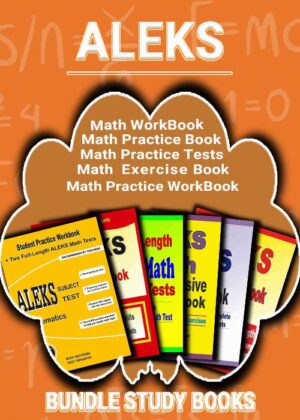
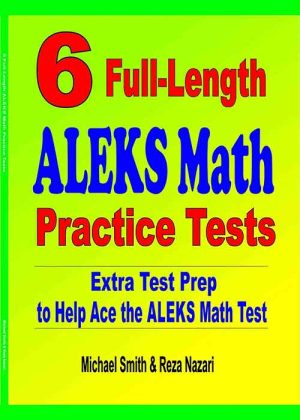 6 Full-Length ALEKS Math Practice Tests: Extra Test Prep to Help Ace the ALEKS Math Test Original price was: $18.99.$12.99Current price is: $12.99.Download
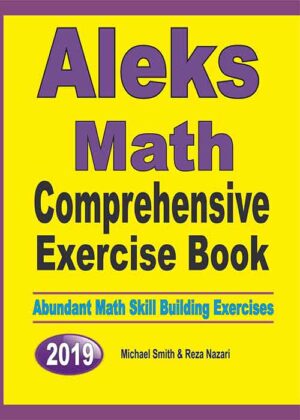 ALEKS Math Comprehensive Exercise Book: Abundant Math Skill Building Exercises Original price was: $18.99.$12.99Current price is: $12.99.Download
 SAT Summer Math Workbook: Essential Summer Learning Math Skills plus Two Complete SAT Math Practice Tests Original price was: $18.99.$12.99Current price is: $12.99.Download
 Accuplacer Math Workbook: Exercises, Activities, and Two Full-Length Accuplacer Math Practice Tests Original price was: $18.99.$12.99Current price is: $12.99.Download
 ALEKS Math Test: How It Works and How to Prepare
 IAR Quadratic Equations Practice — Illinois Guide
 CMAS Scatter Plots Practice — Colorado Guide
 OST Pre-Calculus Practice — Ohio Guide
 SBAC Congruence and Similarity Practice — California Guide
ALEKS Math Score Explained: What Is a Good Score?


If a college has asked you to take ALEKS, your ALEKS math score will decide which math course you start in, so understanding what the number means is important. ALEKS reports a score from 0 to 100, and knowing what that score represents, what counts as good, and how to raise it helps you place into the course you want. This guide explains the ALEKS scoring system in plain language and shows how to improve your result.
ALEKS is an adaptive, open-response placement system, so its scoring works differently from a typical multiple-choice test. Below we’ll cover how the score is calculated, what colleges look for, and how targeted ALEKS math practice raises your ALEKS math test placement.
How the ALEKS score works
ALEKS reports a single score from 0 to 100, representing the percentage of the course material you’ve demonstrated mastery of. It is not a percentage of questions answered correctly; it reflects how much of the underlying knowledge ALEKS has confirmed you genuinely know, based on your open-response answers across an adaptive assessment.
Because ALEKS is adaptive and makes you type in real answers rather than choosing from options, the score is an honest measure of your skills. A higher number means you’ve mastered more of the material, which is why colleges use it to place you accurately into the right starting course.
What the score ranges mean
Colleges set their own cutoffs that map ALEKS score ranges to specific courses. As a general pattern, lower scores place you into developmental or preparatory math, mid-range scores into college algebra or similar, and higher scores into precalculus or calculus. The exact thresholds vary by institution.
This means there’s no single universal “passing” ALEKS score; what matters is the cutoff your college sets for the course you want. A score that places one student into calculus at one school might land differently elsewhere, so always check your specific college’s placement chart.
What counts as a good ALEKS score
A good ALEKS score is one that places you into the course you’re aiming for at your college. For many students, that means reaching the cutoff for college-level math rather than developmental coursework, often a score in the range your school designates for college algebra or higher.
Rather than chasing an arbitrary number, find your college’s ALEKS placement chart, identify the score you need for your target course, and aim comfortably above it. This gives you a concrete, motivating goal tailored to your situation, which is far more useful than a generic target.
Why placement matters so much
Your ALEKS placement has real consequences for your time and money. Placing into a developmental course can add a semester and tuition that often don’t count toward your degree, delaying your progress. Placing directly into college-level math keeps you on the fastest, most affordable path through your program.
This is why a few weeks of preparation to raise your ALEKS score can be one of the highest-return investments you make before college. A higher score isn’t just a number; it can save you real time and money and get you to your degree sooner.
The Prep and Learning Module
One feature that sets ALEKS apart is the Prep and Learning Module you typically receive after your first assessment. It’s a personalized set of lessons targeting exactly the topics you missed, and most colleges allow you to retake the assessment after spending required study time in the module.
This changes everything about how you should approach ALEKS: your first score rarely has to be final. By studying in the module and retaking the assessment, you can genuinely raise your placement. Treating the first attempt as a diagnostic and the module as your path upward is the smartest strategy.
How to raise your ALEKS score
Raising your ALEKS score comes down to genuine practice on the topics it flags. Because ALEKS is open-response, you need to be able to produce answers, not just recognize them, so practice by actually working problems start to finish. Focus first on the foundational topics the module identifies, since they unlock higher material.
Use the Prep and Learning Module diligently, and supplement it with outside practice on your weak areas. Then, when your school allows, retake the assessment after meeting the required study time. This cycle of study and retake is exactly how students climb from a developmental placement into college-level math.
Why open-response practice matters
Because ALEKS makes you type in your own answers rather than choosing from a list, your practice must build the ability to solve problems independently. Passive review or multiple-choice-style practice won’t prepare you; you need to work problems by hand, cover the solution, attempt them cold, and check your steps.
This genuine, produce-the-answer practice builds exactly the fluency ALEKS measures. A student who can work a problem start to finish without prompts will score far higher than one who only recognizes familiar-looking answers. Practicing the way ALEKS tests is essential to raising your score.
Practice with ALEKS worksheets
Targeted practice cements the skills the assessment scores. Math Notion offers free, printable ALEKS math worksheets covering the arithmetic, algebra, and higher-level skills ALEKS uses to place you, so you can drill exactly the areas you need at your own pace.
Browse the full library on our math worksheets page for more practice. Work each worksheet by hand, check your answers, and review any mistakes to understand the method. This focused, produce-the-answer practice on the content ALEKS tests is one of the most efficient ways to raise your score.
Shore up the fundamentals first
Because ALEKS builds from basic arithmetic up through higher math, weak fundamentals cap your score no matter how much you know at advanced levels. The fastest gains often come from making sure arithmetic, fractions, percentages, and basic algebra are solid before tackling harder topics.
The Prep and Learning Module will often surface these foundational gaps, and addressing them first unlocks the higher material that depends on them. For most students, shoring up the fundamentals is the most efficient route to a meaningfully higher ALEKS placement.
Don’t treat the first score as final
It bears repeating: with ALEKS, your first score is usually a starting point, not a verdict. The system is explicitly designed to reward students who study and retake, so a low initial result simply tells you where to focus. Walking in cold, then using the module and practice to climb, is a completely legitimate, effective strategy.
This should take pressure off the first attempt. Instead of fearing a low placement, treat it as a diagnostic that maps your path upward. The students who end up in higher math courses are usually the ones who used every attempt and studied deliberately between them.
The workbook that raises your placement
For thorough preparation alongside the module, a complete workbook helps. The ALEKS Subject Test Mathematics workbook covers the arithmetic, algebra, and higher-level skills ALEKS uses to place you, with clear lessons and step-by-step answer explanations that build the genuine, produce-the-answer fluency the assessment demands.
Paired with the free ALEKS worksheets, a workbook gives you both complete instruction and targeted practice to raise your placement. It’s an instant download, so you can start tonight and aim for the highest placement you’re capable of. Browse all our ALEKS math resources → to find the right fit.
How long it takes to raise your score
How much time you need depends on how far your current score is from your target. A student close to the cutoff for their desired course might raise their placement with a couple of weeks of focused work in the Prep and Learning Module plus outside practice, while a larger gap calls for a longer, steadier plan. Either way, the path is clear and the improvement is achievable.
Give yourself enough time before any registration deadline to study and, if your school allows, retake the assessment. Rushing rarely produces big gains, but steady, daily practice over a few weeks reliably does. Plan backward from your deadline so you have room to study the topics ALEKS flags and retake with confidence rather than under pressure.
Make your practice match ALEKS
Because ALEKS is adaptive and open-response, the most effective preparation mirrors it: practice broadly across arithmetic, algebra, and any higher topics your target placement requires, work problems by hand, and check your reasoning against worked solutions. Avoid relying on multiple-choice-style review, since that doesn’t build the produce-the-answer skill ALEKS measures.
Practicing this way builds the genuine, flexible fluency that lets you handle whatever the adaptive assessment presents. Combined with diligent use of the Prep and Learning Module and steady ALEKS math practice on your weak areas, this approach reliably lifts your placement toward the course, and the college path, you’re aiming for.
Keep your placement goal in view
On the days practice feels tedious, remember what a higher ALEKS placement buys you: time and money saved by skipping developmental courses, and a faster path through your degree. That payoff makes the focused effort genuinely worthwhile, and keeping it in mind helps sustain the steady practice that raising your score requires.
The bottom line on your ALEKS score
To sum up, your ALEKS math score is a 0-to-100 measure of how much course material you’ve mastered, and it decides your math placement, with all the time and money that placement implies. The encouraging part is that it’s genuinely improvable: study the topics ALEKS flags in the Prep and Learning Module, practice by working problems yourself, shore up your fundamentals, and retake when your school allows. Approached that way, a low first score becomes a strong final placement, and the focused effort pays off in a faster, cheaper path through your degree.
Whatever your starting point, treat ALEKS as a process you can influence rather than a fixed verdict. With the module, steady practice, and a retake, the score that decides your math placement is very much in your hands, and raising it is one of the most worthwhile things you can do before college.
Frequently asked questions
What does the ALEKS score mean?
It’s a score from 0 to 100 representing the percentage of course material you’ve demonstrated mastery of, not the percentage of questions answered correctly.
What is a good ALEKS math score?
One that places you into your target course at your college. Check your school’s placement chart, find the cutoff for the course you want, and aim comfortably above it.
Can I raise my ALEKS score?
Yes. Most colleges let you study in the Prep and Learning Module and retake the assessment, so studying and retaking can genuinely raise your placement.
How should I practice for ALEKS?
Work problems by hand to build produce-the-answer fluency, shore up your fundamentals first, use the Prep and Learning Module, and supplement with ALEKS worksheets and a workbook.
Math Notion makes standards-aligned math workbooks and test prep for learners at every level and across all 50 states. See the full collection.
Posted by Math Notion Team · Published on September 9, 2024